Tag: design

  • Hannah Morgan

    Hannah Morgan

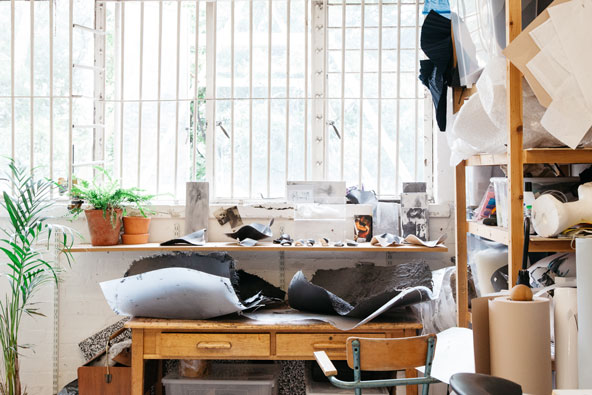
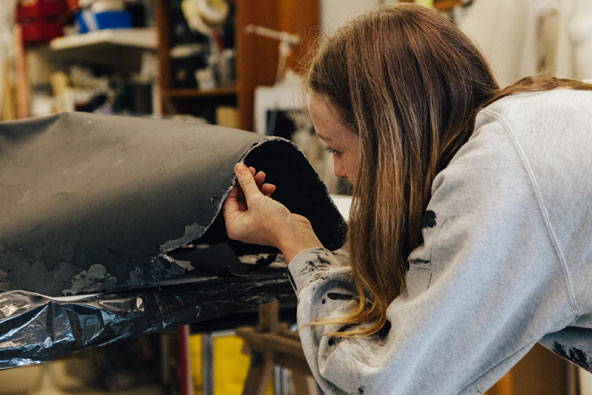
    From her studio in London, Hannah Morgan works on a variety of projects across art and fashion, ranging from sculpture and performance to trend and colour forecasting. We caught up with Hannah to find out more about how her interest in design began, her inspirations and how collaboration plays a vital role in her work.

    www.hannahmorganstudio.com

    Photographs by Ellie Tsatsou.

    future-positive-hannah-morgan-2-low

    Could you please introduce yourself and tell us a little bit about your background and education?

    Hi! My name is Hannah Morgan, I am a maker of objects, that spans art, design, and fashion. I’m a native Londoner, and I’m thankfully still able to live and work not far from where I grew up.

    My first degree was in Film Theory and English Literature at the University of Sussex. I then went into assisting fashion and photographic art directors, and Trend Forecasting at East Central studios before embarking on a series of making courses (notably Kensington and Chelsea Collage) before ending up in the Fashion Department at the Royal Collage of Art under the supervision of Julie Verhoeven/Tristian Webber/Noel Stewart. It was there that I felt like I had entered Willy Wonka’s factory – the scope of what I could make, think about, and engage with was mind blowing!

    After the RCA MA as well as setting up my own practice I worked at Studio Xo for clients such as Wayne McGregor/Lady Gaga. In my own studio I undertake a variety of projects as well as assisting artists such as Julie Verhoeven (as a performer), colour consultant Hilary Scarlett, and collaborating with fantastic creatives like Robert Binet, Ellie Tsatsou, and Liam Hodges.
    future-positive-hannah-morgan-1-low

    Do you remember about when you first got interested in design?

    It probably started in the Dalston Oxfam when I was a kid, I was given free reign to get my outfit… it was an explosion of expression! I grew up in a family of artists/architects/writers that valued looking analytically at the world, and encouraged the ideas and creativity of even the youngest members. So design, fashion and art were always around, a trick of circumstance and osmosis that initially shaped my interests.

    I think design became something that I wanted to know more about as an adult when I studied film for my BA. I was intrigued by the importance of objects in a scene or what the dress of a character signified within the narrative, from a character’s psychological state to a plot twist. It was through the screen that the power of design and its meanings in popular culture were reflected back, and I was hooked.
    future-positive-hannah-morgan-6-low

    You describe your work as interdisciplinary, could you tell us a little bit more about it and where your inspiration comes from?

    My work has always been about process and ideas and I am interested in the way in which the same ideas can apply across different media and disciplines. I find I’m too inquisitive about different processes and outcomes when investigating a subject or idea. If a photograph/film/sound fulfils a direction, then I’m content with that, if a sculpture works better on a wall than a body, that’s fine. I think in the process of play, discovery, and mishaps are vital as a maker. That need to be definitive has become less important as I went through different education and contexts, I still hold on to some stubbornness though – you know when something is right.

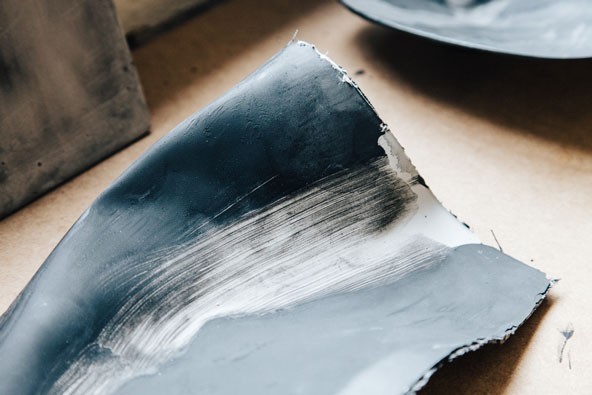
    My focus or inspiration comes from trying things out around a subject. Since the RCA I have been investigating the relationship between a body and object. I can’t seem to shake it, probably because the subject can have so many different interpretations and change according to context. It feels like there are infinite possibilities!

    At the moment I’ve been looking at Neolithic statues, listening to D’Angelo and the Reith Lectures, watching A.Curtis’ HyperNormalization, eating curry, and if I’m lucky go for long walks in and around the city.
    future-positive-hannah-morgan-4-low

    Could you tell us about your collaborative work?

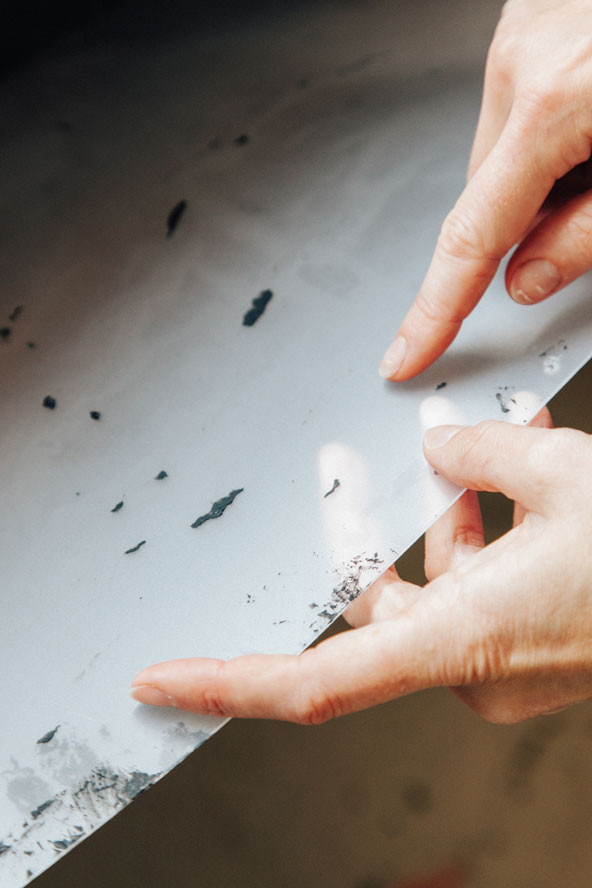
    I have always preferred working with other people, especially if they come from a different context or creative background; it’s the easiest way to learn and challenge your work and the world. At the moment I’m very privileged to be working with choreographer Robert Binet, who is based in Canada. We are using his imagination of what a body can do, and my methods of analysing and abstracting form to re-interpret the language of movement in a space. I’m also at the beginnings of a project with the photographer Ellie Tsatsou, looking at making and documenting processes and methods.

    Collaboration is key! I recommend it to everyone – even if you’re colluding with someone over the dinner! We are all in part a product of circumstance, who we are friends with, where we are born, etc. I’m so happy and lucky to be where I am right now, and crossing paths with the people I do, it’s a sobering thought in today’s world.
    future-positive-hannah-morgan-3-low

    What are your plans for the upcoming months?

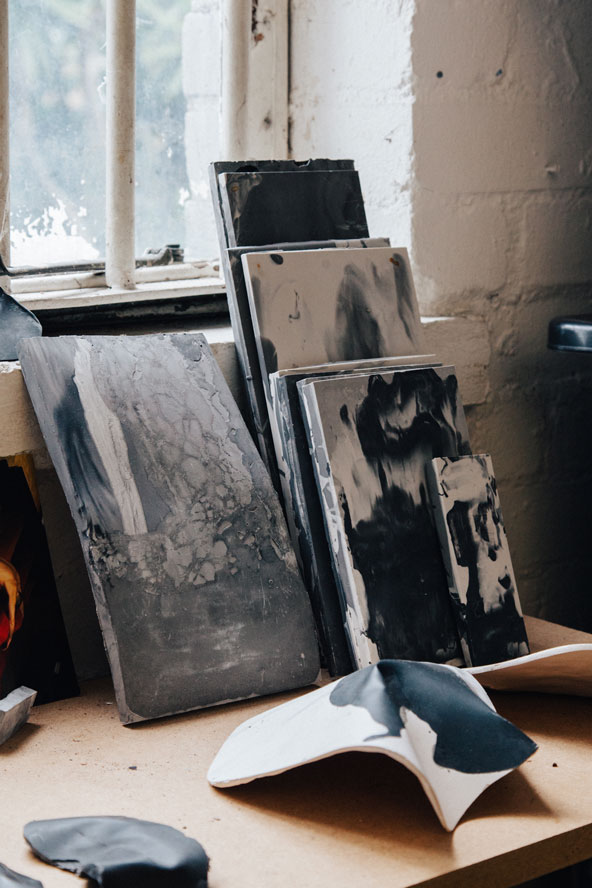
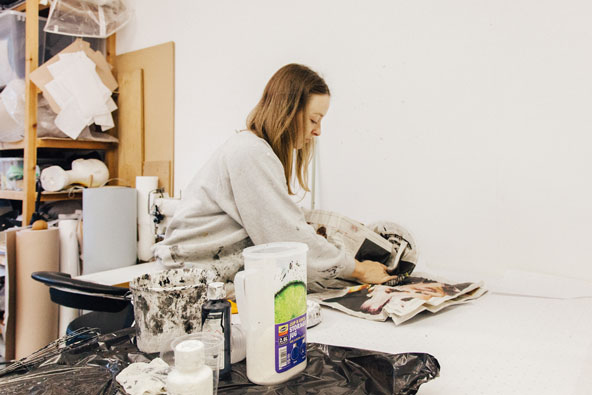
    At the moment I’m working on an exhibition that will open on 2nd of December, Works in Progress: Haptic Methodologies, at Second Six Galley in Dalston. It is a mixture of sculpture, photographs, film and ephemera looking at the ongoing relationship between my body (as performative) and an object (as static), and its impact on the making process. Also coming up is more collaborative performances with Robert Binet across the pond and here in London.
    future-positive-hannah-morgan-5-low

  • DDomingo

    DDomingo

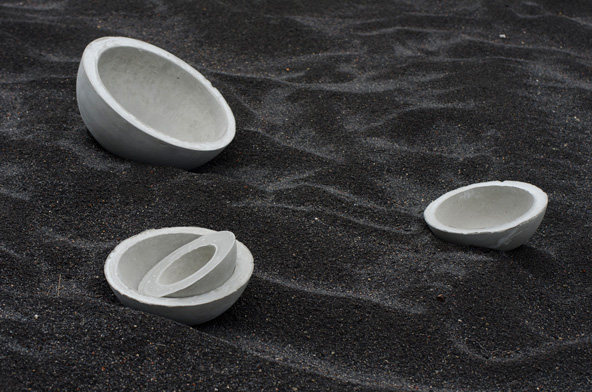
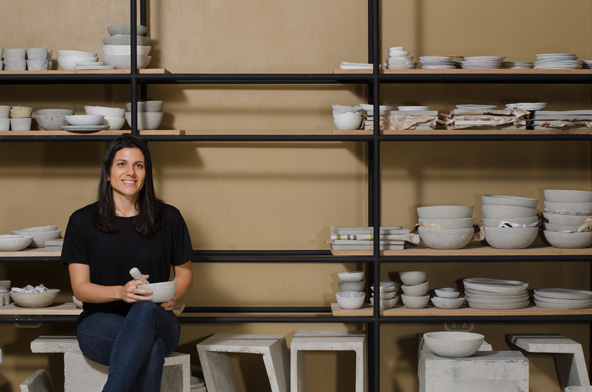
    Larisa Coto is the founder of DDomingo, a product design studio from Costa Rica creating handcrafted concrete lighting, furniture and homewares. We chatted with Larisa about her background, the inspiration behind her designs and why she decided to work with concrete.

    www.facebook.com/DDomingocr

    Photos by Gregory James

    future-positive-ddomingo-1-low

    Could you please tell us a little bit about your background and education?

    I’m an architect based in Costa Rica and I’m the founder of DDomingo (Handcrafted concrete products, lighting and furniture). Design in general is something I am passionate about since I was 12 years old. I studied architecture in Costa Rica and in Buenos Aires, Argentina and in 2 months, I will have my master’s degree (Architecture and Environment) from Wismar University in Germany.

    future-positive-ddomingo-3-low

    What made you start your own business?

    Firstly, my parents’ influence, definitely. My parents built their own businesses when I was growing up. Secondly, working in several architecture studios gave me lots of experience and knowledge in different areas of design. By having the opportunity of working in different cities, I was able to make contacts and was lucky to be reached by them. At that point, I decided that it was a good moment to start my own studio.

    Why did you decide to work with concrete and not another material?

    Concrete is a strong material but sensitive at the same time. You can have infinity of finishes on a concrete piece – different textures, colours and shapes. The surprise factor is one of my favourite things about this material – you never know how it’s going to look like until you demould it.

    I have noticed that people are surprised to see this material used in product design, mainly in smaller pieces. People always touch it and feel attracted to the surface.

    future-positive-ddomingo-2-low

    What is the inspiration behind your designs?

    My biggest inspiration is nature. I am constantly exploring and searching my surroundings for new ideas. It is very easy to be inspired living in a tropical country like Costa Rica. Patterns, textures, organic shapes and colour palettes are my main focus when I am looking for some inspiration and creativity.

    future-positive-ddomingo-4-low

    You design from furniture to homeware, is there any type of product you’d like to experiment with?

    Lighting/lamps is something I have been working on. Incorporating light into a product is something that has become an experiment. Light reveals textures, colour, shapes and transforms spaces. Also, I have been working with some other colleagues, exploring art and fashion. We are preparing 3 new collections for the coming year, combining concrete with new materials and concepts.

  • The Grapevine

    The Grapevine

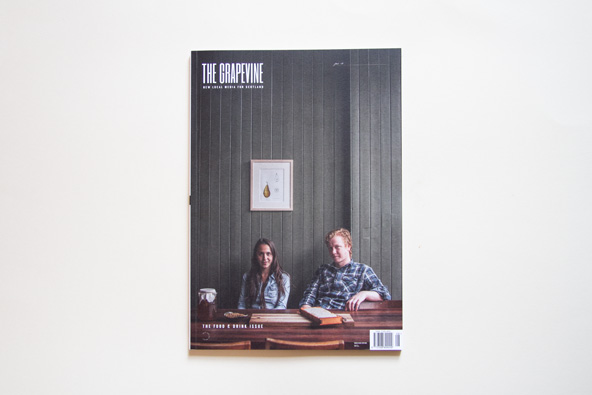
    The Grapevine is a bi-monthly magazine set out to bring Scottish communities into sharper focus. After a redesign and a new launch, the publication is now available throughout Scotland with the objective of offering something unique and different to what’s currently available in Scottish newsstands.

    We caught up with The Grapevine’s editor, Alexander MacLeod, to find out about what made him start his own publication and what readers can find in this new issue.

    www.grapevine.scot

    future-positive-the-grapevine-1

    Please tell us about why you decided to start The Grapevine.

    I’ve always enjoyed a diverse media diet. Growing up in the Highlands, Monocle and the FT were important ways to gain new perspectives from beyond my home patch – they were publications with purpose. With the Grapevine, I wanted to try and take that kind of ethos – sharp editorial, insightful writing, commissioned photography – and apply that in a localised setting. With no money but a band of brave advertisers, we released issue 001 as a free title on toilet-paper thin newsprint in the Highlands. It was a big risk, but our audience continue to prove us right.

    future-positive-the-grapevine-2

    How has The Grapevine changed from the first issue to issue 10?

    The title has gone through many iterations. I don’t believe in standing still. As our base has grown we’ve invest more time and money in content, paper, and distribution. The magazine is now released on beautiful paper, and is distributed across Scotland.

    Through all these changes, though, our driving ethos has remained constant: to bring innovators and change makers into focus, and shine a light on our communities.

    For this issue, you’ve redesigned the magazine – what were the main factors behind this?

    I wanted the magazine to reflect the quality of the content we were producing. Newsprint was great for a time, but we needed to be working in a better format. The redesign is a response to this, and means our photography and content – which has always been our biggest expense – now has a home to show it off as best as it can.

    future-positive-the-grapevine-3

    What is The Grapevine offering that you won’t be able to find in other similar publications?

    There’s been a huge flourishing of new titles in Scotland, which I think is in direct response to a traditionally stale, standard media landscape. I don’t see a title on the newsstand which is doing what The grapevine is doing, but I hope that changes. A rising tide lifts all boats, and we need more quality publishing in Scotland. Hot Rum Cow and Vanguards magazine are two good examples of ambition for print.

    future-positive-the-grapevine-4

    Could you give us a little preview about what readers can find in the next issue?

    Our next issue centres on crafty entrepreneurs – makers and artists who are defining what and how we buy. The issue ties into a fabulous winter gift guide, along with all our regular content. We also have an exclusive partnership with Scotland’s most celebrated painter and one of our most innovative fine art photographers which I can’t wait to share…but you’ll have to wait for that one!


    Save

    Save

    Save

  • Freytag Anderson

    Freytag Anderson

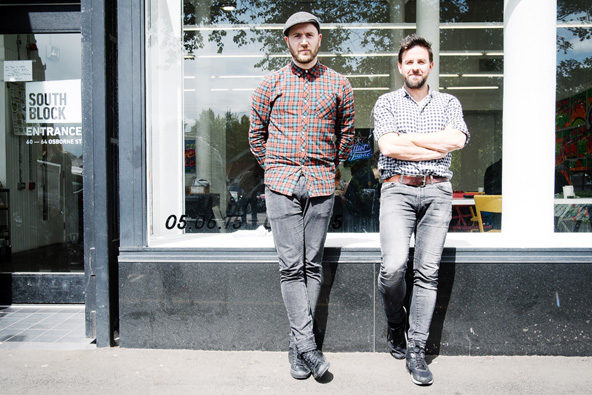
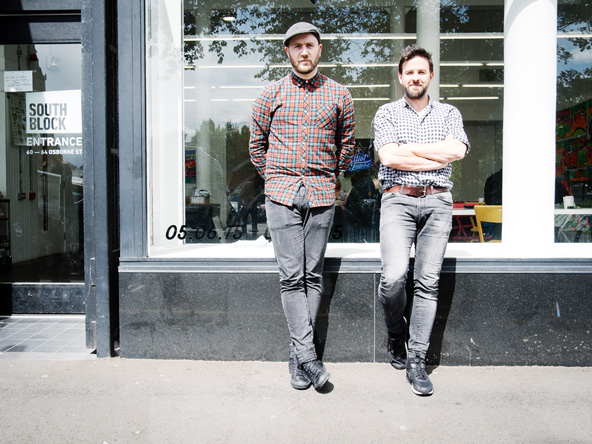
    Founded by Daniel Freytag and Greig Anderson, Freytag Anderson is a design studio based in Glasgow and working with people all over the world. Our contributor Morgane Bigault visited their studio and chatted with Daniel and Greig about how they started their company, the influence of their workspace in their work and where they draw inspiration from.

    www.freytaganderson.com

    Photographs & interview by Morgane Bigault.

    future-positive-freytag-anderson-6-low

    Could you tell us about your backgrounds?

    Daniel Freytag: I’m a designer, photographer and serial idealist. I’m creative director and co-founder at Freytag Anderson, an award-winning branding and design studio. My work as a designer has taken me all over the world – allowing me to see some interesting things and meet some great people along the way.

    When I’m not designing I work on other creative ventures such as curating Editions of 100 (an online print store by a global community of designers), setting up a children’s app business with my wife (junoberry.com) or most recently, working on a publishing concept, for customized children’s books.

    I grew up in the small village of Bühlertal on the edge of the Schwarzwald in Germany. Since then, I’ve lived and worked in Dubai, New York, Sydney, Seoul and London. I recently moved back to Scotland where I now live with my family on the West Coast regularly dipping back into the big smoke!

    Greig Anderson: I’m creative director and co-founder of Freytag Anderson, originally from Aberdeen, and educated in Glasgow. I’m a brand and design professional with over 11 years’ experience working locally and internationally with a wide variety of clients.

    My main interest lies in brand creation and visual identity systems and my work has seen me gain experience across a variety of studio environments in both Glasgow and Sydney, from boutique brand studios to multi-disciplinary agencies and experiential environment practices. This variety has allowed me to work across a diverse range of projects from the launch materials of Virgin Mobile Australia, global digital campaigns for Dell EMEA/Latin America to branding and launching a variety of new-to-market whisky, vodka and beer products.

    Alongside my commercial work I also write about design for leading industry blog FormFiftyFive and I am involved in the design debate through social media. I have an obsession with Instagram and anything with two wheels and pedals.

    future-positive-freytag-anderson-5-low

    How did your career as a duo came up?

    We both spent time living and working in Sydney (but not at the same time) and made some mutual friends. When we got back to Glasgow we met up and shared studio space. We found we had a common design aesthetic/process, so it made sense to start working together on a few projects. Out of this came Freytag Anderson – it was really pretty straightforward – the hardest thing was coming up with the studio name – that took months!

    Was it hard to find clients at first?

    Because we had both come from running our own independent studios (Berg/Effektive), we already had a good online profile and several clients. This made things a lot easier as we had a substantial body of work to promote the new studio, allowing us to hit the ground running. Overall the transition to Freytag Anderson was pretty quick – we found working with two heads much more productive and satisfying.

    future-positive-freytag-anderson-2-low

    When did you move in to your studio and why did you choose this location?

    Our first studio was tiny – literally a shoebox. We were therefore very keen to work in a larger space. This would also allow us to create a shared working environment where we could collaborate with other designers and friends. This was a crucial part of our business strategy – we didn’t want the stress of employing people full-time but equally understood the benefits from working with other like-minded individuals.

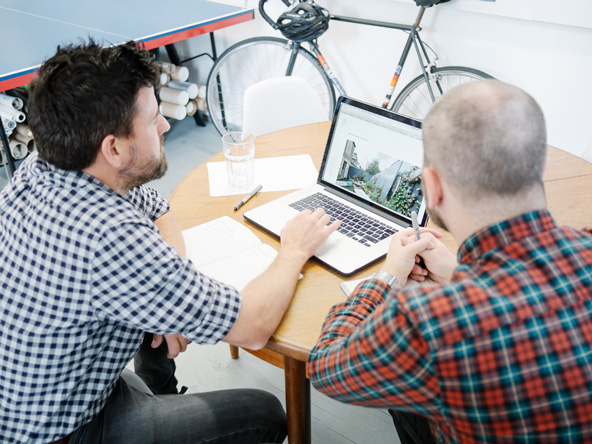
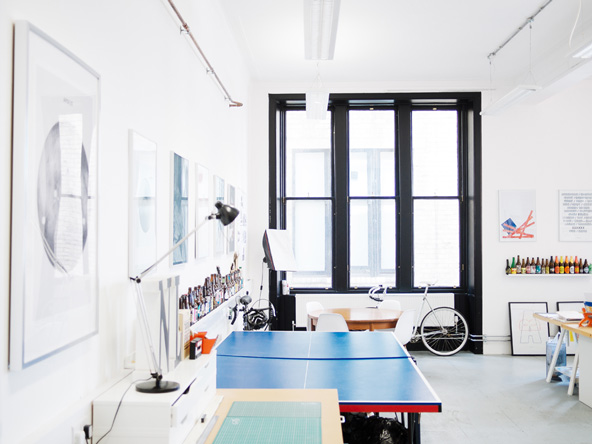
    At the time the Southblock building was a new creative space in the city centre. Run by WASPS, the building caters for commercial creative businesses and art-based practices. It was perfect for our needs and aspirations as a studio. There are also many other studios in the building, which gives the place a real creative buzz, something we find inspiring and exciting.

    Does the workspace influence your creativity?

    Absolutely – creativity is all about doing new things, going out on a limb and experimenting. Having the right workspace is critical to this – but more importantly, you need to surround yourself with the right people. People that inspire you.

    future-positive-freytag-anderson-1-low

    What does Glasgow mean to you? What are your favourite places in this city?

    Glasgow is a vibrant, energetic city. It’s a hard, funny, honest place where folk aren’t afraid to speak their minds. When I think of Glasgow I think of the old adage “A hard life makes for quality”. It’s a great place to be a creative person; it keeps you on your toes and allows you the freedom to explore.

    In terms of favourite places, although a relatively small city, Glasgow is very diverse – leafy West-End with its bohemian vibe, universities, cafés, galleries and bars – Ashton Lane is a definite favourite down there. The Merchant City to the east of the city centre (where our studio is based) is fast becoming a creative hub for all things art and design. Great coffee shops, bars, shops and galleries add to the creative vibe and encourage a lot of pop-up events and festivals in the area. It feels like there is something happening and it’s great to be part of it.

    You do client work. Could you give us an insight into how you approach each particular client, as they are very different, going from a wine company to an art gallery?

    Our design process is all about getting to know people and their businesses. People are at the heart of design. As designers we understand people, communicate with them, and create for them. It’s the best thing about being a designer.

    We like our clients, often becoming friends beyond the project. Getting to know them well is crucial as ultimately our design thinking and executions need to speak for them, whether it’s a logo, product or website.

    We work with people all over the world doing all sorts of things. I can’t think of another industry where you’re learning about craft beer one week and the next you’re into server systems and data management. For us it’s this variety that keeps things fresh and interesting. It’s learning about new things that gets us out of bed in the morning.

    future-positive-freytag-anderson-3-low

    You have been awarded Scottish Design Agency of The Year. What is the project you are the most proud of?

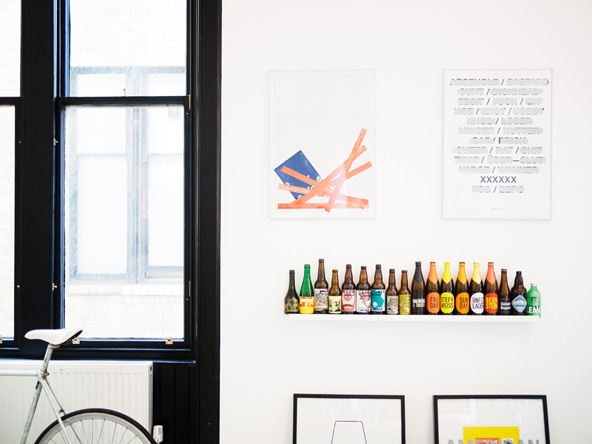
    That’s hard to say. We’re proud of all of our projects in different ways. I’d say the work we did with Fyne Ales Craft Brewery stands out. It was a collaborative project with our studio mate Matt Burns where we were asked to design a beer label for their limited editions beer, 48 Miles Later. What made it a great project is that we saw the brewing process from start to finish: meeting the brewers, brewing the beer and ultimately seeing the bottles in the pub. The project was also recognized by the industry and awarded both Best Packaging as well as the prestigious Chairman’s Award at the Scottish Design Awards.

    You describe your work process as listening, questioning, exploring and researching. Where do you draw your inspiration from?

    Our inspiration and ideas come from experiences, from the world around us, from the things we see and people we meet. As designers we watch, listen and observe – we’re compulsive hoarders of interesting things. The more we experience, the more we accumulate, thereby creating a rich visual vocabulary. The better the vocabulary the better the ideas.

    future-positive-freytag-anderson-4-low

    What would you say is the Freytag Anderson signature?

    I guess we try to keep things simple. Whether that’s running the project or creating the work. We believe in reducing any design work to the essential elements, stripping out the superfluous. As Dieter Rams says: “Good design is as little design as possible.” We think simple is good.

    What is your next big goal?

    We don’t really have one. We want to continue to develop our studio and the work that we produce. We are excited by new challenges and experiences and every day can be different. We feel lucky to be able to run our own studio and work directly with our clients. Ultimately, we want to continue to do good work and get paid (well) for it.

    future-positive-freytag-anderson-7-low

    Save

  • Vanguards Magazine

    Vanguards Magazine

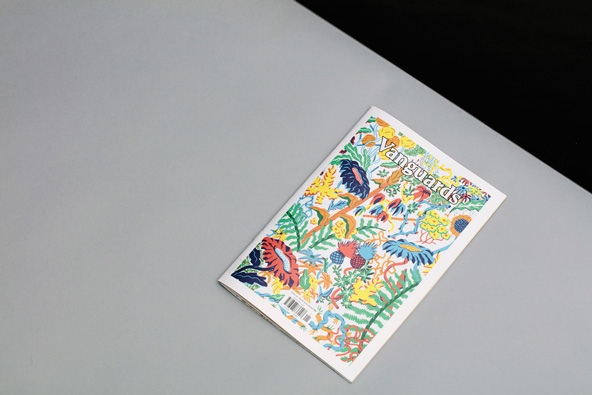
    Founded by James Roberts and Hugo Ross, Vanguards is a new magazine exploring and celebrating Scotland’s rich and diverse design and manufacturing tradition. We visited James and Hugo at the magazine’s studio just before the first issue was launched and we chatted about what made them start their own publication, what makes Vanguards different from the rest of independent magazines and their plans for the next issue.

    www.vanguardsmagazine.com

    Magazine photos by Peter Dibdin.

    Future-Positive-Vanguards-1-Low

    How did you meet and how did you decide to start a magazine?

    We met at Edinburgh University – day one of first year. We’ve both just managed to finish a 5 year degree in Fine Art but have developed passions in design, fashion and manufacturing.

    In the winter of 2014 we visited Laurence Odie, a Shetland knitwear manufacturer, and learnt about his incredible products and his factory’s incredible history. We wanted to tell his story, and educate people like ourselves, interested in quality clothing and fashion. We wanted to demonstrate how much of a significant player in the knitwear industry he is. Laurence promised us that there were far more untold and equally interesting stories out there in Scotland. Vanguards magazine is the culmination of a number of these stories, celebrating honest, thoughtful and quality brands.

    Future-Positive-Vanguards-4-Low

    Why did you decide to focus on Scotland’s design and manufacturing tradition as the topic for the magazine?

    Our passion and interest will forever revolve around design and manufacture – sharing that common interest in the first year of university, is the reason we became friends. Vanguards is most definitely a product of its circumstance – that fact that we are studying in Edinburgh, has everything to do with the magazine’s focus on Scotland. We are just incredibly lucky that Scotland has such a rich history and has an abundance of stories, brands and individuals to celebrate.

    Future-Positive-Vanguards-2-Low

    Could you take us through the different features readers can find in the first issue?

    There’s a great mixture of stuff in issue 1, from classic Scottish brand, Mackintosh, to an article on Loch Duart, a salmon fish farm on the north coast. We wanted to stretch the terms design and manufacturing as much as we could. So design can mean the work of textile designer, Bernat Klein (whose daughter is interviewed in the first issue), or it can mean the design of one of Black Isle Brewery’s organic beers. We also choose the word manufacturing to mean both the small scale, like Trakke’s bags, to the larger scale like Mackintosh’s raincoats. All the stories celebrate the brands and their products, whilst also using that as starting point to discuss issues like unsustainable manufacturing, or why we don’t buy into our own amazing knitwear, like Laurence Odie’s!

    Future-Positive-Vanguards-5-Low

    What makes Vanguards different to other independent publications?

    For a long time we were trying to identify our opportunity within the niche creative independent magazine market – although it is something we are realistically still working on – we strive for our features to be well rounded for our readers, and perhaps offer some meaning, instead of just offering well curated aesthetic photographs. We also think that our focus on one country over a prolonged period of time (instead of just one issue) sets us apart from other travel magazines. We really want to get to understand Scotland and share that with our readers.

    Future-Positive-Vanguards-3-Low

    You’ve just graduated from Edinburgh College of Art, what’s next? Are there any plans for issue #2 that you can share?

    We’ve been building Vanguards for the past 18 months, there are definitely enough features and stories out there for a second, third and even fourth issue. It is our ultimate desire to keep the dream going! Issue 2 is being discussed and we’re hopeful for its release in December. We’ll keep pushing the writing and the visuals, and have some really amazing brands we want to feature.

    We also want to collaborate more with the brands we feature to make limited edition products. To go with issue 1, we’ve produced a line of jumpers with Laurence Odie which really are the best jumpers we’ve worn!

    Future-Positive-Vanguards-6-Low

    Save