Author: Igor

  • Radio Cascabel

    Radio Cascabel

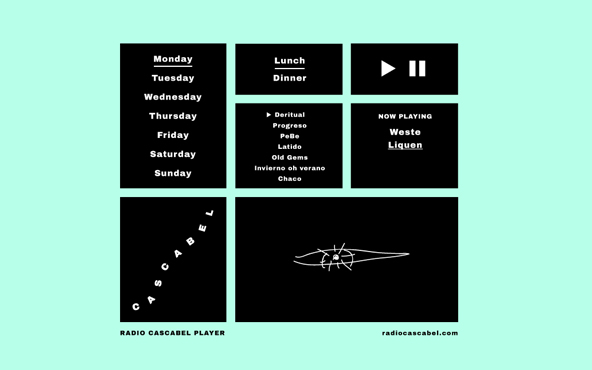
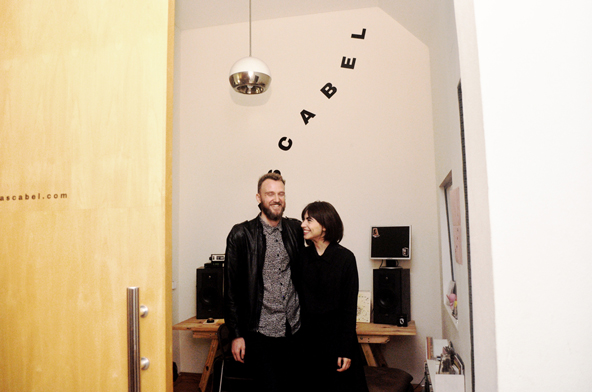
    Radio Cascabel is a musical and visual project started by Argentines Estefi Panizza and Diego Jalfen. Curating the most exciting Latin American sounds, Radio Cascabel offers playlists, sound design, live DJ sets and other musical and visual services. We talked to its two founders to find out more about how this project started, their recent move to London and the Latin American bands we should be listening to right now.
    www.radiocascabel.com

    Future-Positive-Radio-Cascabel-2

    How did you meet and how did Radio Cascabel start?

    We met on a night out when we both went to see a cool DJ play at a bar in Buenos Aires. It was love at first sight 🙂

    Diego worked for a big radio station in Buenos Aires and in advertisement. I, Stefi, was working as a psychologist and was also starting to show my work as a photographer.

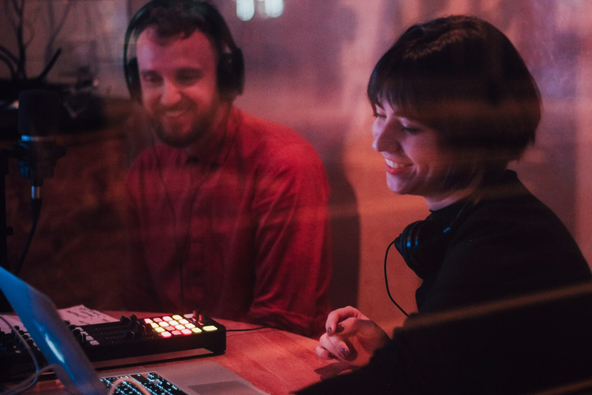
    Spring of 2013 marks an inflection point for us. The idea and concept behind Cascabel was born when we were living in Barcelona. We were at a party and we took a microphone which was on the stage, and started dancing and singing over the music. Everyone at the party was very excited and the day after that, our musical project started.
    Future-Positive-Radio-Cascabel-1

    Tell us a little bit about all the different things you do with Radio Cascabel.

    Have you ever imagined a platform that curates emerging Latin-American music and visual art? A Radio that spreads local sounds with a global spirit and timeless sounds? A radio that could provide a space for experimental music? These questions inspire us to keep on developing our project.

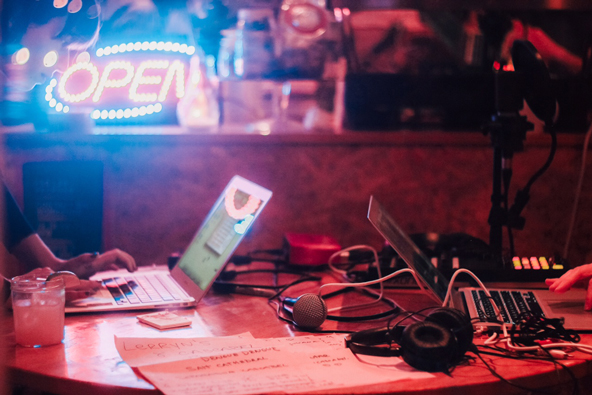
    We search for new sounds and emerging visual artists all around Latin America. We develop an archive of the new, undiscovered and the impossible. We schedule all this music and broadcast a fresh streaming where new stuff can be listened to and artworks that have no place in traditional broadcasting can be enjoyed.

    Cascabel is our world – the way we live, think and feel. It is also a lab for music experimentation.

    You’ve recently moved to London to open a second office. What made you expand to the UK?

    We wanted to have the opportunity to show all the new Latin American music we work with and to experience living in another country. London is a really musical city and it’s giving us the chance to connect countries, people, and languages through music. We’d like to change some stereotypical ideas of the music of our region. We love to offer an unexpected selection of music where listeners can discover new sounds.
    Future-Positive-Radio-Cascabel-3

    What Latin American musicians should we be listening to right now?

    We recommend all the artists we broadcast in Radio Cascabel. This is just a small selection: Bahía Inútil (Chile), Lucrecia Dalt (Colombia), Little Jesus (Mexico), Candelaria Zamar (Argentina), Nicolas Melmann (Argentina), Salt Cathedral (Colombia), Sobrenadar (Argentina) and Helado Negro (Ecuador/US).
    Future-Positive-Radio-Cascabel-4

    What are your plans for the upcoming months?

    We’re starting a monthly show on NTS Radio with some of the best tracks from our selection. Also, some others radio stations have shown interest in having the most exciting sounds from Latin American and the Southern Cone. We are so happy to find Londoners interested in our curated music playlists.

    We also expect to increase our own audience on Radiocascabel.com and visit some friends in Ibiza and Madrid for New Year’s Eve.
  • Brothers We Stand

    Brothers We Stand

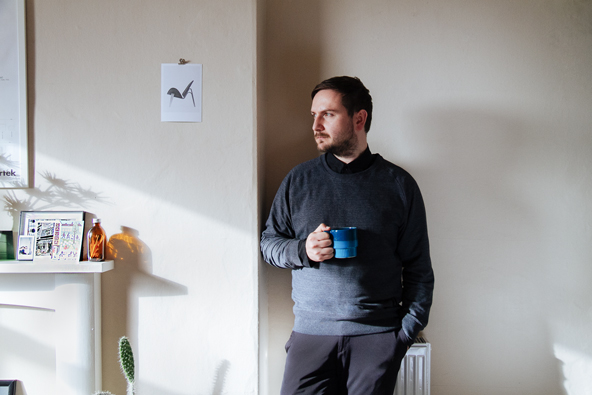
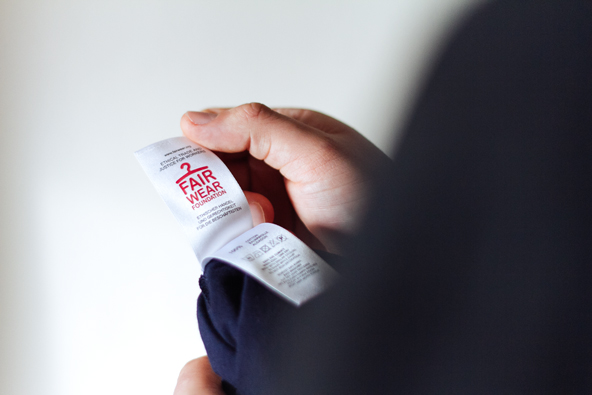
    Founded by Jonathan Mitchell, Brothers We Stand is a new online retailer selling ethical menswear. Conceived as an alternative for the customer dissatisfied with fast fashion and its questionable practices, every product on the website features a footprint tab providing information on its social and environmental impact. Brothers We Stand stocks a stylish and sustainable range of products from its own brand and other like-minded labels.

    We tried on some of its pieces and spoke with Jonathan about what made him start Brothers We Stand, working with friends and his future plans.

    www.brotherswestand.com

    Future-Positive-Brothers-We-Stand-7

    What made you start Brothers We Stand?

    I noticed that there was a growing number of menswear designers working to sustainable standards but that they were often hard to find. So I had the idea that it would be cool to bring them together. That’s it really!

    Our aim is to provide a solution that allows style loving people to build a wardrobe made up of stylish and sustainably made menswear.

    Future-Positive-Brothers-We-Stand-5

    Future-Positive-Brothers-We-Stand-6

    What’s the main criteria for a brand to be stocked at Brothers We Stand?

    For us the product comes first, it’s got to be a great product. We search out pieces that are aesthetically pleasing, created to last and ethically and sustainably made.

    Every product on the site has a different story but all have something about their manufacture that sets them apart from the norm. It could be that they are made from recycled materials, that they are made in a wind-powered factory or perhaps that they are hand-made in London.

    Future-Positive-Brothers-We-Stand-1
    The Level Collective t-shirt

    Future-Positive-Brothers-We-Stand-2
    The Level Collective t-shirt

    Please tell us a little more about the different brands you stock at Brothers We Stand.

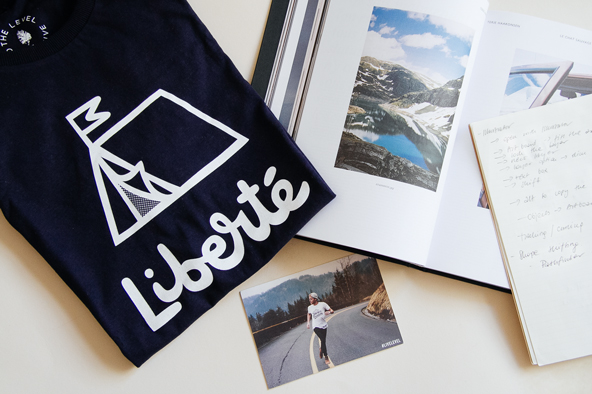
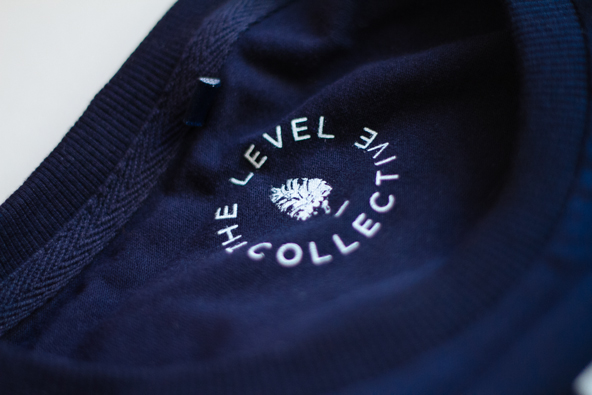
    Seeing as you’re repping a Level Collective tee, let me tell you a bit more of them! Mark Musgrave is the creative head behind the brand and he collaborates with emerging illustrators to co-create prints for his bamboo and cotton tees and sweats. Mark’s designs are inspired by his personal love of the great outdoors and I love the gentle simplicity to his work. The garments are good quality and his bamboo tees are some of the softest t-shirts we’ve come across.

    Elvis and Kresse are another brand and provide a good example of the diversity of materials the brands we work with use. They make phone cases, wallets and bags from upcycled fire hose and military parachute silk. Kresse’s had a fascination with waste since childhood and their story began when Kresse and her partner James met some people from the fire brigade and were invited to come and view their waste. They were brought to a ‘fire hose landfill’ where hoses which can survive for up to 25 years of active service are scrapped when they are too damaged to repair. Kresse says she fell in love with the ‘rich, lustrous coils of red.’!

    James is a skilled craftsman and together they began experimenting with the hoses and started to make bags and wallets. Due to the hard exterior of the material it is hard to work with but they found the effort to be worthwhile and the resulting products highly durable. The couple have now been working with the material for ten years and perfectionism doesn’t even come close to describing how they’re constantly refining their products. Elvis spent an incredible five years perfecting a billfold wallet which apparently he still thinks can be improved further! Their pieces are beautiful and have a narrative to them that’s unrivalled due to the history of the fire hose.

    These are just two examples but all the brands we work with have inspiring stories and it’s a privilege to work with them and sell their products.

    Future-Positive-Brothers-We-Stand-4
    Brothers We Stand sweatshirt

    Future-Positive-Brothers-We-Stand-3

    You’ve built Brothers We Stand alongside a group of friends, can you tell us more about them?

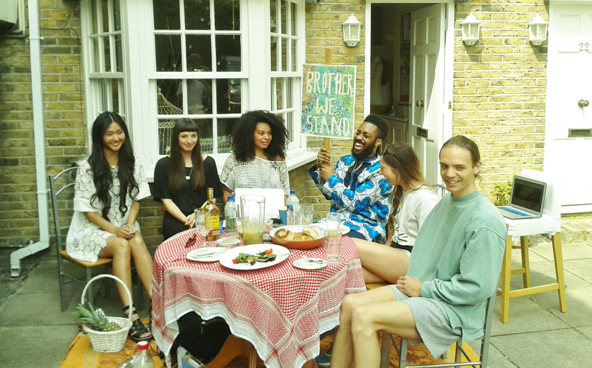
    Brothers We Stand has got to where it is today thanks to the hard work and talents of a lot of people! Whilst I was planning the business I was working as a waiter with an agency which meant I met a lot of new people. One of the guys I got to know was Alex, a Romanian computer science student, and he ended up helping out with some of the coding I needed doing for the website. Luca Iiriti was the housemate of another waiter friend and he designed our pre-launch material which was crucial in getting the first brands on board. Then Gary, a long-time friend, designed our logo. Gary’s gone on to be a huge support and many a day I’ll interrupt his work at Sparks Studio asking him if he can help out with this or that!

    Since we launched, Delia has organised brilliant parties, Rachel has taken really strong photos, Ashley has super charged our Twitter and Lisa has stitched labels for our own brand collection. Alex has repped us at parties and events and Jack has written copy (and is just about to start a fortnightly Brothers We Stand newsletter which I’m really excited about).

    There are many others who have contributed and continue to do so and Brothers We Stand is the product of a lot of people’s imagination, insights and hard work. We hope that the end result is something that people love and can take as much enjoyment of being part of as we do.

    Future-Positive-Brothers-We-Stand-8

    What are Brothers We Stand’s future plans?

    Our aim at Brothers We Stand is to provide a brilliant service that helps people build sustainable and ethical wardrobes. We just want to continue taking that forward and seek to continuously improve our service.

    We’re also keen to work on interesting creative projects to show what a sustainable and ethical future for the fashion industry can look like. We’ve got a project in the works now and it’s set for launch March/April 2016 so watch this space!

    Visit Brothers We Stand.

  • The City Works

    The City Works

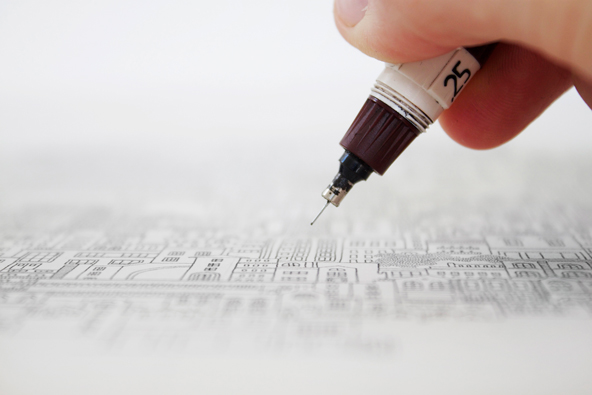
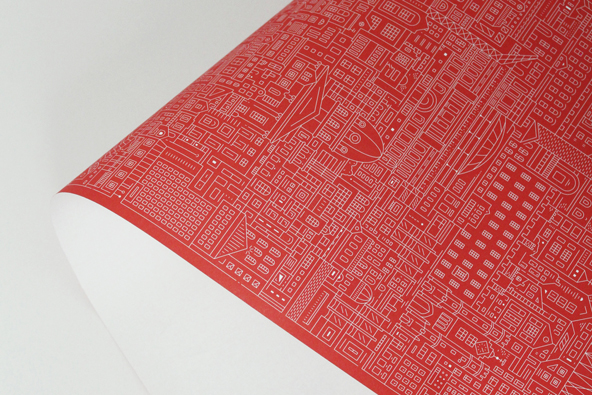
    Founded in 2015 by Sylvia Moritz and Rowan Ottesen, The City Works is an urban-themed brand of stationery, gifts and souvenirs. Paying incredible attention to detail, Sylvia and Rowan create meticulous illustrations that tell the stories behind the cities they use for inspiration, providing unique designs in which you can get lost for hours.

    We spoke to Rowan about the beginnings of The City Works, their design process and future plans.

    www.the-city-works.com

    Future-Positive-The-City-Works-3

    What made you start The City Works? Could you tell us a little bit about your backgrounds?

    Both myself and Sylvia Moritz studied design at Camberwell College of Arts. After graduating, we worked in a few design agencies while Sylvia grew a career in printmaking, featuring complex cityscapes.

    We founded The City Works together with the simple principal to draw the world. We wanted to combine the unique intricacy of Sylvia’s ‘citysphere’ prints with our love for travel and our obsession with paper, to make more affordable merchandise that anyone who loves cities could enjoy.

    Future-Positive-The-City-Works-6

    Why did you decide to focus on an urban theme for all your products?

    Cities are obviously fascinating places, that grow and evolve over time. They’re immensely diverse and complicated, populated by millions of people who each have their own story and reason for being where they are.

    We think there is a charming complexity to cities, and it’s frustrating for many souvenirs to focus on the typical skyline of famous landmarks. No city is complete without it’s people. When observed from afar, every city is a beautiful, unique living fabric.

    Future-Positive-The-City-Works-1

    Your illustrations are full of intricate details. Please tell us about the inspiration behind them and the process you follow to create them.

    Of course the intricacy lies in the fact that, no matter how many times you walk down a street, you can always see something new. Be it a person, a vehicle, a piece of graffiti, a strange colour combination, or a lost architectural style. The city is a massive collection of details, little inspirations that many people may miss as they walk down the high street on their phone.

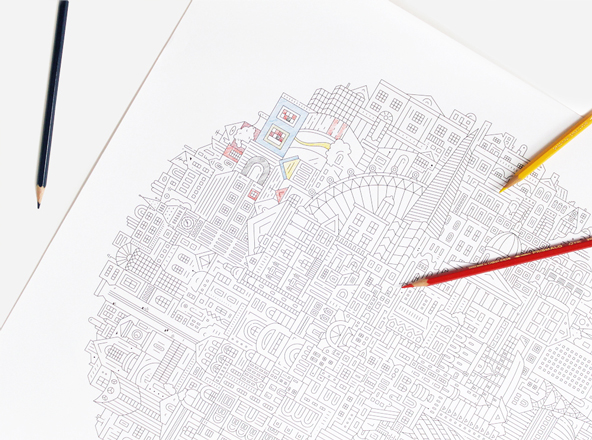
    To create our designs a vast body of research is needed to inform what are essentially hand-drawings. There is something about drawing the designs by hand before digitally rendering them that adds a necessary human character.

    Future-Positive-The-City-Works-2
    Future-Positive-The-City-Works-5

    An important element of your products is that they combine traditional and contemporary production methods. Could you tell us a little more about this?

    We describe ourselves partly as a contemporary souvenirs brand. We feel that giving our products a sense of place. where possible, makes them more meaningful, especially as personal mementos for yourself or loved one.

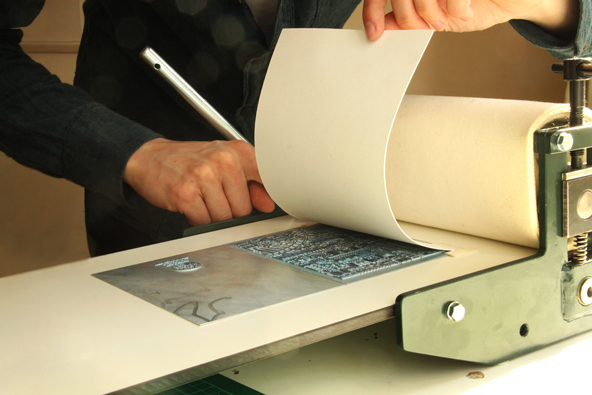
    As lovely and nostalgic as traditional methods are, it’s sometime impractical, so we have suppliers with the technology to produce our digital and lithographic prints, as well as the white ink printing for our ‘A5 London Notebooks’.

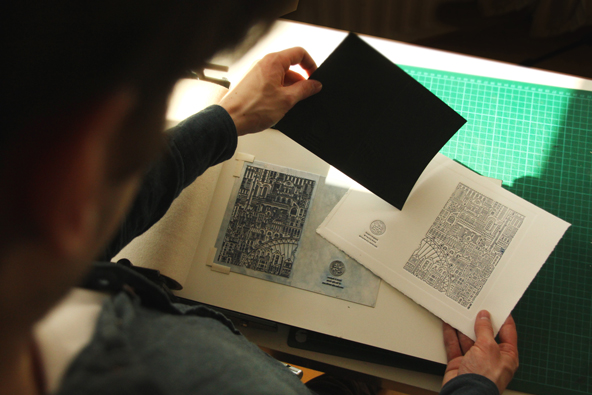
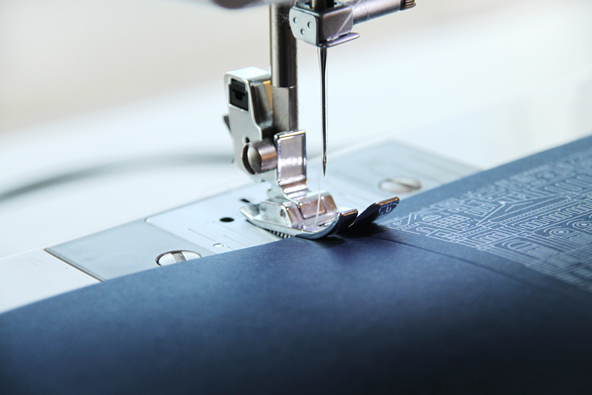
    Sylvia’s background and knowledge of printmaking means we still enjoy the rewarding side of making things ourselves. Every greetings card we make is individually hand-printed in house, the covers for our ‘Debossed Minibooks’ are hand-pressed with a mangle, and our notebooks are hand-sewn and trimmed.

    It’s a labour of love that we would love to do forever. As The City Works moves from city to city the level of quality and attention to detail in everything we do will always be a priority.

    Future-Positive-The-City-Works-7

    London, Vienna, Bethlehem…where’s next?

    There’s endless possibilities but we haven’t settled on one. It’s important to us that places we depict aren’t always mainstream tourist destinations. There are incredible parts of the world that maybe don’t get the attention they deserve, but maybe that’s they way it’s meant to be.

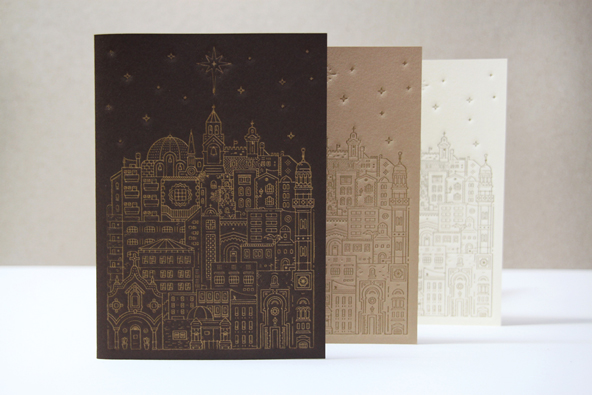
    Right now our focus is developing new ideas and expanding and establishing our ‘Lost in London’ and ‘Free in Vienna’ collections in their respective cities, while making ‘Bethlehem’ available for the busy Christmas period.

    We have been approached a couple of times about the possibility of Scottish cities, and with so much history, Scotland will be a place we study eventually. Bath is also a stunning place that we’ve been meaning to draw for a while. It’s a favourite of ours because it’s a world heritage site with an interesting colour palette. Just like any new collection, we want to try to take our time and do every city justice.

    When we feel our company has grown to a certain point, we’d like to open up the location of our future collections to our customers, and allow them to vote for a place that they wanted to see ‘cityworked’. After all, they live there.

    Future-Positive-The-City-Works-4
    All photos courtesy of The City Works.

  • Aviation and Sustainability – a Future in the Balance?

    The global climate crisis has been a public issue for some time, but its continued impacts on biomes and international communities have rendered it an all-the-more pressing concern in recent years. There are numerous major contributors to greenhouse emissions, from construction and building to agriculture and manufacture – but much of the weight is also borne by travel and transport.

    In the UK, the push against fossil fuels has been growing in profile. Private and public transport alike are considerable contributors to emissions, with the government taking measures to mitigate the impact of personal vehicles on national carbon emissions. But much scrutiny is also placed on the aviation industry, which is responsible for 2.5% of global emissions and the largest carbon footprint per passenger. 

    Change is necessary to ensure that aviation businesses can continue to thrive in a new, sustainable world. But what changes are being made to introduce sustainability to the aviation industry?

    Aviation and Environmental Impacts

    First, it is important to understand the extent to which aviation impacts the environment. The UK Civil Aviation Authority has identified three key environmental impacts influenced by the aviation industry: climate change; noise; and air quality.

    Climate change is the leading issue when it comes to aviation and pollution, and the driving force behind prospective changes to aviation and operation. As illustrated above, aviation globally is responsible for a significant volume of carbon emissions annually, thanks to the high fuel cost of a flight.

    Noise is a by-product of aviation and something that has impacted local communities for decades. Councils and aviation authorities alike have been in conversation with residents beneath flight paths over noise concerns. Air quality is also something that has impacted communities local to airports and flight paths, as fumes and fuel by-products threaten personal health and the equilibrium of local ecosystems.

    Addressing the Issue

    Addressing the impacts of the aviation industry is not a simple task. Many pressure groups and sustainability charities call for reductions in reliance on air travel and private transport – something which can have disastrous consequences for jobs and commerce. Instead, the issue is something that must be addressed directly – through litigation and independent industry problem-solving.

    Private jet provider Vista Global is leading the charge on this front with its transparent and equitable approach to mitigating its own impact on the global climate. A recent press release by the private aviation service examined and addressed some of the routes forward for the industry. Such actions include maximising fleet optimization, subsequentially reducing fuel consumption by 8% whilst also including the wholesale adoption of emissions audits and investment in carbon neutrality. 

    Creating a Carbon-Neutral Industry

    Vista Global’s recommendations are wide-ranging, from upheavals to reporting on emissions to the adoption of new fuels entirely. While sustainable air fuel is some way from mainstream availability, collective investment can ensure its continued research and development – while existing emissions can be offset through investment in carbon capture technology.

  • Things to Do in Hanoi

    Hanoi, the bustling capital of Vietnam, is a fascinating city to explore. It’s a place where you can experience authentic Vietnamese culture, home to ancient imperial citadels, stunning temples, and vibrant local markets. 

    Here are the top things to do in Hanoi.

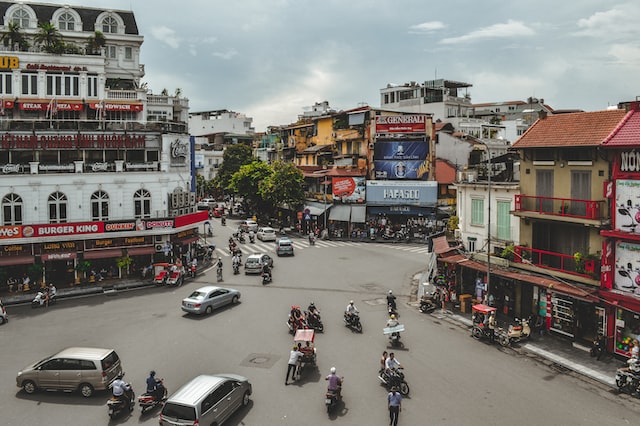
    Image via Unsplash

    Explore the Lakes


    Hanoi’s unique topography, which lies by the Red River Delta, has given rise to numerous beautiful lakes, offering a tranquil respite from the hustle and bustle of the city. Of these lakes, Hoan Kiem Lake is the most popular. It’s the central feature of Hanoi and a popular tourist destination in Vietnam. In the middle of the lake lies the Ngoc Son Temple, also called the Temple of the Jade Mountain.

    Hoan Kiem Lake comes alive around sunrise and sunset when tourists and locals relax by the lakeside while enjoying the views. You will also find joggers and some elderly practising tai chi.

    Eat Amazing Street Food


    Hanoi is the best place to visit if you want to spend your days indulging in delicious Vietnamese cuisine. Here, you’ll find bustling streets lined with street food stalls selling every possible Vietnamese food you can think of – from flavourful pho to delectable spring rolls. In fact, it’s impossible to walk a street in Hanoi without smelling the rich aroma of Vietnamese dishes from street food stalls.

    The best way to cap off your meal is with a glass of egg coffee, a typical Hanoian drink traditionally prepared with Robusta coffee, egg yolks, and condensed milk.

    Walk Around the Old Quarter


    There are several ways to travel Vietnam with luxury, but seeing the Old Quarter is one of the most popular. It’s a bustling area with narrow streets lined with colonial-style buildings, shops, restaurants, and cafes. The Old Quarter is an ideal place to explore if you want to experience the local Hanoian life. Just be very careful when walking around since the narrow streets are often full of tourist crowds, with packs of scooters zooming around.

    See the Temples


    Hanoi is home to numerous fascinating temples that are worth exploring. Most of them are still in use, and you’ll find many locals visiting and praying in them. Visiting these temples offers a unique insight into the local Vietnamese life. 

    The One Pillar Pagoda is one of those temples you should not miss. It’s shaped in a lotus flower, built by ruler Ly Thai Tong to celebrate the long-awaited birth of a son. The Temple of Literature is also worth a visit. It was built in 1070 for the city’s education and academics, and you’ll find it printed in the 100,000 bill of Vietnamese dong.

    Visit the National Museum of Vietnamese History


    Hanoi has many fascinating museums, but one museum you should not miss is the Museum of Vietnamese History in the French Quarter area of the city. It’s in a former school building built during the French Colonial time, with an architectural design inspired by a French villa. The museum has more than 200,000 historical pieces detailing Vietnamese history that date back to ancient times.