Category: Uncategorized

  • Are Bathtubs Hygienic? The Truth About Bacteria Build-Up

    Few places in a home feel as inviting as a warm, freshly drawn bath. Yet the very basin we rely on for ritual relaxation can also harbor an invisible crowd of microbes. Because water, soap residue, and skin cells create a petri-dish cocktail, it’s fair to ask: are bathtubs hygienic or are they secretly breeding grounds for bacteria? Understanding how contamination happens—and how to stop it—turns bath time back into the restorative moment it should be.

    Where Germs Love to Lurk

    Most of the microbes in a tub don’t float in the water; they cling to surfaces. Biofilm—a slimy matrix of bacteria and fungal spores—forms easily on porcelain or acrylic when moisture lingers. Each time someone soaks, body oils, dead skin, and shampoo residue feed that film. 

    Studies have isolated Pseudomonas, E. coli, and even Staphylococcus colonies on neglected tub walls, all of which can trigger rashes or infections in people with compromised skin. In other words, a glossy finish doesn’t mean a germ-free finish.

    Is Your Cleaning Routine Enough?

    A quick rinse after draining the bath feels responsible, but it barely disturbs entrenched biofilm. Household surveys show most people scrub their tubs only once every two to three weeks, far less often than sinks. During that lull, bacteria multiply exponentially, doubling every twenty minutes in damp crevices.

    Truly effective sanitation requires mechanical friction plus a disinfectant rated to kill 99.9 percent of common pathogens. Sprays containing hydrogen peroxide or diluted bleach, left to dwell for five minutes before rinsing, outperform perfumed cleaners that simply mask soap scum.

    Material Matters: Porcelain, Acrylic, and Enamel

    The type of bathtub you own shapes how quickly bacteria settle. Porcelain-on-steel resists staining, yet its microscopic pits trap moisture, so steady disinfection is crucial. Acrylic tubs are lighter, but their softer surface scratches easily, forming grooves that shelter microbes. 

    Vintage cast-iron enamel looks indestructible, but chips expose raw metal where rust and mildew meet. No surface is immune; instead, match cleaners to the material, using non-abrasive pads on acrylic and a mild baking-soda paste on enamel.

    Practical Steps to Keep Your Tub Clean

    Good hygiene hinges on a routine that tackles moisture, residue, and airflow. After every soak, run the showerhead along the walls to flush away soap film, then wipe surfaces dry with a microfiber cloth—water left standing is an invitation for microbial growth. 

    Once a week, sprinkle the tub with baking soda, add a splash of vinegar, and scrub in circular motions before rinsing with hot water. Don’t forget hardware: lift the drain cover, sanitize the faucet aerator, and remove the bathtub stopper to clear hair and grime that bacteria love.

    Conclusion

    A bathtub can indeed be as sanitary as your kitchen sink—provided you treat it with the same respect. By understanding where bacteria congregate and adopting a disciplined cleaning schedule, you can enjoy a safe, soothing soak whenever you need it. Ultimately, the tub’s hygiene depends less on the fixture itself and more on the habits of the bather, keeping self-care relaxing for years to come.

  • Ceramics and Pottery Painting as a Relaxing Hobby for Seniors

    For many seniors seeking a fresh outlet that fits easily into a senior apartment, ceramics and pottery painting feel like friendly invitations rather than intimidating art forms. Clay welcomes hesitant hands, glazes sparkle with possibility, and the process moves at a pace that respects limited mobility while still offering delightful challenges. 

    Because each project can be tailored to individual comfort levels, older adults discover a pastime that nurtures creativity, promotes calm, and rewards persistence—all without rushing anyone along.

    A Gentle Learning Curve

    Unlike fast-moving crafts that demand sharp eyesight or rapid reflexes, the wheel and the paintbrush adjust to the maker. Instructors guide seniors through pinch pots or simple bisque pieces before trying more advanced shapes. 

    Early successes build confidence. Classes often supply lightweight tools, so arthritic fingers feel less strain and can focus on texture. The phrase ceramics for seniors signals that technique can be adapted so that ability—not age—sets the pace.

    Creative Expression and Memory

    Stories live in every brushstroke. When seniors paint favorite garden colors onto mugs for grandchildren, long-buried memories surface alongside bright cobalt and fern green. Glaze layering mimics the rhythm of storytelling: base, detail, reveal. Studies on art engagement show that tactile activities stimulate neural pathways linked to recall, and many instructors weave reminiscence exercises into sessions. 

    A hand-built vase may spark chatter about wartime rationing, wedding bouquets, or first apartments, turning the studio into an impromptu oral-history lounge where every finished piece carries personal lore.

    Social Connection in the Studio

    Pottery rooms hum with easy conversation while wheels spin. Seniors swap tips on slip consistency, compare favorite sponge brands, and celebrate kiln surprises together. That casual camaraderie reduces feelings of isolation, especially for individuals living alone. Weekend open studios often culminate in informal show-and-tell circles where applause feels sincere and unforced. 

    Laughter over an accidental handle collapse reminds everyone that mistakes are merely design detours. Over time, these shared experiences evolve into genuine friendships extending beyond class times to coffee outings and holiday craft fairs.

    Mindful Movement and Stress Relief

    Kneading clay folds gentle exercise into creative focus, engaging wrists, forearms, and shoulders without aggressive repetition. Coordinating breath with wheel speed encourages a meditative rhythm; many participants report a drop in blood pressure after sessions. Painting bisque pieces provides a truly soothing alternative for those preferring seated activity, yet still invites fine-motor practice. 

    The concept of senior apartment hobbies often highlights puzzles or knitting; adding pottery broadens the list with an option that combines movement, color therapy, and tactile calm. The result is stress released through art rather than bottled behind polite conversation.

    Conclusion

    From the first press of pliable clay to the final glossy reveal after firing, ceramics and pottery painting offer seniors an accessible path to self-expression, gentle exercise, and new community bonds. Every mug, planter, or decorative tile becomes a quiet testament to patience, adaptability, and ongoing curiosity. In a season of life sometimes framed by limitations, this hobby proves that creativity keeps growing—one kiln load at a time.

  • How to Actually Find the Right Community for You When Moving to a New City

    So, you’re packing up, maybe tossing your last coffee mug into a box marked “kitchen stuff,” and you can already see yourself exploring a brand-new city. Exciting, right? But let’s be real—finding a community that feels like, well, yours is a whole other project. It’s personal, sometimes nerve-wracking, often messy, but absolutely worth the effort.

    Start With What Feels Good, Not What Looks Good

    There’s this weird pressure to nail down the trendiest part of town. Social feeds might have you itching for rooftop hangouts or artisan donuts on every corner, but here’s the thing: what works for someone else might not click for you at all. Before you start checking off neighborhoods, ask yourself what makes you feel at home. Is it knowing your barista by name, or having trails to run every weekend? Try writing down your “must-haves” and “nice-to-haves” before diving into late-night research rabbit holes.

    Walk the Neighborhood, Not Just Google It

    Okay, you can learn a lot by scrolling online. School districts, crime rates, even reviews on which street is the party street (hi, college towns). But honestly, nothing beats walking around. If you can manage it, take a stroll on a regular Tuesday. Is there a buzz to the place, or is it sleepy until the weekend? See who’s playing in the parks. Duck into a bakery. Don’t be afraid to get a tiny bit lost—you’ll probably find something cool that way. Bonus: You’ll get a real feel for where your potential neighbors actually spend their time, not just a glossy version someone wrote about.

    Don’t Be Shy About Reaching Out

    It’s totally normal to feel weird messaging strangers on local social groups or neighborhood apps. But here’s what I’ve learned: most folks love to share what they like about their area, and maybe warn you about the midnight train that nobody mentions in the listings. Post a quick intro, ask people about their favorite spots, or if there are block parties or trivia nights. Sometimes, you just have to put yourself out there, even if it feels a little awkward at first.

    Ask About the Community Spirit, Not Just the Amenities

    It’s easy to hunt for high-rise gyms and rooftop lounges, but honestly, you want a place where people notice if your lights are out for a week—or, depending on your style, respect your love for “hermit mode.” Great home builders can help you identify pockets where folks are actually invested in making a vibrant community, not just selling houses.

    Let Yourself Adjust Slowly

    It might sound obvious, but genuine comfort comes with time. You might not fall in love the first week. Give yourself permission to change your mind, make a few mistakes, or even admit when something just isn’t gelling. The right fit isn’t always instant, but when you find your people—and your favorite late-night taco spot—you’ll know.

    Finding your place in a new city is far more than finding four walls. It’s about finding those tiny moments, shared smiles with neighbors, and, yeah, maybe the late-night train you learn to love. Good luck, and remember: your “right” community is out there, quirks and all.


  • Commuter electric bikes Buying Guide — A Complete Breakdown from Practicality to Experience

    In today’s fast-paced cities, commuting takes longer and traffic gets worse. More and more people are turning to a new, flexible way of getting around — the electric bike. It’s not just a means of transportation, but a new way to experience city life.

    Here are answers to some of the most common questions about commuter electric bikes to help you find the one that fits you best.

    Why are more people commuting by electric bikes?

    Because it solves the “time, cost, and comfort” problem all at once.

    • Save time: Skip traffic and packed subways — for trips under 3 miles, it’s often faster than driving.
    • Save money: A full charge costs around $0.10, and your monthly commute costs less than one-tenth of a metro card.
    • Eco-friendly & healthy: Zero emissions and light exercise — good for you and the planet.

    In short: Faster, cheaper, and easier.

    What are the key factors when choosing a commuter electric bikes?

    Think of the battery and motor as the heart, the frame and weight as the skeleton, and comfort and safety as the soul.

    • Battery: Look for at least 400Wh capacity for over 20 miles of range; removable batteries are easier to charge.
    • Motor: For city riding, a 250W mid-drive or rear motor offers smooth, reliable power.
    • Weight & portability: Around 45 lbs (20 kg) is ideal; lighter bikes are easier to carry. If you use public transit, go for a folding model.
    • Safety features: Hydraulic disc brakes, front/rear lights, and reflective strips are must-haves.

    If your commute includes hills or longer distances, prioritize a mid-drive motor + large-capacity battery.

    What type of electric bikes fits city commuting best?

    That depends on your daily route:

    • Short, flat rides: Go for a lightweight or folding electric bikes.
    • Mid- to long-distance (6–12 miles): Choose one with at least 50-mile range and a mid-drive motor.
    • Mixed commute (bike + subway): Folding bikes under 4 ft (1.2 m) in length are best.
    • Carrying cargo: Pick a commuter model with a rear rack and removable battery.

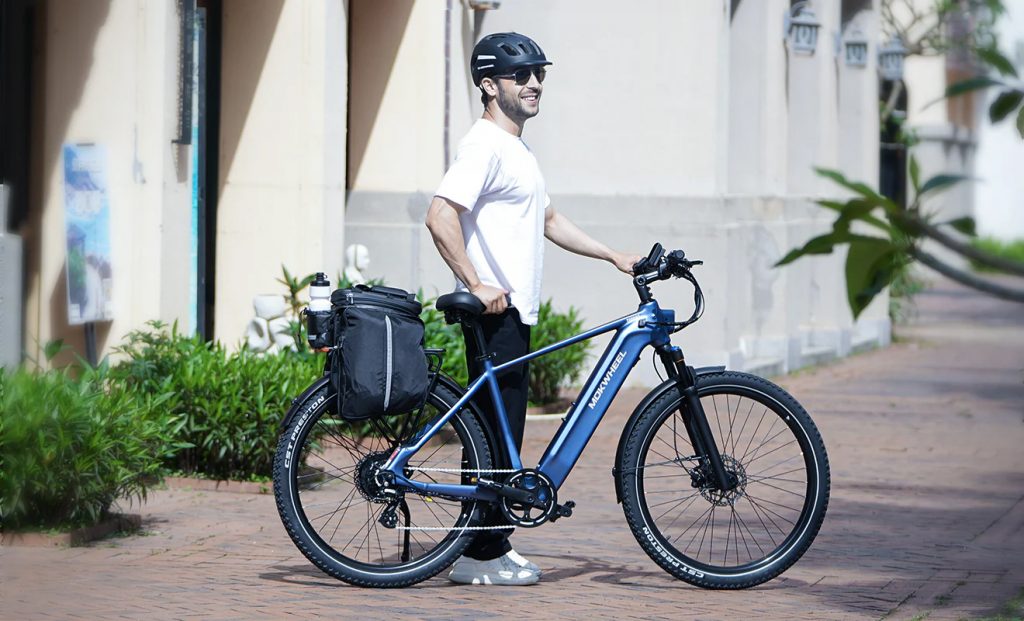
    Mokwheel Urban Commuter Series

    If you want an electric bikes that balances performance and design, Mokwheel is worth a look.

    Built for “smart urban mobility,” it features a stable mid-drive motor system and a removable high-capacity lithium battery, offering up to 50–60 miles of range. The motor peaks at 860W, providing strong acceleration and hill-climbing power.

    The integrated smart display shows real-time speed, battery, and assist level — simple and intuitive.

    Compared with standard commuter bikes, Mokwheel focuses more on riding comfort — ergonomic posture, front suspension, and puncture-resistant tires make every mile smoother and safer.

    For city riders who value quality and comfort, it’s more than a commuter bike — it’s a lifestyle choice.

    Is it really convenient? What’s the daily experience like?

    Compared to traditional commuting, electric bikes bring “three kinds of freedom”:

    • Freedom of travel — no need to check train schedules.
    • Freedom of space — park anywhere, no restrictions.
    • Freedom of pace — speed up when you’re late, slow down when you want to enjoy the ride.

    Many office workers say that electric bikes commuting doesn’t just change how they travel — it changes how they feel every morning. Riding through familiar streets with the wind on your face gives you a sense of control over your time — making “going to work” feel lighter.

    Do electric bikes need special maintenance? Can I ride in the rain?

    Maintenance is simple — just clean regularly and charge properly.

    • Check brakes and tires weekly.
    • Avoid over-discharging; keep the battery between 30–80%.
    • Light rain is fine, but don’t ride through deep puddles.
    • If parked outdoors, take the battery with you and use a rain cover.

    Get a professional inspection once a year (brakes, electronics, and battery) to extend your bike’s lifespan by 2+ years.

    Can an electric bikes really replace a car?

    For commutes under 6 miles (10 km) — absolutely.

    When you consider time, cost, and flexibility, electric bikes outperform cars in most cities. With rising fuel prices and limited parking, electric bikes commuting is simply the smarter choice.

    More importantly, it offers a low-carbon, low-stress lifestyle — exactly what modern urban life needs.

    Bring freedom and fun back to your commute

    An electric bike doesn’t just replace your car — it gives you back control of your commute.

    It lets you find your rhythm in a fast-moving city — no stress, no traffic.

    From practicality to pleasure, from speed to serenity, it’s a quiet revolution in urban commuting.

    Choose the right electric bikes, and every ride becomes a little moment of freedom.

    Frequently Asked Questions

    What’s the difference between a commuter electric bikes and a regular electric scooter/bike?

    Commuter electric bikes are lighter and more agile, designed for short city rides. Regular electric bikes or scooters are heavier and bulkier, built more for transportation than riding enjoyment.

    How far can a commuter electric bikes go on one charge?

    Most models can go 30–60 miles, depending on battery capacity and riding mode.

    For example, the Mokwheel Urban Commuter Series offers 50–60 miles, so you only need to charge once a week.

    Are folding electric bikes good for commuting?

    Yes — they’re perfect for mixed travel. You can take them into elevators, subways, or offices easily.

    If your daily commute is between 3–6 miles, a folding bike offers both flexibility and portability.

    How long does the battery last, and how do I maintain it?

    Typically 2–4 years.

    Keep it between 30–80% charge, avoid deep discharges, and store in a cool place. If unused for long periods, top up the charge monthly.

    Is electric bikes commuting really more convenient than driving or taking the subway?

    For 2–6 mile commutes, yes — it’s faster, cheaper, and stress-free.

    No traffic jams, no parking hassles, and you can enjoy the ride while staying active.

  • What to Look for in a Travel Charging Kit That Actually Works

    There are two types of travel charging kits: ones that save your trip, and ones that take up space while your devices die anyway. It’s the features, often negligible in the moment, that differentiate the good gear from the bad. Most people don’t realize what works and what doesn’t until they’re stuck in a European airport with dead batteries, incompatible outlets, and international fears of missing their connecting flights.

    The problem is that the countless number of travel chargers out there look the same in product photos but perform at vastly different levels. Some can’t handle the discharge of energy for modern-day devices; others work great in the convenience of one’s home outlet but as soon as they’re plugged in abroad, all hell breaks loose. And most just fall apart after a few trips because they’re cheaply made with little dedication to quality.

    Power Output Capability for Devices

    It’s not just about how quickly a charging kit can charge either. When you’re at 15% battery with two hours to go until your next flight and need a boost to get you through FIDs, then when you get that useless 5% boost after 20 minutes, it’s not cool to know you’ve got something on your hands that doesn’t do its job.

    Most phones and tablets support fast-charging through their adapters and outlets – but unless a travel charging kit provides enough power to satisfy, there will be no charge. Expect at least 20 watts for phone charging kits and upwards of 30-45 for tablets or laptops. Anything lower means you’re using yesterday’s technology.

    Furthermore, while watts measure the individual power needed for devices, they also determine how power is parceled out among multiple devices charging at once. A cheaper adapter likely won’t keep pace with speed for multiple ports. Plugging in both your phone and tablet might lead to both devices charging slowly because the adapter does not have sufficient wattage to accommodate both.

    Universal Compatibility Without Size

    There are different plug types in every country across the world, which is surely made just to annoy travelers. A travel charging kit should accommodate multiple areas so a person doesn’t have to find a secondary adapter once they land and settle in.

    The best options possess sliding prongs or interchangeable plugs; no one should need to carry two adapters when they’re going to one destination. At the very least, coverage for Type A (USA), Type C (Europe), Type G (UK), Type I (Australia/China) is necessary. Some adapters provide coverage for seven or eight types; this is probably excessive if one isn’t venturing into various international territories.

    However, where people go wrong are with cheap universal adapters that do not mesh with voltage needs; just because it fits an outlet perfectly does not mean it can convert it adequately. The USA operates on 110V while many countries use 220V – make sure conversions are safe across the board.

    Multiple Ports – But Good Ones!

    It’s rare that someone only travels with one device anymore. Phone, tablet, possible wireless earphones, e-reader, maybe a smartwatch – instead of being forced to seek out available outlets for all devices or just give one device a charge, there should be travel charging kits on hand for those who require more than one charge at a time.

    Travel charging kits with multiple USB ports make sense; however, implementation varies tremendously from type to type. Cheap multiple port charging kits don’t share power between ports as well as they should. You might have three ports but you’re getting three times less charge if each port is utilized as they’re powered at a fraction of a speed just to keep everything charged.

    Good kits use smart technology to charge according to need – your phone gets fast-charged but your wireless earbuds get the requisite low power they need so it can be effectively charged without wasting energy. This isn’t just marketing but results speak volumes in effectiveness; for example, a good Travel Charger offers various port connections for international regions and several USB ports that actually work when more than one device is plugged in – all at once – making it easier than carrying separate kits.

    Furthermore, the type of ports matter too – most new devices are using USB-C but it’s still beneficial to have USB-A available for older models and vice versa so one isn’t left needing a dongle to charge anything.

    Durability Despite Travel

    Gear that’s made for travel gets a beating. It’s packed into bags, dropped on tile floors, exposed to unstable electricity in questionable hotels – with almost everything treated much worse than its original intentions for home use – it’s important to find something that will withstand daily life on-the-go.

    Materials tell the whole story; flimsy plastic compositions break easy. Find options that reinforce housing – especially around prongs or connection points – as those tend to give up first on cheaper outlets. Ports should also feel stable when cables are plugged in – not wobbly.

    Heat detection is something that most people take for granted until their charger gets burning hot – good charging kits possess protection circuits that limit overheating and are designed with ventilation systems to decrease heat output; if it’s too hot to touch, there’s something wrong – and chances are safety and longevity are at stake.

    Cable integrity matters as well – thin, cheap cables fail easily; reinforced cables with strain relief at connection points last much longer. Some travel charging kits come with cables and some don’t – but better cables mean less pain down the road when coupled with good adapters.

    Size and Weight Factor

    There’s no need for an enormous portable charger; however, there’s logic behind cutting down weight. No one wants to take something massive but when photos make these little guys look amazing yet they can’t pack the wattage necessary – and ounce reduction doesn’t help when everything’s only partially charged.

    A slightly larger option that actually works beats out something that hardly weighs a thing but disappoints. That said, something massive isn’t practical either – most travel charging kits on the market today boast modern technology that can compact respectable wattage for portable use.

    Furthermore, it’s important to see how the kit features into packing – does it come with a pouch? Do the cables wrap nicely? Do they get tangled? These problems may not seem like much but when you’re digging through your bag as your group is being called and you forgot to account for tiny adapters – it ruins more than just first impressions.

    Safety Features Matter Most

    Charging accessories can literally ignite if they’re made cheaply or without proper safety features. While it may sound dramatic – and theoretically it is – but the number of cheap charging options that catch fire or ruin devices is mind-boggling.

    Look for charging kits made with surge protection and overcurrent protection as they’re necessary for both the charger and devices plugged in under bad circumstances – hotels and airports can have faulty electricity and if something’s plugged in that can’t sustain voltage jolts over time kills everything connected.

    Certification matters – the UL/CE/FCC/RoHS certification statuses mean something; if they’ve passed testing from outside sources and reputable ones – they’re safe – if not, then they’re burned and bombed.

    What’s Right For Your Types of Travel

    Weekend warriors who stick primarily to one country can probably get away with compromising – but if you’re mostly in one area, you know what two plug types you’ll need and the few amount of USB ports – that’s enough.

    Frequent travelers who bounce across continents need everything – if you’re traveling through several countries then investing in universal comprehensive options might be worth it; who wants to buy new adapters in every airport? The pricing up front makes sense not only to save all options but also because odds are you’ll be buying new cheap ones at every stop anyway.

    Business needs should prioritize charging speed/professional compatibility – for quick meetings between layovers there isn’t time for cumbersome acceptance; PD support/larger wattage kits make sense here as well.

    Final Thoughts About Travel Charging Options

    The best travel charging kit makes travelers forget they even have it. You visit somewhere new and somehow by magic all devices work without having to hunt down how things fit where you are or need traveling across borders.

    But when people truly consider their needs versus what’s cheaply available online, there’s an equity between where you go and how many devices you’re burdened with – or what’s relied upon between flights – that could make an investment worthwhile.

    Traveling isn’t easy – we’ve all established this – but anything that makes it easier makes sense; therefore, good charging kits might be slightly more expensive than their counterparts – but once you’ve had one fail cheap option too many times – and forced your good ones onto clients who’ve borrowed them – you’ll understand what’s really needed all along.

    A good travel charging kit should become indispensable without any excess attachments surrounding it – and everything else becomes excess baggage you tote unnecessarily.