
Author: Igor

  • Relocating with Success: A Comprehensive Guide to Moving Out of State and Thriving

    Moving out of state is an exciting and transformative experience. It’s a chance to chart new territories, embrace change, and start fresh in a different environment. 

    Whether you’re moving across the country or to a neighboring state, the process can be both exhilarating and daunting. 

    But fear not! In this comprehensive guide, we will walk you through the essential steps and provide valuable insights to help you navigate the process of moving out of state successfully. 

    Our aim is to empower you with the knowledge and confidence needed to thrive in your new surroundings.

    Preparing for the Move

    1. Researching the New Location

    Before embarking on your journey, take the time to thoroughly research your new state. Understand its climate, geography, local amenities, and services. 

    Explore the job market and employment opportunities, and familiarize yourself with the available housing options. By gaining a deeper understanding of your new surroundings, you can make more informed decisions and plan effectively.

    2. Setting a Realistic Budget

    Moving out of state involves various expenses. Calculate your moving costs, including packing supplies, transportation, and potential professional moving services. 

    Additionally, consider living expenses in your new state, such as housing, utilities, and groceries. Setting a realistic budget will help you manage your finances and ensure a smooth transition without unnecessary stress.

    3. Organizing and Sorting Belongings

    As you prepare to move, declutter and downsize your belongings. Consider donating or selling items you no longer need or use. Develop packing strategies and gather necessary packing materials. 

    Create a labeling and inventory system to keep track of your belongings, making unpacking at your new home much more manageable.

    Managing the Logistics

    1. Hiring Professional Movers vs. DIY

    When it comes to moving out of state, one of the crucial decisions you’ll need to make is whether to hire professional movers or handle the move yourself. While both options have their merits, professional movers like adamsvanlines.com can provide invaluable assistance and expertise throughout the moving process.

    They have a reputation for their attention to detail, efficient handling of belongings, and excellent customer service. Obtaining a moving quote from them can give you a clear idea of the services they provide and their competitive pricing.

    2. Notifying Important Parties

    To ensure a smooth transition, notify essential parties about your move. Change your address with the United States Postal Service (USPS) to ensure your mail is forwarded. 

    Notify utility companies, service providers, and institutions like banks, insurance providers, and government agencies. Update your voter registration and arrange for the transfer of medical records to your new healthcare providers.

    3. Understanding Legal Requirements

    Every state has its own set of legal requirements. Research the process of obtaining a driver’s license and registering your vehicle. Transfer your insurance policies to comply with local regulations. 

    If you have children, understand the procedure for registering them in schools. Additionally, familiarize yourself with any laws or regulations concerning pets if you’re relocating with furry companions.

    Adapting to the New Environment

    1. Building a Support Network

    Moving to a new state often means leaving behind familiar faces and support systems. Build a new support network by joining local community groups and organizations. Attend meetups and events where you can connect with like-minded individuals. 

    Utilize social media and online forums to find communities that share yourinterests or hobbies. Building a support network will help you feel connected and supported as you navigate your new environment.

    2. Exploring Your New Neighborhood

    Once you’ve settled into your new home, take the time to explore your neighborhood. Locate essential services such as grocery stores, pharmacies, and healthcare facilities. 

    Find nearby recreation and leisure facilities where you can unwind and enjoy your free time. Engage with your neighbors, introducing yourself and forging new connections within your community.

    3. Navigating Cultural Differences

    Moving to a new state often means encountering different cultures and customs. Embrace the diversity of your new environment and learn about local traditions and etiquette. 

    Understand the regional slang and dialects to better communicate with the locals. By immersing yourself in the local culture, you’ll not only adapt more easily but also enrich your own experiences.

    Settling In and Thriving

    1. Setting Up Your New Home

    Unpacking and organizing your belongings is an essential step in settling into your new home. Take the time to unpack systematically, focusing on one room at a time. 

    Consider the layout and functionality of your space as you decorate and personalize it to reflect your style and create a welcoming atmosphere. Establishing a daily routine will provide a sense of stability and familiarity.

    2. Establishing a Work-Life Balance

    Finding employment opportunities in your new state is crucial for your financial stability and overall well-being. Explore job listings, network with professionals in your field, and leverage online platforms for job searches. 

    If you have the flexibility to work remotely, create a productive home office space that promotes focus and efficiency. Strive to strike a healthy work-life balance by incorporating self-care activities and leisure time into your daily routine.

    3. Taking Care of Your Well-being

    Prioritize your physical and mental well-being as you settle into your new state. Find healthcare providers who meet your needs and establish a primary care physician. 

    Maintain regular exercise and fitness routines to keep your body healthy and energized. Moving to a new state can be stressful, so develop coping mechanisms and seek support if you find yourself struggling with homesickness or adjusting to the new environment.

    Frequently Asked Questions

    How far in advance should I start planning my out-of-state move?

    Planning ahead is key to a successful move. Ideally, start planning at least two to three months before your intended move date.

    Should I visit the new state before making a decision to move?

    Visiting the new state beforehand can provide valuable insights. If possible, take a trip to explore the area, get a feel for the culture, and assess whether it aligns with your expectations and preferences.

    How do I find a reliable and trustworthy moving company?

    Researching and reading reviews are essential when selecting a moving company. Get recommendations from friends or family, check online reviews, and request quotes from multiple companies to compare their services and prices.

    What should I do if I experience homesickness or struggle with adjusting to the new environment?

    Adjusting to a new state takes time, and it’s normal to experience homesickness. Stay connected with loved ones, build a new support network, and engage in activities that make you feel more at home. Give yourself grace and patience during this transition.

    How long does it usually take to settle into a new state?

    The time it takes to fully settle into a new state varies for each individual. It can range from a few weeks to several months. Remember that everyone adjusts at their own pace, so be patient with yourself as you navigate this exciting new chapter in your life.

    Conclusion

    In this guide, we have explored the essential steps to successfully move out of state and thrive in your new environment. From researching your new location to managing the logistics and adapting to the cultural differences, each aspect is crucial for a smooth transition. By setting up your new home, establishing a work-life balance, and prioritizing your well-being, you’ll be well on your way to building a fulfilling life in your new state.
  • Resident Store

    Resident Store

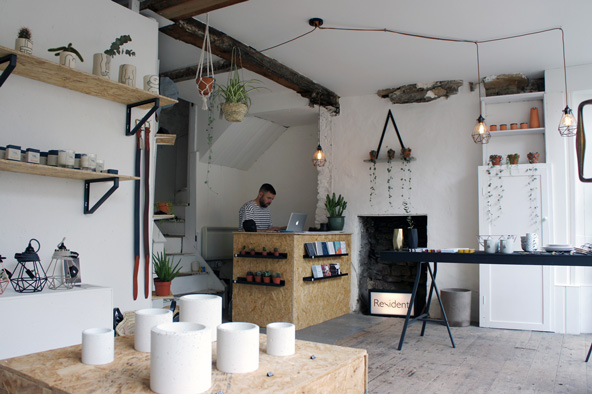
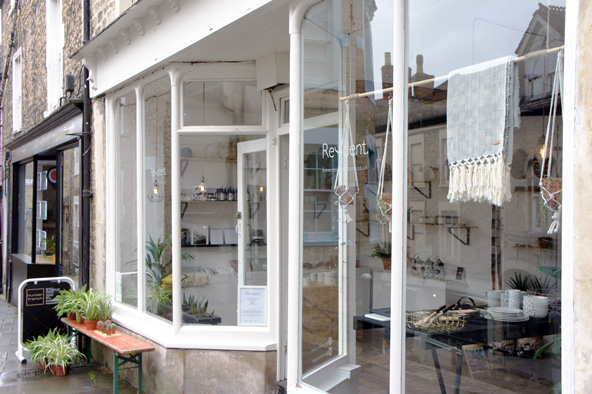
    Founded in 2015 James Borley and Greg Avis, Resident is a store bringing together a curated selection of homewares, accessories and grooming products from UK and international designers like Matia Mollenbach, Daniela Rubino and Louise Madzia. After its first location in London, Resident has just settled in a new home in Frome, Somerset.

    We talked to James and Greg to find out more about what made them start their own shop, what customers can find at Resident and they’re plans for the upcoming months.

    www.residentstore.co.uk

    All photos by Resident.

    Future-Positive-Resident-2-Low

    You design your own lighting products as The Electrical Shop, what made you start a store selling other designers’ goods?

    It was a very organic process. We started off making and selling lights and began to meet other designers and makers at events and markets who were doing a similar thing to us, but working with different products.

    As a result, we started to build up a collection of really great stuff made by great people that we wanted to showcase, and so Resident was born.

    Future-Positive-Resident-1-Low

    Please give us an overview of what type of products visitors can find in Resident.

    It’s very hard to pin down a certain type of product, but visitors can expect to find a carefully curated selection of homewares and accessories.

    Everything from ceramics, tableware, books and magazines through to accessories, candles and chocolate! It’s a varied mix that we like to change up regularly.

    Future-Positive-Resident-5-Low

    What are the main characteristics a product must have to be stocked in Resident?

    First and foremost we have to love the product! We also love to work with independent designers and makers based in the UK; but that does also extend to Europe and the US with some of the stuff we carry!

    Essentially, if a product is well-made, well-designed and if the person who makes it gets what we’re trying to achieve with the store then that’s a pretty good start.

    Future-Positive-Resident-3-Low

    Tell us a little bit about the building where the shop is and the renovation plans for the upcoming months.

    It’s Grade II listed townhouse originally built in the late 17th Century in the beautiful Somerset town of Frome. As well as being listed, we’re also in a conservation area so we are up against it somewhat with renovation plans!

    We’re working with a great local architect (James Grayley Architects) to completely renovate the two floors above (where we live) and will finish by doing the same on the ground floor and eventually end up with a shop space twice the size it is now. This will allow us to not only expand our range, but also enable us to host events and workshops. Plus, we have a licence, so who knows what the future may bring!

    Future-Positive-Resident-4-Low

    You moved to Frome from London. Could you tell us a little bit about what visitors can find in the town?

    Frome is a fantastically quirky place. One side is a slowly decaying 70s concrete shopping centre, whilst the other side is a very vibrant independent retail scene.

    The local council has gone to great lengths to promote indie businesses by scraping business rates and helping to fund a mammoth monthly market (the Frome Independent) which takes over the town each month bringing around 10,000 people into the town.

    Catherine Hill offers great shopping opportunities – alongside us there are menswear shops Assembly and Kushi Clothing, indie record shop Covers Vinyl and a myriad of vintage clothing shops. Plus there’s great coffee at Crocker and Woods and fantastic food at the River House and High Pavement Cafe.

  • Alastair Borthwick And His Successful Life As A Journalist

    Alastair Borthwick was a known war veteran, broadcaster, and author. He served his country by joining the military and defending it during the world war. Borthwick also contributed to the country’s literature by writing and publishing two books which are now both considered as classics. Later on, Borthwick did the thing that he loved the most: working on journalism until his death.

    Borthwick was born in Rutherglen, a small town in South Lanarkshire. However, he spent most of his childhood in Troon. He and his family would later move to Glasgow, where he attended the Glasgow High School. Borthwick left the high school in 1929 when at the age of 16, he decided to join the Glasgow Herald to work. At first, he was the one in charge of taking down answers from respondents through the phone. Later on, he was given the authority to post in the paper’s “Open Air”, where any topic can be featured. His topics revolved around hillwalking and climbing, which had drawn the interest of the working class people. Later on, Borthwick also wrote on the newspaper’s front page leads, in the crossword section, and both in women’s and children’s pages.

    After working for a couple of years in the Glasgow Herald, Alastair Borthwick joined the Daily Mirror in 1935. This new job was a very big opportunity for him in terms of growing his career in journalism. However, because the London life did not appeal to him, he was back in Glasgow after a year. But instead of returning to writing in the newspaper, he decided to venture into another part of journalism and became a radio correspondent at BBC.

    Four years later, Alastair Borthwick released his first ever book titled “Always a Little Further”, which was published by Fabers. The book is a compilation of classic tales of camping, hiking, and climbing during the 1930s. “Always a Little Further” succeeded in documenting the social changes that rock climbing and hiking have done to the country. The book is still currently published in Scotland up to this day and is one of the best books about Scotland’s outdoor activity. His career as an author will be put into a halt when World War II arrived in their country.

    Joining the 5th Battalion, the Seaforth Highlanders, Alastair Borthwick served as an Intelligence officer during World War II. He was deployed to a lot of places and fought a lot of battles, including those that took place in North Africa, Sicily, France, Holland, and Germany. Ultimately, he reached the second lieutenant rank in 1939. After the war, he was asked to write the history of the 5th Batallion, which he released in 1946, titled “Sans Peur, The History of the 5th (Caithness and Sutherland) Batallion, the Seaforth Highlanders.” It received positive feedbacks due to Borthwick’s brilliant idea of using the point of view of an infantryman for his story.

    After the war, Alastair Borthwick and his wife Anne moved from Glasgow to Jura, where he found another job at the form of crofting and fishing while resuming his job at BBC. Borthwick helped during the 1951 Festival of Britain. During the 1960s, he ventured into television via Grampian TV, where he produced programs involving a wide range of subjects. The Borthwicks stayed in Ayrshire starting 1970s until 1998 where Alastair was moved to a nursing home at Beith. He died on September 25, 2003.


  • Gino Pozzo is One Step Ahead of the Game

    Football feels more than just a sport now but a way of life. Anywhere around the globe, if people don’t play the sport, they avidly support a team. Footballers have become celebrities who bring in a lot of dough for the clubs they play for. It takes a remarkable eye to spot these young footballers brimming with passion for kicking around the ball. Gino Pozzo, the Watford Football Club owner in England, is one such man with a keen eye. He has actually developed a brilliant reputation for taking less than stellar lower-division football clubs and leading them to greater heights.

     A Family Affair

    Influenced by his family who breathed football, especially his father, Gianpaolo who purchased the family’s first football club more than 30 years ago, it is not surprising that Gino Pozzo has followed suit. Currently, he is one of the most popular figures in the sports scene all across Europe. Educated in the United States, and with a Masters degree from Harvard, this guy eventually settled down in Barcelona, and then in London with his own family and children, to keep a more hands on approach to managing the family’s many clubs. Originally focused in the woodworking industry, their family has branched out into various industries from electrical appliance business, property management, finance mergers, and of course, club ownership.

    Expansion

    This busy man said, they may have their hand in many endeavors, but football continues to be a favorite fueled by passion. They follow a scouting-driven model, wherein they actively look for new talents, in managing their clubs. Gino has been the one handling that family’s sports ownership, paying close attention to international expansion. They have acquired Udinese and Granda FC years ago, which helped the clubs rise in division level in spite of struggling in the beginning.

    The Watford Club

    A heavily indebted club struggling to climb their way up was purchased in 2012. This was the Watford Club, which has now proven that long-term plans can see fruition and meet with success. The acquisition of the Watford F.C. paved the way for the Pozzo family to be known as the only family worldwide to own three football clubs simultaneously in Italy, Spain, and England. This tidbit prompted the prestigious Wall Street Journal to run a breaking feature on the Pozzos, dubbed by the magazine as the European Soccer’s Ascendant Family. As the only family in the world to own three football clubs simultaneously in Italy, Spain, and England, prompting the Wall Street Journal to run a story naming the Pozzos “European Soccer’s Ascendant Family” in 2015.

    Vision

    Gino explained that vision is necessary in making his clubs, and any other business endeavors for that matter, propel forward. At times, depending on how things develop, he deemed that it may even be necessary to tweak his vision. A long term approach that’s flexible is what’s essential in making the businesses grow. Gino Pozzo is the type of man who unafraid to walk the talk when it comes to running his football clubs. Apart of the evolving vision is exemplified when he freely trades his players between the family owned clubs; this, of course, is for the benefit of each one. Noteworthy, the Watford Club has gone over 8 different head coaches and managers, but the club’s track record is enough proof that this dynamic style works.

    Changing the Game

     Aside from passion, running a football club also requires perseverance and a good head on ones shoulders. After all, football is a multi-million dollar industry, where the Pozzo family has invested aplenty. As much as Gino’s reason for purchasing the club is emotional and sentimental, he has to ensure to give way to the more serious side of business. After all, no one goes into business intending to lose. The goal of just about anyone has always been to make a profit. There are millions of dollars in profit waiting to be made in a Premier League. Gino and his family are certainly one step ahead of all of us in this game.

  • The Best Places to Retire in Spain

    If you’re approaching retirement age, and you’re dreaming of spending the rest of your life in a sun-soaked paradise, then Spain is sure to appeal. It’s affordable, accessible, and provides a great mix of hospitable weather and culture. You’ll benefit from the healthcare and low crime rates of a developed country, too.
    Would-be migrants to Spain have a range of destinations to choose from. Let’s take a look at a few of the more attractive ones.

    Image via Unsplash

    Costa del Sol

    If you’re looking for warm weather and sandy beaches throughout the year, then the Costa del Sol is sure to appeal. There’s a wealth of golf courses to explore and a thriving community of English-speaking expatriates. So better start getting a hybrid golf bags so you can carry everything you needed for the play. If you’re going to be flying into Malaga airport, then you can cut your costs by booking the transfers well in advance. The same goes for any family members that might look to visit you while you’re out there.
    Whether you’re a fan of world-class golf, or you’d simply like to spend your retirement soaking in the sunshine and lounging beside the beach, this is a part of Spain with a huge amount going for it.

    Benidorm

    Benidorm has welcomed plenty of tourists over the years, as well as older people looking to settle permanently. As such, it’s ideal when it comes to accessibility, with long promenades, and a car-free town centre. You’ll find plenty of entertainment, restaurants and bars targeting English people. If you’d like to supplement your income with a little bit of bar work, then you might find that it’s easy to come by.
    While this place is better known for its tourist trade, this can actually be a good thing – if you choose to come back to the UK for a visit, then you can rent out your accommodation in Benidorm for a respectable profit.

    Madrid

    If you’d prefer something with a little more hustle and bustle, then a spell in the Spanish capital might be what’s called for. It’s a little more fast-paced than the other destinations we’ve mentioned, and you’ll have to learn to speak the language to get the best from it. But you can expect a thriving culture, an ever-changing and diverse slew of entertainment, and a world-class transit system.
    While you might expect to enjoy warm weather in the summer, the winter can get chilly (though rarely freezing). Thus, you’ll want to pack clothing for all occasions. The cost of living is lower in Madrid than in other European capitals, though you can expect to devote a considerable chunk of your spending to restaurants, as there’s a thriving dining culture.
    What you won’t get is the coast – Madrid is more-or-less right in the centre of the mainland.