Author: Igor

  • Openhouse Magazine

    Openhouse Magazine

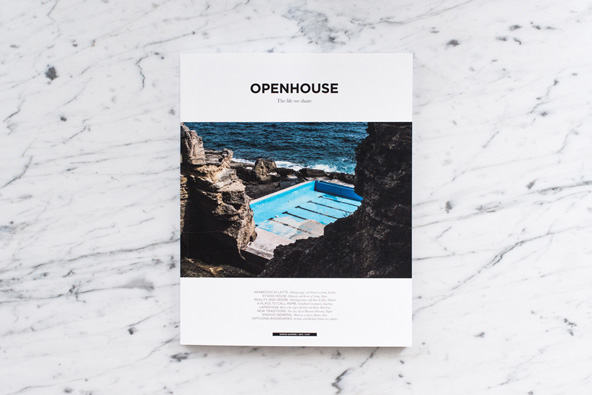
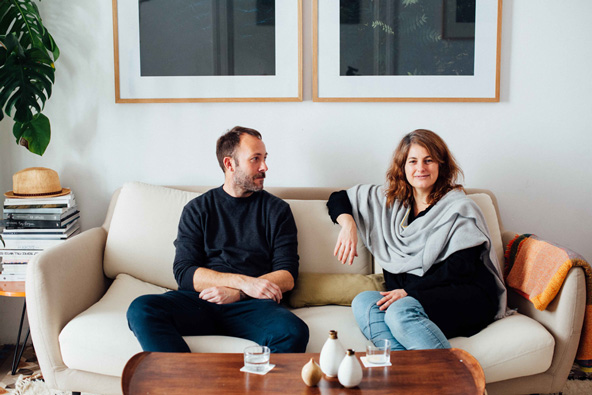
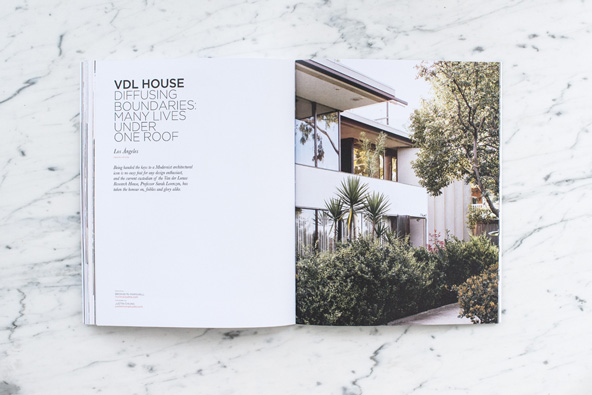
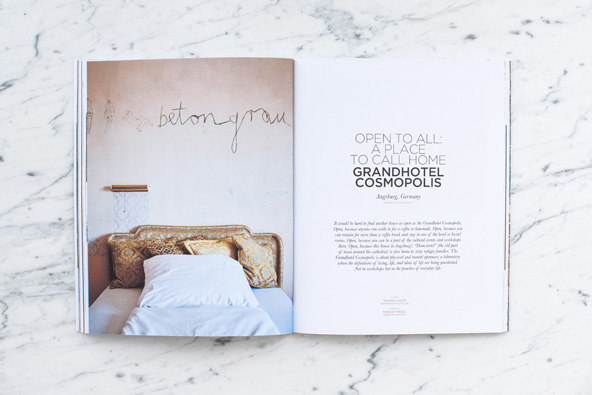
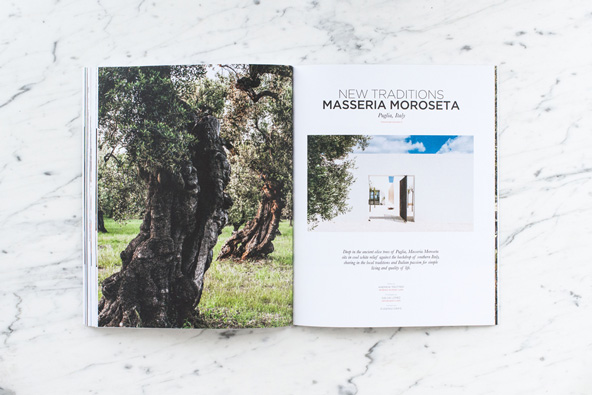
    Founded by Andrew Trotter and Mari Luz Vidal, Openhouse is a biannual magazine dedicated to creative people around the world that open their homes or private spaces to the public to organise different events and activities related to gastronomy, art and design.

    We chatted with Andrew about the beginnings of the magazine, opening his house to other people and how Openhouse is bringing like-minded creatives together.

    www.openhouse-magazine.com

    Photos by Yanina Shevchenko

    What made you start Openhouse?

    Openhouse, the magazine, grew from our project in Barcelona. We started to open our home as a gallery of photography to share our work in a more intimate way. With our flatmate Nobu Kawagoe, we started making dinner and sushi parties, then concerts and talks. We became quite the talk of the town. Over the three years that we were open, more that 4,500 people passed through our doors.

    We met so many wonderful people, some became new friends, and we started to learn about more people around the world with similar projects so we decided to put it down on paper.

    The magazine is in English but each article is also written in a different language, depending on the location of the spaces and people you feature. How did you come up with this unique idea and what were the reasons behind it?

    I’m English and Mari Luz is Spanish, and we talk with a mix of these languages, sometimes even in one sentence. But we realised people talk easier and open up more when then talk in their own language, so we decided we should always find a writer to interview in the first language of the subject. This way the stories become more intimate and more close, real feelings come out.

    How has the magazine evolved since its first issue?

    We actually hope the magazine isn’t evolving too much. We don’t want to change, we hope to always talk about these amazing people around the world who humbly share their homes and lives with others. The only change is that it is getting easier and easier for us each day. We have now launched issue No.7 and we are getting used to the business and logistics of having a company.

    What do you hope people experience when they read Openhouse?

    Openhouse acts as a guide to these people, whether they are in your town or in a place you are visiting. We are so connected in these days by our telephones, that we have lost sense of our community and rarely meet new people. We talk about people who have a love for bringing people together and sharing ideas.

    Do you have any plans or projects for the upcoming months that you’d like to share with us?

    We will soon open our second house here in Barcelona. A space where we can hold intimate gatherings, talk to people and welcome visitors to stay with us. We are also launching a new web that will make it easier for you to find these people around the world. There will be more stories and local guides.


  • The Future of UK’s Independent Ceramic Industry

    The Future of UK’s Independent Ceramic Industry

    The UK has always been associated with ceramics and pottery and, over the past few years, the country’s ceramic industry has gone through a revival thanks to independent makers and designers celebrating craftsmanship and using social media to connect with their customers. According to data, the sector grew 45% between 2009 and 2013, and since 2013 the employment in this industry has kept on increasing.

    To find out about the current situation and what’s next, we chatted with 4 ceramicists and potters across the country to hear their views and predictions.

    Olivia Fiddes

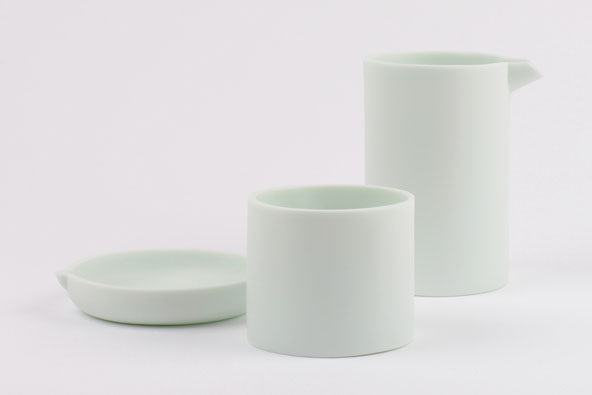
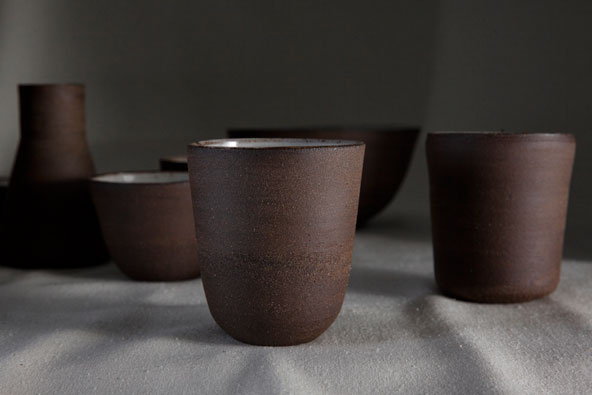
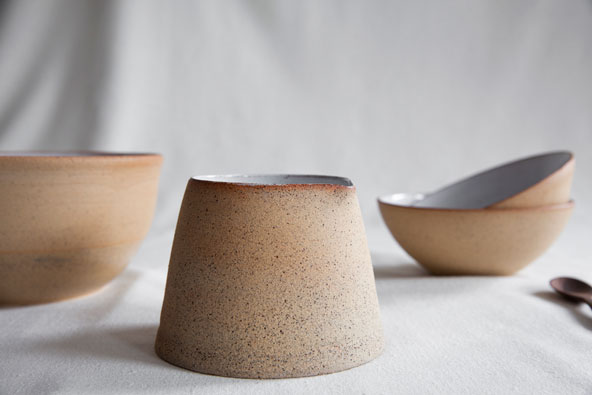
    Olivia Fiddes is a Scottish ceramic artist based in London that creates homeware and objects using hand building techniques. When asked about why ceramics have become so popular over the past years Olivia says “There’s clearly been a shift away from ‘fast-fashion’ and consumption to more support for local, ethical and traditional businesses. Even if you aren’t able to be a ‘maker’ yourself you can be involved in that lifestyle by supporting makers and by having these goods in your home. I think shops and businesses definitely see this and have looked to sourcing products from artists, designers and craftspeople who value quality and self-expression. As a customer there is nothing more special than a one-off or limited run product, which handmade ceramics tend to be.“


    Photo by Olivia Fiddes

    For Olivia, this shift in the way we consume products is also influenced by the current financial situation, “We’re spending rather than saving our money more because houses and families are more distant. We’re willing to spend money enjoying our everyday and living in the present, whether that is on special tableware, a holiday or going out for meals.“


    Photo by Johanna Tagada / Photo by Association

    Ana Abellán

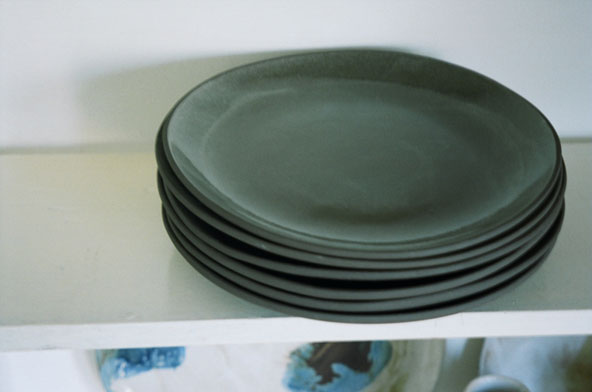
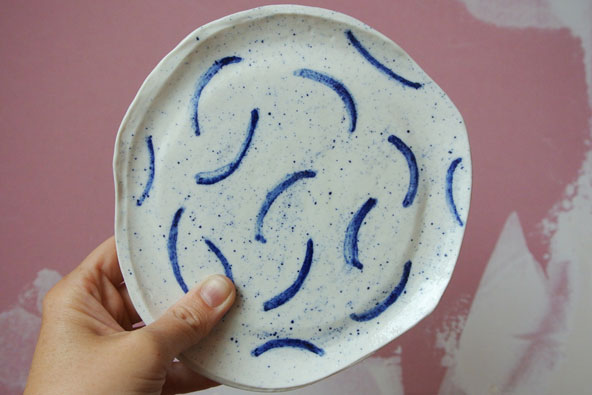
    Spanish ceramicist Ana Abellán started working with ceramics 5 years ago after moving to Edinburgh and attending an evening course for adults. Ana agrees with Olivia when it comes to the value of owning something special, “We all want to have unique things, things that have a meaning – I really believe in quality over quantity. I don’t want to have ten cups made with a machine somewhere in China, I’d rather have one handmade cup that has some kind of special energy“. The way we live right now has also influenced how we interact with things around us and Ana thinks that “Society has lost the connection with nature and beauty. I think we need to relearn how to slow down and appreciate the beauty inherent in simple things we have around us, although I am the first one on that list – I am always rushing everywhere trying to get too many things done.“


    Photo by David Guillen

    When asked about what ceramic artists need to do to supply customer needs in the near future Ana says that “Ceramic artists have done a great job over the last few years, promoting themselves, sharing more and making ceramics more attractive. Getting in touch with customers and listening to them is important, as well as being affordable but valued.“


    Photo by David Guillen

    Home Thrown Studio

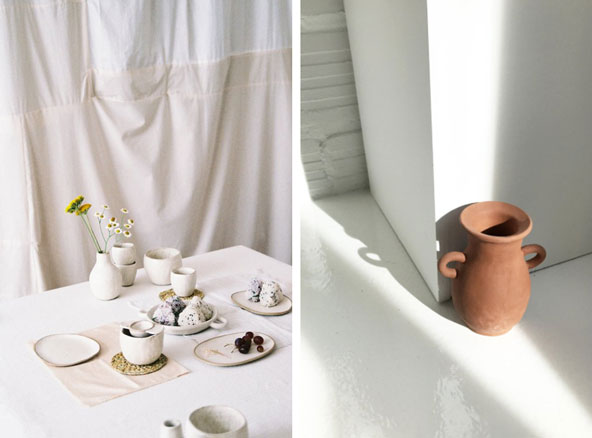
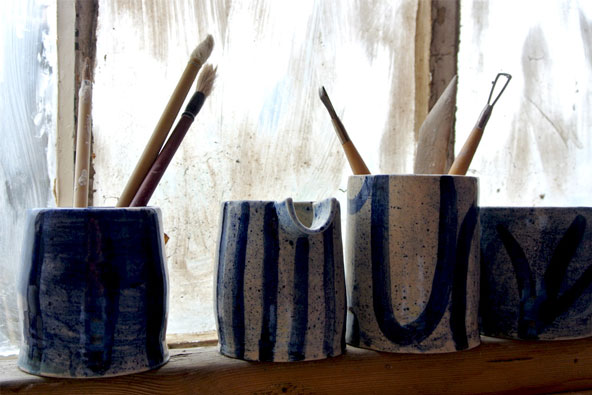
    Gem Mordle from Home Thrown Studio also got interested in ceramics after taking up an evening class when she moved to Dorset 8 years ago. For Gem, the recession has had a positive impact on consumer behaviour, “I’ve definitely seen a rise in appreciation for ceramics and everything and anything hand crafted over the last couple of years. People want to spend their money on objects or clothing that are hand made and have a sense of authenticity about them. Lots of my customers seem to really appreciate the personality of my wares and the fact they are all original and have a story. It’s also really nice to be able to meet customers face to face at local markets, as so much shopping is done online these days.“


    Photo by Home Thrown Studio

    Despite oversees manufacturing and the easy access to cheap homeware, Gem feels positive about the current situation of the industry and its future, “I feel over the past years that ceramicists and potters are being put back on the map. There has been a bit of a revival with the Great British Throw Down, the Kickstarter campaign for The Clay College in Stoke and a handful of universities are starting up their ceramic courses again so I think we can be hopeful. I am inspired daily by the ceramic community on Instagram, and feel that social media is a great platform for contemporary potters to exhibit their work and keep in touch with their customers.“


    Photo by Home Thrown Studio

    Natalie J Wood

    Scottish designer Natalie J Wood studied at Gray’s School of Art and felt attracted to ceramics due to its complexity and flexibility. For Natalie, social media has played a key role in the development of her businesses and educating customers about what’s behind a product, “It has helped me connect to new audiences. To promote events I’m linked with. I feel as a designer/maker Instagram has been a great platform for visual based work. You can instantly gauge what about your work people connect to the most. It challenges you in a way to create a larger story with your work. Now people want to understand more about behind the scenes and how making is a part of your life. In turn that gives the work more value because people can understand it on more than just a visual level.“


    Photo by Sean Dooley

    Natalie considers function an important factor for current and future customers, “I think the industry is becoming more about micro manufacturing and independent brands. People are becoming more concerned about where the products they buy are coming from and having a story behind a piece makes it something special. I also think that in a backlash to throwaway culture our society is less about the ornate and there is a rise in the beauty of function. Objects that have purpose but also become decoration. I know I sell water carafes but a large number of people use them as vases, which I think is great! I’ve been a long time advocate of the William Morris quote ‘Have nothing in your house that you do not know to be useful, or believe to be beautiful.’ But I think now that use and beauty are becoming one and the same.“


    Photo by Sean Dooley

  • Meet the Graduate: Julia Krewinkel

    Meet the Graduate: Julia Krewinkel

    We’re starting a new series of posts in which you can meet students from art schools around the world that are graduating in 2017. If you’d like to be featured on our blog, please send us an email to hello@thefuturepositive.com with some information about your graduation project.

    Julia Krewinkel is an illustration student who is about to graduate from the art academy AKV|St. Joost in the Netherlands. We talked to Julia to find out more about her course, her project ‘This must be the place’ and how someone graduating in 2017 feels.

    www.juliakrewinkel.com

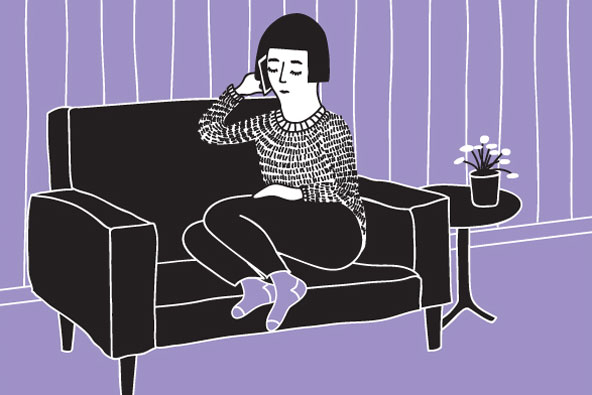
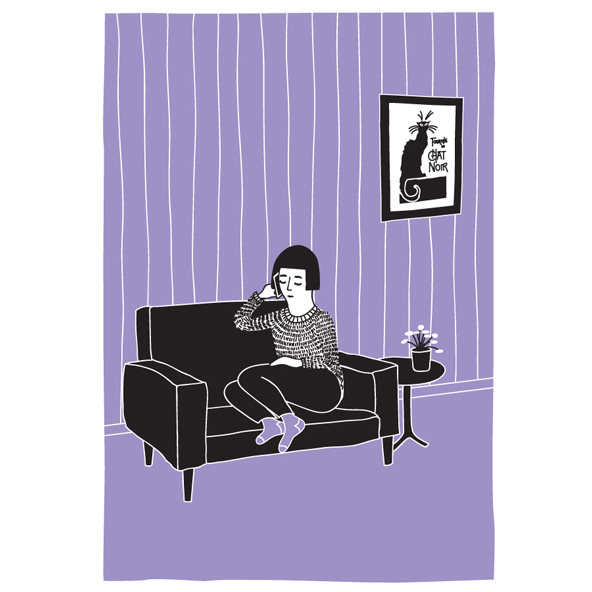
    Illustrations taken from ‘This must be the place’.

    Can you tell us about yourself and your course?

    I literally grew up with a pencil in my hand. With my mother as a goldsmith and my father as a painter, my brother and I grew up in a very free and creative environment where I learned to look at the world around me with curiosity and to react with it accordingly. In high school I didn’t have a creative outlet, so when I started my first course in graphic design I felt that I was really in the right place. Here I was encouraged to think big in a conceptual way, but also to think about working with clients. After graduating I decided to continue my education with a programme in illustrative design at the art academy. During this course, I learned to position myself in the art world and to make my place in the world. I have become an independent designer; I try to distinguish myself and to use my education in the best way.

    Can you tell us more about your project ‘This must be the place’?

    For the last four years I have been living in an international student campus in the Netherlands. More than 200 people, from all over the world, live in my building and from the beginning I was intrigued with who my 199 housemates are. I decided to interview these international residents and ask them how they experience their lives in the Netherlands, how they organize their lives and what problems they may encounter. Through the interviews it became clear that many of the residents didn’t know their neighbours either and that sometimes they felt isolated and lonely. I decided to tell their stories in a graphic novel where I could show, through many short stories, some of the different ways these people experienced these types of loneliness. The stories show that although everyone experiences loneliness in a different way, the essence of the experience is the same. Ultimately my goal is for the reader to see that loneliness can be relieved if you realize that you are not the only one who has these feelings.

    How has your course and school prepared you for life after graduating?

    During my education I learned to position myself as a designer. I worked for four years to find my distinctive abilities and apply them. In my third year I worked as an intern in a design studio with a number of classmates, where we worked on numerous different projects and had intensive contact with clients. These experiences taught me how to maintain my own aesthetic while working with the needs of a particular client and project. Alongside my education I have worked independently over the last four years, participating in various art fairs in the Netherlands. Since 2016 I have also been selling my work in an art store in Maastricht.

    How does a graduate feel in 2017?

    Graduating and discovering the workplace is exciting for everyone, but perhaps especially for art students. You don’t have the quick guarantee of a steady job and income, so the future may feel unsure and that’s unsettling. However, there are some advantages to my situation; I often work digitally and when I have my computer and drawing tablet, my immediate surroundings are irrelevant – the world is virtually at my feet. I’m eager to become part of the creative world and to show people my vision of events.

  • Putting It Famously – Executives Offer Their Favorite Leadership Quotes

    Successful executives lead through inspiration.

    There’s a reason for that, and it’s probably universal. Fast Company offered this explanation: “Humans are aspirational. Leaders and their words…affect us on a primal level.”

    Jeffrey Aronin, Chairman and CEO of Paragon Biosciences, calls on inspiration from Henry David Thoreau to describe the lure of entrepreneurship: “If one advances confidently in the direction of his dreams, and endeavors to live the life which he has imagined, he will meet with a success unexpected in common hours.”  And recognizing that bold endeavors often mean overcoming adversity, Aronin also cites Winston Churchill: “If you’re going through hell, keep going.”

    To inspire his team, Elon Musk observed that “Engineering is the closest thing to magic that exists in the world.” To help employees at Microsoft embrace change, CEO Satya Nadella reminded them that “Our industry does not respect tradition – it only respects innovation.”

    Above all, inspirational quotes help leaders and their teams overcome challenges and reinforce important values. To close his 2018 Duke University commencement speech, Apple CEO Tim Cook quoted Dr. Martin Luther King from the commencement speech King made at Duke in 1964: “The time is always right to do right.”

  • How You Can Turn Your Musical Hobby Into A Career

    Photo via Pexels

    If you love music and you’re good at playing a musical instrument, singing, or DJing, chances are you’ve thought about quitting your day job and turning your musical hobby into a career. The truth is that making serious money that’s enough to live on with music can be difficult: however, for a lucky few, it is possible. Here are some tips on how you could make your dream a reality.

    Ask Yourself Some Questions

    First of all, ask yourself what exactly you want from this enterprise. If your only goal is to sell out stadiums, you may have to take a deep breath and get more realistic. If you’d like to chip away at making a career from singing or DJing and you’re happy to play local gigs, at parties, and you’re not completely sold on giving up your day job just yet, you’ve got a much bigger chance of achieving your goals. Figure out what exactly you want from turning professional. If you want to be on a stage entertaining people, this is very possible. If you want to become a millionaire, you need to think again: are you doing this because you love music, or because it seems like a pathway to fame and fortune?

    Photo via Pexels

    Improve Your Skills

    It may sound simple, but it’s important to make sure that you’re as good as you possibly can be. If you sing, go to a singing teacher to learn techniques that will ensure that you don’t injure your vocal cords. If you play an instrument, keep practising and studying so that you’re as good as you possibly can be. There will be a lot of competition out there, so you need to ensure that you’re at the absolute top of your game.

    Build Yourself A Team

    If you think of yourself as a creative, you may not be great at aspects of your job like booking gigs, booking travel and hotels, publicising yourself, and the general nitty-gritty logistics of making sure that you’re making money. If you have the spare cash, it’s a good idea to hire a manager who will be able to help you make smart business decisions and who can make your life a lot easier.

    Photo via Pexels

    Consider Branding

    It’s time to start thinking of yourself as a brand rather than a person. You are turning your hobby into a business, which means that you need to think like a businessperson as well as an artist. If you have a good team around you, they will be able to help with this. But you need to think about what exactly you’re providing for audiences that other people can’t provide. If you’re doing local gigs, how can you provide a better service than other local musicians? A lot of musicians who have made it big have onstage quirks that have helped them to stand out from the rest. For example, Ed Sheeran played huge venues by himself with a loop pedal that helped him create a big sound that filled the whole room, and that also enabled him to save money on paying a band. Hire a graphic designer to sort out a logo for yourself, and make sure that you have CDs that you can sell at the end of each show. Companies like Pure Music can ensure that your CDs look professional so that people want to buy them – you don’t want to have a product that looks like you made it yourself in your garage!

    Beyond artwork and design, think about the practical side of producing and delivering those CDs or other physical formats. Working with specialists in packaged media production can help you select appropriate formats, finishes and secure replication methods so your merchandise looks and feels professional. Many providers offer short-run options and reliable fulfillment, which means you won’t need excessive inventory yet can still get stock to gigs quickly. Factoring these production and distribution choices into your merchandise planning will protect your investment and improve fan experience.


    Be A Professional

    If music is your hobby, you can take it up whenever you feel like, and when the muse doesn’t strike, it’s perfectly okay to leave the songwriting for another day or to put your guitar back into its case. But if you have decided to go pro, this is no longer an option. Your music is your job and what pays your bills, so even if you can’t think of any ideas or you don’t feel like making any music, you need to put your head down and get on with it.

    It’s important that you can adjust to knowing each genres. Each musician should begin with learning the evolution of music.

    Photo by Pexels

    Learn To Network

    No matter what freelance career you’re interested in, networking will almost certainly be a key part of it. Getting jobs is often about who you know – and how will you get work if people don’t know that you’re actively looking for it? Talk to people who run open mic nights, befriend other musicians who might be on the same bill as you, and use social media platforms to support people and talk to them. Don’t spam everyone with links to your music – rather, use sites like Twitter and Facebook to find out about local venues and performers and to interact with them so that you can gently promote yourself.

    Think About Money

    Being self-employed is a completely different way of living, particularly if you’re used to the company you work for taking your taxes out of your salary each month. Even if you haven’t given up that job just yet, you need to make sure that you’re paying taxes on the money that you’re earning from your music. If you can’t figure out how to pay your taxes at the end of the tax year, hire an accountant who will be able to help you out, because it’s vital that you pay the correct amount. Otherwise, you may have to pay a huge amount next year that you’re unprepared for, leaving you in a difficult financial situation. Put aside a suitable percentage of your income from your music career so that you won’t find yourself in a pickle when it comes to paying your taxes. You could also consider setting up a business bank account for yourself so that you can keep everything separate and your professional and personal funds don’t get confusingly mixed up. This also means that you won’t end up dipping too far into your own savings.

    Do Some Research

    It sounds like a simple piece of advice. But it’s often overlooked. Never underestimate the power a bit of research can do.

    In our modern times, pretty much every question you have can be answered via a quick Google search. The same goes when turning your musical hobby into a career. You can seek advice from people who’ve made their hobby a career. You’ll be able to hear about people’s successes and their failures, so you avoid the same pitfalls they fell into. Plus, the internet is a great way to market yourself. So you can use this resource to research all the best ways to sell yourself as a fledgling musician online. Use blogs and news resources from companies or other creatives who work in the industry. Their advice is like gold dust. Head to www.singularsound.com/blogs/news as a start to your musical journey. 

    No matter how much you love music, it’s clear that there are lots of things that you’ll have to learn to do before you make it a career. Thankfully, if you’re business savvy and determined, it’s a very possible thing to do.