Tag: film

  • Essential Camera Gear for Your First Short Film

    Essential Camera Gear for Your First Short Film

    Creating your first short film is an exciting step for any filmmaker. While storytelling and creativity are the heart of any film project, having the right equipment can make a significant difference in how your final production looks and sounds. For beginners, the idea of assembling a film kit may feel overwhelming, but focusing on a few essential pieces of gear from reputable and experienced camera supply stores can help you build a solid foundation for your project. 
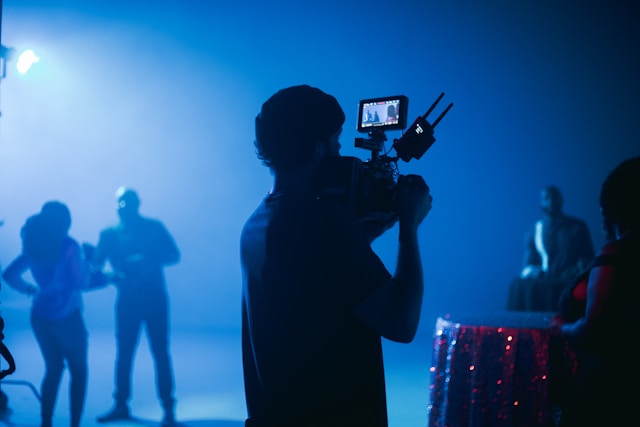
    Image via Unsplash

    One of the most important tools for any short film is the camera. Modern digital cameras have made filmmaking more accessible than ever, offering high quality video capabilities in compact and affordable systems. Mirrorless and cinema style cameras are often popular choices for short film production because they provide strong image quality, interchangeable lenses, and advanced video settings. When selecting a camera, filmmakers should consider factors such as resolution, frame rates, and low light performance to ensure the camera can handle the type of scenes they plan to shoot. 

    Lenses are another key part of a filmmaking setup. Different lenses can dramatically change the look and feel of a scene. A wide-angle lens can capture expansive environments or group shots, while a standard lens is often useful for dialogue scenes and natural perspectives. Telephoto lenses can help isolate subjects and create a cinematic depth of field. Many filmmakers begin with a small selection of versatile lenses that allow them to capture a variety of shots throughout the film. 

    Stable footage is essential for professional looking video, which makes a tripod or stabilizer one of the most valuable pieces of equipment for beginners. A tripod helps keep the camera steady during interviews, dialogue scenes, and static shots. It also allows filmmakers to maintain consistent framing while adjusting other elements of the scene. For projects that involve movement, filmmakers may also use camera stabilizers or handheld rigs to create fluid, smoother motion. 

    Lighting plays a crucial role in shaping the visual style of a short film. While natural light can sometimes be used effectively, controlled lighting allows filmmakers to achieve consistent results regardless of location or time of day. Basic lighting kits often include soft lights that help illuminate subjects evenly without creating harsh shadows. Reflectors and light modifiers can also be used to adjust brightness and create different moods within a scene. 

    Audio equipment is another essential component that new filmmakers should not overlook. Even visually stunning footage can feel unprofessional if the audio quality is poor. External microphones are often used instead of relying on the camera’sbuilt-in microphone. Lavalier microphones are commonly used for dialogue because they can be attached to clothing and capture clear speech. Shotgun microphones mounted on boom poles are another popular option for recording directional audio during film scenes. 

    In addition to these primary tools, several accessories can make filming more efficient. Extra batteries and memory cards help ensure the camera continues recording throughout long shooting days. Camera bags protect gear during transportation, while monitoring equipment such as external screens can help filmmakers review framing and focus while filming. 

    Planning your equipment setup ahead of time can help make the filming process more organized and efficient. Many filmmakers create a gear checklist before production begins so they can confirm that all necessary items are available on set. This preparation helps prevent delays and allows the production team to stay focused on capturing the best possible footage. 

    For beginners, renting equipment can be a practical way to access professional gear without the cost of purchasing everything at once. Rental services allow filmmakers to get expert gear advice, as well as test different cameras, lenses, and lighting setups while working on their projects. This flexibility makes it easier to experiment with equipment and discover what works best for different filmmaking styles. 

    Producing your first short film is both a creative and technical learning experience. By focusing on essential gear such as a reliable camera, versatile lenses, stable support equipment, proper lighting, and clear audio tools, new filmmakers can create strong visual stories while developing their production skills. With thoughtful preparation and the right tools, your first short film can become the starting point for many future projects. 
  • HEIS by Anaïs Volpé

    HEIS by Anaïs Volpé

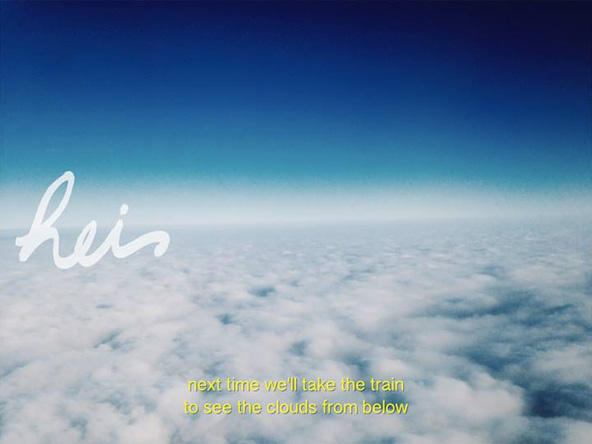
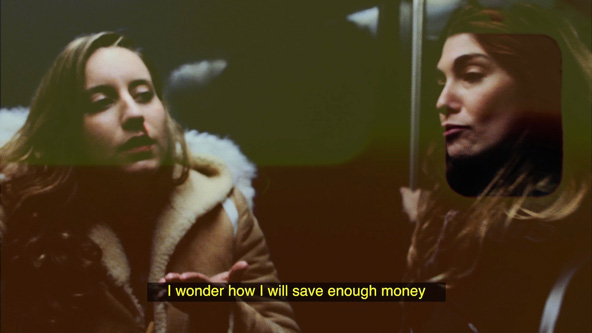
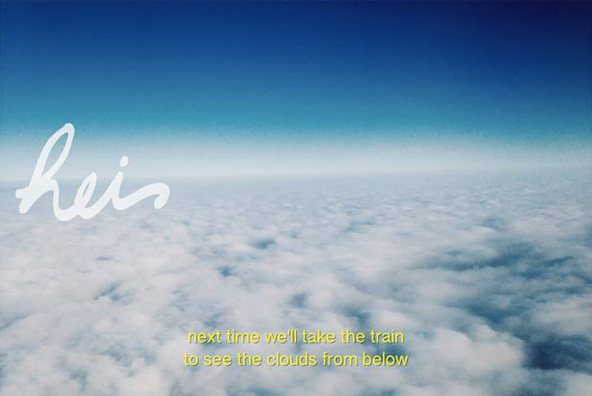
    HEIS is a cross-media project by French artist and filmmaker Anaïs Volpé. This innovative project is composed of a series, a feature film and an art installation. To find out more about it, we spoke with Anaïs about her background, the different elements of HEIS and the places where the project will be screened and exhibited.

    www.heis.fr

    Could you please tell us about yourself and your background?

    I’m a French filmmaker although, initially, I used to work in theatre as an actress. Theatre is kind of my first love. Also, I’m a freelance photographer and videographer for different magazines. I always like new collaborations through creation and I’m also involved in visual arts.

    I left school when I was 17 because I really wanted to work in Arts. I learned many things by being an assistant director for almost two years. After that, I learned a lot from theatre, especially from stage directing and acting – it opened my mind and my imagination. A few years after that, I learnt how to edit videos with tutorials on YouTube and I started to shoot small shortfilms, around 1 and 3 minutes long, in order to practice. I later found a producer who helped me film my first real short movie named ‘BLAST’. The movie has been selected in a few festivals and received the Jury Prize in the International Film Festival Between China and France. Thanks to this prize I was invited by the French Embassy in China to visit the country and I received help from the French Cultural Institute of Beijing in order to work on my next project within an artistic residency in Beijing. That’s how two years ago I started working on my latest project, HEIS, while I was in China.

    Future-Positive-Heis-1

    Could you describe HEIS briefly?

    HEIS is a Greek word (εἷς) meaning one, to be one, not as individualism but as self-fulfilment. This project is about how one human being tries to reach the ‘number one’, the daily struggle of one’s mind, body and heart. HEIS is a cross-media project composed of a feature film (90’), a series (5×11’) and an art-exhibition. The project received help from the French Cultural Institute of Beijing and has been shot between France, China and USA, with so much heart and an independent spirit.

    I can say that the whole project is about universal youth issues -especially in Europe- such as lack of jobs, rising of terrorism in the world… It is about the distress of the youth, of a whole generation that won’t be neither really poor or really rich. But it is also about family guilt: the real question about the duty to stay (close to our family) or the right to go (and to emancipate). In an other words, HEIS is a project for the youth made by the youth.

    Please tell us a little more about each of the parts of this cross-media project.

    The three parts of the project can be enjoyed separately or together. This possibility is the particularity of this cross-media project. It’s complementary but it can be understood
    independently.

    The feature film is an hybrid film mixing video in HD, old VHS, fiction and fictional documentary. I think it is a two speeds film, two languages dedicated to two generations: youth and parents.
    It is a love and a anger story, an emancipation and a guilt story, a blood and a life story : a family tale. No matter the period, the country or the language, this theme remains complicated.

    The series is very complementary to the feature film because, I’ve used around one quarter of the series in the feature film (in a different order) and if you want to see it completely, you have to watch the series. The series is made of 5 episodes of 11minutes each. The work in the series is more of a ‘voice over’ exercise. Each episode is about an universal struggle that every human being can experiment once in their own life. It’s about contrasts and choices.

    The art exhibition is also complementary to the series and the feature film. It’s a mix between art and digital. You can discover in the exhibition the work of one of the main characters of the feature-film who is also working on art exhibition. The exhibition is composed of digital, sounds and visual artworks in connection with the feature film and the web series: subtitled photographs, QR codes, videos in old TVs and computers…

    What events are you going to be involved at this year with HEIS?

    The feature film is still in Sound post-production right now. I’m going to send it to some film festivals that I really like and support. And I’m currently looking for a distributor in order to release it in theatres in 2017.

    The series has been already selected in film festivals in France and abroad (NYC, Reykjavik, Hong Kong, Chicago…) and I’m currently waiting for answers from others festivals. After that, I will collaborate with a film distributor in order to release the series (TV and web, I hope) by the end of 2016.

    The art-exhibition has been already exhibited in three places in France. The current place is now extending the exhibition for one more month until the end of April, so you can still see it Paris at the moment. In May the exhibition will be shown in London and after that in Berlin.

    I’m also working on releasing the project with all the three parts together in some places suitable for that. I hope that it will be possible. It’s a very long process to release your artistic project and I have to be as patient as the audience is! All the information about where the films are selected and screened are on the Facebook page and you can also check the ‘live exhibition’ of the project on our Instagram account, heis_crossmedia.

    Future-Positive-Heis-3

    Are you currently working on any other projects or have plans to work on something new after HEIS?

    Yes, whenever I have some free time I work on the script of my next feature film. I would like to develop it quite soon. To be honest, in fact, I have two ideas for films. And I’m currently developing and I’ll see which one will be easier to do with a producer. I don’t know yet if I’ll shoot it in France. One of this scripts, named ‘Märlha’, has just been selected by ‘La Maison des Scénarites’ at the ‘Festival de Cannes 2016’ and will be pitched during the Festival to producers.

    Apart from that, I continue writing screenplays for theatre, just for pleasure. I’m constantly working on something related to visual arts – it helps me to keep inspired.

  • Film: Sunday by Thomas Slack & Joshua Kang

    We’ve talked about Thomas Slack’s video work before. We love everything this Los Angeles-based photographer and videographer does, and his latest short film – directed with Joshua Kang for INLAB + Maison Kitsuné – is a visual delight.

    Don’t you wish all Sundays were like this?

    www.tomkellyslack.com

    SUNDAY an INLAB + Kitsuné short film from thomas slack on Vimeo.

  • Website: Cinemargentino

    Website: Cinemargentino

    Cinemargentino is a non profit video library of Argentinian movies founded by Rita Falcón and Martín Ramos Mejía. The platform allows users to stream movies for free and its goal is to make independent films available to the broadest possible audience, once they have been premiered in film festivals and then completed the commercial exhibition circuit. The films in the Cinemargentino’s catalogue are quite difficult to come by once they abandon this official circulation. 

    In the Fiction section a couple of titles like (How) to be dead by Manuel Ferrari and Bellville by Grupo Hexágono brought our attention so far.

    In the documentary section you can find titles like Brides – Godmothers – Sweet 16, a film about The Levy brothers portraying their life in a silk shop located in Buenos Aires, or Mono – an experimental documentary about a renovation in the Argentinian musical scene. 

    www.cinemargentino.com

  • Web series: Roger, the Chicken

    Roger, the Chicken is a web series based on the award-winning short film of the same name. This dry comedy follows an eccentric couple on an existential journey through NYC. Roger is a ‘post-post-hipster who lives his life in a chicken costume and attempts to achieve success in a mundane world’

    The original short was shot in 2011 and was awarded in many film festivals around the States. That’s how the idea of turning Roger, the Chicken into a web series was born.

    Have a look at the first episode of the series below and for more visit:

    www.rogerthechicken.com

    Roger, the Chicken: Dinner from ROGER, THE CHICKEN on Vimeo.