Category: Uncategorized

  • Why the E-Bike Market Is Moving Toward Everyday Use Cases

    In its early years, the e-bike market was driven by possibility. New technology opened up new ways of riding, and much of the excitement centered on what electric assistance could unlock—longer distances, higher speeds, and experiences that felt fundamentally different from traditional cycling.

    Today, the direction of the market looks noticeably different.

    Instead of expanding outward toward more extreme performance, the e-bike category is consolidating inward, focusing increasingly on everyday use cases. This shift reflects a deeper change in who is buying e-bikes, how they are being used, and what buyers now expect from them.


    From Exploration to Routine

    Early adoption was fueled by exploration. Buyers were curious, enthusiastic, and willing to experiment. They approached e-bikes as something new to learn and adapt to.

    As adoption widened, that mindset changed. A growing share of riders now approach e-bikes not as a novelty, but as a tool meant to fit seamlessly into daily life. The primary use cases have become clearer and more consistent: commuting, short urban trips, errands, and predictable routes.

    When a category reaches this stage, routine begins to replace experimentation as the dominant driver of demand.


    Why Everyday Use Cases Are More Scalable

    Everyday use cases scale more easily than niche ones. While extreme riding scenarios appeal to a limited audience, routine scenarios apply to a much broader group of people.

    Daily commuting, for example, does not require maximum speed or range. It requires reliability, comfort, and predictability. The same is true for most urban riding. These use cases reward balance rather than excess, and they naturally pull product development toward more restrained designs.

    From a market perspective, this shift allows e-bikes to move beyond enthusiasts and into the mainstream.


    Buyer Expectations Are Becoming More Defined

    As buyers become more familiar with e-bikes, they also become clearer about what they want. Rather than comparing abstract specifications, they evaluate how well a bike fits into their routine.

    Questions have changed accordingly:

    • Will this be easy to ride every day?
    • Will it feel manageable in traffic and at low speeds?
    • Will it require constant attention or adjustment?

    These expectations favor products designed around everyday scenarios rather than exceptional ones. Over time, such preferences reshape the entire market.


    The Influence of Urban Environments

    Cities play a central role in this transition. Urban riding environments are defined by short distances, frequent stops, shared spaces, and unpredictable conditions. In these settings, practicality consistently outperforms performance.

    As more e-bikes are used in cities, everyday use cases naturally rise to the top. Designs that feel intuitive, calm, and adaptable become more attractive than those optimized for peak output.

    This urban influence helps explain why the market is converging around similar functional priorities.


    How Availability Reinforces Practical Demand

    Wider availability has also reinforced the move toward everyday use. With more models accessible online and in stores, buyers are exposed to a broader range of options early in their decision process.

    Casually browsing an ebike for sale has become part of how consumers understand the category. Instead of searching for the most advanced option, many are simply trying to identify what aligns best with their daily needs.

    This exposure encourages comparison based on suitability rather than novelty, accelerating the market’s shift toward practical offerings.


    Everyday Use Changes How Value Is Defined

    As the market pivots toward routine use, the definition of value changes as well. Value is no longer measured primarily by maximum capability, but by consistency over time.

    An e-bike that performs reliably across hundreds of short rides may deliver more perceived value than one that excels only under specific conditions. This reframing places greater emphasis on comfort, durability, and ease of ownership.

    In practical terms, buyers are investing in confidence rather than potential.


    What This Means for Product Development

    For manufacturers, the rise of everyday use cases reshapes priorities. Development efforts increasingly focus on refinement rather than reinvention—improving integration, simplifying interfaces, and enhancing ride feel.

    Innovation does not disappear in this phase. It becomes subtler and more targeted. Progress is measured in how smoothly a product fits into daily life, not in how dramatically it pushes boundaries.

    Markets moving toward everyday use reward consistency over spectacle.


    Long-Term Implications for the Category

    As everyday use cases define the center of the market, growth is likely to become steadier and more sustainable. Products designed for routine use tend to generate repeat demand, stronger word of mouth, and longer ownership cycles.

    For buyers, this evolution brings clarity and reduced risk. For the industry, it signals a transition from expansion through novelty to growth through relevance.


    Conclusion

    The e-bike market’s move toward everyday use cases marks a critical stage in its development. What began as an innovation-driven category is becoming one shaped by routine, familiarity, and real-world needs.

    As expectations continue to mature, the most successful products will be those that disappear into daily life—supporting movement without demanding attention. In a market defined by everyday use, that quiet reliability is what ultimately drives confidence and long-term adoption.

  • Why Trusting Professionals with Your Home Cleaning Pays Off

    The Concept of a Home That Feels Like Home Very good

    Entering a home that has been meticulously cleaned is a truly remarkable experience. Not only is it important to appear great, but it is as important to note how it makes you feel. Stable. At ease. Ready to take pleasure in your space.

    In the past, I would spend my weekends cleaning bathrooms and dusting bookcases, under the impression that I was able to save money. But in all honesty? Neither my leisure time nor my sanity were being preserved. That is when I came to the realisation that calling in the professionals was not a luxury but rather a necessity. Not only can professional cleaners make your home gleam, but they also give you back time, calm your mind, and create a better environment for you and your family.

    Because of the Difference That Professionals Make

    The professionals who clean are experts in their field. They have acquired an arsenal of strategies and methods that the majority of us would never consider. The best technique to deal with sticky surfaces and the removal of dust that is hidden in corners are just two of the many things that they are able to fix.

    I can still vividly recall witnessing a group of people use specialised equipment to clean my windows and carpets. Instantaneous results were obtained. It wasn’t just about how great my house looked; it also made it feel cleaner, more energising, and even more convenient to live in.

    Having access to local services makes life easier.

    Discovering a local provider can provide a significant amount of relief. When I hired a house cleaning Los Angeles, for instance, I was able to save hours each and every week. They were aware of the types of residences that individuals in this area had, the materials and surfaces that they worked with, and even the minor messes that accumulated more quickly in a metropolis that was always moving.

    My search for a cleaning agency near me also provided me with flexibility. It was possible for me to plan a visit around my work schedule, and they even provided advice on how to maintain a clean home in between appointments. Simply being able to count on that assistance made life feel less hectic.

    It Is Not Always Less Expensive to Do It Yourself

    Getting it done yourself is more cost-effective, I get it. But in reality, cleaning your own home can end up costing more than you anticipate. You could spend hours with your family, friends, or engaging in activities that you enjoy if you did not have to spend time cleaning, vacuuming, and organising. Moreover, errors might occur; inappropriate products can cause harm to flooring or furnishings.

    Employing a specialist in addition safeguards your residence. Even while looking for a cleaning service outside of Los Angeles, finding the greatest one in San Diego made a significant difference. As a result of the team’s effective management of everything, my weekends suddenly seemed like they were mine again.

    Peace of mind and physical well-being

    Being clean is much more than just looking good. Additionally, it is about how you feel. For the purpose of eliminating allergies, dust, and germs, professionals make use of the appropriate disinfectants and instruments. Since we began having regular cleanings, I have observed that my family has experienced fewer allergic reactions.

    Your house seems to have a better air circulation. There is a sense of cleanliness in every nook and cranny, and even mundane duties such as cleaning or washing surfaces are completed in a manner that is more durable.

    Less stress and more time to free up

    Simply put, cleaning is a really tiring activity. It frees up mental space and time when you delegate it to another person to manage. As an alternative to spending hours cleaning toilets, you may take some time to relax, read a book, go out for coffee, or concentrate on something that you enjoy doing.

    Hiring specialists to clean your home does more than just clean it; it also allows you more space in your life to breathe. What a priceless asset!

    Ultimately, it is well worth every penny.

    When it comes to cleaning your home, putting your faith in professionals pays dividends in ways that you can feel. Your house will continue to be healthier, your stress level will decrease, and you will have more spare time. Irrespective of whether you employ a house cleaning Los Angeles team, a cleaning firm near me, or the best maid service San Diego, you are making an investment in comfort, peace of mind, and a home that genuinely feels good to live in.

    There is more to it than just having clean floors and countertops that are gleaming at the end of the day. This is about making a place where you can unwind, refresh yourself, and take pleasure in life to its fullest. Delegate the chores to the professionals; you are deserving of it.

  • New Digs, New City: Tips for Seniors Making a Move

    Moving is a big deal, no matter how old you are. Changing homes can feel like flipping your whole life upside down—new streets, new neighbors, new routines. But for seniors making the jump to a new home in a brand-new city, it’s a whole mix of excitement, nerves, and “where did I pack my toaster?” If you, or someone you know, is gearing up for this kind of fresh start, here are some things that might actually help.

    Take Your Time (Seriously, It’s Not a Race)

    Let’s be honest: you don’t have to have everything unpacked before the first sunset. There’s no medal for fast-moving. If you’re moving on your own or to a spot like an independent living community, the urge to just “get settled” might feel strong, but pacing yourself can actually make the process way less stressful. Tackle one room at a time. Celebrate checking off small things—like finding your favorite mug or finally hanging your photos—rather than worrying about the mountain of boxes.

    Get to Know Your Neighborhood (Curiosity Counts)

    One of the best ways to start feeling at home is by exploring a bit. Grab a map (or let’s be real, grab your phone’s map app), put on some comfy shoes, and head out for a walk around your block. Maybe say a quick hello to the folks you pass. Find the nearest grocery store, the post office, and at least one spot for coffee—or whatever your preferred treat is.

    I remember when my own mom moved halfway across the country. She made it her mission to find the friendliest cashier in her new town. Turned the simple act of buying eggs into a bit of an adventure.

    Join In, Even If You Don’t Know Anyone Yet

    Even if you’re not the “joiner” type, it helps to dip your toe in. Local libraries almost always have free events or book clubs. Senior centers, churches, and independent living communities often offer group classes or coffee hours that go beyond awkward small talk. You don’t have to go every week—just showing up every once in a while can make a big difference. You never know if your new best friend is the lady across the hall or the guy beside you in tai chi class.

    Lean Into Technology—Just Enough

    Here’s a handy trick: technology can smooth out a lot of bumps. Use your smartphone for maps, to look up best restaurants, or to video call family who suddenly feel a lot farther away. If learning new apps sounds intimidating, ask family, younger neighbors, or the community’s staff for a little help. You don’t need to turn into a tech genius overnight, but even just using email or FaceTime makes a new place feel a bit less lonely.

    Stay Open to Little Joys

    It’s easy to focus on what’s unfamiliar and miss the silver linings. Maybe the birds sound different in your new city or the sunsets hit your window a little brighter. Small things matter. Keep a list of new things that make you smile, even if it’s just discovering a park bench with a perfect breeze.

    Keep Yourself in the Loop

    If you find yourself feeling out of sorts, homesick, or even just plain lost, that’s normal. Keep in touch with old friends and family—send updates and ask for theirs. That feeling of connectedness turns a strange new place into a home a lot quicker.

    Moving may come with its own set of nerves, but it’s also a fresh chapter. If you give yourself time and grace, you’ll find your comfort zone again—with maybe a few more interesting stories to tell next time you call home.

  • How Neighborhood Context Influences Rental Demand

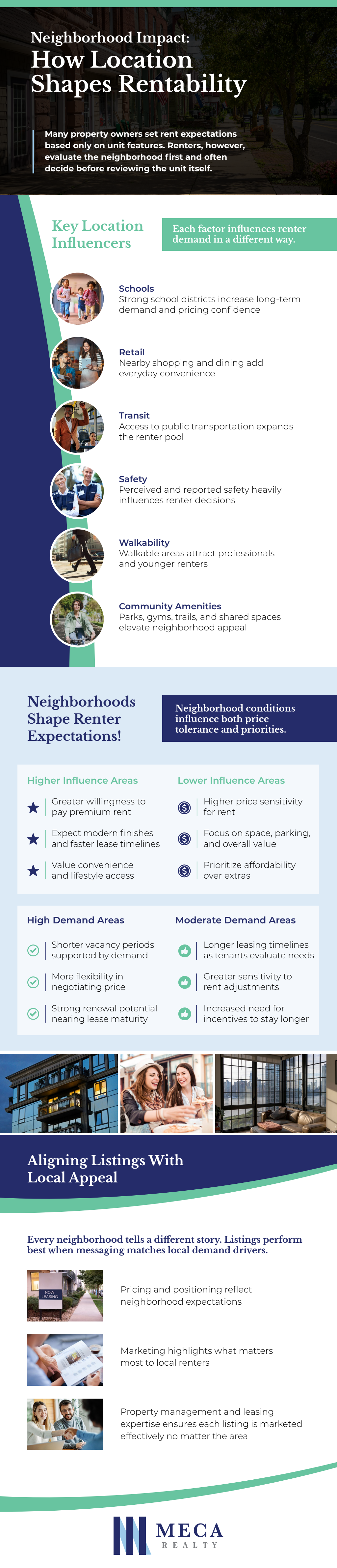
    When assessing rental performance, attention often goes straight to unit features like updated interiors, modern appliances, or flexible floor plans. While these details matter, they are only part of the equation. A property’s surroundings play an equally powerful role in shaping rentability. Long before a renter compares finishes or square footage, location helps determine whether a property even makes it onto their shortlist.

    Today’s renters evaluate housing through the lens of lifestyle. They look for neighborhoods that align with how they live, work, and spend their time. Access to transportation, nearby amenities, walkability, and the overall feel of an area all influence whether a property feels like a natural fit. When a location supports a renter’s daily routine, the unit itself often feels more appealing, even if it is similar to options in other areas.

    Perceptions of value are also closely tied to neighborhood characteristics. In high-activity or centrally located areas, renters may expect efficiency, connectivity, and convenience, and they often accept smaller spaces or higher prices in exchange. In quieter or more residential neighborhoods, renters may place greater importance on space, privacy, or long-term comfort. These expectations shape how pricing is received and how quickly renters are willing to commit.

    Location also affects leasing pace. Some neighborhoods create urgency because of strong demand, reputation, or limited inventory. In these areas, renters may move quickly and make decisions with minimal negotiation. In other locations, the process tends to be more deliberate. Renters may compare options longer, ask for additional information, or weigh tradeoffs more carefully. Recognizing these patterns allows property teams to adjust leasing approaches and set realistic timelines.

    Effective marketing bridges the gap between location and renter expectations. Listings that clearly communicate neighborhood benefits help renters visualize daily life beyond the unit itself. Describing nearby conveniences, community character, and accessibility provides context that supports faster and more confident decision making. When marketing reflects how renters actually experience a neighborhood, it becomes a powerful driver of interest.

    Over time, alignment between renter expectations and neighborhood reality supports stronger performance. Residents who feel connected to their surroundings are more likely to remain satisfied, renew leases, and engage positively with property teams. This consistency benefits both renters and owners by reducing turnover and strengthening long-term stability.

    Strong rental strategies treat location as an active influence, not a fixed backdrop. By understanding how neighborhood dynamics shape demand, perception, and behavior, owners and managers can better position their properties, attract the right renters, and support sustainable results across their portfolio.

    For a deeper look at how neighborhood traits impact rental outcomes, refer to the companion visual guide below from MECA Realty, a residential property management company in Charlotte, NC.

  • When Car Trouble Hits on the Road: Real Tips for Travelers Who Just Want to Get Moving Again

    When Car Trouble Hits on the Road: Real Tips for Travelers Who Just Want to Get Moving Again

    Nothing can kill that “windows down, music up” road trip vibe faster than a weird clanking noise, a blinking dashboard light, or—worst of all—a dramatic puff of steam pouring out from under your hood right in the middle of nowhere. Whether you’re driving just a couple of hours for a family visit or going full-on cross-country, car trouble while traveling has a special way of making you feel stranded and stressed. Don’t worry—you’re not the only one who’s pulled off at a random exit, popped the hood, and stared blankly at the engine, hoping for some kind of miracle.

    If you ever find yourself in this mess (and let’s be real, it happens to most of us), here’s what actually makes a difference and helps you get back on the road with as little drama as possible.

    Image via Unsplash

    Don’t Panic: Find a Safe Spot First

    First rule: get yourself out of harm’s way. If the car’s making noises or you see smoke, use your hazard lights and pull over as far right as you safely can. Highway shoulder? Great—just be visible. If it’s at night, leave on hazard lights and, if you have them, those little reflective triangles are worth their weight in gold.

    If you’re on a busy road or don’t feel 100% safe, stay in your car and lock the doors. It’s better to call for help from inside than try to play amateur mechanic next to streaming traffic.

    Do a Quick Self-Check (Even if You’re Not Car-Savvy)

    Pop the hood if it seems safe and see if there’s something super obvious—like a loose battery cable, a snapped belt, or even (yep) a cap that wasn’t screwed on tight at the last fuel stop. Don’t poke around if you smell gas, see big puddles, or the engine’s still smoking hot. Some things are DIY-fixable. Most, you want a pro for.

    Check your phone for local mechanics or roadside help. If the car will start and limp along, go for the next service station. If not, time to call in some backup.

    Use a Local Mobile Mechanic (They’re a Lifesaver, Seriously)

    Roadside assistance is great, but sometimes a traditional tow just means getting stuck at a random shop with a long wait time. For a fix right where you are (and sometimes a faster one), try a service like MechaMedix Mobile Mechanic—they come to you, whether you’re at a hotel parking lot, the side of the interstate, or grabbed a shady spot at a rest stop. Many mobile mechanics can handle everything from battery swaps to minor engine woes, and they’re often used to working with travelers in a hurry.

    Finding a mobile mechanic near your location is as easy as a quick search on your phone or checking review sites. Just make sure you check credentials and reviews, and ask for a rough price estimate before agreeing to anything.

    Stay Safe While You Wait

    It might take a bit for someone to reach you—grab some water, stay hydrated, and use the opportunity to catch up on a podcast or text family so they know where you are. If someone stops to “help” and you’re not sure about them, stay in your car with the windows up. Legit mechanics should have company logos or identifiable vehicles.

    Have a Basic Emergency Kit in the Trunk

    This feels obvious, but you’d be amazed how handy a little kit can be. Toss in jumper cables, bottled water, phone charger, flashlight, reflective vests, and simple snacks. Even a paperback helps if you’re waiting awhile. If you’re in a rental, check the trunk and glove box for what’s already there.

    The best lesson? Treat car trouble as a twist in the story… not the end of the trip. With some back-up, common sense, and maybe a little humor, you’ll be rolling on to the next stop before you know it. Safe travels!