Category: Uncategorized

  • How do I calculate how much concrete I need?

    Whatever the size and scale of the project you have planned, it’s very important that you order the correct amount of concrete for the job. If you order too little, you’ll have a temporarily unfinished job on your hands. If this initial batch of concrete is allowed to set before you get the chance to add the rest, you’ll end up with a seam in the finish known as a cold joint. If you’re using the concrete for some structural applications this can be a real problem.

    If you order too much concrete, you’ll end up paying more than was necessary. It’s very easy for costs to spiral out of control on any project, so ensuring that you get your concrete order right matters. If you order too much you could end up forking out more to dispose of it correctly.

    Image via Unsplash

    To keep tabs on costs and minimise on-site headaches it makes sense to get your order right the first time.

    At Goodmix Concrete we can advise you how to measure your space and work out how much concrete you will need for your job. An online concrete volume calculator can also be useful.

    Calculating the metric volume of concrete that you’ll need

    Many people who are placing a concrete order for the first time can find it something of a minefield. At first glance, the process can look confusing with lots of different factors to consider. However, it’s relatively straightforward once you understand the basics.

    The first thing to consider is the shape of the space you’re concreting. If it’s a regular four-sided shape like a square or a rectangle, calculating the volume is fairly simple. You will need to measure the depth, the length and the width of the space and then multiply them together.

    If you’re looking to concrete an irregular shape, you will need to break that shape up into a series of regular shapes. This can be tricky when you’re measuring circular, prism or other irregular shapes, so take your time to get it right.

    It can be helpful to find as many regular shapes within the irregular one as you can. For instance, a teardrop shaped space may contain a larger square or rectangle in the middle. It may also contain a number of triangular shapes. With these you measure the two longest sides, double them, and multiply those figures with the depth. Then divide the final figure in two to get an accurate volume figure for that section.

    All the units you use should be uniform and metric, and you should be meticulous in recording the measurements. Check and double-check. If you can, let someone else on site check your figures.

    Some people find it prudent to add 5-10% to the final figure, particularly if they’re placing an order for the first time. But don’t go overboard, too much concrete on your hands is one headache you should try to avoid. A perfectly placed order will complete the job with a small amount of concrete left over. Ordering precisely the amount you have calculated for the job may save you a few pounds but can be risky.

    How to get your order right

    As well as working out the volume of the concrete you require, there are a range of other factors that you’ll need to consider. Different jobs require different types and densities of concrete. Colours and texture can vary as well, so it’s important to think about the kind of finish you require before you start.

    Concrete Density

    Building regulations determine the density of concrete required for different building projects.   As a house foundation only needs to withstand foot traffic, it doesn’t require the same density of concrete as a driveway or a garage floor. A goods yard used by heavy vehicles on a daily basis would require a density that gives it strength enough to cope.

    Types of concrete

    Different types of concrete are suitable for different purposes. A grading system indicates the compressive strength rating of concrete 28 days after the concrete was poured. The grading reflects the job that the concrete is needed for. This should make it easier to ensure you order the correct density and strength for the job you have in mind.

    This grading system ranges from C7/8, which is usually used for domestic foundations, kerbing, haunching and cavity filling, through to C40 which is the heaviest duty grade of concrete. This is the grade of concrete used in HGV car parks and large-scale civil engineering projects. In between the two extremes are a range of intermediate grades for different purposes.

    If you’re in any doubt about the kind of concrete you might require, it’s important to discuss your requirements with your concrete supplier. At Goodmix Concrete we’re experienced in providing concrete for a wide range of jobs with very different requirements. We can help you choose the right grade and ensure that your work is built to last.

    Goodmix Concrete are the North West’s leading provider of ready-mix and barrow-mix concrete.

    If it’s the first time you’ve had to order concrete, you may be confused about the whole process and concerned about getting it right. Although it can appear complicated, it’s one we deal with every day. We’re the leading provider of both ready-mix and barrow mix concrete across the North West, to projects of all different sizes both domestic and commercial.

    As ready-mix concrete is delivered on time to a customer’s precise specifications it eliminates issues of waste and over ordering. You only pay for the concrete you actually require. At Goodmix Concrete we only use aggregate direct from the quarry, never cheaper recycled materials.

    If you’re currently planning a domestic or commercial project that requires high-quality, reliable concrete why not get in touch for some professional advice?  Our highly experienced team are ready to answer your questions and we can deliver to your site within 24 hours.


  • The Advantages and Disadvantages of XRD

    X-ray diffraction (XRD) is a common x-ray technique for scanning and measuring compounds and its main uses are in scientific industries.

    The many industries that use XRD include:

    Engineering
    Materials science
    Environmental science
    Forensic science
    Pharmaceuticals
    Microelectronics
    Geology
    Biology
    Glass production.

    Image via Unsplash

    XRD is a major analysis technique used at all stages of drug development. It is used in trace analysis in forensics. XRD characterises crystal substrates such as silicon for use in integrated circuits in microelectronics. In glass manufacturing, XRD supports process control, identifying tiny crystal that can lead to manufacturing faults.

    But given these wide applications across different industries, what are the advantages and disadvantages of XRD as a measuring technique?

    How XRD Works

    As light-forms, x-rays include measurable wavelengths in nanometres.

    If you direct monochromatic x-rays onto substances with crystalline structures, there will be levels of interference when the x-rays then scatter, which cause patterns of varying intensity.

    This process is known as constructive interference, and it is the basis of a technique for studying crystal structures and atomic spacing.

    The atomic planes of crystals and crystalline structures cause this interference to diffracted x-ray beams. The distances between these planes are known as d-spacings and each mineral has its own unique set.

    Therefore, if you collect the diffracted x-rays, you can analyse the structure of a sample.

    D-spacings have standard reference patterns, which you can refer to as comparisons to identify the structure of a sample substance.

    The way the XRD method reveals the atomic structure of crystals is based on Bragg’s law.

    Under Bragg’s law, for x-ray diffraction to occur, the x-rays and the sample surface must interact in a certain way:

     The angle of intersection between the beam and surface is equal to the angle of scattering, and

     The pathlength difference is equal to an integer number of wavelengths.

    The instrument for carrying out this technique is an x-ray diffractometer.

    The x-ray diffractometer emits x-rays from a cathode ray or rotating target, directing them at the crystalline sample.

    The sample and x-ray detector in the x-ray diffractometer both rotate. When this movement satisfies the conditions for Bragg’s law, constructive interference occurs.

    The x-ray diffractometer includes a detector, which records and processes the x-ray signals, converting them for output to a computer.

    Each crystalline structure has a unique set of d-spacings, and these are like individual fingerprints. There are standard d-spacing reference patterns you can  compare your readings to, enabling you to identify the sample substance’s structure.

    The Advantages of XRD

    You can use XRD to determine the orientation of the individual grains of a crystal and to identify crystal structures in unknown substances.

    This technique will measure the internal stress, the size and shape of small crystalline areas, and measure the average spacings between the layers of rows of atoms in samples. It can determine their minerology.

    XRD will produce clear, unambiguous results, and as a technique it is both powerful and rapid.

    Preparation only involves minimal sample quantities. These you grind into a fine powder, with an optimum size that is less than 10μm (micrometres).

    Interpreting the results of XRD is relatively straightforward. The x-ray diffractometer continuously records data during the process, and presents peak positions and x-ray counts in a table.

    In the table, the Bragg equation calculates the d-spacing of each peak. Once you have all the d-spacings for the sample, you can compare these readings to d-spacings of known materials, to identify the sample.

    X-ray diffractometers are widely available testing instruments, both as benchtop and portable models.

    Disadvantages of XRD

    XRD is a specialist technique and has limitations in what you can apply it to.

    If you are using it to identify a substance that is not known to you, then the sample must be single phase and homogeneous.

    The sample must also be very small, in quantities of tenths of a gram. Proper preparation of samples is crucial.

    If the sample is a non-isometric crystalline structure, then indexing its patterns can be complex. Where there are high-angle reflections, peak overlay can occur and worsen.

    Despite requiring small sample sizes, XRD is much more accurate measuring large crystalline structures rather than small ones. Small structures present only in trace elements will often go undetected. If the sample consists of mixed materials, the detection limit is 2% of the sample.


  • Why automated aluminium gates can be the safest option for your driveway

    The safety of automated gates is a key consideration for owners of domestic and commercial properties. If you have pets, people coming and going and children on your property, then nothing can be left to chance. Perhaps your driveway borders a busy road or pedestrian area. In which case, if something were to go wrong with your gating system, then you could be held responsible.

    Gate system manufacturers understand this and have, over the years, built in practically foolproof mechanisms to prevent accidents occurring. When you install automated gates, you need to be confident that everything is safe.

    Image via Unsplash

    When it comes to choosing the material for your gates there’s a growing consensus that aluminium offers the greatest safety benefits. There are a number of reasons for that, not just in the material itself and what’s required to operate it, but also in what it can offer in terms of security.

    Let’s take a look at some of the principal reasons why aluminium automated gates are such a smart choice.

    Light & Nimble

    As a material, aluminium manages to combine incredible strength with lightness. This makes it ideal for automated gates because it means that it takes less power to move the gates. Having less power behind the gates means that, in the unlikely event they hit an object, the power behind the gates won’t be as powerful in trying to keep driving the gates forward. This reduces the risk of serious injury or property damage.

    Compared to wood, iron or steel, the lightness of aluminium also means that should it hit a person, animal or object it’s much less likely to cause damage.

    Does the lightness of the material mean that you have to compromise on the overall strength of your gates? Not at all. While being light, aluminium is also incredibly strong. This is why it’s increasingly becoming the material of choice when it comes to automated gates.

    Secure access

    While heavy wooden gates may appear to offer a natural barrier to intruders, their security aspect is limited. As well as being relatively easy to scale, they don’t offer the same degree of security as automated gates. Using a latch and bolt system, perhaps in conjunction with some kind of extra key lock, wooden manual gates offer only a minimal amount of security. Locks can easily be cut, latches lifted. and bolts drawn back.

    Opportunist thieves tend to be experts at dealing with basic levels of gate security. To really deter a thief, you need to go the extra mile. Automated aluminium gates offer a real deterrent to your average thief. The locking systems are practically impossible to force open, and certainly beyond your average opportunist thief who is likely to look elsewhere for easier pickings. Access to your gates is controlled via remote control or a button inside the property. Optional security options such as CCTV can give you added control over access to your property. Smartphones apps allow you to control access while away from home and can even allow you to see who is standing at your gates before you allow them entry.

    Compared to traditional manual gates aluminium automated gates are a superior choice when it comes to security.

    Choose an experienced installation team

    Automated gates rarely present the users with any problems. Any safety issues that do arise tend to be as a result of poor maintenance. Any other problems that occur are often the result of an inadequate installation. It’s possible for people with some electrical and construction experience to install automated gates, likewise for people in related trades, but it isn’t always advisable. While many will do a decent enough job, there are aspects to consider that are best left to an experienced gate engineer.

    Qualified aluminium gate installers will be experienced at handling all kinds of installations and will ensure the whole process is carried out as safely as possible. They will be alert to any potential dangers and hazards and do all they can to minimise the risk. They can also suggest a maintenance schedule based on your gate usage.

    For the best of all worlds, an automated aluminium gate installed by a qualified and experienced installer will enable you to enjoy the security that they offer for many years to come.


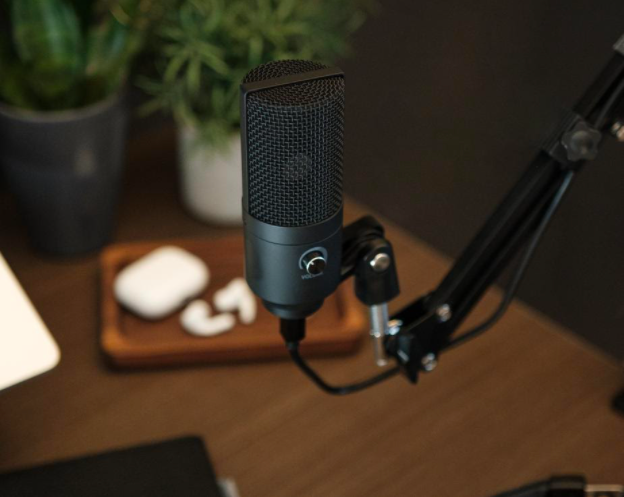
  • Ways of Starting a Successful Podcast with Less Money

    Many people have started listening to podcasts. The number has increased tremendously over the years. A podcast does not require a lot of things. You need to have the content and money to begin, and you are good to go. It is a perfect way of reaching a good number of audience and also making money. There are things you should know first before starting a podcast. Do not be so eager to start and forget to use the correct criteria when choosing a platform. Check out this list, crafted by this website.

    How to Start a Podcast

    1. You should have the concept of what you want to discuss
    2. You should have designed artwork for your podcast
    3. Recording and editing of files.
    4.  Get a place to host the files you have.
    5. Put the audios together for distribution.

    Reasons to Start a Podcast

    If you know more about delivering content, you have a clue about the podcast. Starting a podcast means connecting with an audience to give them the content they require. You do not need to know too much for you to be a substantial podcaster. It allows you to start from scratch and see yourself grow to a better person daily. As a podcaster, you have a chance to take your audience back to your page after your show. There is a link provided that will help you with directing people to your page. If you give out the best content, you will have an impressive number of listeners. People have turned to listen to podcasts because they learn different things from them. Having a podcast gives you the power to run it the way you want and also sell yourself out there.

    Podcast Works as a Content Platform

    It is a content platform because people can hear them anywhere. You do not have to be at home to listen to a podcast. Again, it does not give restrictions to the device to use. You can use any gadget of your choice. It is different from the other platforms because of the connection you get to have with your audience. It feels good when you talk, and different people try to listen to you. Because of the relationship you have with your audience, they end up listening to the ads. People have contrasting goals when starting a podcast. If you are commencing yours to promote your business, make sure you push hard, and people will get your products. When you want to make money from ads, you need to attract a good number of audience. You have to believe in yourself and work hard.

    Starting your Podcast

    Before you start, you need to know the theme. Make sure that each of your episodes makes sense. The topic you talk about should be captivating in all aspects. If you are a business person who sells sunglasses, it will not be a good idea to start your podcast by promoting your glasses. You can either promote yourself at the end of the show or make your topic about something related to sunglasses. If you use the correct criteria, people will always be there to support you. Before choosing a theme to talk about, you need to know if you have enough points to push you until the show ends.

  • Debt Collection Strategies for Small Businesses

    Establishing a Clear Credit Policy

    Your credit policy is your first line of defense against bad debts. It should detail your payment terms, interest rates, and penalties for late payments. For instance, a business-to-business (B2B) enterprise might implement a credit policy that includes net-30 terms with a 2% penalty for late payment. It’s crucial that this policy is communicated clearly to all your clients before engaging in any transaction. Regularly review and update your policy to reflect changes in your business environment and to close any loopholes that might lead to non-payment.

    Consistency in Billing

    Consistent billing can significantly reduce the chances of payment default. Timely invoices remind customers of their obligations. If you are a service-based business, ensure that invoices are sent out immediately after the services are rendered. If an account is overdue, send out a reminder promptly. Automating your billing system can streamline this process and ensure no debtor slips through the cracks. Software like QuickBooks or FreshBooks can send out automated reminders to clients, reducing the manual work involved in chasing payments.

    Proactive Follow-Up

    Being proactive in following up on unpaid invoices can greatly improve your debt recovery. This could be a friendly reminder email, a formal letter, or a phone call. For instance, a week after the invoice is due, a friendly email reminder could be sent. If payment is still not received after another week, a more formal written request can be sent. Maintaining a professional and polite tone during these communications can help preserve your business relationship with the client.

    Offering Multiple Payment Options

    By offering multiple payment options, you make it easier for customers to settle their debts. Traditional methods like cash or checks can be supplemented with digital wallets, online banking, or even installment plans. For example, a retail business can offer options like PayPal, Google Pay, or installments through Afterpay. The easier you make it for clients to pay, the quicker you’re likely to receive payment.

    Utilizing a Debt Collection Agency

    If your attempts to collect a debt have been unsuccessful, consider involving professionals. For instance, if a client owes your consulting firm a significant sum and has not responded to multiple follow-ups, a reputable debt collection agency could step in. They have expertise in tracking down and negotiating with hard-to-reach debtors. They also understand the legal landscape, ensuring your actions remain within the bounds of the law.

    Accurate Record Keeping

    Maintaining accurate records is vital in any debt collection effort. Keep track of every transaction and communication with your customers. For example, if you own a small publishing company and a bookstore has failed to pay for a shipment of books, having a record of emails, invoices, and delivery receipts can help resolve the dispute. These records could also be essential if you need to involve debt collection agencies or take legal action, ensuring the agency has all the necessary information to recover the outstanding debt effectively.

    In conclusion, while the goal is to recover the debt, it’s equally important to preserve your relationship with customers. A diplomatic, empathetic approach can go a long way in maintaining customer loyalty. Moreover, prevention is key—mitigate the risk of bad debt with thorough credit checks and setting credit limits. By implementing these strategies, you can ensure your cash flow remains healthy, securing the future of your small business.