Category: Design

  • CERIO

    CERIO

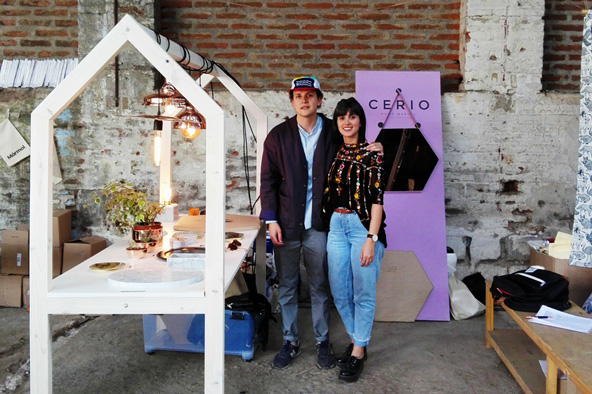
    Husband and wife Cristóbal Rioseco and Valentina Cerda are the founders of Chilean design studio CERIO, specialising in furniture and homeware using unexpected material combinations. We chatted with Cristóbal and Valentina to discover more about what made them start their own business, their design process and their choice of materials.

    www.instagram.com/cerio.cl

    future-positive-cerio-low-5

    Could you please introduce yourselves and tell us a little bit about your backgrounds and how you met?

    I studied advertising and Valentina, my wife, is an interior designer. I used to work in retail design and also building different pieces of furniture. Valentina worked at several architecture studios and was in charge of the visual merchandising of different brands. We met through the girlfriend of my brother, who introduced me to Valentina – we both are from small cities in the south of Chile.

    It was normal for me to often switch jobs trying to find the right one, the one that would fulfil me but also having a regular job made it impossible to start our own business.

    future-positive-cerio-low-1

    What made you start CERIO?

    We used to talk a lot about quitting our jobs and do what we really wanted to do – having a better quality of life. A life where we could have more time for us and, most importantly, doing what we were really passionate about.

    We knew we wanted to do something together and it had to be design-related because it is something we love. Apart from this, we knew there were lots of people like us who prefer buying from independent business.

    We used to design our own furniture and gave it as presents to our friends and family. Moreover, because of our backgrounds, experience and knowledge, we saw an opportunity to create our own brand called CERIO. (The name comes from our last names: CERda + RIOseco.)

    future-positive-cerio-low-6

    The material combinations you use for your products are really interesting, could you tell us about how you choose the materials you work with?

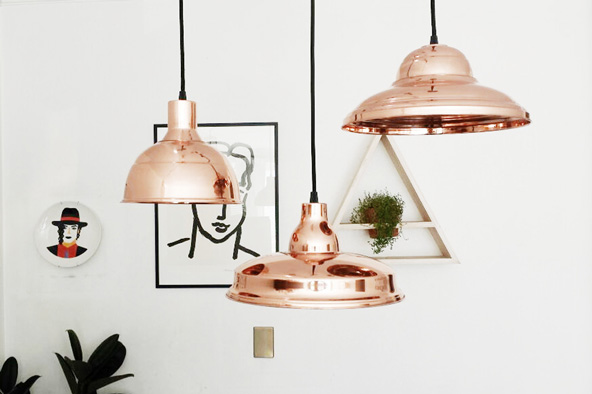
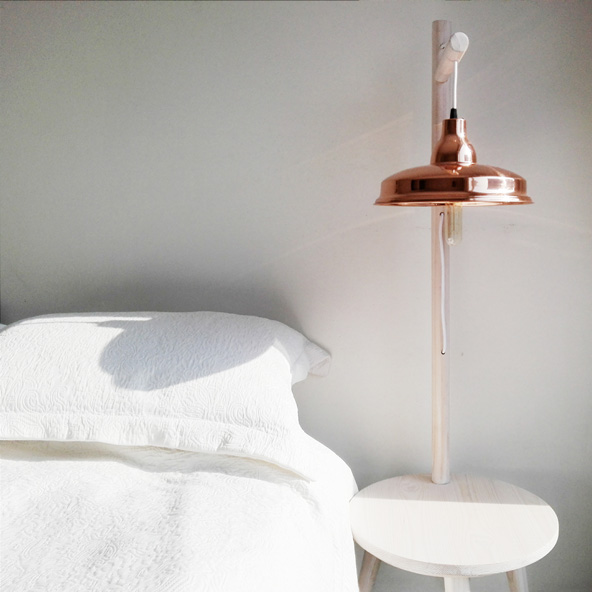
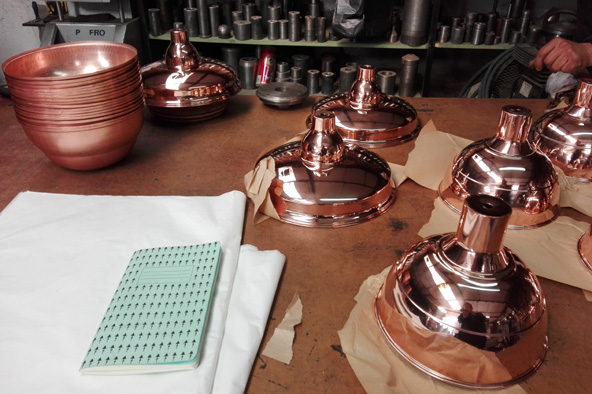
    In our work we prioritize copper as the main material – it has an infinite array of properties and ways to use it. Our country has one of the biggest copper reserves and it’s our main export, so when we use copper in our designs we feel we are including part of our country.

    We have a very eclectic taste so we are always searching for new materials to incorporate in our designs, making prototypes to see how they’re going to look together. We try to combine materials that aren’t normally used together. Our goal is to always look for new materials and in the future we would like to experiment with ceramics and textiles.

    future-positive-cerio-low-3

    Could you tell us about the different products you currently manufacture?

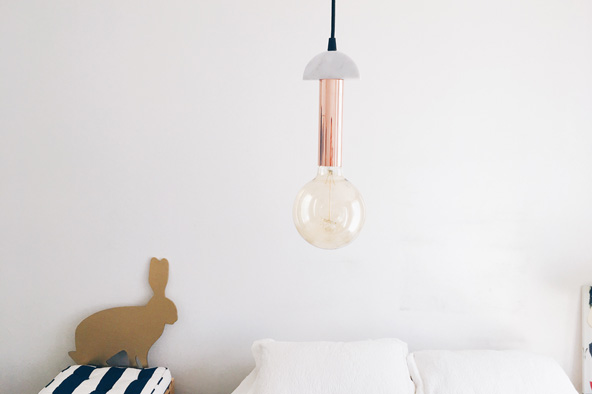
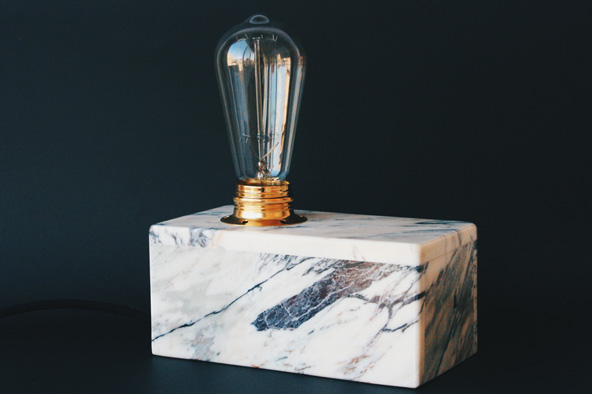
    We currently sell different types of products including mirrors, planters, lamps and tables. We are working a lot with marble and copper and we are introducing bronze and wood to our designs, combining all these materials in one product.

    With our products we try to give more personality to our clients’ houses, offering products that are handmade and fair trade.

    future-positive-cerio-low-2

    Could you take us briefly through your design process? How does an idea in your heads transform into a physical product?

    We are inspired by nature, people and everything surrounding us. We start drawing and it usually takes us lots of time to agree on one design. After that – it is the best part of the process – we start playing with the different materials and get excited seeing the first results through the prototypes.

    future-positive-cerio-low-4

    What are your plans for 2017?

    Our plan is to focus on designing more furniture pieces (desks, shelves, etc.) and export our products to others countries. We also want to start exploring other design areas.

    This year we are interested in getting more involved with products made with recycled materials. In the past we have made a few products using this type of materials and it is something we would like to do again.

    In a few years we would like to have a little coffee shop where we can have a showroom with our products and other similar brands.

  • Aimée Wilder

    Aimée Wilder

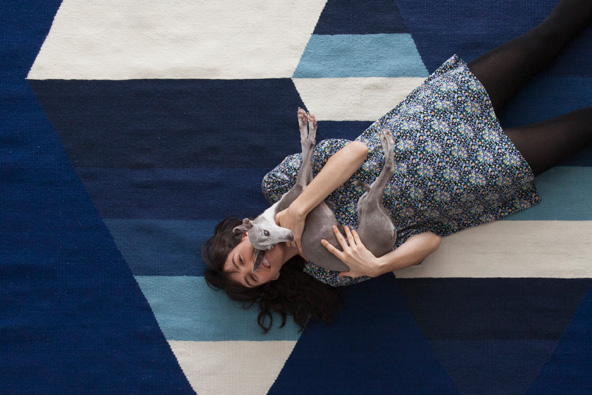
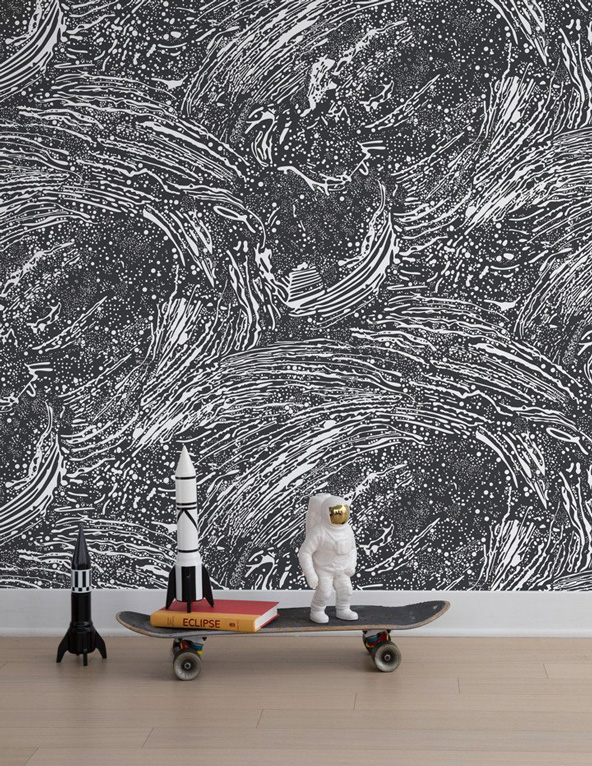
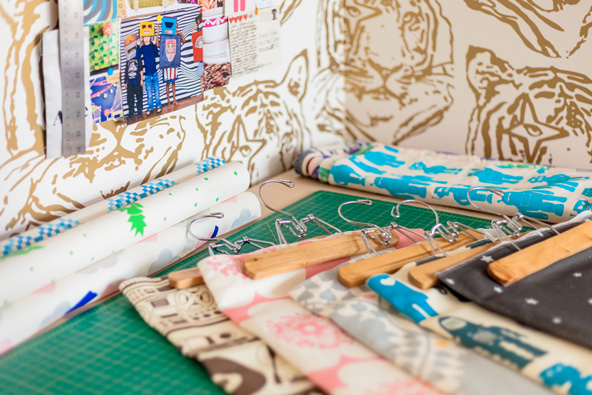
    Aimée Wilder’s love for design and textiles started at a young age whilst exploring the fashion showrooms where her parents worked. In 2009 Aimée launched her own brand in New York City, first translating her artwork into wallpaper and later expanding into home textiles, hand-made rugs, pillows and other products.

    We chatted with Aimée to find out more about her childhood, her design process and the inspiration behind her latest collection, Phantasmagoria.

    www.aimeewilder.com
    future-positive-aimee-wilder-7-low-2

    Do you remember how your passion for textiles and design started?

    I went to work with my parents a lot on my days off from school, or when there were circumstances like doctor appointments or something else where I needed to be in Manhattan with my parents at the end of the day. I guess maybe I was sort of playing “hooky”— what you in the UK call playing truant.

    My father was a denim manufacturer; They made some of the first acid-washed and studded denim. I was enamoured by the clothing and details whenever he would bring me in. I also loved going to my mom’s office. She also worked in fashion and travelled a lot for different dress companies that had amazing dresses adorned with patterns, such as florals and embellishments.

    My parents worked across the street from one another on Broadway in the Garment District, so I would often jump between their offices having lunch with whomever was free before heading to the art department of my mom’s office. She worked in a studio environment where artists and designers worked on graphic design, photography, fashion design, illustration, pattern making, and more. Endless art and design supplies were at my fingertips: old Polaroid cameras, film, watercolour paints, markers, paper, cardstock, and long counter height tables and stools where I could spread out and get to work. It was like a dream. All of the designers were busy working, but sometimes I could help develop Polaroids by shaking them, or stapling packets for presentations. Usually I would get to have some play time of my own, so it was like a hands-on art education.
    future-positive-aimee-wilder-3-low

    Can you take us briefly through your design process? How does an idea in your head transform into a print or pattern?

    While ideas are always coming in and I love the idea of lists, I am bad at making them; so I usually just go with the flow of how I’m feeling on the day. I don’t design well under pressure and like to create what feels most natural. My process can take a while because I have myriad files with concepts not fully developed, and most of the time I have to work on a deadline. When I have time to develop new work, I dig through my files to see where I left off. If I am starting something new I might draw something on scratch paper or I’ll start with an inspiration image such as a magazine tear, web image, or photograph. I’ll create a file with a name that resonates and start adding more inspiration images from various sources. One source of inspiration that influenced my last collection was wild animals. It helps me to collage images into a layout or repeat. Then I decide if I want to develop the concept further.

    My tool of choice is a computer mouse. I never got used to a stylus. I was dysgraphic as a child, having trouble holding a pen properly. I also had a problem with depth perception. My hand-eye coordination didn’t work the same way with a pen and paper as it did with something such as 2D video games, and writing was difficult. By comparison, with a computer and a mouse I am able to draw in a completely different process using the pen tool — with it’s points and curves — to create artwork. Dysgraphia for me was a temporary developmental difference due to some difficulty focusing, likely due to borderline hypothyroidism. With the aide of the computer, I was able to develop as an artist, through software such as Photoshop and Illustrator.
    future-positive-aimee-wilder-5-low

    Where do you draw inspiration from?

    Travelling is a huge part of where I draw inspiration because I see and experience new things. What you get to see when you are in different parts of the world is always different from what you have access to at home. From the way places and spaces are decorated, to the general feel of the culture and colours of the city, there is always inspiration to be found. Both locally and while travelling I find inspiration through research both online and in books, new and vintage magazines, and in physical places like museums, interiors of restaurants, retail spaces, public spaces, and hotels.

    Shopping for clothing and homewares is also a way to find inspiration. I collect a lot of fashion items, textiles, and other home goods for research purposes. The way a material feels, or looks when printed, or how it’s constructed is something we can reference when we are specifying a product for production. Additionally, the way well-designed places look and feel help me to think of how I want to use colour and design in my line.

    I love historic textiles and they play a large part in my inspiration as well. I’ve always been inspired by graphic design and find that elements of typography and iconography appear in my work. When I am developing artwork, a lot of times the individual designs merge into a story. Most recently I am finding specific words as inspiration and I am working with language to define another upcoming collection in a similar way that we did with Phantasmagoria.
    future-positive-aimee-wilder-2-low

    Can you tell us a little bit about your latest collection, Phantasmagoria?

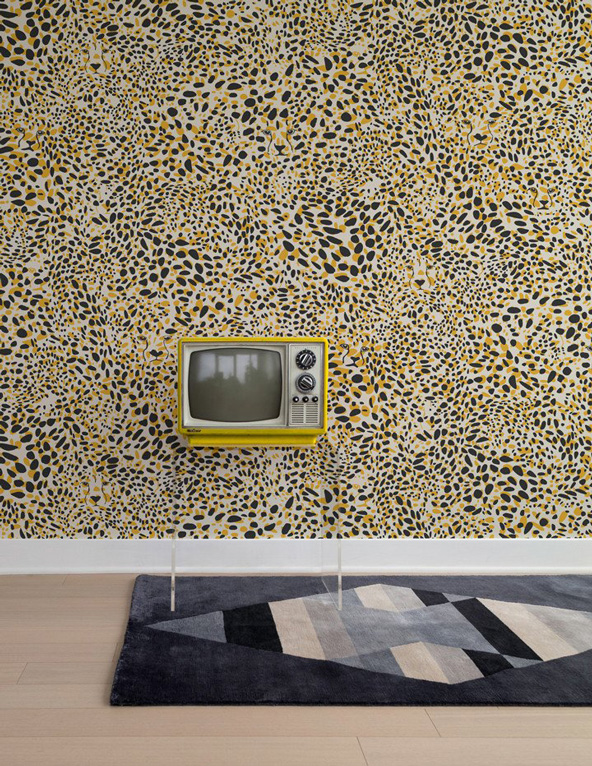
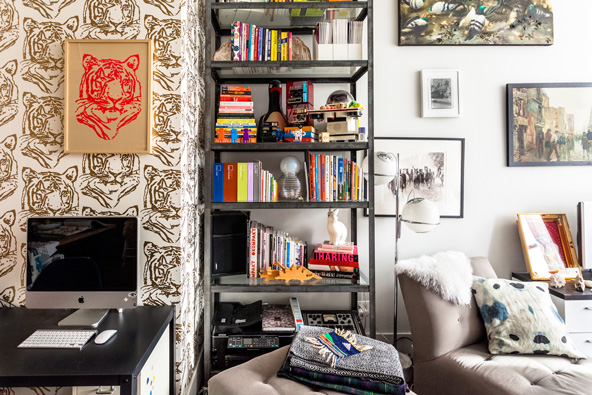
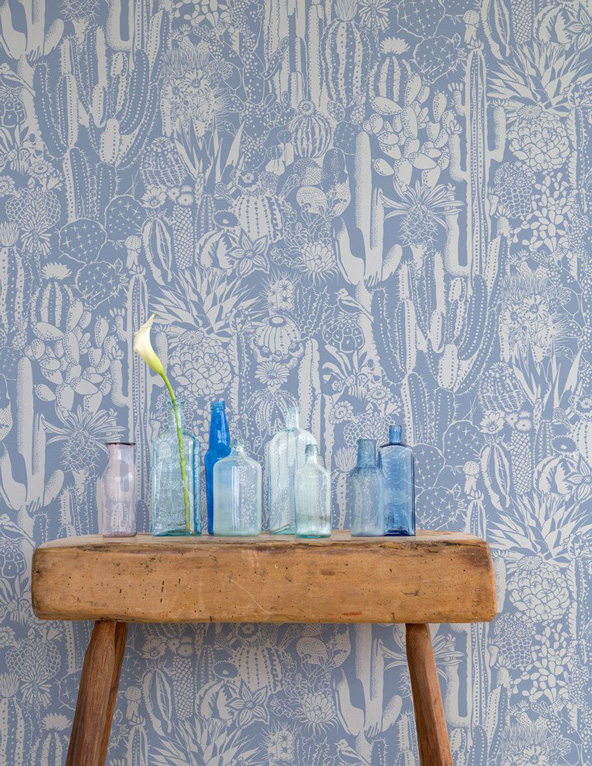
    Phantasmagoria was made out of extremely detailed large format designs. They came together as a group into a menagerie of a dream state where wild things happen, extraordinary things, and so this collection came from a dream after starting on some of the designs that were culminating. For instance, we were working on a cheetah pattern where we added cheetah faces that had a psychedelic feel to it, heavily influenced by psychedelic art and vintage animal print textiles. At the same time, we were working on detailed natural designs and botanicals. We had a cactus design with thousands of prickly points and the cactuses were actually quite large and created on a larger scale for wallpaper (2 feet by 3 feet). Jungle Dream has very large elements with nocturnal animals. I had a recurring dream that these cheetahs were chasing me in the night and that I’d be chased from a jungle into a cactus desert into a galaxy swirling above me and then all of a sudden, I’d be immersed in a sea of cheetah spots and cheetah faces. It was definitely trippy! This collection makes me really excited for the next one, where I’ve been thinking about the flow state of balance and flourishing, known as Eudaimonia. Phantasmagoria was relative to where I was at the time having to adjust to some changes, whereas this new collection is going to be about balance.
    future-positive-aimee-wilder-4-low

    Your designs are printed on a wide variety of products, from wallpaper to most recently rugs. What products would you like to explore or where would you like to see your prints?

    I plan to continue to develop my home line, and also expand into fashion, but in a practical way where the items carry over from season to season with good shapes, but new fabrics and prints. I dream of making delicious cashmere sweaters, overcoats, dresses, children’s clothing, bedding, indoor/outdoor tiles, jacquard woven fabrics, upholstery, and I also imagine some of my designs being transferred into children’s toys. Lots of possibilities! What matters most to me is that I am creating products that are meaningful, that I would want for myself if I saw them in a store or online. The products must have practical use. I love quality items that last.
    future-positive-aimee-wilder-1-low

    What are your plans for the upcoming months?

    They’ve been a bit adjusted due to knee surgery I had about three months ago. When I was 14, I busted my ACL while skiing but it didn’t affect me until years later when my knee collapsed in lacrosse at school. I opted out of surgery because of the long recovery time, but went through rehab… enough to return to playing sports. Earlier this year my knee finally gave out in yoga while practising handstands and I knocked cartilage off my femur into my knee joint. I had two allografts, one for the ACL with a donor hamstring tendon, and the other was a soft tissue graft of bone and cartilage to my femur. I’m so grateful for the technology, and the donors—allograft is a graft made from donor material. In retrospect, I highly recommend taking care of these issues immediately—don’t be afraid! This recovery period is teaching me patience, allowing me to really concentrate on the healing process, which ultimately is helping restore my creative energy, thus finding balance.

    Now that I’m on the road to recovery, travelling is on the agenda! In February, my guy Stewart and I will travel to Argentina and Brazil. We’ll be starting off in Buenos Aires, then visiting the jungle and waterfalls of Iguazu, and will explore the bird park across the border in Brazil. I’m excited about the tropical birds for a possible collection, and am considering booking a trip to Holbox Island in Mexico to see Flamingos feeding nearby in late April. Argentina, and Latin America in general, have an exuberant colour palette, textiles and patterns, which I am looking forward to seeing.

    In early April, I’ll be travelling to the Milan Furniture Fair (Salone Internazionale del Mobile di Milano) with dear friend and art director, Jason. We are scouting to see about exhibiting there the following year. After a few days in Milan, we are going on a road trip around Northern Italy and Switzerland for inspiration.

    A trip to Scotland is planned for the summer, where Stewart is originally from. His grandmother lives in a stone house in Nairn that she’s been living in for over 95 years, and I’m excited to see all the castles and landscapes. A trip to the River Findhorn and the Isle of Skye (where whiskey is made) is on the itinerary. We are travelling through Iceland, so we want to try to see Vik, Black Sand Beach, and drive to the Golden Circle, as well as to the Blue Lagoon. We are also excited to see Reykjavik!

    Save

    Save

    Save

    Save

    Save

  • Exploring Shoreditch with CitizenM

    Exploring Shoreditch with CitizenM

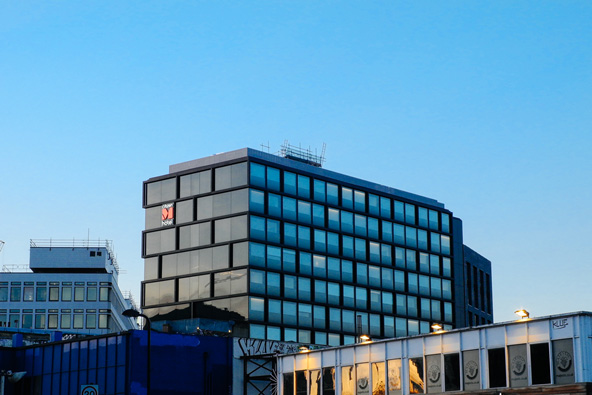
    Located in the heart of East London’s most famous district, the new CitizenM Shoreditch has everything you need to explore all that this vibrant area has to offer. We stayed at this recently opened hotel and selected some of our favourite places in Shoreditch for this mini guide.

    CitizenM Shoreditch

    Designed by Amsterdam-based architecture and interior design firm concrete, CitizenM Shoreditch is the latest CitizenM hotel in London. The brand’s affordable luxury ethos is present in the 216 rooms and communal areas of the hotel, combined with a relaxed atmosphere and the lively streets of Shoreditch as a background.

    future-positive-citizenm-1-low
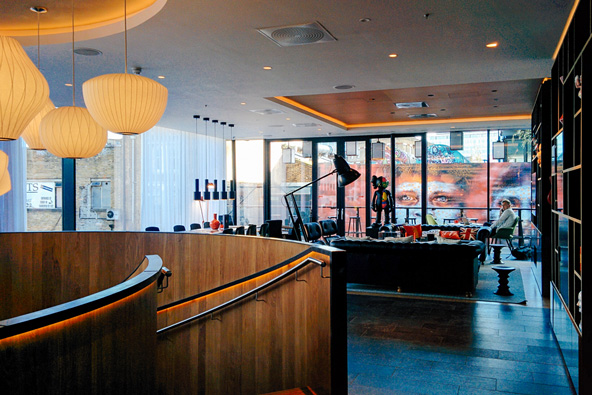
    The surrounding street art is extended into the hotel with a commissioned piece by AVAF located next to the hotel’s entrance. Art is also prominent inside the hotel, especially in the lobby area where several pieces are exhibited and limited editions at affordable prices can even be purchased. The hotel’s lobby is also home to the self check-in area, where you can easily select your room and its views, and the canteen where you can enjoy a delicious breakfast buffet in the morning or cocktails and craft beers in the evening.

    future-positive-citizenm-5-lowfuture-positive-citizenm-6-low
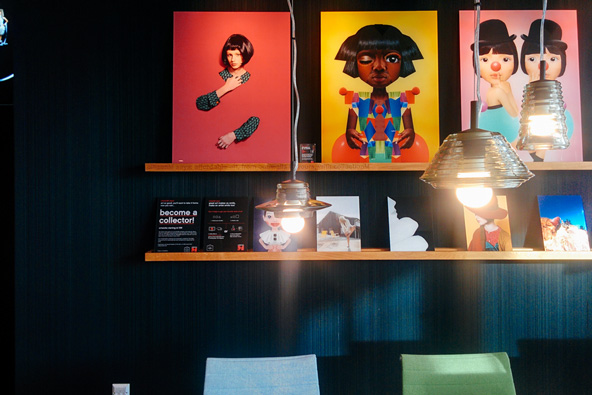
    Design is an essential aspect of CitizenM and you can find many pieces of furniture by Vitra, from chairs to lamps,  throughout the hotel. The lobby’s shelves are filled with art, fashion and design books curated by MENDO, an Amsterdam-based bookshop considered one of the best in the world for design titles.

    future-positive-citizenm-2-lowfuture-positive-citizenm-3-low
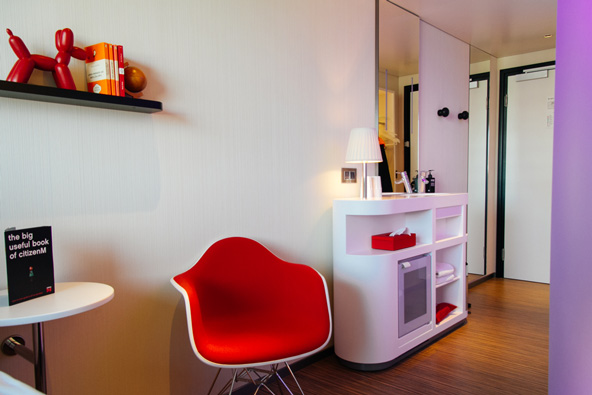
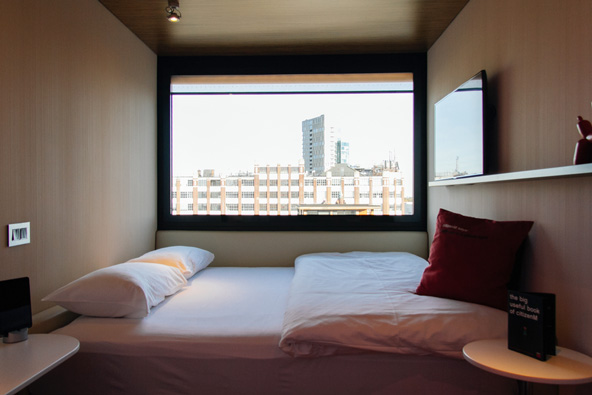
    The hotel’s rooms are equipped with everything you might need for a short stay in London. One of the most interesting features is the big window, extending across the room’s width and providing amazing views of the area. The 2 x 2 metre bed is also impressive and we can guarantee you’ll have a good night’s sleep. Other details that make CitizenM different to other hotels you might stayed in include the moodpad from which you can control the entire room – from the colour of the lights and temperature to the TV and blinds – and the high pressure rain shower with AM and PM shampoo/gel designed by the talented noses responsible for creations by Comme des Garçons and Helmut Lang.

    CitizenM Shoreditch – 6 Holywell Ln, EC2A 3ET

    www.citizenm.com


    Eat & Drink

    Shoreditch is filled with restaurants, food markets, cafés and bars so you won’t really need to leave this area of the city to find exactly what you want.

    To start your day with a hearty breakfast or brunch (breakfast is served all day), head to The Breakfast Club, an independent chain of cafés founded in 2005 with locations all across London. It can be quite busy but we can assure you won’t mind waiting for the Huevos Rancheros, the All American and other delicious choices from their menu.

    The Breakfast Club – 2-4 Rufust St, N1 6PE

    future-positive-citizenm-16-low
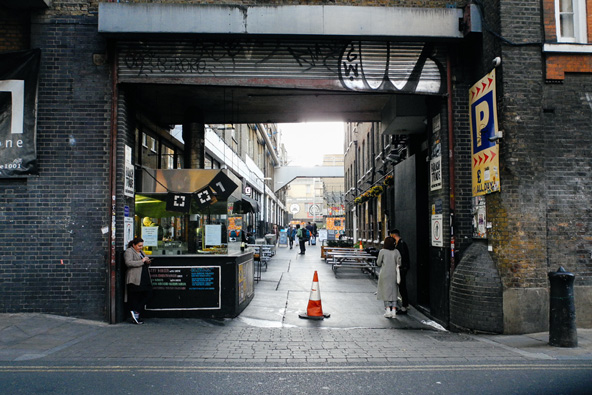
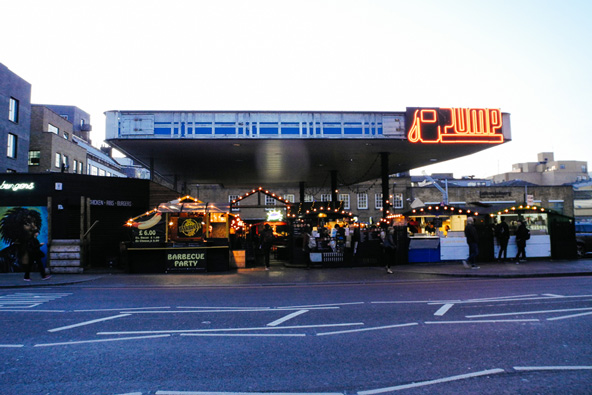
    If you like food trucks and food markets, you’ll find plenty in Shoreditch. You can grab lunch at Ely’s Yard Food Market at The Old Truman Brewery, with vendors changing regularly and often included in articles about the best food trucks in London. For dinner try Pump, a former petrol station now home to a great selection of food trucks offering dishes from all around the world.

    Ely’s Yard – 91 Brick Lane, E1 6QL
    Pump – 168 Shoreditch High St, E1 6HU

    future-positive-citizenm-14-low future-positive-citizenm-15-low
    Finish your day with drinks at The Commercial Tavern, a pub with quirky interiors where you can enjoy a great selection of draft beers and also tasty pizzas at affordable prices.

    The Commercial Tavern – 142-144 Commercial St, E1 6NU


    Shop

    From vintage clothing and books to homewares and the latest designer pieces, the shopping offer in Shoreditch is impressive.

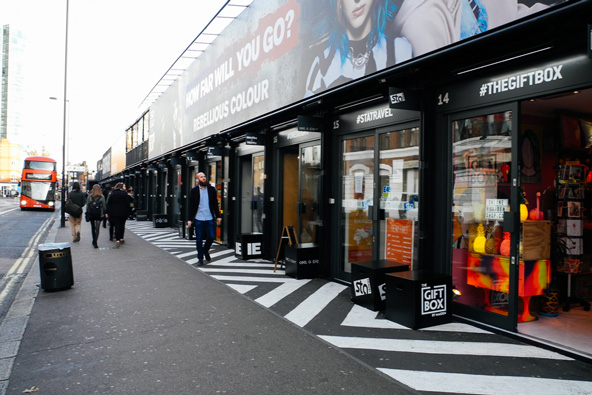
    The best way to start your shopping day in Shoreditch is to visit Boxpark, just across the road from CitizenM Shoretich. Opened in 2011, Boxpark is composed of refitted shipping containers offering affordable and flexible leases for lifestyle brands, cafés and galleries. A great place to discover new brands and buy something unique.

    Boxpark – 2-10 Bethnal Green Rd, E1 6GY

    future-positive-citizenm-8-low
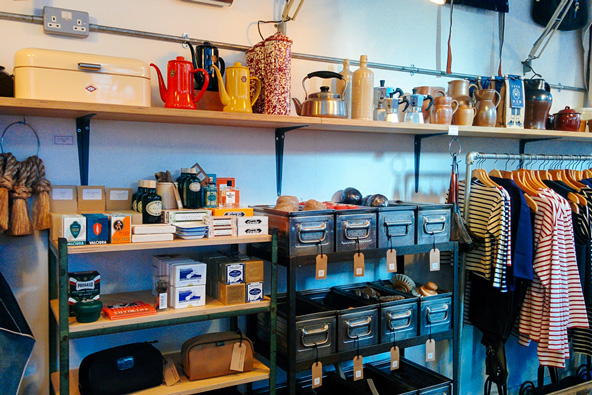
    A few minutes away from Boxpark you can find Labour and Wait, a general store selling a carefully curated collection of new and vintage items, celebrating functional design and ranging from stationery and clothing to kitchenware and outdoor products.

    Labour and Wait – 85 Redchurch St, E2 7DJ

    future-positive-citizenm-9-low future-positive-citizenm-10-low
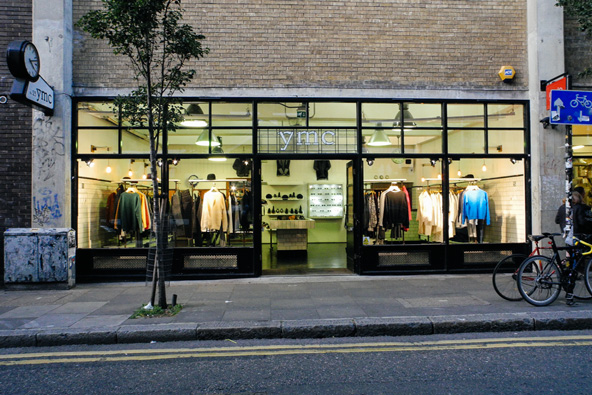
    London brand You Must Create (YMC) has their flagship store in the heart of Shoreditch. The ethos behind the brand is to take a traditional item and rework it to create something modern, giving a timeless quality to its clothes.

    YMC – 23 Hanbury Street, E1 6QR

    future-positive-citizenm-11-low
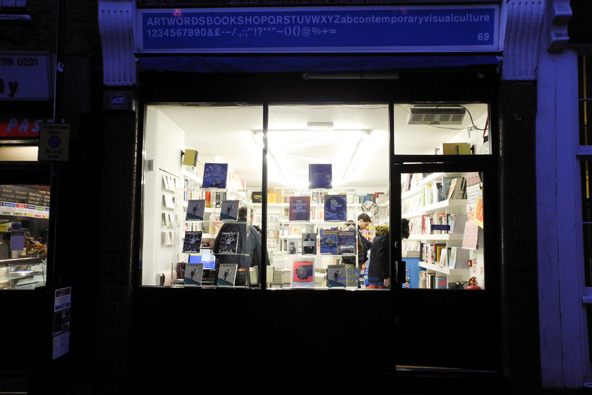
    If you’re interested in books and magazines don’t forget to pay a visit to Artwords, a bookstore specialising in contemporary visual arts and covering subjects including photography, fashion, architecture, graphic design, fine art and critical theory.

    Artwords – 69 Rivington Street, EC2A 3AY

    future-positive-citizenm-12-low future-positive-citizenm-13-low

    Enjoy

    Shoreditch is filled with street art by emerging and established artists (look for Banksy’s pieces on Rivington Street). Wander around the numerous lanes and streets to discover colourful and impressive pieces all across the area.

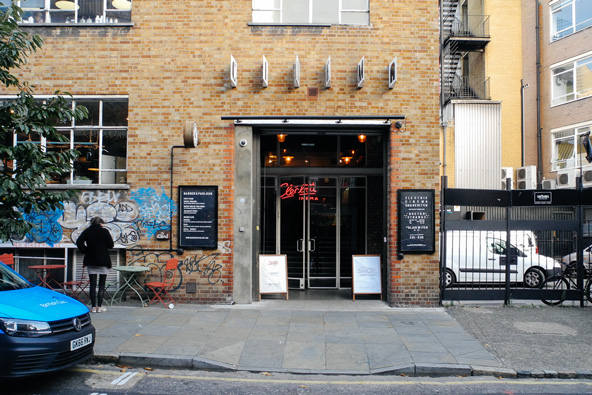
    For an unrivalled cinema experience head to Electric Cinema, with screenings for up to 50 people. Enjoy your movie from a comfortable armchair with cosy cashmere blankets. The cinema is part of Barber & Parlour, a three-floor space where you can get manicures, haircuts, beard trims and even food.

    Electric Cinema – 64-66 Redchurch Street, E2 7DP

    future-positive-citizenm-18-low

    Save

    Save

    Save

    Save
  • Hannah Morgan

    Hannah Morgan

    From her studio in London, Hannah Morgan works on a variety of projects across art and fashion, ranging from sculpture and performance to trend and colour forecasting. We caught up with Hannah to find out more about how her interest in design began, her inspirations and how collaboration plays a vital role in her work.

    www.hannahmorganstudio.com

    Photographs by Ellie Tsatsou.

    future-positive-hannah-morgan-2-low

    Could you please introduce yourself and tell us a little bit about your background and education?

    Hi! My name is Hannah Morgan, I am a maker of objects, that spans art, design, and fashion. I’m a native Londoner, and I’m thankfully still able to live and work not far from where I grew up.

    My first degree was in Film Theory and English Literature at the University of Sussex. I then went into assisting fashion and photographic art directors, and Trend Forecasting at East Central studios before embarking on a series of making courses (notably Kensington and Chelsea Collage) before ending up in the Fashion Department at the Royal Collage of Art under the supervision of Julie Verhoeven/Tristian Webber/Noel Stewart. It was there that I felt like I had entered Willy Wonka’s factory – the scope of what I could make, think about, and engage with was mind blowing!

    After the RCA MA as well as setting up my own practice I worked at Studio Xo for clients such as Wayne McGregor/Lady Gaga. In my own studio I undertake a variety of projects as well as assisting artists such as Julie Verhoeven (as a performer), colour consultant Hilary Scarlett, and collaborating with fantastic creatives like Robert Binet, Ellie Tsatsou, and Liam Hodges.

    future-positive-hannah-morgan-1-low

    Do you remember about when you first got interested in design?

    It probably started in the Dalston Oxfam when I was a kid, I was given free reign to get my outfit… it was an explosion of expression! I grew up in a family of artists/architects/writers that valued looking analytically at the world, and encouraged the ideas and creativity of even the youngest members. So design, fashion and art were always around, a trick of circumstance and osmosis that initially shaped my interests.

    I think design became something that I wanted to know more about as an adult when I studied film for my BA. I was intrigued by the importance of objects in a scene or what the dress of a character signified within the narrative, from a character’s psychological state to a plot twist. It was through the screen that the power of design and its meanings in popular culture were reflected back, and I was hooked.

    future-positive-hannah-morgan-6-low

    You describe your work as interdisciplinary, could you tell us a little bit more about it and where your inspiration comes from?

    My work has always been about process and ideas and I am interested in the way in which the same ideas can apply across different media and disciplines. I find I’m too inquisitive about different processes and outcomes when investigating a subject or idea. If a photograph/film/sound fulfils a direction, then I’m content with that, if a sculpture works better on a wall than a body, that’s fine. I think in the process of play, discovery, and mishaps are vital as a maker. That need to be definitive has become less important as I went through different education and contexts, I still hold on to some stubbornness though – you know when something is right.

    My focus or inspiration comes from trying things out around a subject. Since the RCA I have been investigating the relationship between a body and object. I can’t seem to shake it, probably because the subject can have so many different interpretations and change according to context. It feels like there are infinite possibilities!

    At the moment I’ve been looking at Neolithic statues, listening to D’Angelo and the Reith Lectures, watching A.Curtis’ HyperNormalization, eating curry, and if I’m lucky go for long walks in and around the city.

    future-positive-hannah-morgan-4-low

    Could you tell us about your collaborative work?

    I have always preferred working with other people, especially if they come from a different context or creative background; it’s the easiest way to learn and challenge your work and the world. At the moment I’m very privileged to be working with choreographer Robert Binet, who is based in Canada. We are using his imagination of what a body can do, and my methods of analysing and abstracting form to re-interpret the language of movement in a space. I’m also at the beginnings of a project with the photographer Ellie Tsatsou, looking at making and documenting processes and methods.

    Collaboration is key! I recommend it to everyone – even if you’re colluding with someone over the dinner! We are all in part a product of circumstance, who we are friends with, where we are born, etc. I’m so happy and lucky to be where I am right now, and crossing paths with the people I do, it’s a sobering thought in today’s world.

    future-positive-hannah-morgan-3-low

    What are your plans for the upcoming months?

    At the moment I’m working on an exhibition that will open on 2nd of December, Works in Progress: Haptic Methodologies, at Second Six Galley in Dalston. It is a mixture of sculpture, photographs, film and ephemera looking at the ongoing relationship between my body (as performative) and an object (as static), and its impact on the making process. Also coming up is more collaborative performances with Robert Binet across the pond and here in London.

    future-positive-hannah-morgan-5-low

  • DDomingo

    DDomingo

    Larisa Coto is the founder of DDomingo, a product design studio from Costa Rica creating handcrafted concrete lighting, furniture and homewares. We chatted with Larisa about her background, the inspiration behind her designs and why she decided to work with concrete.

    www.facebook.com/DDomingocr

    Photos by Gregory James

    future-positive-ddomingo-1-low

    Could you please tell us a little bit about your background and education?

    I’m an architect based in Costa Rica and I’m the founder of DDomingo (Handcrafted concrete products, lighting and furniture). Design in general is something I am passionate about since I was 12 years old. I studied architecture in Costa Rica and in Buenos Aires, Argentina and in 2 months, I will have my master’s degree (Architecture and Environment) from Wismar University in Germany.

    future-positive-ddomingo-3-low

    What made you start your own business?

    Firstly, my parents’ influence, definitely. My parents built their own businesses when I was growing up. Secondly, working in several architecture studios gave me lots of experience and knowledge in different areas of design. By having the opportunity of working in different cities, I was able to make contacts and was lucky to be reached by them. At that point, I decided that it was a good moment to start my own studio.

    Why did you decide to work with concrete and not another material?

    Concrete is a strong material but sensitive at the same time. You can have infinity of finishes on a concrete piece – different textures, colours and shapes. The surprise factor is one of my favourite things about this material – you never know how it’s going to look like until you demould it.

    I have noticed that people are surprised to see this material used in product design, mainly in smaller pieces. People always touch it and feel attracted to the surface.

    future-positive-ddomingo-2-low

    What is the inspiration behind your designs?

    My biggest inspiration is nature. I am constantly exploring and searching my surroundings for new ideas. It is very easy to be inspired living in a tropical country like Costa Rica. Patterns, textures, organic shapes and colour palettes are my main focus when I am looking for some inspiration and creativity.

    future-positive-ddomingo-4-low

    You design from furniture to homeware, is there any type of product you’d like to experiment with?

    Lighting/lamps is something I have been working on. Incorporating light into a product is something that has become an experiment. Light reveals textures, colour, shapes and transforms spaces. Also, I have been working with some other colleagues, exploring art and fashion. We are preparing 3 new collections for the coming year, combining concrete with new materials and concepts.