Category: Design

  • Glasgow Print Fair: Bringing Together People Passionate About Print

    Glasgow Print Fair: Bringing Together People Passionate About Print

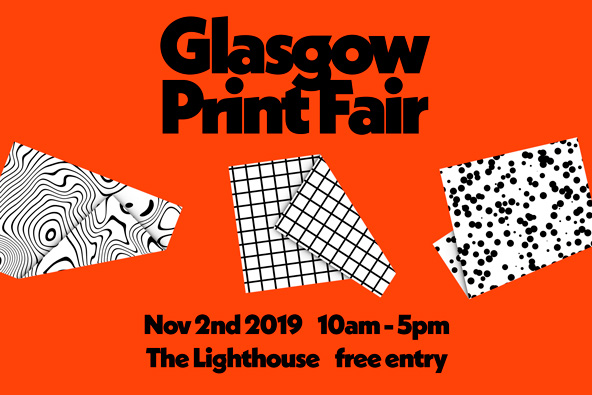
    Print is still on the rise and the best example is Glasgow Print Fair, a new festival and the first of its kind taking place in Glasgow. Organised by local creatives Jane McDevitt, partner at Maraid Design, and Kaye Symington, co-founder at Paved with Gold, this festival celebrates established and new printmakers, and brings people together for a day of print-based fun.

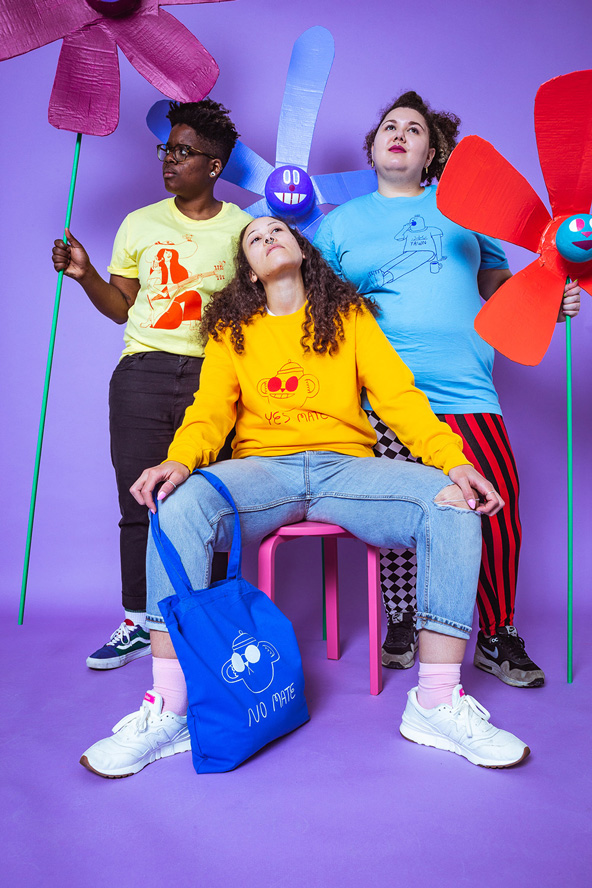
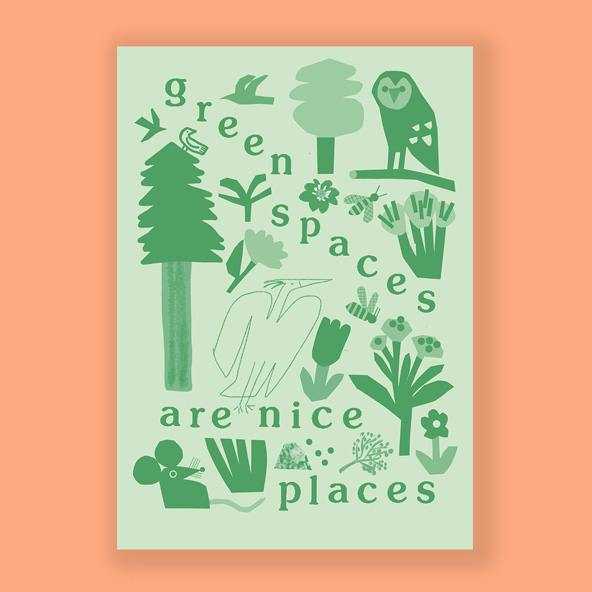
    Glasgow Print Fair will take place on Saturday 2nd November (10am – 5pm) with free entry at The Lighthouse.  The festival will showcase prints and other products by over 50 makers from the UK and Europe. With work by established studios and artists like Lesley Barnes and Risotto Studio (read our interview with its founder!), collectives and design shops like Yuk Fun Now and Welcome Home, and also some emerging talent from Glasgow School of Art.

    Do not miss this opportunity to support print and take home with you textiles, zines, posters and much more!

    www.glasgowprintfair.co.uk

  • Dust London: Homeware from Organic Materials

    Dust London: Homeware from Organic Materials

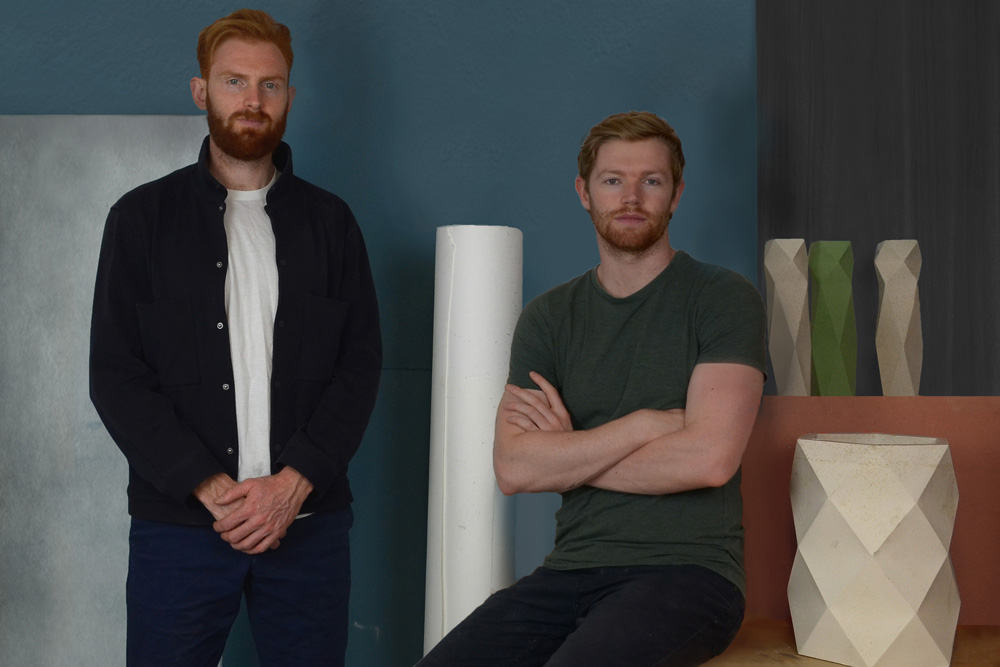
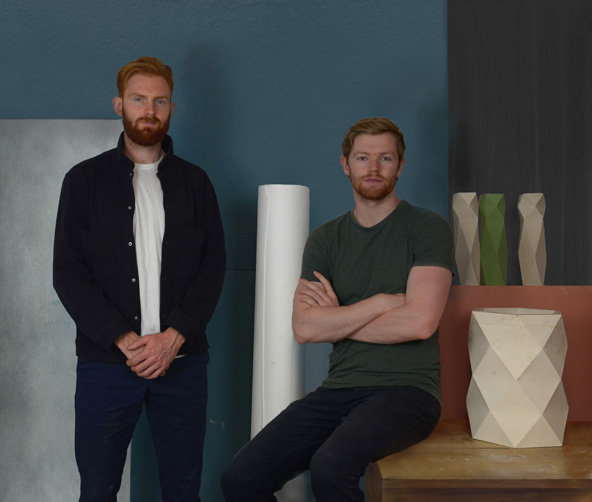
    Founded by Michael McManus and Matthew Grant, Dust London is a homeware label drawing on their experience in artist and architecture studios. They established their design company with the intention of changing the way materials are conventionally used and the ambition of creating objects from natural materials.

    We chatted with Michael and Matthew to find out more about the manufacturing of their products, their current range and what homeware means to them.

    www.dustlondon.co

    Can you tell us about how you met and what made you start Dust London?

    We knew each other from a young age and shared design ideas whilst studying art and architecture respectively. Dust London was born out of an ambition to set up a studio that explored our mutual interests in design alongside our passion for organic and sustainable materials.

    Your products are made from tea waste, can you tell us more about why you decided to choose this material and what processes you follow to manufacture your items?

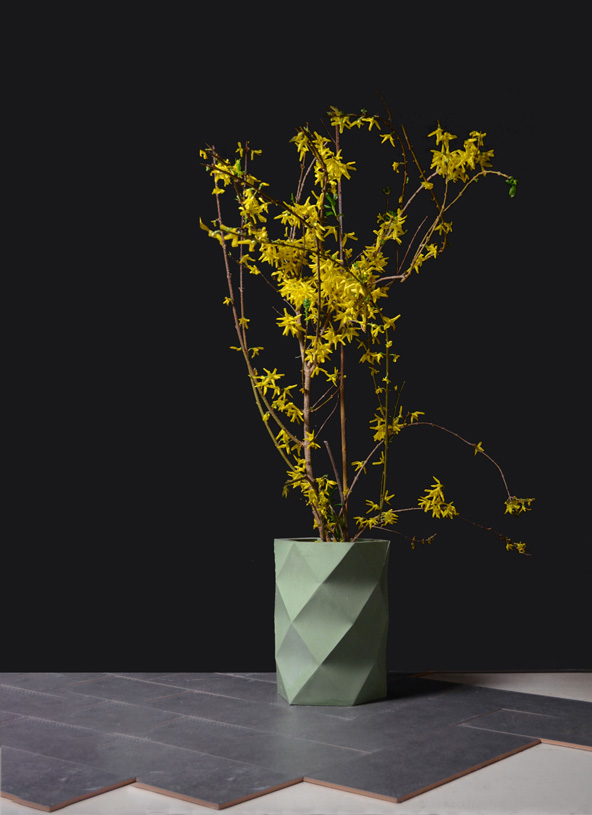
    Our studio practice is driven by discovering new materials for making. We were looking for an organic material to use and after months of experimenting we tried tea waste. We found that adding tea to our material created a beautiful range of rich colours. Experimenting with tea waste as a material for making has enriched the colour palette of our designs. From the soft and subtle green hues of our Peppermint tea range to the rich warmth of the Rooibos and English breakfast selections, our products compliment a range of interiors. We collect and separate the tea waste into 5 different colours. Each selection is thoroughly dried before blending and mixing with a gypsum-based powder and non-toxic binder. This mix is then poured into our handcrafted moulds which have been made from a single sheet of paper using origami folding techniques.

    Coming from an arts and architecture background, you mention that you are “keen to step away from the computerised and the mechanistic”, can you tell us more about this decision and why you lean towards handmade products?

    We have interests in a variety of traditional casting techniques and wanted to apply these to our designs. Through refining handmade processes our ideas have developed organically in our studio. Exploring new techniques and experimenting with materials in this way allowed us to achieve unpredictable results that informed future works. We chose not to use technology within our studio practice because we wanted to apply a makers touch to our objects. By casting our work by hand each piece is entirely unique, with subtle variations in surface pattern and colour.

    Your current collection is made up of three objects, can you tell a little bit about each of them? Do you have plans to expand your product range in the near future?

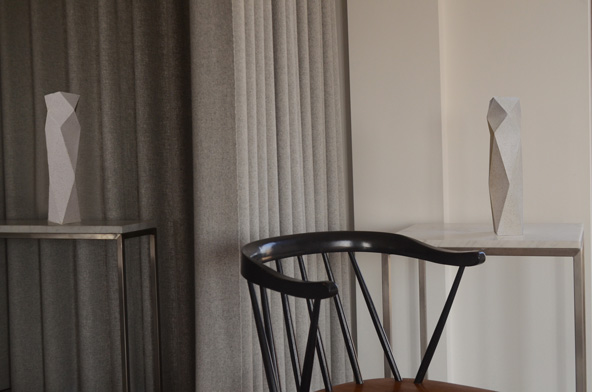
    Our current collection comprises three designs inspired by origami forms: a coaster set, a centrepiece vase and a large planter. Each object is folded from a single sheet of paper to create a homogenous design. We were drawn to the minimal aesthetic and elegance of origami that aligned with contemporary interior design. Each of our objects are available in five tea variations: Chamomile, Rooibos, English Breakfast, Peppermint and Black Tea. These colours have been selected to provide a range of textures and hues to complement a variety of interior colour palettes.

    We are currently working on a number of larger scale pieces of furniture and have developed a prototype for a table. We are excited to combine the aesthetic of origami with the function of furniture. Experimenting with organic resources will always be at the forefront of our work and we are currently exploring a sustainable material that we can apply to a new collection.

    What does homeware mean to you and why do you think it’s important?

    Homeware is accessible in scale, both for the designer and user. It allows designers to experiment with new materials that find their way into the home. Homeware therefore paves the way for wider conversations that the designer looks to address through their work. By bringing functional objects into the home that are made of tea waste challenges convention and questions how we commit to a sustainable future.

  • T-Cross Creativity Fest: More Than 1 Thing

    T-Cross Creativity Fest: More Than 1 Thing

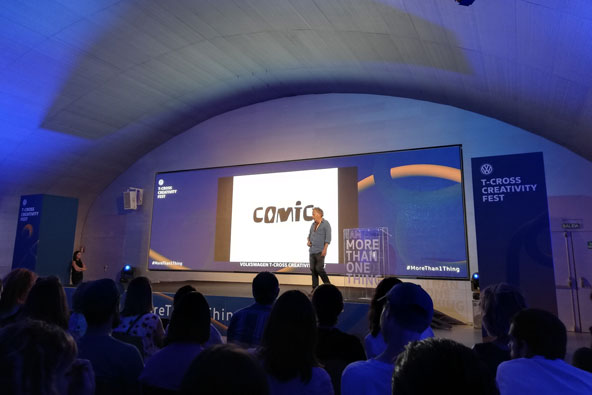
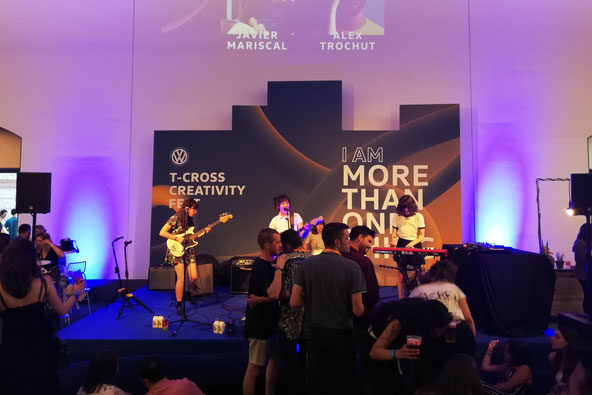
    Last weekend we attended T-Cross Creativity Fest, a new festival organised by Volkswagen in Madrid with the objetive of inspiring people through workshops, talks, gigs and other activities across different areas such as design, art, food, connectivity or technology. A different concept in which we were invited to discover, learn and listen.

    www.tcrossfest.com

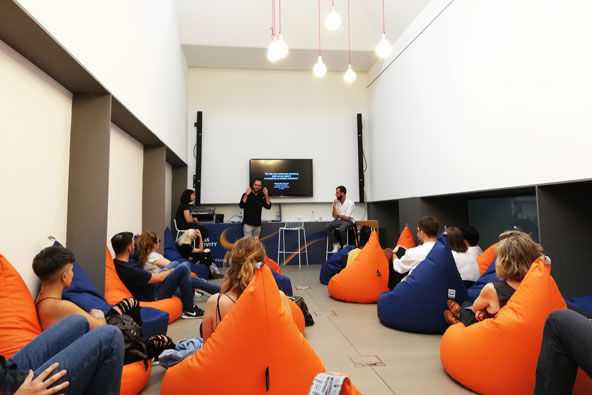
    T-Cross Creativity Fest took place at Casa del Lector in Matadero, a former slaughterhouse that is now a cultural and arts centre for promoting innovation in the city. During just one day, attendees could discover the work of different Spanish artists, designers, illustrators and musicians who are shaping the current creative landscape in the country.

    Artists Carlos Saéz and Abel Iglesias created installations that were designed to interact with them. The talks were led by creatives like typeface designer Alex Trochut, data company Domestic Data Streamers, 3D studio Six N.Five or iconic designer Javier Mariscal, who closed the festival looking back at everything he has created throughout his career.

    There were also workshops run by illustrator Monstruo Espagueti, designers Maria Ke Fisherman or graphic designer Arnaud Pi, who shared with the attendees their knowledge and expertise in their areas. And bands and musicians like Adriana Proenza, Melenas or Carlos Sadness played live gigs.

    T-Cross Creativity Fest was created to embrace the values of T-Cross, the new car by Volkswagen designed for those who are more than 1 thing and need the versatility of a vehicle that can adapt to anyone, no matter how many things they do in their daily lives.


  • Studio Visit: PAKTA STUDIO

    Studio Visit: PAKTA STUDIO

    We first talked with Kerim and Hana, the founders of PAKTA STUDIO, when they were just starting their bag and accessories brand after moving from London to Bratislava. It’s just been over a year and Kerim and Hana have now opened their own workshop and store (Tobrucka 1, Bratislava, 81102) as a means for customers to see the handmade process before purchasing the products,  as well as a point of contact with the local community in order to get to know people better.

    We caught up with them to find out more about the space, the new products they’ve been working on and their plans for the upcoming months.

    www.paktastudio.com
    Can you tell us about what you have been doing since we visited your studio? How has PAKTA grown over this period of time?


    Quite a lot has happened in a year, we can’t believe it’s only been that. We have moved into a new place which serves both as our workshop and our store. It’s a great space for us to work in, as well as for people who wish to visit the store and try on our bags or see the whole production process. We’ve also expanded our product range to include the KONSIO collection (which includes some small accessories), the DERIVAT collection (which is made from our production scraps) and a selection of magazines.

    We also spent a lot of time refining our visual identity and brand. Now we go under PAKTA STUDIO, to truly encompass everything that we do within the brand and our focus on a holistic approach to designing and production.
    What made you open your own store and workshop? How have the locals in Bratislava reacted to it?


    We had pretty much outgrown our old studio and needed more space to work in. We found this place on a hidden corner in the centre of Bratislava, and we just had to take it. It’s a pleasant area to work in and is very accessible, which is great for people who wish to visit. This helped us solve the problem of setting up appointments for people to try on the bags and being able to see them in real life.

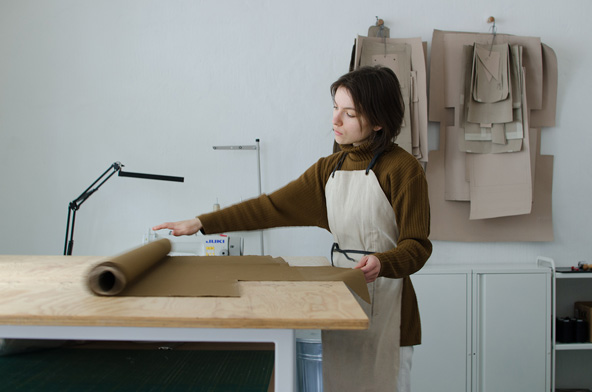
    Half of the week the space functions as a workshop, where we work on the designs there and have meetings. The other half of the week, the store is open for people to come in and try on the products or browse the magazines, or just chat with us if they have any questions. We think sometimes people are confused as it’s quite an unusual space, it’s not your usual retail store because we work there as well. But people seem to enjoy being able to see the bags being produced to be restocked, and knowing that it really is all made by us. We’ve only had good experiences so far, really.
    Can you tell us about the space and what people can find inside?

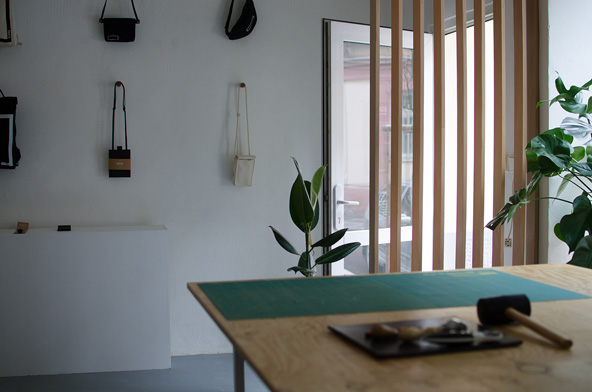
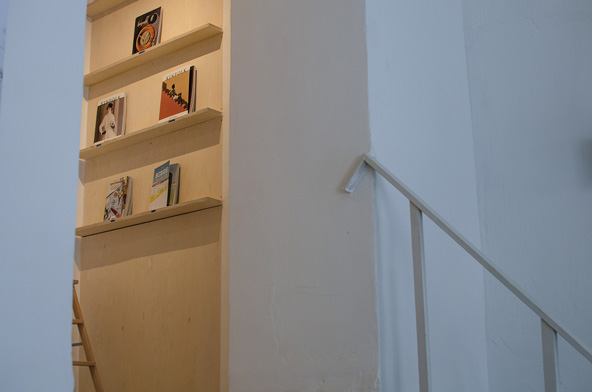
    One of the first things you notice about the space is the large windows, which were important to us. We love working with natural light, and being able to have plenty of plants is important to us. The shop is divided into two main areas – one half being the workshop and the other being the store. All of our bags are hanging on the wall to peruse, and then we have a cosy upstairs where you’ll find our curated magazine selection, which includes magazines you can’t find anywhere else in Bratislava, and the DERIVAT collection.

    On the workshop side of the studio, you’ll find us, and all the materials we use to make our products – from fabrics, to the components, and the tools we use. Depending on when you come, you might find us in the process of making some bags, experimenting with prototypes, or discussing new ideas.

    Currently we also still have some photos on the walls from an exhibition we held in the space earlier this year, which draws your eyes around the room.
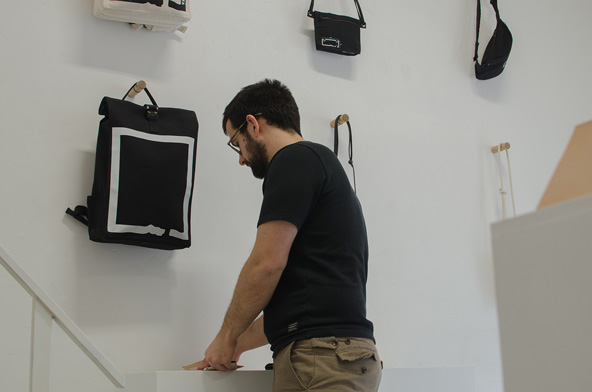
    When we first talked, you were only making a few products but now your offer has grown. Can you tell us more about your new products?

    Yes, we’ve spent a lot of time working with new product ideas and new materials, and now our product range is basically split into 3 collections.

    Our regular bags and backpacks made from waterproofed cotton sailcloth are. With this collection, we still focus on bringing functional bags which are made using durable metal components. Most recently, we took a lot of feedback on our original RUKSAK design and released RUKSAK 2, a more robust and versatile backpack. We also released a small bag in a limited edition called the REZIDENT when we opened the space, with an adapted form of our logo which forms the floorplan of the studio (the release included 42 bags, which is the square meterage of the space).

    The new collection KONSIO, which we are really proud of. It’s made using Piñatex, a wonderful new material made from pineapple leaf fibres. Exploring new, innovative materials which are more sustainable and environmentally-friendly are important to us. With this collection, we loved the challenge of finding the balance between what we can do with the material and the shapes we wanted to create. This collection also expands beyond just offering bags, to offer accessories such as the Wallet and Keyring.

    And our DERIVAT collection, which is made from our leftover fabric, which is generated as part of our making and innovating process. In an attempt to minimise our waste, we regularly explore the leftover fabric we have and look for ways we can re-use it to give it a new life. This often results in experimental and interesting shapes, but is a great challenge for us and helps us be conscious of the waste we generate as a studio.
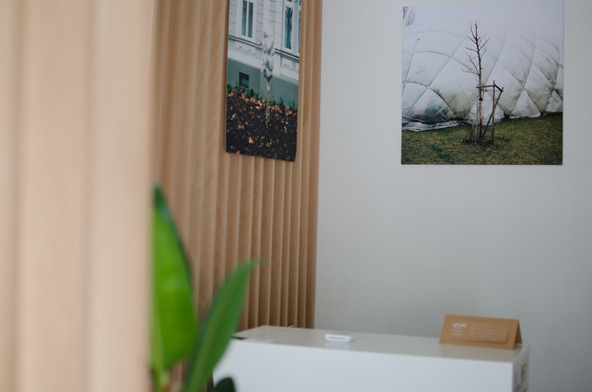
    What are your plans for the upcoming months?

    Currently, we’re in the process of testing and working with a new fabric for a totally new collection which is proving to be a lot of work at the moment. We also want to focus more on the DERIVAT series, as solving the problem of fabric waste is very dear to us, and not only that but sustainability overall.

  • The Silver Building, creative workspaces in London’s Royal Docks

    The Silver Building, creative workspaces in London’s Royal Docks

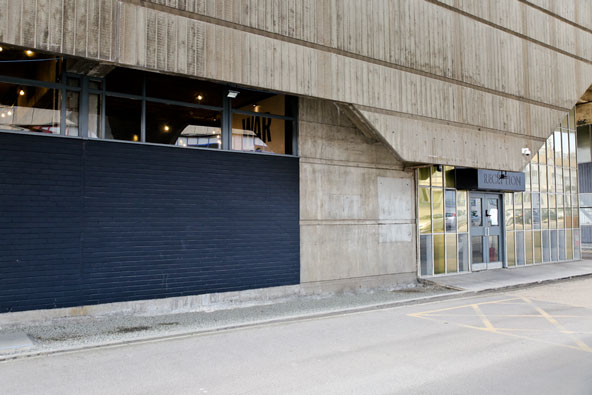
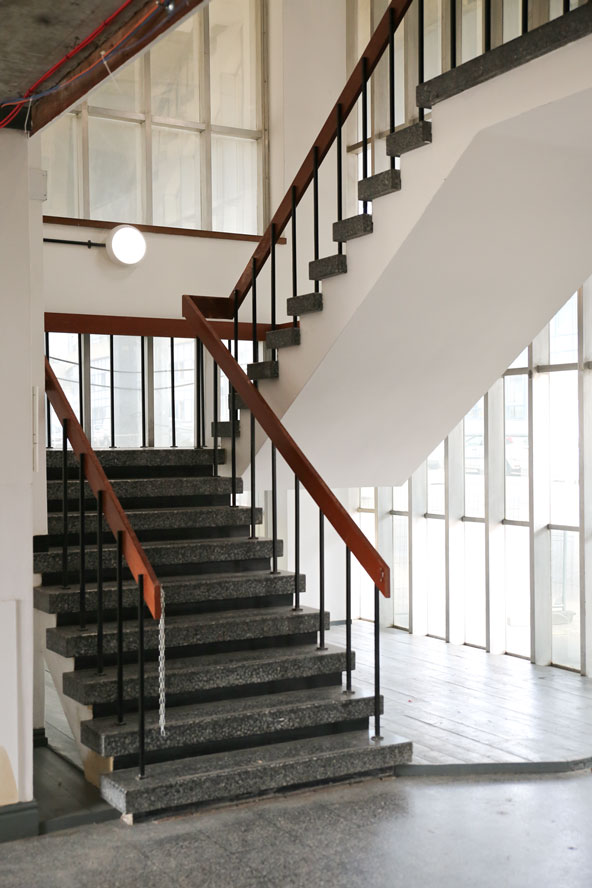
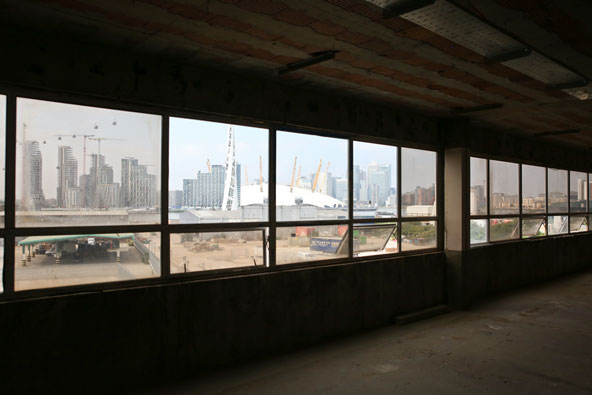
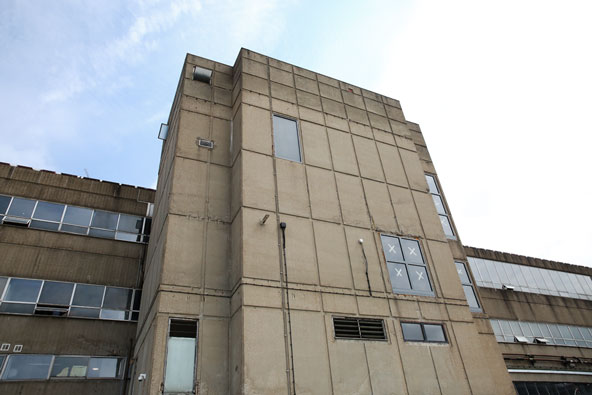
    Located in London’s Royal Docks, an area currently undergoing a transformation to become a hub for creative industries, The Silver Building is a dramatic multi-purpose shared workspace centre in a striking brutalist building by the River Thames.

    www.thesilverbuilding.com

    On our last trip to London, we visited The Silver Building at Silvertown and were showed around the different areas and studios by its founder Nick Hartwright, who’s also behind Green Rooms Hotel – an arts hotel and social enterprise we’ve already talked about.

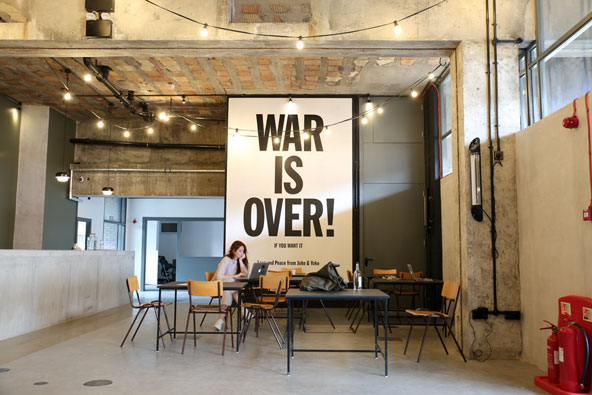
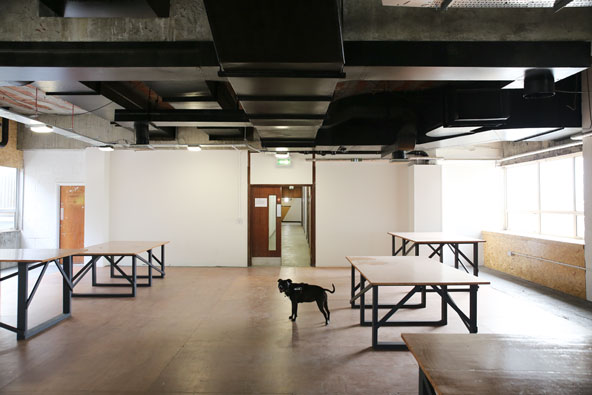
    The 50,000 sq ft building, originally constructed in 1964 for Carlsberg-Tetley Brewing company, opened in late 2017 and is already a bustling creative and entrepreneurial hub where new talent is nurtured and grown. The concept behind this project is to provide affordable workspace for everyone, with different studio spaces that cater for everyone: from fashion designers and artists to photographers and set designers.

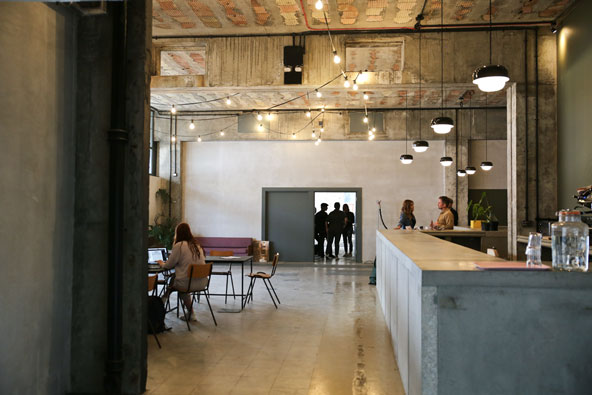
    Working in partnership with the Mayor of London’s office and re-purposed by award-winning studio of architects and designers SODA, The Silver Building also features communal areas and events spaces across its four floors, with a ground floor café which is the beating heart of the development.

    Nick Hartwright has said about the project “The Silver Building is an incredibly exciting project and a perfect example of how modern regeneration should be carried out.  Over the coming years we’re going to put Silvertown on the map.  We’re going to engage with existing Newham-based businesses and we’re going to bring new enterprises to the area.  Everyone will benefit, and together, I’m sure we’ll produce some brilliant outputs.”

    And the Mayor of London, Sadiq Khan, supports the initiative and the offering of affordable workspaces for creative businesses: “London’s creative industries are unrivalled, but the capital is growing and we need to make sure we build great creative infrastructure into major development projects. As property prices rise, artists are finding it more difficult to put down roots here and that’s why they need access to genuinely affordable workspace.

    Fashion designers like Craig Green and Liam Hodges have their workspaces here and also set designers Block9, who have worked with Gorillaz, Lana del Rey and Banksy. With prices of around £15 per sq ft, The Silver Building is attracting some of the most exciting creative talent due to its affordable spaces, the dramatic setting and the on-going regeneration of the neighbourhood.