Category: Art

  • 7 Photography Styles That Are Worth Trying

    Photography is undoubtedly one of the most common outdoor hobbies worldwide. However, it isn’t uncommon for many skilled photographers to turn their hobby into a source of income. According to IBISWorld, America’s photography industry’s market size by revenue alone is $11.5 billion as of 2022. Many photography genres may appeal to you, whether you want to pursue a full-time career or simply take up a worthwhile pastime. Here are some of the top photography genres you should know about.

    Travel photography


    Image Credit

    Travel photography is definitely worth considering if you have a lot of wanderlust and are skilled with a camera. It is one of the broadest subcategories of people photography, involving the capture of life in other areas of the world. Travel photography is well-known for drawing inspiration from several different types of photography. For instance, you may set out to capture people and their lifestyles when you visit one area. However, you may notice and capture several landscapes and other elements of the natural world, like wildlife in that location that is picture-worthy. A good travel photographer perfects the art of taking excellent photographs when visiting new cities. These photographs typically capture the striking differences and similarities between people worldwide, making viewers feel more connected to and aware of how others live. 

    Aerial photography


    The aerial photography genre is one of the fastest-growing photography fields facilitated by modern technology. Indeed, Allied Market Research estimates that the global aerial photography market was worth $2.26 billion in 2020 and will reach $8.52 billion by 2030. Admittedly, aerial photographs have been around as long as cameras and manned flights have been. However, aerial photography’s increasing popularity in recent times is due to the advent of high-quality drones. Drones are unmanned aerial vehicles that capture views from above and give photographers different perspective shots. In the US, UK, and many other nations, you need a license before you can legally fly a drone. They are being used to capture everything, from real estate to wildlife. Top-notch drones such as the DJI Matrice 30 series are used by search and rescue personnel to locate missing persons in foliage. Therefore, the perspective drones offer in aerial photography comes in handy for aesthetic and life-saving purposes alike.

    Wedding photography


    Wedding photography is, without a doubt, one of the most popular genres out there. Many people pay for professional photography only once in their lives, and that time is likely to be their wedding day. As such, wedding photography is in very high demand worldwide. As a career, being a professional wedding photographer will entail taking a wide range of photos in various settings and groups. The role is pretty intense since there is a lot of pressure to take your best shot on the first attempt because you may not get a second chance in many scenarios. The emphasis is on taking candid photographs that the family will treasure for their lifetime. Besides being quick on your feet, you should also be a fairly good salesperson and must be able to handle customer service easily.

    Furthermore, you must be adaptable, ready to shoot indoors during dimly lit dances and receptions and outdoors on sunny days. Finally, the couples you photograph will expect a lot of direction from you when posing. Therefore, you must be confident and capable of clear communication with the bride and groom. 2020 was perhaps the worst time to be a wedding photographer since the pandemic reportedly cut weddings by more than 50%. However, the wedding photography niche is picking up fast post-lockdown, so now is the perfect time to enter the industry.

    Portrait photography

    Image Credit

    Portrait photography, also known as portraiture, intends to capture the moods and personalities of groups and individuals. Portrait images may be posed or candid, full-body, or close-ups. However, the common constant is that the subject’s eyes and face are usually in focus. Portrait photographers rely heavily on lighting and backdrop to convey the right tone and emotions. In addition, you must make your clients feel as comfortable as possible to get natural expressions.

    There is no shortage of people that need portrait photography services, so it is one of the most profitable genres worth considering as a career.Everyday patrons need portrait photos for every phase of life, so you can expect to take a lot of maternity and newborn, high school senior portraits, and general family photographs. You will also take several corporate portraits for employees that need to update their headshots for publicity materials and websites. Furthermore, professional and aspiring models need updated portfolios with current pictures to market themselves for jobs and agencies. Consequently, portrait photography is an excellent starting point for all professional photographers. A great portfolio of high-quality shots will generate more contracts, and you will also get several gigs from word-of-mouth marketing.

    Product photography


    There is no denying that great product photography is important for convincing potential clients to make purchases. Indeed, an estimated 90% of buyers say that photo quality is the most important factor they consider when purchasing online. As such, product photography is a mainstay of modern-day advertising, and you can position yourself for great success in this niche with the right strategies. One of the best things about product photography is that it covers a lot of ground. For instance, you can focus on the sub-niche of jewelry to make a lot of cash. Many jewelry dealers are eager to hire professional photographers because their products require the right amount of creativity to attract clients through images. Alternatively, you can specialize in food photography for restaurants that need to advertise meals and create menus.

    Product photos are used for labels, packaging, and print and online catalogs, so there is a high need for quality. Consequently, the majority of product photography is done in studios that permit careful control of lighting, shadows, and backgrounds. As a product photographer, you may lose significant cash to studio rentals, so invest in creating a personal photography studio on a budget.

    Fashion photography


    Fashion photography is perhaps the most glamorous photography genre, but it is sadly among the most difficult to break into. Fashion photographers usually reside in the design districts of Paris, Milan, and New York, documenting the trendiest runway styles and taking cover shots for leading industry publications. However, they work in many other locations, including studios, open fields, and city streets. Fashion photographers use many skills portrait photographers are known for. For example, this job focuses on the models, so a lot of your time will be spent posing and directing them to get the desired shots. As such, you must have good teamwork and communication skills to effectively collaborate with models, creative directors, wardrobe specialists, makeup artists, and many other professionals.

    Architectural photography

    Image Credit

    Many people take pictures of buildings as a fun hobby, but others have made entire careers out of it. Architectural photographers work as freelancers or are employed by agencies to capture the essence of structures and buildings from their commencement to completion. You will capture details like the building’s interiors and exterior and any subtle elements that make the building’s design outstanding. Also, architectural photography needs special equipment and techniques to reduce distortion and perspective issues that are easy to spot from a building’s right angles.

    Real estate photography is a great subdivision of architectural photography. Realtors always require top-notch photographs, especially in today’s market, where 87% of home buyers rely on photographs to make their decisions. Therefore, realtors are willing to pay top dollar for quality professional photographs, particularly in the high-end market.


  • Marie Varley

    Marie Varley

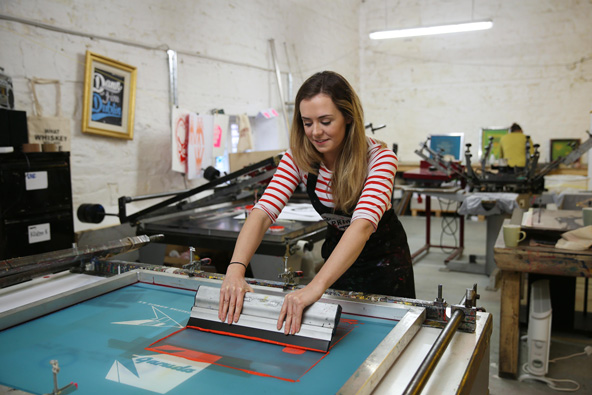
    Marie Varley is an Irish artist running a small screenprinting business, creating prints that explore national identity and how this has been celebrated in the past particularly through the form of ephemera such as postage stamps and matchboxes. We interviewed Marie to find out more about her education, love for print and her recent move from Edinburgh to Dublin.
    www.marievarley.com

    Future-Positive-Marie-Varley-1-Low

    When did your interest in visual arts begin?

    That’s a difficult one to pinpoint but for as long as I can remember I have always been completely obsessed with colour and the tactility of paint. As a child, most visits to friends’ houses involved pulling out the poster paints and brushes! In secondary school I first discovered modern artists such as Andy Warhol and Jackson Pollock whose work and concepts really resonated with me and the decision to go to art college was firmly made.
    Future-Positive-Marie-Varley-3-Low
    Why did you decide to focus on screenprinting in particular?

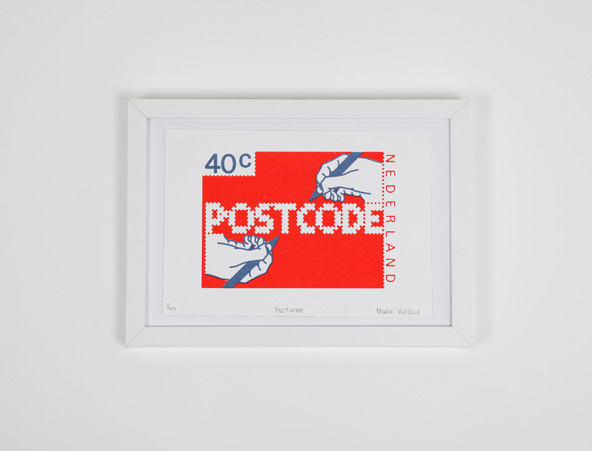
    Throughout the four years I spent developing my practice at LSAD, my work always dealt with found imagery and in particular imagery which represented national identity. In one way or another these themes always entered my work and in my final year I began looking at postage stamps, disassembling the imagery and what the intended meanings were for the individual countries. My degree is in Fine Art Painting however as the imagery in postage stamps was originally printed I wanted to stay true to my source material by utilizing a printmaking technique. Having briefly dipped my feet in the screen printing process during a module in my second year, I was familiar with the properties of screen printing and loved the flatness of print in contrast with the oiliness of paint. I had about 6 months to master the art of screen printing and thanks to the amazing – and patient – printmaking technicians at LSAD I managed to screenprint my whole Degree show! My degree show pieces were a mix of several layers of print upon paint. The show consisted of 8 pieces which measured 2 metres x 1 metre and I absolutely loved making them.

    Future-Positive-Marie-Varley-2-Low
    Please tell us a little bit more about your interest in national identity and ephemera.

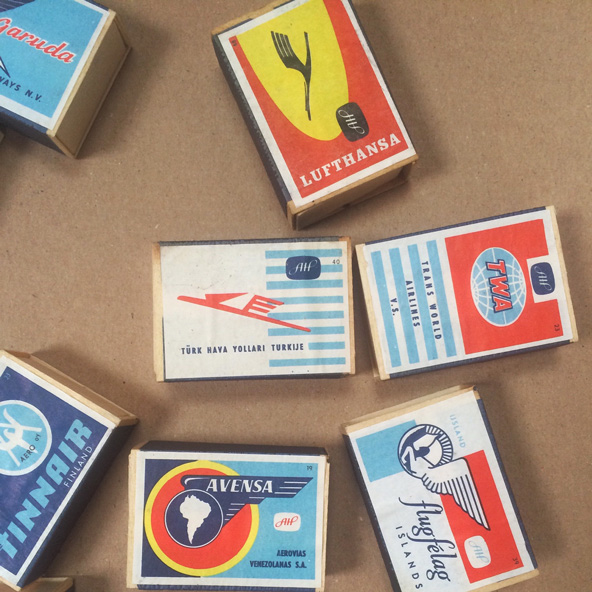
    For me it is fascinating to gain an insight into the social context of a country by the imagery used in the 2.5cm x 2cm space of a postage stamp. Countries had varying messages at different times. One stamp in particular, a German DDR stamp from 1981 which depicted a whimsical plug character had quite a powerful message. The stamp reads “Rationelle Energie Anwendung” (translating to Rational Use of Energy) to support the German governments recently introduced energy efficiency policy, at a time in which the country had a serious concern about energy waste. It is difficult to imagine a postage stamp holding this much communicational power these days but in a time before the internet, these ephemera were really quite powerful. Similarly a piece which I created for my Degree show “Kenya” which included a series of reproduced Kenyan stamps from the 1950’s with safari animal illustrations can seem quite stereotypical. With stamp collecting a hobby amongst many and air travel was a luxury, this was a way of visually communicating the identity of a country.
    Future-Positive-Marie-Varley-4-Low
    What are your plans for the upcoming months?

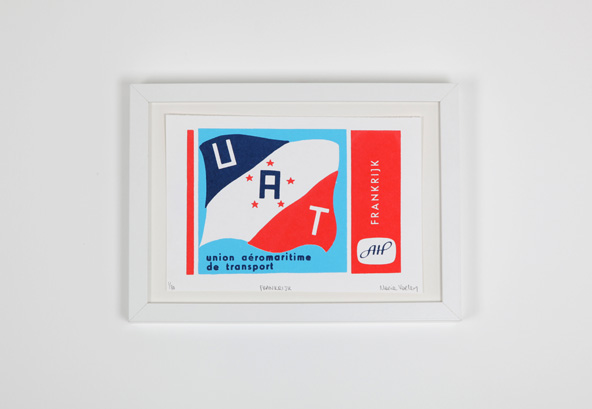
    I am working towards a solo show so the next few months will be a busy few in the studio. I am hoping to complete a series of prints based on matchboxes from the 1950’s. I have 6 separate images already printed and I am hoping to print at least another 4 or 5 new editions. My prints have recently been stocked on the super online print shop Department Store based in London so that’s quite exciting!
    Future-Positive-Marie-Varley-5-Low
    You’ve recently moved to Dublin from Edinburgh. How do you compare the creative ‘scene’ in these two cities?

    The creative scene is pretty exciting in Dublin at the moment. In a city only just about recovering from the recession, artists and creatives have set up studios in unused shops and vacant warehouses. The studio where I make my prints for example is a small studio set up by Kim Willoughby in 2011 as the first affordable pay-as-you-go screenprinting studio in Dublin. This allows for a wide range of studio users where fine artists work alongside graphic designers and Illustrators alike.

    I absolutely loved the three years I spent in Edinburgh! Surrounded by hugely talented and professional artists at Edinburgh Printmakers where I was a member was hugely beneficial for me. I learned invaluable tricks of the trade and I learnt a lot about artist and gallery relationships. The Edinburgh creative scene has a real community spirit which I thought was unique. Just before I moved to Dublin last year I attended the Hidden Door arts festival, a non profit, volunteer run arts festival which took place in an abandoned spaces on King Stable’s Road. Not long before that I took part in a Creative Pop-Up market in nightclubs which were empty during the day. There is a real ‘anything is possible’ attitude in the Edinburgh Creative scene.
  • Jennifer Argo

    Jennifer Argo

    Jennifer Argo is a Glasgow-based artist, working across different fields and looking at complex adaptive systems in nature as inspiration for smart design, and as a metaphor for the way communities develop and grow. We interviewed Jennifer to discover more about her practice, her work designing sanctuaries and her plans for the next few months.

    www.jenniferargo.com

    Future-Positive-Jennifer-Argo-1-Low

    Could you please tell us about your education and background?

    I studied at Gray’s School of Art in Aberdeen, in the north-east of Scotland, specialising in Photographic Electronic Media, which was then combined with sculpture in the last year, which was great! I loved getting into the workshops and working with the technicians, doing more hands-on stuff. I developed a practice that utilised illustration, photography and sculpture, as separate mediums or combined to create installations.

    Future-Positive-Jennifer-Argo-2-Low

    You work across different fields, ranging from photography to installation. Could you tell us a little bit each of these and how they relate to each other?

    I like working on different types of projects, it’s nice going from working on intricate drawing studies in the studio then getting outside and working on large-scale structures, or documenting sites to draw from.

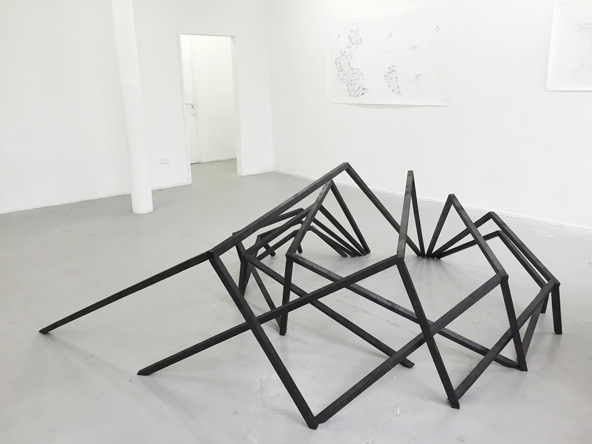
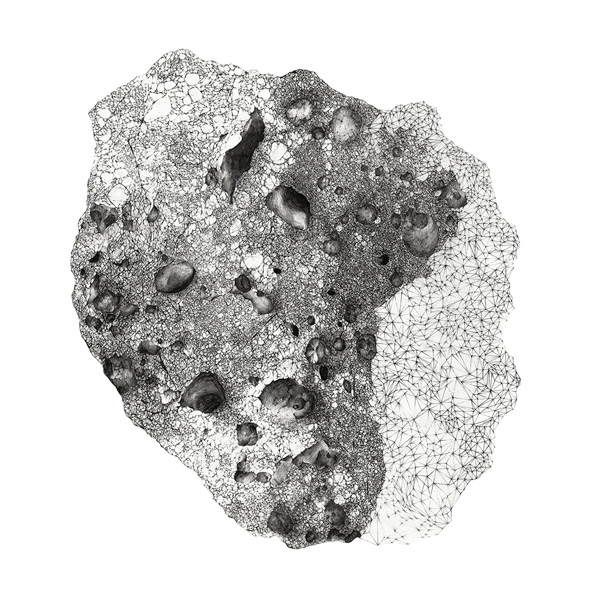
    Both my illustrative and sculptural work looks at natural structures, as inspiration for sustainable design, and as a metaphor for communities, the way they develop and bridge, and as a reminder that we are part of a much broader environment and timescale. I try to do this through referencing timeless, ubiquitous structures.

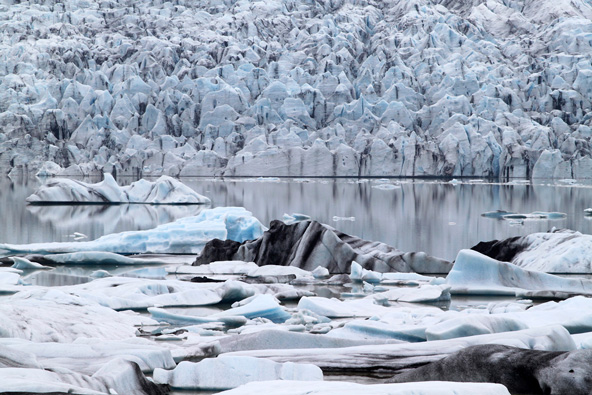
    Photography feeds in to this too, in that I like to document interesting geological and botanical formations as a starting point for illustrative works and as stand-alone images. I spent time in Iceland a wee while ago looking at the complex, ever-changing formations of glaciers, basalt formations and the tectonic ridge for inspiration, and to highlight the breath-taking characteristics of sites that change and form over millions of years.

    Future-Positive-Jennifer-Argo-3-Low

    We’re interested in finding out more about your collaborative work designing sanctuaries. How did it start? Can you take us through the different projects you’ve worked on so far?

    I started working with an architect called Lee Ivett on a series of workshops at Glasgow Sculpture Studios with a group of teenagers from an arts charity called Depot Arts, designing an entrance structure for a local nature reserve. We had similar ideas about building relaxing environments in the city, spaces that provided a similar sense of peace that churches do, without any religious bias, where people could relax individually or collectively.

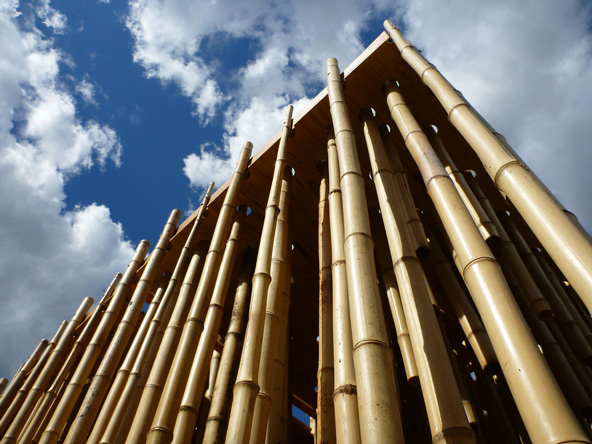
    We ended up designing and installing a bamboo sanctuary in Caledonia Road Church ruin, a beautiful site with lots of plant-life, which is run by arts organisation Wave Particle who had opened the site up to artists and students to test ideas. The space is one of a number of Stalled Spaces sites around Glasgow, provided by Glasgow City Council to regenerate spaces through creative activity and open them up to their local communities again through series’ of events and on-going projects.

    Lee and I created a second sanctuary space last year at Hello Wood: Project Village in Hungary, working with a group of 10 students, designers, artists, and creatives to develop and build a sanctuary over the space of 10 days. Project Village is a live-build blueprint for different types of sustainable community dynamics and communal spaces, including the festival itself and the way everyone works and lives together during it. Applications just opened for the next round of the 3-year project due to start in July, I recommend it to anyone interested to get involved!

    I’m working with a small team of architects, engineers, joiner/carpenters, musicians, designers and tacticians at the moment on a project for this year’s ArchiFringe festival in Scotland in July. We’re in the process of designing a sound installation and sanctuary space that we will be installing in a woodland area near Glasgow, working with the elements to create gentle music for inhabitants in the space.

    Future-Positive-Jennifer-Argo-4-Low

    You’ve recently won a travel award from J.D.Fergusson Arts Award Trust to travel to New Zealand. Could you tell us a little more about it and what will you be working on during the trip?

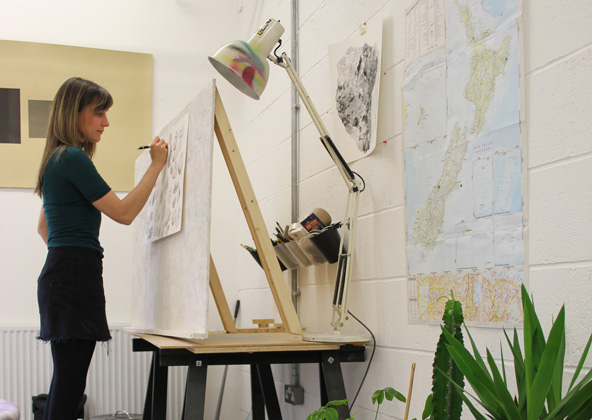
    I’ll be heading to New Zealand at the end of this year, to trek and travel across areas of the alpine ridge in the south and the sub-tropical regions in the north, to document rare geological and botanical structures. I’ll also be visiting the Longbush Eco Sanctuary and Welcome Centre near Grisbourne to meet with the anthropologists, ecologists and architect behind the Welcome Centre, to find out about the work they do there and to volunteer for a few days. I’ll be gathering lots of imagery to make new work and get some inspiration for new installations based on the natural structures I find. I’m interested in forms, and organisms that use closed-cycles of resource management, mutually-supportive ecological systems, or natural structures that are extremely strong and durable, while using as little material as possible, as inspiration for sustainable design and architecture.

    Future-Positive-Jennifer-Argo-5-LowWhat else will you be working on in the upcoming months?

    In the next few months I have a few small shows opening at ForFikaSake and Glad Café in Glasgow, as well as workshops and a pop-up shop at Fika  on 21st-22nd of May.

    I’ll be working with the team I’m taking part in ArchiFringe with (Shirley Hottier, Therry Lye, Grace Mark, Michael Bleach and Douglas MacGregor) on the sanctuary. We will be finalising the structural design and how we are going to install it across a stream, making our own recycled materials at the Sculpture Studios to clad the space, before installing it at the end of June.

    I’ll be hosting a public workshop at Glasgow Sculpture Studios in July, constructing temporary den spaces in the community garden. I’ll also be working on a few commissions; designing and making planters and light fixings for the interior of a house, furniture design for the garden of a public library, and a large-scale illustration for a shop front, then illustrations based on coffee-plant molecules for a coffee festival in Glasgow.

  • 8 Reasons To Consider Hiring A Personal Trainer

    Photo by bruce mars on Unsplash

    If you’re considering hiring a personal trainer but you’re not sure, you have definitely come to the right place. As it’s not a decision to be taken lightly, you need to be a personal trainer is the right step for you and your fitness journey. Whether you’re struggling to lose weight or you’re trying to recover from an injury, you need to find your ‘WHY’ before you begin. With that in mind, here are 8 reasons to consider hiring a personal trainer:

    What is A Personal Trainer?

    Before we get started, you may be asking, what exactly is a personal trainer? Well, a personal trainer is an individual that is certified when it comes to fitness. They will have a varying degree of knowledge when it comes to general fitness, putting them in the best position to motivate you by setting goals and providing feedback and accountability. Whilst every personal trainer is different, their ultimate goal is to ensure your fitness levels improve during your time with them.

    How Can You Hire One?

    When it comes to hiring a personal trainer, there are a number of different ways you can do so. One of the most common, of course, is hiring a personal trainer through your gym. As they’ll have trained PTs ready to work with you immediately, this is often the most popular choice with people that already have a gym membership. If you don’t have a gym membership, you can hire a personal trainer privately. For a guide to hiring a personal trainer, you can visit this site here.

    Reasons To Consider Hiring A Personal Trainer (personal trainer course)

    • You’re Struggling To Make Progress At The Gym

    If you’re struggling to make progress at the gym and you can’t seem to pinpoint why, then a personal trainer may be the best option. They will be able to take a look at the exercises you’re currently doing, advising you as to whether or not they’re right for you. They’ll give a detailed plan of what you should be doing, giving you the opportunity to results within weeks.

    • You’re Training For A Specific Event

    If you’re training for an event and don’t think you’re going to be ready in time, hiring a personal trainer could ensure you’re at the level you need to be in order to take part. If you give them details about the event you’re doing and the skills you need to have in order to complete it, they will be able to get you to the level you need to be within your time limit. Whilst you need more than a few weeks notice, this can often be done in record time.

    • You’re Trying To Recover From An Injury

    If you have experienced an injury and you want to build your strength, a personal trainer will be able to help you through your rehabilitation process. Ensure you’re giving them all of the details the doctors gave you in terms of your ability to move, as otherwise, they may push you further than you can handle. Whilst that may be a good thing, some people find it hinders them rather than helps them.

    • You’re Looking To Lose Weight Fast

    For those that want to lose weight fast, a personal trainer is a great option. If you give them a good idea about your goals and how much you want to lose, they will be able to put you on a meal and exercise plan that ensure you hit your goals well before you’ve planned. If you need extra support, they’ll most likely be at hand for you to message whenever you need them.

    • You’re After One-One-One Training At The Gym

    Although you may have been going to the gym for years, some one-on-one training may benefit you more than you realise. As it’s really easy to get stuck in your ways, having a personal trainer there to switch things up could change your routine for the better. For tips and tricks when it comes to switching up your routine, you can visit this site here.

    • You’re Unsure What The Best Programme For You Is

    If you have been attending the gym for a while and you still don’t know what exercise and diet programme is best for you, working with a personal trainer for a couple of months can really help. Looking at your current routine, your goals and your fitness levels will allow them to create a tailored programme for you to follow.

    • You’re Thinking Of Becoming A Personal Trainer Too

    If you’re thinking of becoming a personal trainer and you’re looking at personal trainer course costs, hiring a personal trainer to give you extra advice could really help. Whether you’ve hired one before or you want to work with someone who is widely successful in the industry, you need to ensure you’re learning from the best. They’ll be able to give you tips and tricks when it comes to being a personal trainer, advising you of the best possible route to take once you pass your course. If you’re lucky, they may even be able to offer you a chance to do work-experience or shadow them as they work.

    • You’re After Long-Term Results

    Finally, if you’re after long term results when it comes to your fitness, a personal trainer is definitely the best route to take. They will be able to create the best possible programme, ensuring you have results that last for years to come. Whilst you can’t carry out the programme and stop after a couple of months, the aim is to instil the values and practices within you so that it no longer feels you’re on a strict diet and exercise plan. Instead, it becomes a part of your life that you love and enjoy which will improve your overall quality of life even as you get older.

    Are you thinking of hiring a personal trainer? What made you make that decision? Let us know in the comments section below.

  • Estefania Clotti

    Estefania Clotti

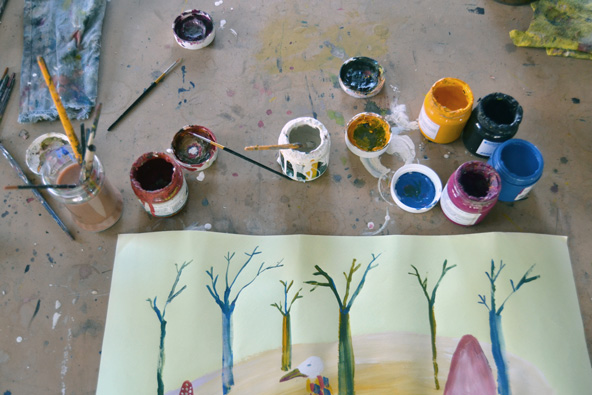
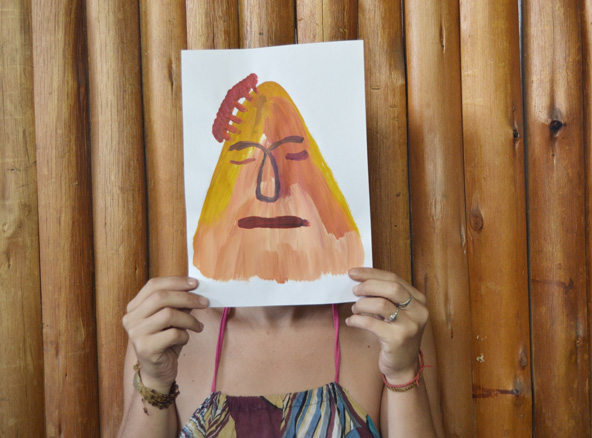
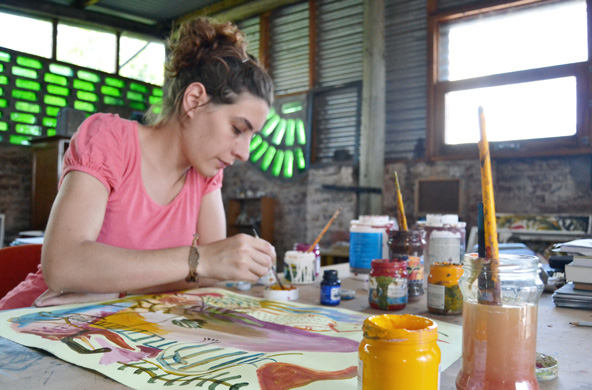
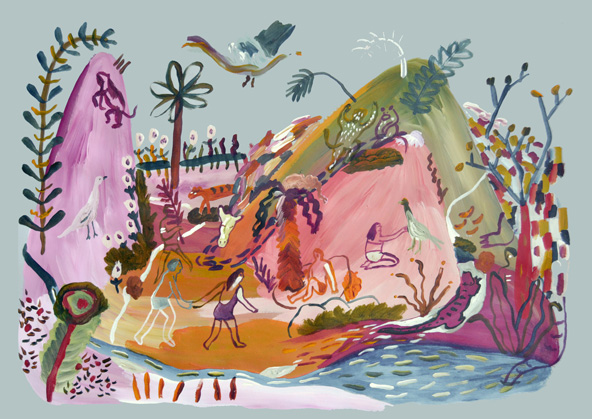
    Estefania Clotti is an Argentinian artist creating colourful drawings and paintings filled with different characters and inspired by social reality and her own platonic universe. We chatted with Estefania to find out more about her work, background and future plans.

    www.facebook.com/DibujosdeEcloT

    Future-Positive-Estefania-Clotti-3-low

    Please introduce yourself and tell us a little bit about your background and education.

    My name is Estefania Clotti and I was born in Rosario, Argentina. I studied Cinema and Animation, but I think my ‘big education’ took place at high school where I learned about the different languages of art. I also find important the education I received from the workshops, drawing and painting classes – they had a great influence on my work.

    Future-Positive-Estefania-Clotti-5-low

    When did you become interested in drawing?

    I started drawing when I was studying cinema. Back then, I started to do the storyboards and concepts for shots and I realised that it was the thing I liked the most about my course. After that, I attended animation school and never stopped drawing and creating animated short films.

    Future-Positive-Estefania-Clotti-4-low

    How would you describe your work?

    I consider my work ‘free’ and with no prejudices or, at least, that’s what I try to communicate with it. Lines, points… everything comes from experimentation. I like to play with it and change the pencils and paints; use different materials such as wood, cardboard and paper; try different formats from big to tiny; experiment with fanzines, animations, comics.. everything in the graphic world inspires me and allows me to constantly develop my work.

    Future-Positive-Estefania-Clotti-1-low

    What inspires your illustrations?

    I have two sources of inspiration that sometimes merge, but typically I get inspired by social reality, which I associate with cleaner lines with very little colour and the second inspiration is more introspective and related to my platonic, ideal world, with lots of colour and invented characters.

    Future-Positive-Estefania-Clotti-6-low

    Is there any project you’re working on at the moment? What are your future plans?

    I’m currently working on an animation and a series of large format paintings and drawings. The idea is to display them in different locations across the city. In the future I’d like to publish a book with all my works.

    Future-Positive-Estefania-Clotti-2-low