Category: Art

  • What is Pop Art?

    In the 1950s, popular culture went through a revolution. Not only did the decade witness the rise of television and give birth to rock n roll, it was also the decade that fine art went commercial. This art movement is known as Pop Art – you’ve probably heard of names like Andy Warhol and Roy Lichtenstein and seen many of the famous works such as Warhol’s Campbell’s Soup Cans.

    However, pop art was more than simply trendy art. It was a representation of the times and provided a counterculture to everything that had come before it. Celebrating the objects and familiar faces of everyday life, it stood against the mythology and grandiosity of traditional fine art. And whilst embraced commercial aspects of product advertising and Hollywood, it was just as much poking fun of these things as it was idolising them.


    Image Source

    The central themes of the movement

    Pop art aimed to blur the lines between high-brow and low-brow culture. Whilst the likes of Roy Lichtenstein made artwork in style of comic books, the likes of Richard Hamilton created collages out of advertisements and pulp magazines.

    Much of pop art is based on irony and could be seen as being the first wave of post-modernism. It deliberately made use of mundane objects and used repetition. Meanwhile, whilst previous art had almost always had a moral message behind, Pop Art went against morality displaying emotional scenes with a sense of comical ambivalence (for example, Roy Lichtenstein’s ‘Drowning Girl’ in which the caption famously reads ‘I don’t care! I’d rather sink than call brad for help’). Today’s contemporary artists might not have a pop art style, but they’ll certainly have taken some inspiration from the artists behind some of the most famous pieces, and it’s interesting to see how they’ve used those ideas to create something new.

    Product labelling and logos of the 1950s feature highly in Pop Art. Many works made after the 1950s have paid homage to this time by continuing to use imagery from this era.


    Image Source

    The biggest names in pop art

    Andy Warhol remains one of the biggest names to date. His most famous works are his prints of soup cans and celebrities such as Marylin Monroe. He would take these items and put them in repetitive patterns. It was a statement on mass production and how art is now viewed as a commodity. There’s a double-irony to much of Warhol’s work – the prints were in some respects mocking the way we consume art, and yet they have become so mass-produced and commercialised themselves. Warhol himself embraced this irony.

    Across the pond in the UK, Richard Hamilton is one of the more revered artists of the Pop Art movement. His most famous piece ‘Just What Is It That Makes Today’s Home So Different, So Appealing?’ was a collage that critiqued domestic life featuring cuttings of household products and bodybuilder and burlesque dancer to symbolise the perfect household couple. He kickstarted the trend of using magazine advertisements in Pop Art.

    Roy Lichtenstein is famous for his comic-based art pieces. He deliberately blurred the lines between high and low art questioning whether art had to have a moral message at all. One of his most famous works is ‘Whaam!’ which is a cartoon of a jet shooting down another plane. It put the context of war into a comical setting that questioned how trivial war imagery had become.

    David Hockney emerged in the 1960s and is another big name from the movement. His works experimented with suburban scenes, often changing his artistic style within each painting creating a jarring blur or realism and surrealism. Hockney’s ‘Splash’ is the best example of this aesthetic – the splash is painted in loose and natural detail, whilst the house and pool in the background are contrastingly geometric and plain.

    Other famous artists from the movement include Robert Rauschenberg, Eduardo Paolozzi and James Rosenquist.

    The best places to see Pop Art

    Most contemporary art galleries around the world contain works of Pop Art. However, there are some galleries in which the greatest of these works can be found.

    The Tate Modern in London contains several famous works of Pop Art, including Roy Lichtenstein’s ‘Whaam!’. In 2013, an entire exhibition was held in celebration of the artist’s works, information of which you can read here http://www.tate.org.uk.

    New York’s The Museum of Modern Art also contains some key pieces such as Jasper Johns’ ‘Flag’ and of course Andy Warhol’s ‘Campbell’s Soup Cans’. You can read here for more information of Pop Art pieces found at this museum: https://www.timeout.com.

    The Andy Warhol Museum in Pittsburgh meanwhile is the largest gallery dedicated to a single artist, containing 900 of his paintings, 100 sculptures and over 4000 photographs, as detailed here: https://hamiltonselway.com/. The museum also delves into the artist’s personal life, giving an insight into the artist’s influences and his own personal interpretations of his work.

    The influence of Pop Art

    Pop art has had a huge influence in all areas of modern life from entertainment (have you ever wondered how much do ice sculptures cost?) and fashion. It symbolised the beginning of celebrity worship, whilst also critiquing it. Its use of irony also directly led to postmodernism – deconstructing everything that had come before it.

    There are many modern artist’s today still pushing pop art forward such as Kevin Cherry, whose work uses elements of 60s pop art whilst incorporating digital art from the internet age. Mario Wagner similarly uses 50s iconography and combines it with elements of digital culture.


  • Bookshelf: Sometimes Always

    Bookshelf: Sometimes Always

    Sometimes Always is a multidisciplinary and independent project run by London-based Gabriel Finotti. On its website, Sometimes Always  is described as a “partial report of a generation made from the perspective of individuals who somehow belong to it and share the same doubts and anxieties.”

    The online platform publishes bilingual content (English and Portuguese) divided into different categories but with similar ideology and perceptions. Sometimes Always is also present offline with multiple projects like zines, posters and events.

    Gabriel sent us the two of their latest publications, “Fui Pra Israel E Curti Demais” and “Montarias Altamente Perigosas”.  You can find more information about Sometimes Always’ projects on:  www.sometimes-always.com

    If you’re looking for other exciting art projects going on right now, look into Marandi and the exciting work he’s doing with Watercolour preservation.

    Bookshelf- Something Always - Future Positive

    Bookshelf- Something Always - Future Positive (1)

    Bookshelf- Something Always - Future Positive (2)

    Bookshelf- Something Always - Future Positive (3)

    Bookshelf- Something Always - Future Positive (4)

  • In conversation: The Smails

    In conversation: The Smails

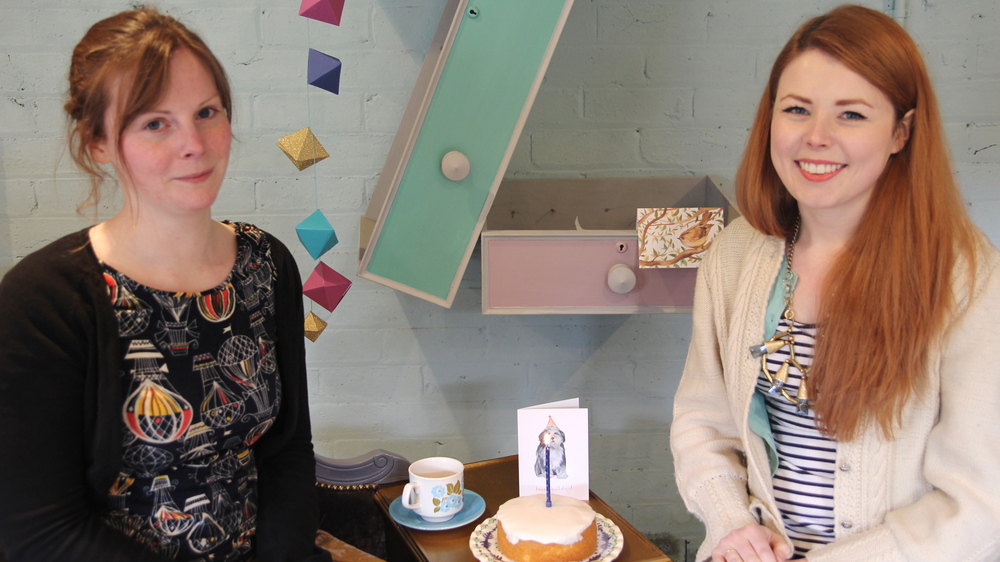
    Christopher Smail is a freelance arts journalist and editor living in Edinburgh. Christopher’s sister, Katy, is an illustrator based in Brooklyn, New York.

    When we met Christopher a couple of weeks ago and he told us about his sister, we thought it would be interesting to witness a conversation between these two siblings and find out more about their childhood and creative upbringing.

  • So It Goes Magazine

    So It Goes Magazine

    So It Goes is a biannual arts and culture magazine that has been conceived to be a a meeting place for a global network of photographers, journalists and other creatives. It is also creative agency that extends the magazine’s network and commitment to unique storytelling into branded film content, documentaries, featurettes and short films. 

    The debut issue was launched just a few weeks ago and we talked to James Wright, co-editor and founder of So It Goes, about his background and the idea of starting a magazine/creative agency.

    www.soitgoescreative.com

    Could you tell us a little bit more about yourself and your background?

    I’m the Creative Director and Editor of So it Goes magazine. After having studied politics at Bristol University in the UK, I went on to work for the 2008 Barack Obama presidential campaign in (rural…) Virginia, followed by 2 years in the New York film industry working for Bob Berney. Needless to say, my career in publishing was something of a segue…

    After my visa expired, I came back to the UK and co-founded the lifestyle brand Fourth & Main. F&M was a brand comprising two parts: a capsule menswear collection and a biannual arts and culture publication called Fourth & Main Journal. The title profiled a range of young talent across the arts and ran as a free title for three issues. Earlier this year, we felt the magazine deserved to be given a life force of its own as a paid publication, hence the new company and the birth of So it Goes magazine…

    How did you meet your co-editors?

    I’ve known my co-editors Josh Bullock and Lewis Carpenter for 15 years; we were all at school together and rather fortuitously all found ourselves in similar fields at a time when we were all looking for a new creative adventure. I’d worked with Josh at F&M and knew that our shared interests (and work ethic!) would make an excellent foundation for the new company.

    How did you come up with the idea of So It Goes as a creative agency and a magazine?

    Both Josh and my first love is cinema. At Fourth & Main we made 18 short films together, ranging from a video for the Sundance Film Festival, a docu-short with artist Alex Prager and a fashion editorial with James Bond’s new ‘Q’, Ben Whishaw. With So it Goes magazine, we saw the opportunity to pursue our film work inan even more active sense. The magazine affords us wonderful access to an incredibly diverse range of stories and storytellers. We decided that one arm of the business should feed the other – a story we’re researching, or an actor we’re shooting can and should be complemented by video work that we workshop, produce, edit and disseminate ourselves.

    We also saw the creative agency as an outlet to talk with brands who are looking to diversify their advertising by developing an innovative and forward-thinking approach to content curation.

    To those ends, we hope to bridge our passion for filmmaking with commercial considerations.

    What differentiates So It Goes from other arts and culture magazines that have been launched in the last couple of years?

    So it Goes was born out of shared desire to launch an independent magazine title that was at once intelligent, but not alienating. We strongly believed there was a market that wasn’t being catered for. When we looked at the newsstand, we didn’t see many publications that balanced well-shot and well-produced photo shoots (of primarily acting or musical talent) with long-form cultural or political commentary. It seemed like there was a hinterland between the two. Many people have said that you have to hone in on a target demographic, whether it be food, travel, politics or fashion, but we believed there was a cross-cultural niche to be filled. As a result, we devised a chapterised format for the magazine – ‘The Actors’, ‘The Directors’ ‘The Musicians’, ‘The Artists’, ‘The Collection’, ‘The Places’ and ‘The Writers’. From the beginning, we were seeking to bring about a return to long-form journalism. Whatever the current predilection for throwaway, bite-size commentary, we still believed there was an appetite for well-written pieces that are given the word count to cut to the heart of an issue or story.

    As a result, there’s a truly broad and dynamic range of content from photo shoots with young acting talent like Felicity Jones; interviews with the auteur of modern Hollywood, Paul Thomas Anderson and the linchpin of cult British cinema Michael Winterbottom; an original piece of non-fiction from the actor James Franco; an augmented reality spread with artist/rapper Yung Jake; long-form articles that address the future of modern espionage and many many more.

    For finding recommendations of similar bands to the ones mentioned by James in the interview, don’t forget to check music discovery platform www.bandnext.com

  • Aye Create

    Aye Create

    Aye Create is a photography project by Glasgow-based Polish photographer Mateusz Sleczka. The project portrays the diversity of Scottish culture and creativity through people in their workspaces.

    Mateusz says: “the project is mostly based on my friends and creative people I’ve had a chance to meet in Scotland” . 

    See the full projects here.