Author: Igor

  • What are the benefits of extended car warranty?

    Warranties are an important insurance policy for any driver! In fact, insurance is an important part of modern-day life as accidents, crime and other mishaps can happen; these in turn can become a huge financial burden on people, hence insurance is so important because it can provide important protection in case anything were to happen.

    Image via Unsplash

    For vehicles, an extended warranty will cover the cost of labour and parts of any mechanical or electrical issue, which can occur at any time during the vehicle’s lifetime. Though the majority of people may not think about warranties as soon as they purchase a new vehicle, it is important that as a consumer to consider value in them. When commenting on car warranty, experts often say “the devil really is in the detail”, not all warranties are created equal, which is why it is always best to speak to a specialist and always read the small print. Often, you will be able to choose how long the warranty lasts which will also impact the price.

    So, here are some things to take into consideration:

    Comprehensive Cover

    Even though the technology in today’s cars surpass those built before, these advancements are often more complex and result in a higher risk for breakdowns. This means vehicle repair costs will potentially be higher and it is in the driver’s best interests to ensure they’re protected. Hence it is important to carefully read through what is covered by your warranty, including things such as “consequential damage”. 

    Car Value

    Another benefit that many customers don’t consider – the policy becomes more valuable as the vehicle ages. A car that was under warranty or had an extended warranty is more likely to be well maintained and in good working order. Therefore, it is considered more trustworthy and of more value to the owner and will command a higher trade-in value at the dealership whenever the car owner may decide to sell the vehicle.

    More importantly, this provides peace of mind so that people can go about leading their daily life with confidence.

  • Running a care home: do’s and dont’s

    Thanks to a better health care and brand-new technologies, today’s generations are likely to live significantly longer than their parents and grandparents. However, certain challenges are likely to rise from that peak in life expectancy, such as meeting the needs of the elderly through adult care homes for example. Therefore, care homes are in high demand and it becomes an incredible business for entrepreneurs, but there are also options for those who want to stay at home like those provided by Abafields Home Care.

    Image via Unsplash

    Market study

    If you want to open any kind of business and especially a care home like , the first step is to do a market study. This will allow you to validate that there are opportunities and needs in the market. Research is the first thing to do, get a close look at the city or town where you wish to implement your business and have a look through the ages of the elderly population but also their needs, questions and worries. Some of the needs of the elderly may include financial, medical and emotional support. Make sure to secure a location for your house that is quiet and easy to access for ambulances. It may take a lot a money at first to buy all of the equipment and a house capable of housing at least 20 inhabitants but it will all be worth it in the long run. 

    Material

    To set up a care home, you’ll definitely need some organisation and a ton of material and human needs, this project will require a big financial investment. Firstly, you’ll need to make sure:

    • The building is accessible to wheelchairs and ambulances at the entrance but also on the inside with ramps, stair lift, handrails, etc;
    • Equip your care home with care home vehicles, these cars are carefully designed to provide comfortable care home transport solutions which address the needs of both disabled and able-bodied users, you can find a wide range of vehicles from specialised companies such as Allied Fleet;
    • Provide good quality food to your residents (local, seasonal vegetables for example). As we know, food can heal and can lift spirits;
    • Purchase art supplies, board games and more to entertain people, especially if they don’t receive a lot of visitors; 
    • Get well trained staff. You’ll need staff to cover all positions (reception, catering, maintenance and upkeep, marketing, etc.) but also qualified medical staff.

    Opening a care home can be extremely challenging at first and if you’re in it just for the money, you won’t get far. Compassion and care to enhance the quality of life of the elderly as well as your staff should be your drive and purpose. 

  • Madrid Instants

    Madrid Instants

    Last week we travelled to Madrid to work on a new City Guide. We loved the city and can’t wait to show you all the places we visited. Until then, here’s a small preview taken from our Instagram profile.

    11931253_216552245343649_2088187398_n
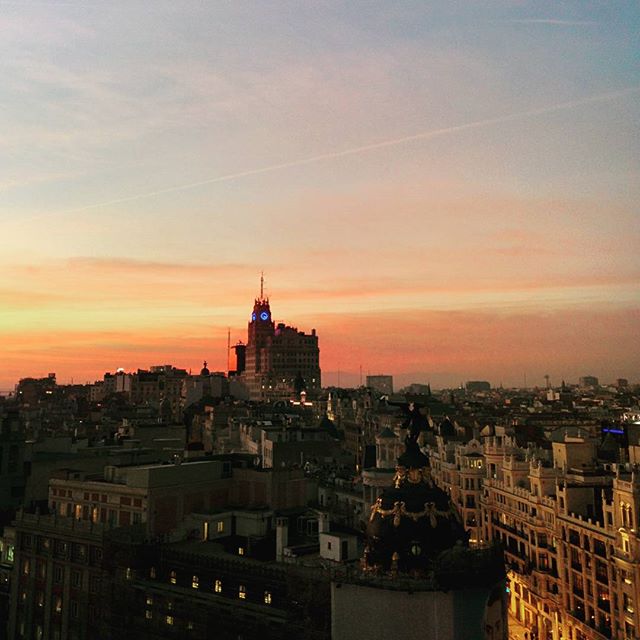
    The views from the rooftop of El Círculo de Bellas Artes

    12139772_1227099030639727_163041294_n
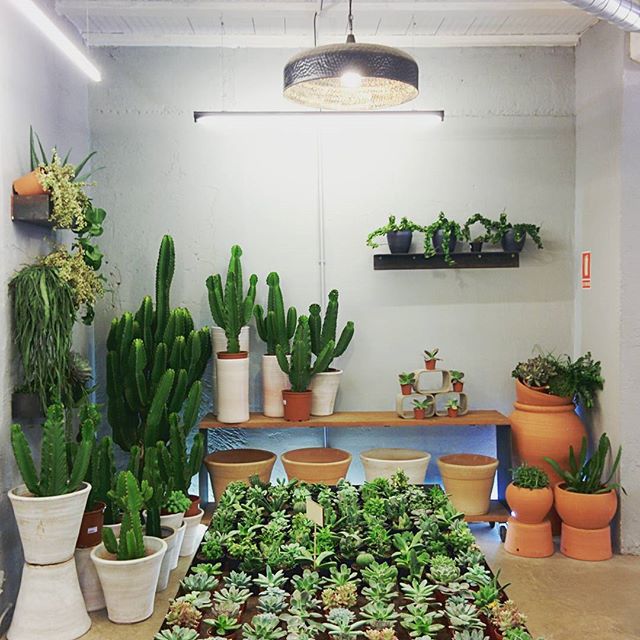
    Cacto Cacto, a shop selling only cacti and succulent plants

    12063287_973977302670095_624923178_n
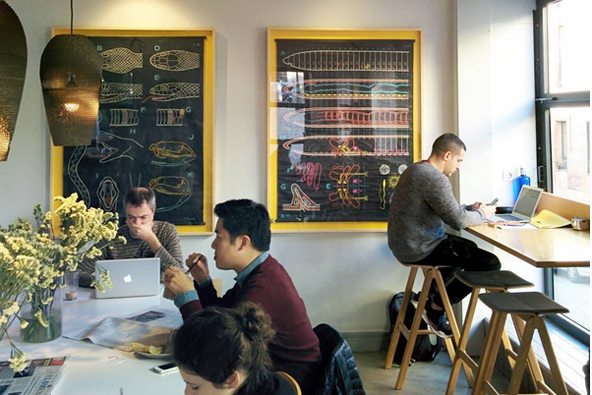
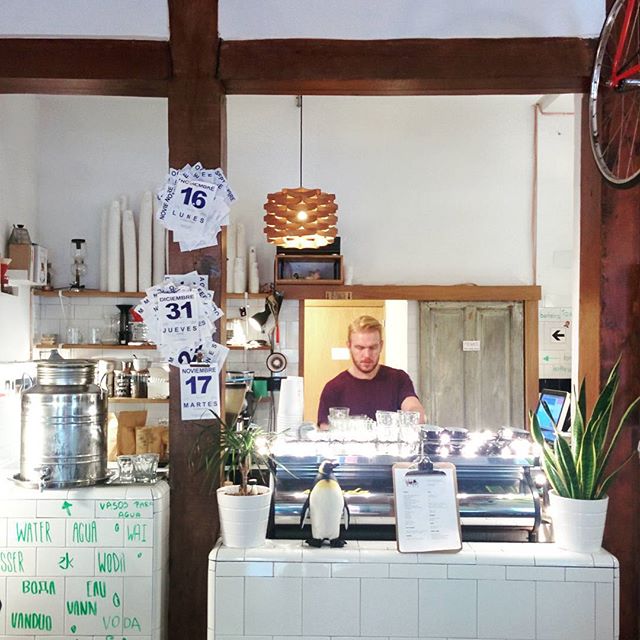
    Toma Café, a cool coffee shop in the Malasaña neighbourhood

    11374449_868522663225648_1342631700_n
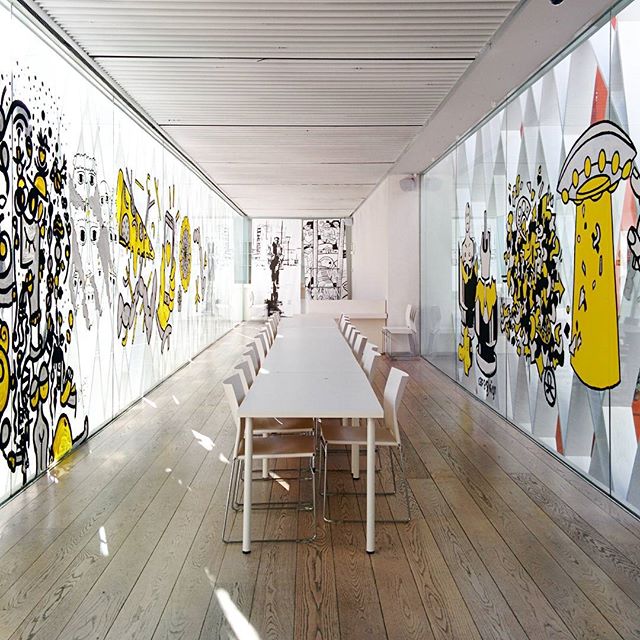
    Kyle Hughes-Odgers exhibition at Swinton and Grant gallery

    12277546_736393199826321_2027457955_n
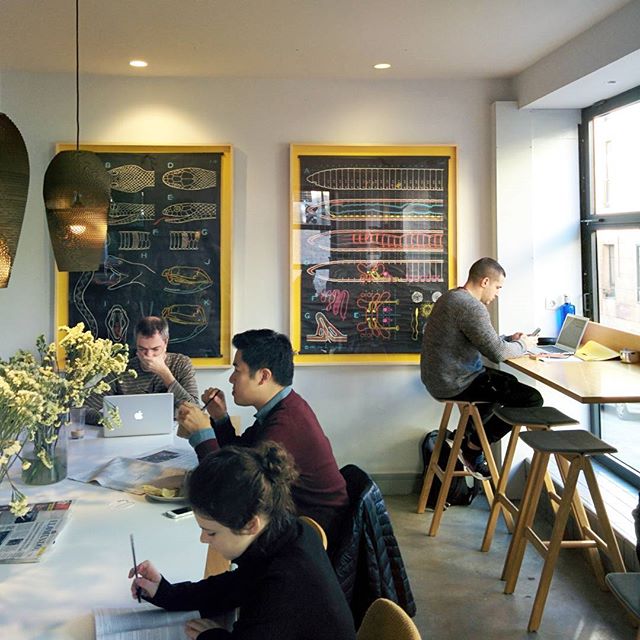
    Federal Café in the hip neighbourhood of Conde Duque

    12224081_519052398272388_657533215_n
    Illustration museum Museo ABC

    12142613_880027998776948_279686544_n
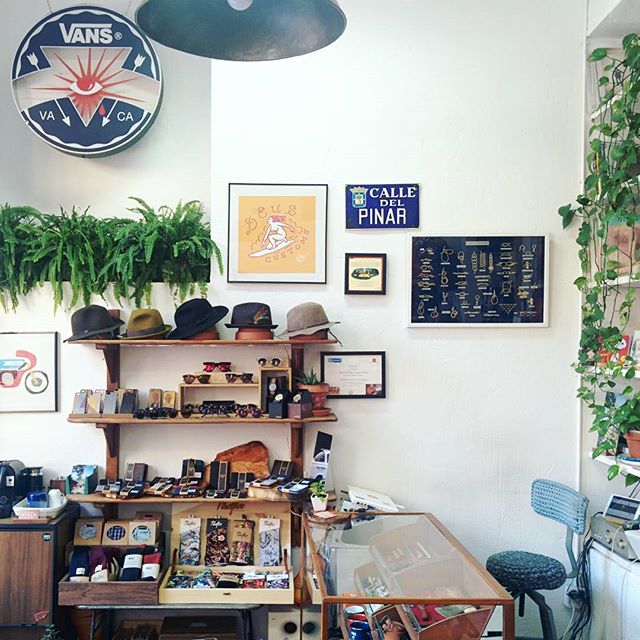
    Pinar, a really nice menswear shop in the Barrio de las Letras neighbourhood

    11371242_188169738190710_2144754533_n
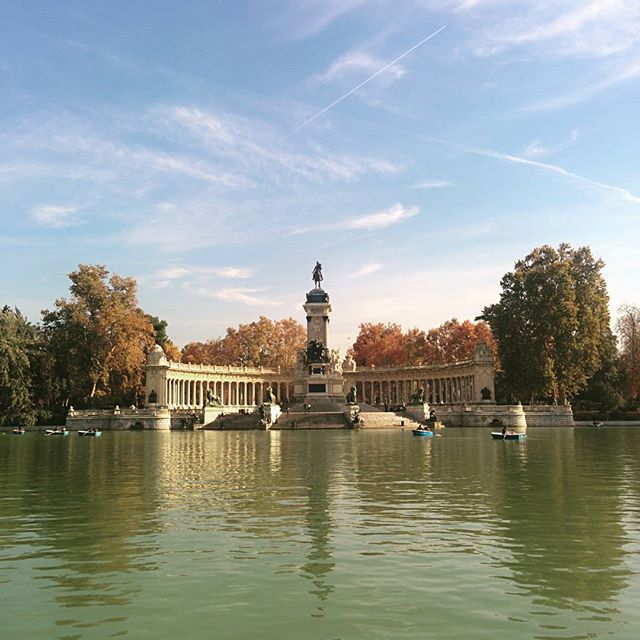
    El Retiro park

  • Kristin Texeira

    Kristin Texeira

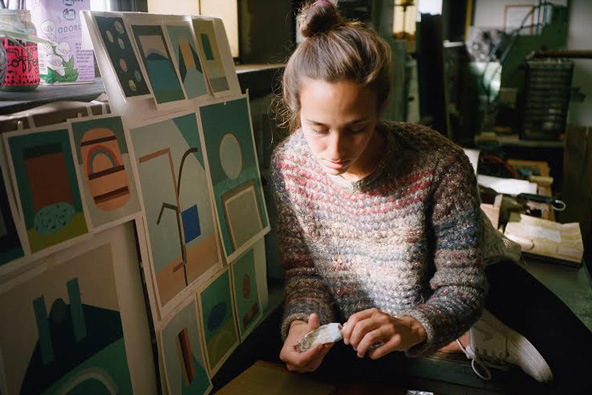
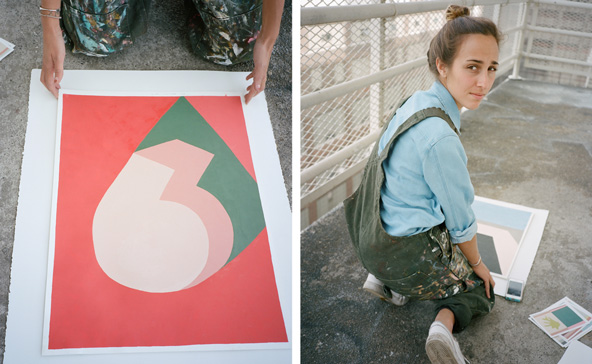
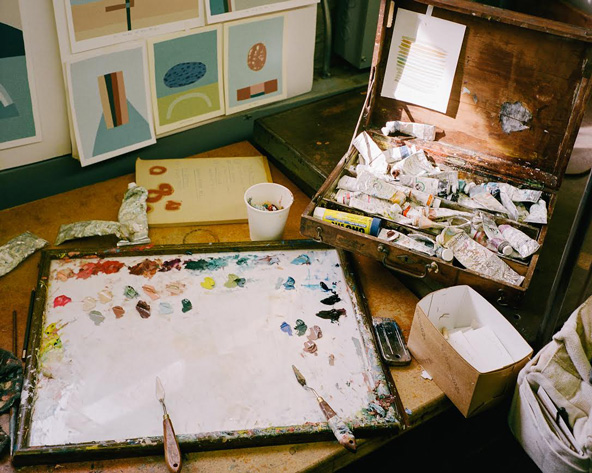
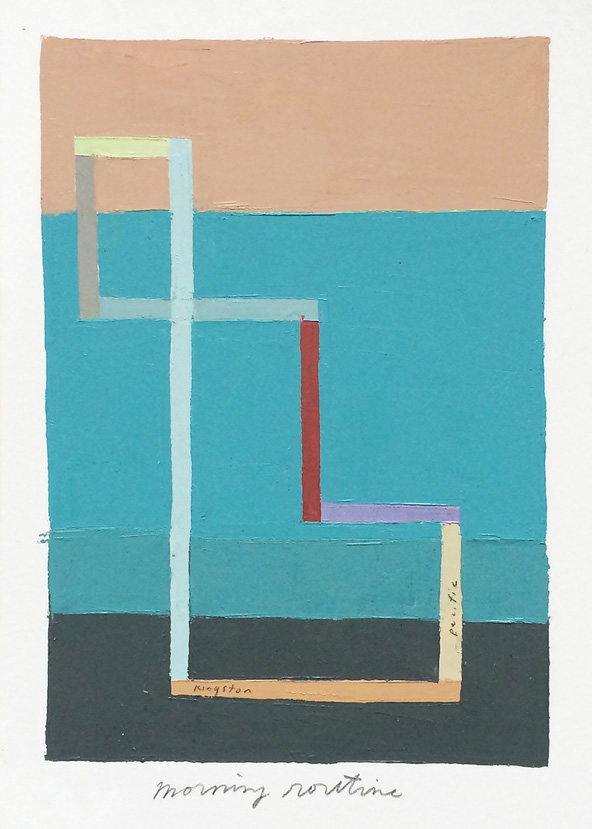
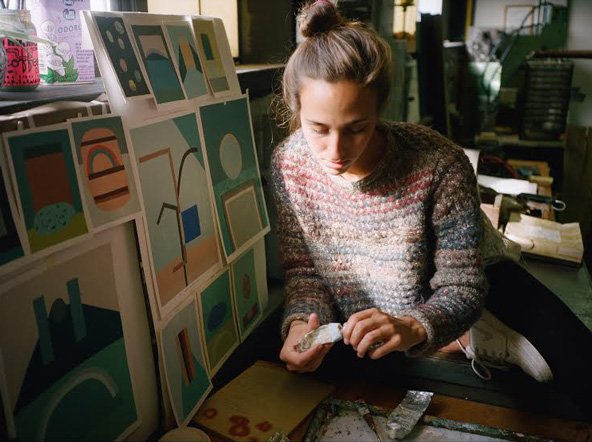
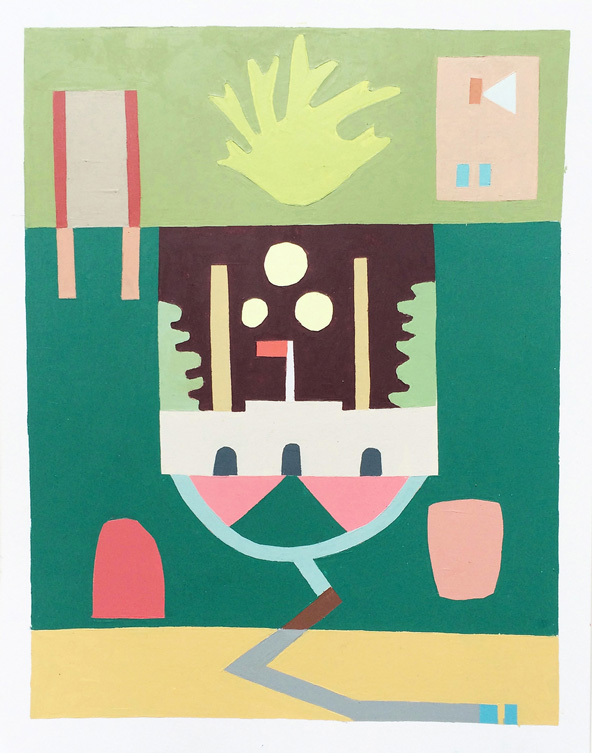
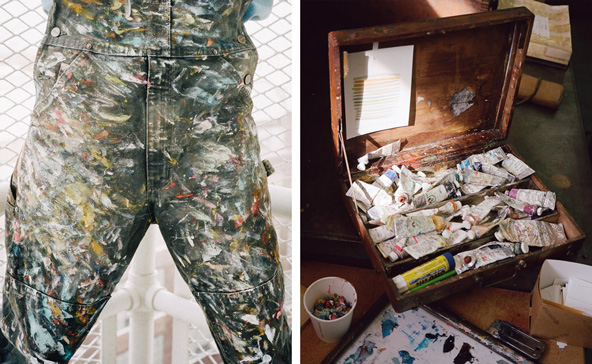
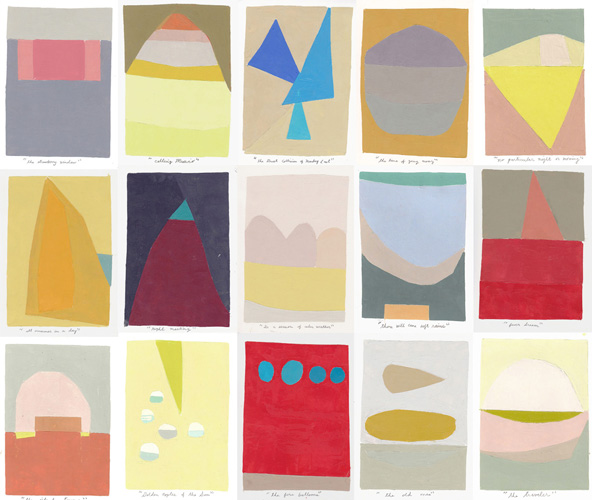
    Kristin Texeira is an oil painter originally from Massachusetts. From her studio in Brooklyn, Kristin creates abstract colourful paintings to capture, document and preserve memories. We chat with Kristin to find out more about her earliest memories of painting, the influence of colour in her work and what happens on a normal day at her studio.

    www.kristintexeira.com

    Studio photographs by Julie Simon.

    Future-Positive-Kristin-Texeira-4

    What are your earliest memories of painting?

    I remember as a very young child a pair of feathery paintings above my mother’s couch. I would subconsciously study them – the way the colors and shapes interacted and overlapped, comparing and contrasting them. So, it all started with looking.

    After that I can remember passing my hours filling coloring books – my strategy was to use as many colors from the crayon box as possible. I had little watercolor sets and my grandmother would let me paint on her walls and windowsills. I loved color from a young age. I would take the paint palettes from my classmates and mix their colors together to watch them all blend before washing them.

    Future-Positive-Kristin-Texeira-1
    Future-Positive-Kristin-Texeira-9

    Please take us through a normal day at your studio and tell us a little about your work process.

    I’m a big list-maker. My day usually starts with a coffee and a “to-do” list. There is a lot to balance between the act of making art and the business side of things. So, my lists usually include a few business oriented tasks: emails, updates, applications, and then there’s the good stuff – what I will make that day.

    Most of my paintings begin in the form of writing. I try to free write everyday in search of inspiration. Writing helps me to preserve the present and unlock memories that I haven’t visited in a while. My paintings are these stories retold through the language of color.

    Future-Positive-Kristin-Texeira-2

    Colour is clearly an essential aspect of your paintings. Please tell us in which ways it influences your work.

    My life is categorized with color. Colors are evoked through interactions. I make playlists based on the colors of songs. I know certain friends will get along with each other based on their colors. I see colors in scents and sounds. It helps me define moments in time.

    I paint to provide proof – for myself and others – of existing in these moments. Painting keeps me present and allows me to pay homage to the past. I gather colors daily as a reminder to remain awake and I paint the colors of the past to remedy nostalgia.

    Future-Positive-Kristin-Texeira-8 Future-Positive-Kristin-Texeira-5

    What other elements are an essential part of your work? Where do you draw inspiration from?

    Travel plays an important role in my work. I’ve noticed a pattern where I never have a sense of my present home until I reach a new destination. Interacting with new environments allows the past to become a memory and therefore something I wish to preserve through painting. Being in new places and listening to the stories of strangers serves as great source material for my pieces. My desire to learn through travel and my artistic practice are intertwined.

    Future-Positive-Kristin-Texeira-6

    What are you working on at the moment?

    Though I look outwardly for inspiration, my work over the past few years has been mostly personal. I am continuing the search for beautiful interactions but, I am starting to gather other people’s memories as well.

    I have had strangers come to me with memories that they want to preserve through paint. There have been families that have to sell their grandparent’s home and want a tangible map to remember. There have been couples that share a great adventure in a faraway place, walking me step-by-step through their memory, asking me to put it into paint. It’s amazing some of the stories people have shared and beautiful that they trust me with something so precious. I’m hoping to continue my own adventure and help many people along the way with remembering theirs.

    Future-Positive-Kristin-Texeira-3 Future-Positive-Kristin-Texeira-7

  • Stephanie Specht

    Stephanie Specht

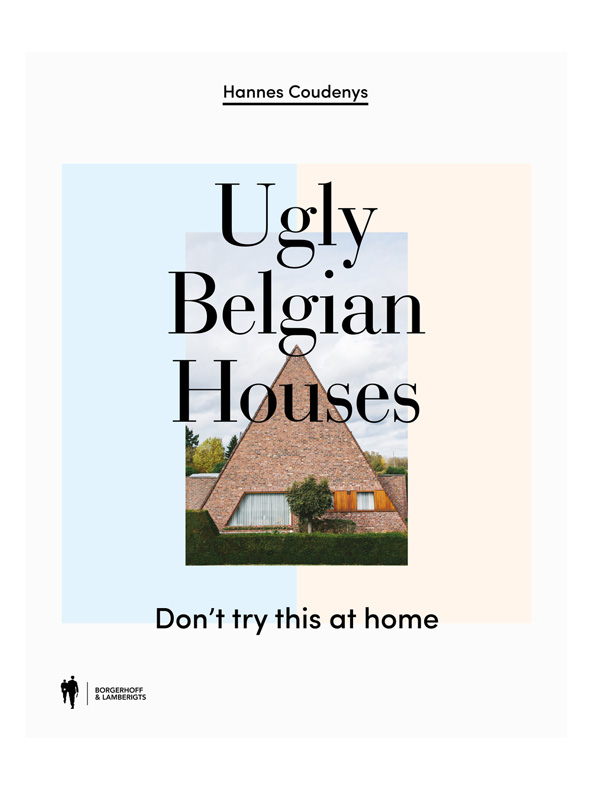
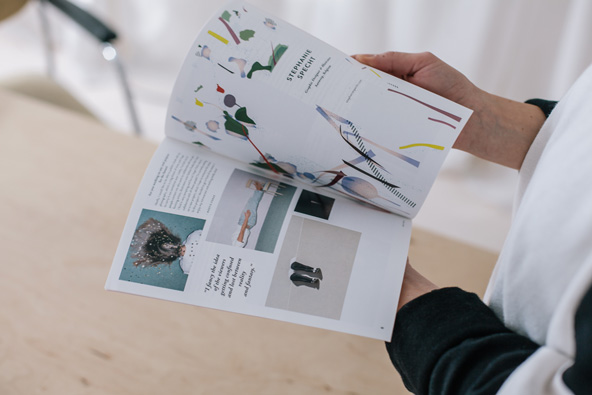
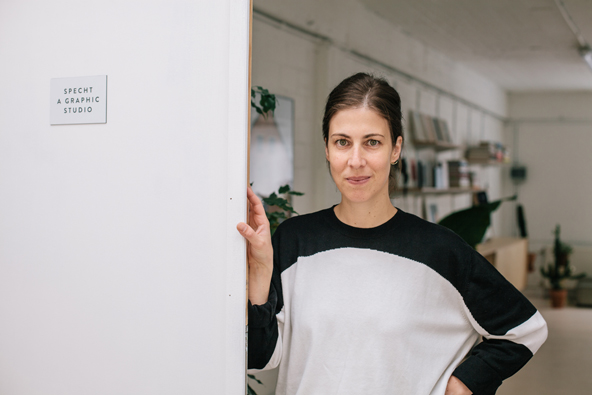
    Stephanie Specht is a freelance graphic designer based in Antwerp, Belgium. Inspired by music, art and fashion, Stephanie describes her work as intuitive, abstract, typographic and minimalistic.

    We chat with Stephanie to find out more about what made her become a graphic designer, her workspace and plans for the upcoming months.

    www.stephaniespecht.com

    Studio photographs by Christophe Derivière.
    Future-Positive-Stephanie-Specht-2

    Please tell us a little about your background and education. The bio on your website mentions that you lived and worked in so many places before going back to Antwerp!

    I was born in Antwerp and I studied Graphic Design at the Royal Academy for Fine Arts. I worked at a company for a year and quickly realized I didn’t belong in a structure like that. Also, the routine was killing my creativity. I wanted to do my own thing.

    I became self-employed in 2007. Initially, my plan was to stay in Antwerp but, due to a past relationship, I moved to all those different places: Cape Town, Brussels, Princeton and New York. I was living a modern nomadic life which was really inspiring but at the same time exhausting. After a while I really felt I wanted to settle down somewhere. Suddenly I wanted the opposite lifestyle than the one I was living. I was used to working from ‘home’, wherever ‘home’ would be but, if I look back at those couple of years, I think I wasn’t really 100% focused on my work. There was too much distraction.

    It’s only been since 2014 that things really started changing for me. I decided I would stay in Antwerp for a longer time. I did not plan on moving anywhere soon again. I became more focused on my work and somehow attracted more interesting clients.
    Future-Positive-Stephanie-Specht-8
    Future-Positive-Stephanie-Specht-3

    What made you interested in graphic design in the first place?

    Initially, I wanted to become an architect. In Antwerp, where I grew up, I started an architectural design course when I was 16. I didn’t know what graphic design was, but I’d always loved to draw. At one point, one of my teachers advised me to change direction since my maths weren’t good enough. So I started a more general art course, and instead of focusing on buildings, I began looking at the style of architectural movements (Bauhaus, Brutalism, De Stijl, Modernism). I became fascinated by the lettering on buildings. Only by looking at these typefaces, you could tell the years in which these buildings were built. During my last year in high school, a typography teacher introduced me to graphic design.
    Future-Positive-Stephanie-Specht-5
    Future-Positive-Stephanie-Specht-6

    Tell us about your workspace, Studio Specht, and its uses.

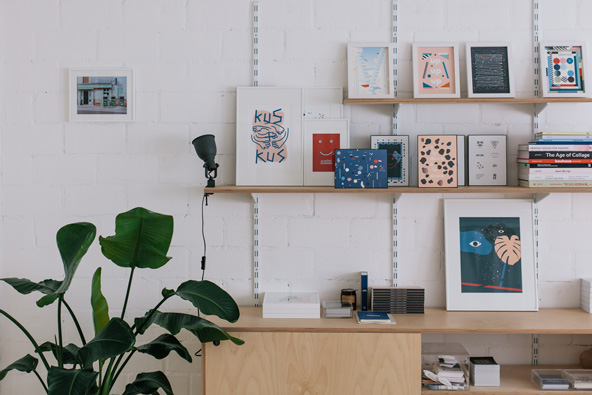
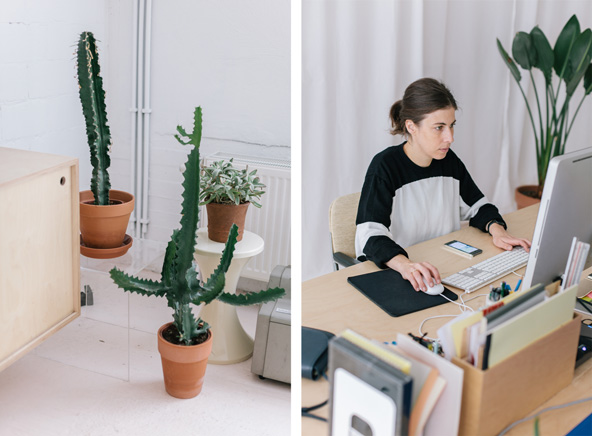
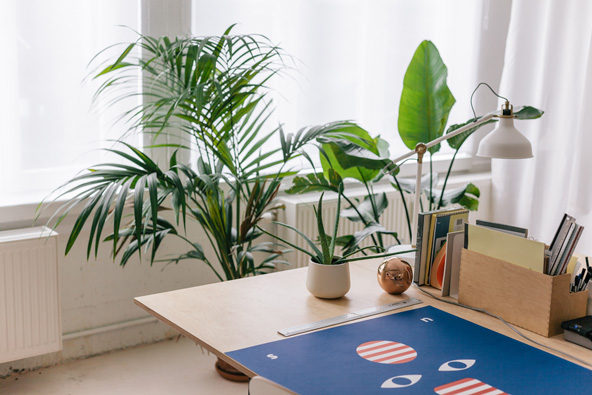
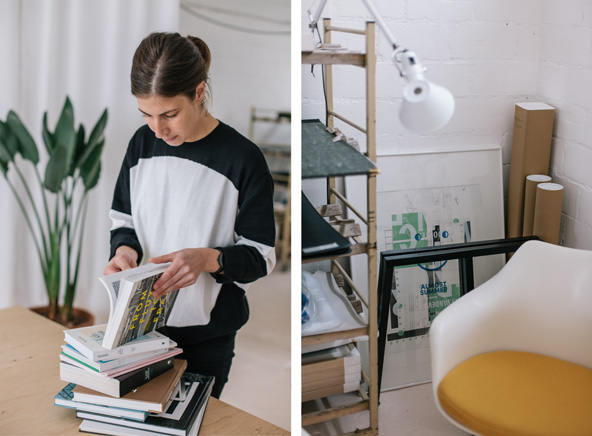
    I moved into my first real ‘office’ at the beginning of this year. I really dislike the word office – it’s more like a creation room, a work space, a studio! My studio is in an old building materials warehouse. There are 12 studios in total, all occupied by creatives. The interior was designed by Nicolas Petillon. The space is really rectangular and when he suggested to use a ceiling-high curtain line in the form of a wave through the space, my first reaction was ‘why break this space!?’ But he was right. The curtain gives the space even more ‘space.’ I can open the curtain wherever I want and change the whole room.

    I also have a marble Knoll table in my meeting room. It belonged to my grandmother who passed away a few weeks before I opened up the studio and I inherited it. The curtain follows the shape of the table and this space now almost feels like a sanctuary. It’s beautiful. I decided to paint my floor apricot white which adds a certain warmth and feminine touch to the all concrete white space. I also have a lot of plants. It feels like a soft jungle. Every time I walk into the studio I feel inspired and happy. Nicolas did a great job, really.

    The first couple of months I organized a few Open Days where people could just come, walk in and look at new works I produced. I have done some collaborations that I’m really happy with and those works are also on view here. From time to time, I get emails from people who want to make an appointment to come and have a look at my studio. Sometimes they are just curious to see where I work, sometimes they want to buy an illustration. It’s nice to meet people this way, because they are different to my clients.
    Future-Positive-Stephanie-Specht-4
    Future-Positive-Stephanie-Specht-10

    How would you describe your work? Where do you draw inspiration from?

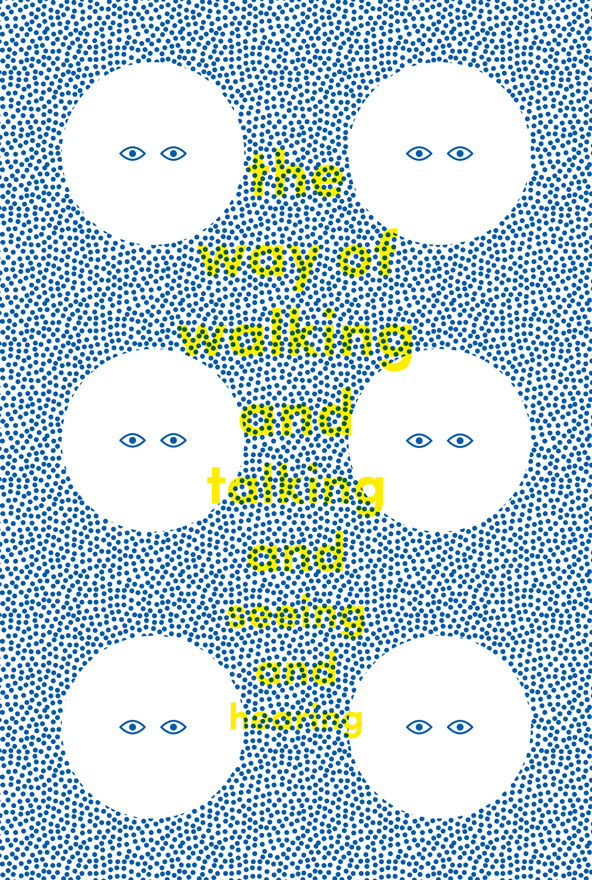
    My work is intuitive, abstract, typographic and minimalistic. I love to find purity in lines and forms.

    Music, art and fashion are a big source of inspiration for me – but it can be anything really; a conversation, a photograph…
    Future-Positive-Stephanie-Specht-11 Future-Positive-Stephanie-Specht-7

    Do you have a particular favourite piece of work or something you feel especially proud of?

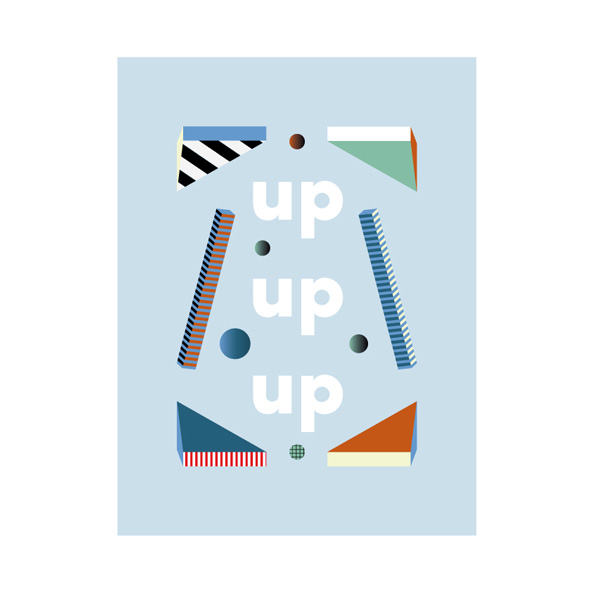
    I think the Up Up Up illustration is one of my favorite personal works now. I recently created the identity for this new music documentary television show called Off the Record. It was the first time I designed something for TV. I am very happy with the result. It’s great to see my designs moving on screen!
    Future-Positive-Stephanie-Specht-1

    What are your plans for the upcoming months?

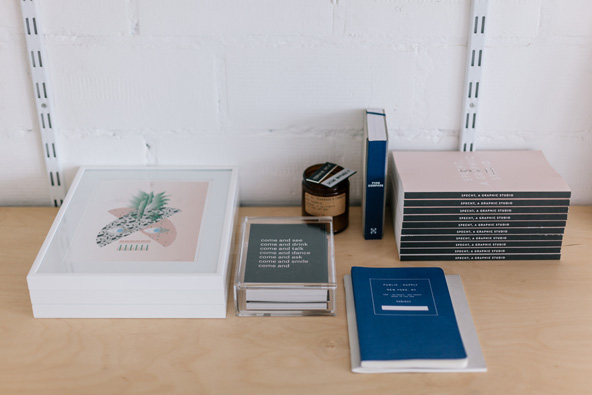
    I just finished a really intense book project in New York. I was there for two months. I am really tired so I am working on just a few jobs – I need to relax a little. Right now I am working on a redesign for S Magazine. S is a deluxe art and fashion biannual committed to gorgeous fashion photography, intelligent long-form articles, and experimental visual art. The magazine often changes style (designer). They have an identity but they like to play around with different typography and layout within the magazine itself.

    I’m also busy updating Belgian artist Leon Vranken’s website. His work is amazing – I love working with his beautiful images. I also might design some new book covers for Das Mag, a new young Amsterdam based publisher.