Author: Igor

  • Helsinki: People Make the City

    Helsinki: People Make the City

    When we visited a couple of years ago to create our Helsinki City Guide, this Nordic city instantly became one of our favourite destinations mainly because of its friendly people and vibrant culture. Finnish photographer Laura Iisalo has wanted to show her city and what makes Helsinki special, compiling stories from the capital’s makers and doers in a book called Helsinki: People Make the City.

    We talked to Laura about what made her publish the book, the stories that readers can find in it and her meaning of ‘Nordic living’.

    You can find more about the book and purchase a copy in the link below.

    www.peoplemakethecity.com

    Future-Positive-Helsinki-People-Make-the-City-3-Low

    Can you tell us about how the idea of creating the book come about?

    I used to run a website titled Creating Helsinki. I interviewed and photographed local makers and doers based on the idea that people make the city. One day Melanie Dower contacted me and we started working together on some stories; she did the writing and I took the photos. I guess I had dreamed of making a book and then we just decided to go for it. We already had quite a lot of material when we contacted a publisher and signed the contract.

    Future-Positive-Helsinki-People-Make-the-City-4-Low

    What can readers find inside the book?

    The book features five local people who all live in different neighbourhoods and their favourite places to shop, eat and hang around. We wanted to create a book that not only allows people to visit the city but take a piece of it back home, which is why we included some recipes of some classic dishes and some DIY projects. We interviewed some lovely business owners too and at the end of the book we listed the best of local restaurants, bars, coffee shops, stores and other places to visit. So all in all, it’s a book for those who want to experience the local way of life.

    Future-Positive-Helsinki-People-Make-the-City-1-Low

    How would you describe Nordic living?

    The Danes have made hygge so popular it’s almost too much already. I think people have their eyes in the Nordic countries right now eager to see what comes next. I believe it’s because people have this idea that life here is very cosy and relaxed and in this crazy world people find that appealing and I do too. I love the seasonality and we have this amazing nature and great traditions such as sauna and our own cuisine, which is very undervalued still. To add to those traditions we have local culture that is thriving right now. People really want to do things together and make the world a better place, I believe. It makes life here very enjoyable.

    Future-Positive-Helsinki-People-Make-the-City-5-Low

    What makes Helsinki different to other cities?

    Helsinki is quite small compared to Stockholm for example and full of nature. The city is surrounded by the sea and you can take the tram to go to the woods. There are many new public saunas and islands that can be visited for a mini getaway too. There are a couple of fun neighbourhoods that are evolving super fast and have lots of new coffee shops, restaurants and small stores run by local entrepreneurs. I know the same thing is happening elsewhere too but I suppose the vibe in Helsinki is perhaps more authentic than in some of the bigger cities. It’s not purely Scandinavian but it’s inspired by the east mixed with local traditions and international influence. I think that it’s very easy to run a business here and still have a good work-life balance.

    Future-Positive-Helsinki-People-Make-the-City-2-Low

    Save

    Save

    Save

  • Sergio Membrillas

    Sergio Membrillas

    Sergio Membrillas is an illustrator living and working in Valencia, Spain. We chatted with Sergio to find out more about he got first interested in illustration, his inspiration and plans for the upcoming months.

    www.sergiomembrillas.com

    Studio photos by Raúl Pérez.

    Future-Positive-Sergio-Membrillas-6-low

    How did you become interested in illustration?

    I have been always interested in drawing, since I was a little kid. It has always been my biggest passion, but I only got to know that I could make a living out of drawing after my fine arts degree. It took me a little while to focus on it, but I have learnt a lot on the way.

    I liked to draw ancient sculptures at the university even though I didn’t know that would be important in my future, the way it is right now. I think those facts helped to shape something inside of me that I can apply in my everyday life now.

    Future-Positive-Sergio-Membrillas-3-low

    What are the main inspirations behind your work?

    Daily life, photography and design books, and the internet. And by saying the internet, I mean all the content in there and all the cool resources of history of graphic design and illustration that you can find. Like videos of Saul Steinberg talking or the short films by the Eames. It is difficult to mention all the cool stuff that can inspire you at the same time.

    So yes, basically, the internet, interior design, art, architecture, and the big masters, of course: Eckersley, Shapur or Eksell.

    Future-Positive-Sergio-Membrillas-4-low

    Could you share some of your favourite projects you’ve worked on with us?

    Lately, the upcoming Future Islands posters, the illustrations for the awesome Pallet magazine and some of my last Adweek and Aftenposten illustrations.

    Future-Positive-Sergio-Membrillas-1-low

    What other illustrators and designers based in Valencia we should know about?

    Valencia is a city full of creative talent. I like to call it the Spanish Berlin – I know it is still not there yet , but we are getting closer step by step.

    Here are some of my favourites from different disciplines: illustrators Antonio Ladrillo and Milimbo, and designers Nueve estudio, Dani Sanchis, and lamamba.

    There are also two creative businesses that I love: carmencita film lab, that develops analog film from all around the world and obsolete letterpress, one of the best letterpress in Europe.

    Future-Positive-Sergio-Membrillas-5-low

    What are your plans for the upcoming months?

    The usual : working, travelling as much as I can and enjoying the sun of my city while drinking coffee. Plus, a new editorial adventure that is a secret but will be a total challenge. I will let you know when it is done 🙂

    Future-Positive-Sergio-Membrillas-2-low

    Save

  • London Cyclist with Expedia

    London Cyclist with Expedia

    We recently collaborated with Expedia on a cycling route around East and North London for their London Cyclist guide. We often travel to London for work and the route we suggested, from Borough Market to Camden Town, is one of our favourites when we are visiting and have some free time.

    You can find more about this route and all our recommended shopping and eating stops on the following link:

    www.city-cycling.expedia.co.uk/london/heading-north-past-markets-and-waterways

    Future-Positive-Cycling-Expedia-4-low
    Gulliver’s Wharf in Wapping

    Future-Positive-Cycling-Expedia-3-low
    Regent’s Canal

    Future-Positive-Cycling-Expedia-1-low
    Donlon Books in Broadway Market

    Future-Positive-Cycling-Expedia-2-low
    Present & Correct in Islington


    Save

  • The Bothy Yard

    The Bothy Yard

    Designed in Edinburgh, The Bothy Yard is a home away from home for the modern explorer, combining the comfort and character of a boutique hotel with the buzz and social experience of a hostel. We chatted with The Bothy Yard’s founder Max Strzelecki to find out more about this innovative concept.

    www.thebothyyard.com
    Photos by The Bothy Yard

    Future-Positive-The-Bothy-Yard-2-Low

    Could you please introduce yourself and tell us a little bit about your background?

    My name is Max Strzelecki (str-let-ski). Edinburgh has been my home for five of the past seven years. My life here tends to revolve around people, waves, wind and building things… probably in that order. It’s easy to get the balance right here; you can enjoy the social buzz of city life and you’re also a stone’s throw away from the hills and the ocean. I’ve always enjoyed rich, simple experiences, whether it’s camping on the Isle of Tiree, hostelling in a surf town or cycling through Edinburgh’s side streets, there’s a lot to be said for the less-is-more approach.

    How did the idea of The Bothy Yard come about? Could you tell us a little bit about the concept behind it?

    It was the coming together of my love of experiencing the outdoors from the cosy comfort of a tent, and that of meeting new people and sharing stories from the road. I recently returned from 15 months in Australia, during which I spent a lot of time travelling and staying in hostels, mixing work (if you can call building Tough Mudder events “work”) and pleasure (being in the ocean).

    I love the social element of the hostel experience; there aren’t many places where you are so strongly encouraged to approach a group of strangers and introduce yourself. That’s a beautiful thing, but I find communal dorm rooms very tedious. I know a lot of people who miss out on the social experience hostels offer because they don’t want to stay in a shared room. Knowing this and appreciating the unique cosy and protected feeling of camping in the wild, I had the idea of The Bothy Yard. The Bothy Yard is a hostel that offers each guest their own Bothy Box – a private sleeping and changing space with storage and all the other features a modern explorer needs, all behind a lockable door.

    Future-Positive-The-Bothy-Yard-3-Low

    Who is The Bothy Yard for?

    The Bothy Yard is for today’s explorers who want their days to be action packed, to meet new people, experience new places and really get in amongst it. At the end of the day when you’re tired and weary, you can close your Bothy Box door and have the peaceful, heavy, undisturbed slumber you deserve. We’re for people who want all of the social benefits of staying in a hostel, but with a bit of extra comfort and privacy.

    You are launching a crowdfunding campaign in February, could you tell us more about it and the plans for the upcoming months?

    This is a very exciting time for us! The crowdfunding campaign will be the first opportunity for people to book their stay at The Bothy Yard. We will be opening the doors of the first (mini) Bothy Yard in July of this year. The next few months will be filled with a lot of box construction, coffee, Frank Ocean and Tallest Man on Earth (our “getting stuff done” music). Edinburgh will be our home, but for now the exact location is a secret. Stay tuned for the announcement in the coming weeks. If you’re planning on visiting Edinburgh in the next year, be sure to follow our journey and book your stay!

    Future-Positive-The-Bothy-Yard-1-Low

  • CERIO

    CERIO

    Husband and wife Cristóbal Rioseco and Valentina Cerda are the founders of Chilean design studio CERIO, specialising in furniture and homeware using unexpected material combinations. We chatted with Cristóbal and Valentina to discover more about what made them start their own business, their design process and their choice of materials.

    www.instagram.com/cerio.cl

    future-positive-cerio-low-5

    Could you please introduce yourselves and tell us a little bit about your backgrounds and how you met?

    I studied advertising and Valentina, my wife, is an interior designer. I used to work in retail design and also building different pieces of furniture. Valentina worked at several architecture studios and was in charge of the visual merchandising of different brands. We met through the girlfriend of my brother, who introduced me to Valentina – we both are from small cities in the south of Chile.

    It was normal for me to often switch jobs trying to find the right one, the one that would fulfil me but also having a regular job made it impossible to start our own business.

    future-positive-cerio-low-1

    What made you start CERIO?

    We used to talk a lot about quitting our jobs and do what we really wanted to do – having a better quality of life. A life where we could have more time for us and, most importantly, doing what we were really passionate about.

    We knew we wanted to do something together and it had to be design-related because it is something we love. Apart from this, we knew there were lots of people like us who prefer buying from independent business.

    We used to design our own furniture and gave it as presents to our friends and family. Moreover, because of our backgrounds, experience and knowledge, we saw an opportunity to create our own brand called CERIO. (The name comes from our last names: CERda + RIOseco.)

    future-positive-cerio-low-6

    The material combinations you use for your products are really interesting, could you tell us about how you choose the materials you work with?

    In our work we prioritize copper as the main material – it has an infinite array of properties and ways to use it. Our country has one of the biggest copper reserves and it’s our main export, so when we use copper in our designs we feel we are including part of our country.

    We have a very eclectic taste so we are always searching for new materials to incorporate in our designs, making prototypes to see how they’re going to look together. We try to combine materials that aren’t normally used together. Our goal is to always look for new materials and in the future we would like to experiment with ceramics and textiles.

    future-positive-cerio-low-3

    Could you tell us about the different products you currently manufacture?

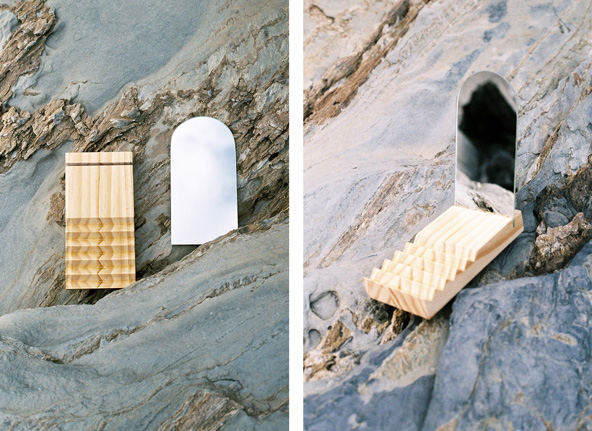
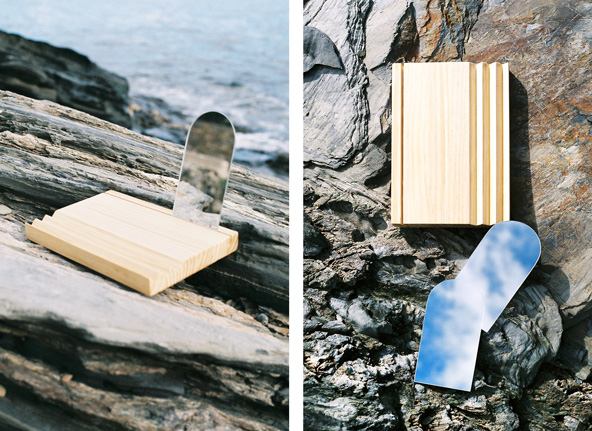
    We currently sell different types of products including mirrors, planters, lamps and tables. We are working a lot with marble and copper and we are introducing bronze and wood to our designs, combining all these materials in one product.

    With our products we try to give more personality to our clients’ houses, offering products that are handmade and fair trade.

    future-positive-cerio-low-2

    Could you take us briefly through your design process? How does an idea in your heads transform into a physical product?

    We are inspired by nature, people and everything surrounding us. We start drawing and it usually takes us lots of time to agree on one design. After that – it is the best part of the process – we start playing with the different materials and get excited seeing the first results through the prototypes.

    future-positive-cerio-low-4

    What are your plans for 2017?

    Our plan is to focus on designing more furniture pieces (desks, shelves, etc.) and export our products to others countries. We also want to start exploring other design areas.

    This year we are interested in getting more involved with products made with recycled materials. In the past we have made a few products using this type of materials and it is something we would like to do again.

    In a few years we would like to have a little coffee shop where we can have a showroom with our products and other similar brands.