Tag: illustration

  • Peony Gent

    Peony Gent

    Peony Gent is a freelance multimedia illustrator currently based in London, specialising in visual poetry and observational drawing. Working across different media – from comics to ceramics – Peony likes to keep a sense of play in her work, whilst maintaining her practice fluid and always open to change. We chatted with Peony to find out more about her education, her favourite projects and plans for the upcoming months.
    www.peonygent.com

    Can you introduce yourself and tell us about your education?

    Originally from Cambridgeshire I’ve lived in Edinburgh for the past five years, where I completed an undergrad at the Edinburgh College of Art. After a year out of education I’ve recently moved to London, where I’m just starting a two-year master’s in Visual Communication at the RCA here.

    How would you describe your illustrations?

    Describing my own work is something I’ve never been quite good at, even though I really should have gotten used to it by now. I do like to keep my practice really varied though, and enjoy doing a wide selection of jobs, from bold commercial designs to contemplative visual poetry. I would say, however, that my main love in illustration is the visual narrative/comics making side, and it’s definitely the most personal work I create. The interplay between word and image is really important to me in those projects, and the writing is just as valuable as my drawings to me there.

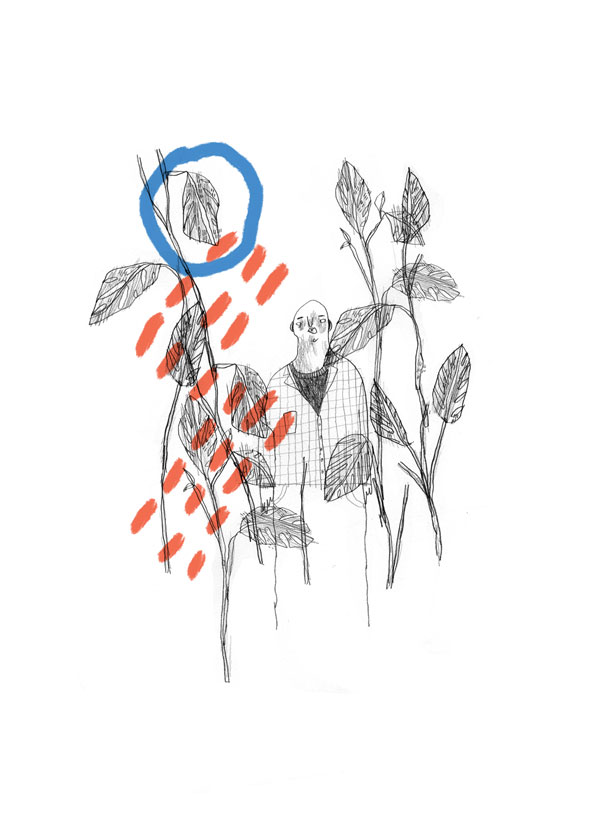
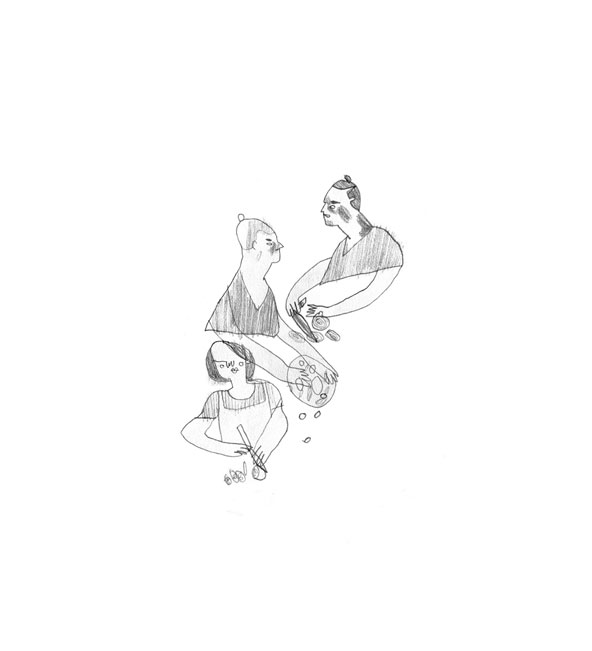
    In terms of a consistent visual style though, I mainly work in just pencils and then edit and add colour to my work digitally in Photoshop. That organic hand drawn element is very valuable to me, so even though I could just do a lot of my sketches directly on a tablet, I still like to keep it in a sketchbook first. I feel it stays a bit more free and fluid that way.

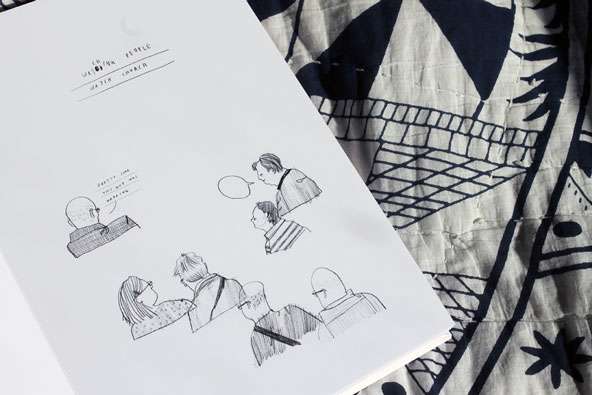
    A large part of my illustration style is about trying to capture a sense of place and/or character without just directly copying the subject, if that makes sense. A photo-realistic drawing that just copies a subjects appearance without showing any of its energy simply isn’t for me. To that end I often create a lot of my work by quickly redrawing the same subject over and over, until I feel like one has really captured the energy I’m searching for. I always keep a sketchbook with me for these observational drawings, and try to use it as often as I can. Often, I’d say around 70% of these drawings turn out like total trash, but it’s still worth it for the ones that do turn out well. I’ll also often return to drawings from those sketchbooks that I did weeks or months ago and find something valuable there that I hadn’t originally seen or needed.
    You work across different formats, can you tell us a little bit about each of them?

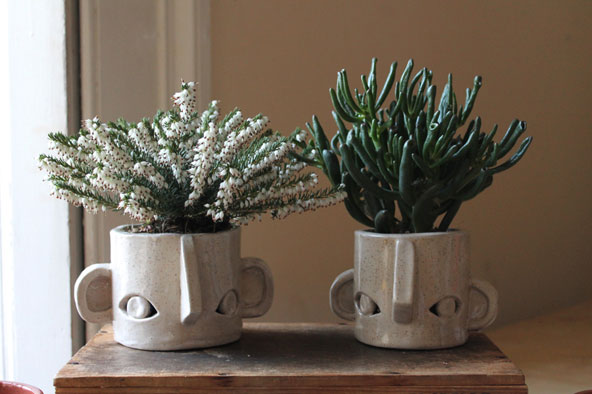
    Whilst pencil drawings are the most common medium I use, I do really love to experiment and have recently got really into ceramics. In contrast to typical illustration work, it’s nice that you don’t have to worry about deeper meanings or anything, you can just concentrate on making something aesthetically pleasing. I’d love to work on a more cohesive range this year and ideally get a space with a wheel to cut down on production times. In the past all my ceramics have been made very informally in my room without any proper equipment or tools, and I’d like to learn a lot more about glazing and different clays as well.

    And whilst I enjoyed printmaking at uni it’s been difficult to access any facilities since leaving ECA, but I have kept up making some risograph prints. It’s been the only way for me to print large runs fairly cheaply and I do like that organic texture and ability to layer colours that risograph printers give. I’ll often take bits of other projects and transfer them into these prints, rather than sitting down with the direct intention to design a new one from scratch.
    What are some of your favourite projects you’ve worked on?

    The ones I value the most have to be my own comics and poetry projects, they’re the ones that always take me the longest to do and they’re definitely the most personal. It really means a lot to me when those stories strike a chord with people, and some of the responses I’ve had to them have been honestly very touching. With each new one I make there’s always an element of fear: that I’ve put too much of myself into a piece of work or made myself too vulnerable.

    On the other hand I also enjoy the pay off of making ceramics, it’s just very pleasing to be able to use things you’ve made yourself for everyday practical purposes. Especially when so many illustrations I make only exist digitally in their finished form – it’s a nice balance to have physical results of things you’ve made.

    I was also lucky enough to be one of It’s Nice That’s 2016 graduates and really appreciated the opportunities I got through that. In particular, each of the grads that year got the chance to make a book in collaboration with GF Smith papers and it’s still easily the nicest thing I own with my illustrations in it. I made mine as a kind of formal presentation of my sketchbooks and it’s a collection of my photography, drawings and writings from the two previous years.
    What are your plans for the upcoming months?

    Mainly settling into London! I’ve honestly only ever lived in Cambridgeshire where I grew up or in Edinburgh, so it’s an exciting change to live somewhere new and see what opportunities there are here. I’ve also been working on my very first long form comic and hope to make some good headway on it before Christmas, at least. Having only made short self-published zines before this is a big change for me, especially since I’m usually so bad at committing to one theme or idea long enough to carry it through to the end. It is still very much in the early stages though, so we’ll have to see how it goes…
  • Meet the Graduate: Julia Krewinkel

    Meet the Graduate: Julia Krewinkel

    We’re starting a new series of posts in which you can meet students from art schools around the world that are graduating in 2017. If you’d like to be featured on our blog, please send us an email to hello@thefuturepositive.com with some information about your graduation project.

    Julia Krewinkel is an illustration student who is about to graduate from the art academy AKV|St. Joost in the Netherlands. We talked to Julia to find out more about her course, her project ‘This must be the place’ and how someone graduating in 2017 feels.

    www.juliakrewinkel.com

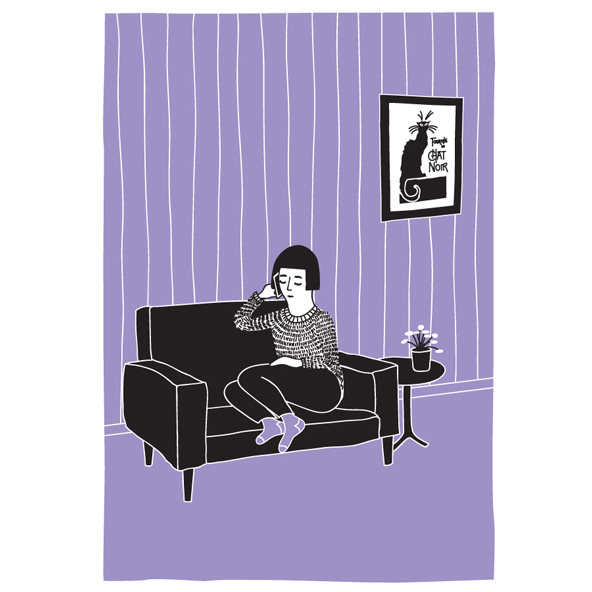
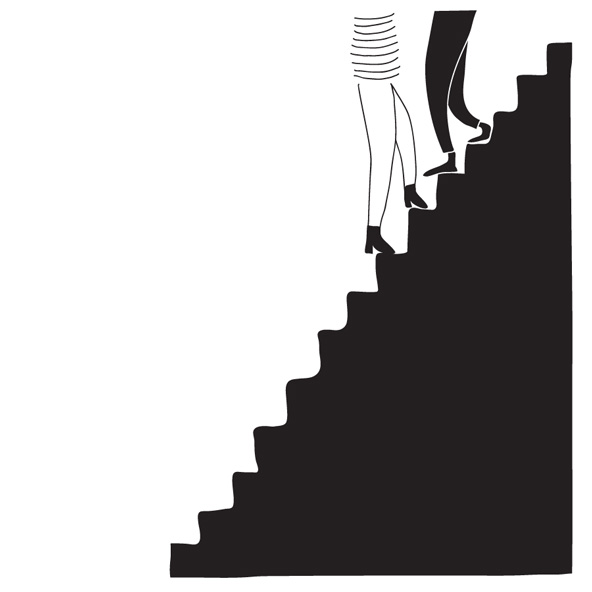
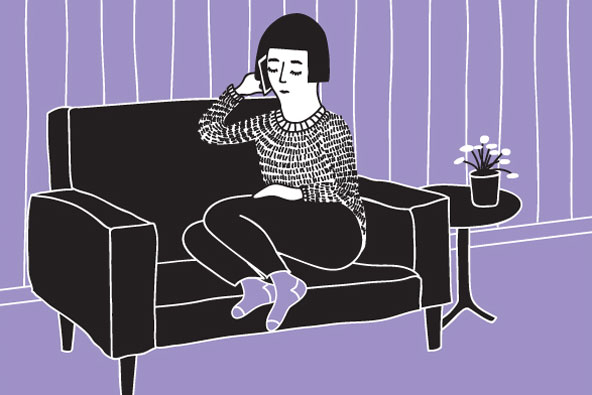
    Illustrations taken from ‘This must be the place’.

    Can you tell us about yourself and your course?

    I literally grew up with a pencil in my hand. With my mother as a goldsmith and my father as a painter, my brother and I grew up in a very free and creative environment where I learned to look at the world around me with curiosity and to react with it accordingly. In high school I didn’t have a creative outlet, so when I started my first course in graphic design I felt that I was really in the right place. Here I was encouraged to think big in a conceptual way, but also to think about working with clients. After graduating I decided to continue my education with a programme in illustrative design at the art academy. During this course, I learned to position myself in the art world and to make my place in the world. I have become an independent designer; I try to distinguish myself and to use my education in the best way.

    Can you tell us more about your project ‘This must be the place’?

    For the last four years I have been living in an international student campus in the Netherlands. More than 200 people, from all over the world, live in my building and from the beginning I was intrigued with who my 199 housemates are. I decided to interview these international residents and ask them how they experience their lives in the Netherlands, how they organize their lives and what problems they may encounter. Through the interviews it became clear that many of the residents didn’t know their neighbours either and that sometimes they felt isolated and lonely. I decided to tell their stories in a graphic novel where I could show, through many short stories, some of the different ways these people experienced these types of loneliness. The stories show that although everyone experiences loneliness in a different way, the essence of the experience is the same. Ultimately my goal is for the reader to see that loneliness can be relieved if you realize that you are not the only one who has these feelings.

    How has your course and school prepared you for life after graduating?

    During my education I learned to position myself as a designer. I worked for four years to find my distinctive abilities and apply them. In my third year I worked as an intern in a design studio with a number of classmates, where we worked on numerous different projects and had intensive contact with clients. These experiences taught me how to maintain my own aesthetic while working with the needs of a particular client and project. Alongside my education I have worked independently over the last four years, participating in various art fairs in the Netherlands. Since 2016 I have also been selling my work in an art store in Maastricht.

    How does a graduate feel in 2017?

    Graduating and discovering the workplace is exciting for everyone, but perhaps especially for art students. You don’t have the quick guarantee of a steady job and income, so the future may feel unsure and that’s unsettling. However, there are some advantages to my situation; I often work digitally and when I have my computer and drawing tablet, my immediate surroundings are irrelevant – the world is virtually at my feet. I’m eager to become part of the creative world and to show people my vision of events.

  • Easle, find the best creative freelancers

    Easle, find the best creative freelancers

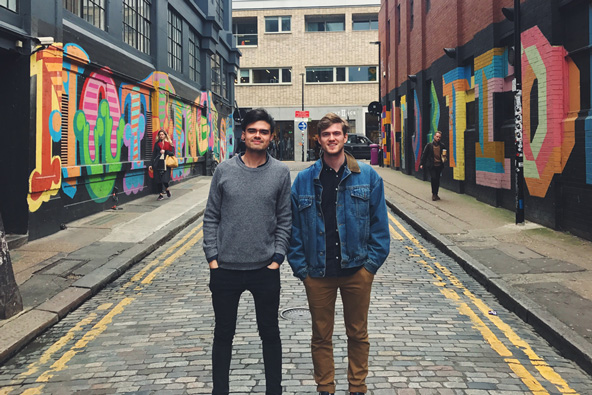
    Finding work when you are an independent creative can be a struggle. That’s why after hearing stories from their creative friends, Scott Wooden and Nick Law decided to start Easle, a new online platform allowing freelancers to showcase their work and clients to discover and hire the best creators and artists.

    Scott and Nick state that “Easle is specifically for the creative arts. The focus for us is on quality across the platform, rather than super low price point, and we’re taking the vetting process seriously for creators and clients alike. We have also built a unique system for handling incoming work, allowing both sides to seamlessly negotiate a proposal through conversation and have it paid for within minutes.”

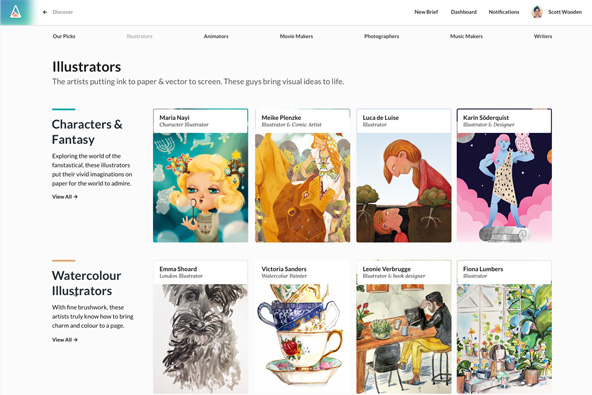
    At the moment, Easle focuses on showcasing the work of some of the best illustrators across the world although Scott and Nick have received applications from creatives working in all types of fields and they’ve noticed “corners of creativity that felt lost online without a true place for them to show off their work with the opportunity to get hired. There’s no reason why Easle can’t support more niche creative outlets.”

    Easle is currently comprised of an initial group of 50 illustrators. Scott and Nick have intentionally decided to keep strict limits on numbers with the idea that every illustrator on the platform should be seeing a significant amount of work coming through on a monthly basis.

    Easle is open for applications, free to use and takes 10% of the negotiated fee.

    www.easle.co


  • Lisa Laubreaux

    Lisa Laubreaux

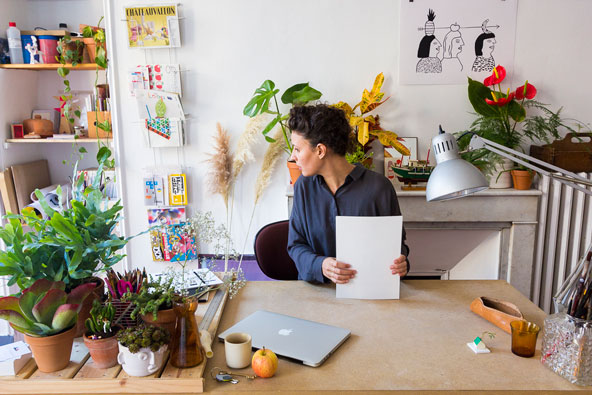
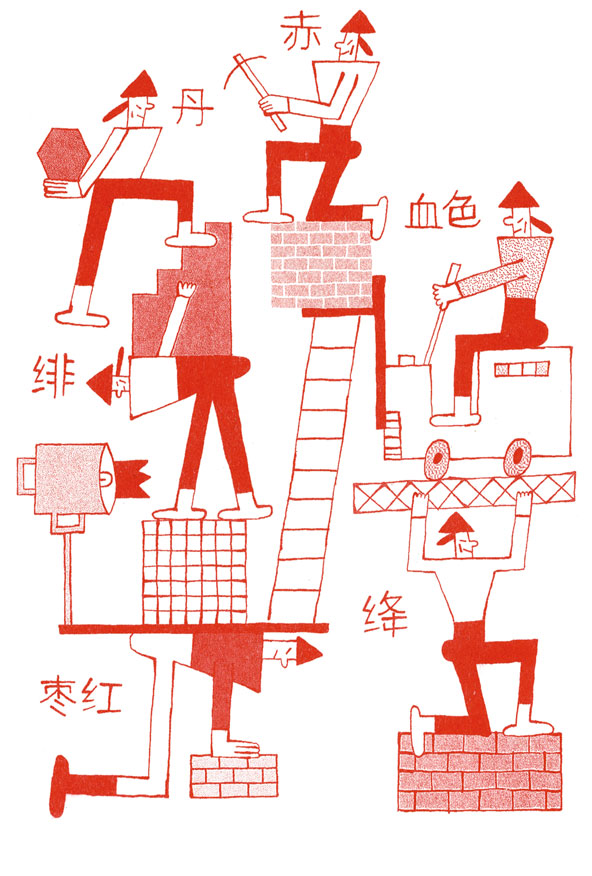
    Lisa Laubreaux is a French multidisciplinary creative working across different fields, from illustration to set design. We chatted with Lisa to find out more about her playful works, her favourite projects she’s worked on and plans for the upcoming months.

    lisalaubreaux.fr

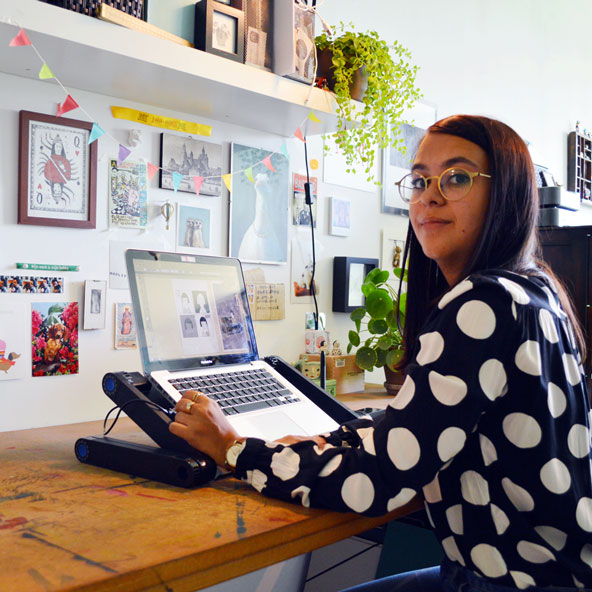
    Studio images by Maïa Izzo-Foulquier.

    Could you introduce yourself and tell us about your education and background?

    I’m Lisa Laubreaux and I’m a French illustrator. I was born in Marseille in 1987. After graduating from the Duperré school of Paris in fashion and environment (DSAA Mode & environnement), I co-founded the Super Groupe collective.

    Currently flying solo, I’m now working freelance for a range of different clients (illustration, installation, set design…). Through each discipline, I develop multidisciplinary experiences with an experimental and artistic approach that drive me to use a variety of media and techniques throughout my work. In addition to my usual practice, I also run participatory workshops in museums and festivals always in a fun and educational way, allowing every participant to take over the professional tools of graphic design.

    You work across different fields, could you tell us a little bit about each of them?

    Illustration: I do work for clients (I generally do commissions for the press or PR) and also my personal work. I use the same techniques for client work and personal projects but the subjects of my drawings are different. It’s interesting to have constraints – that way I can discovering new things about my work and my own possibilities.

    Set design: What I really like about set design is working with a team. When doing a shoot, you have to design elements which bring out the best in both the clothes and the model. It’s a question of working with the photographer, stylist and model to create the best possible photo.

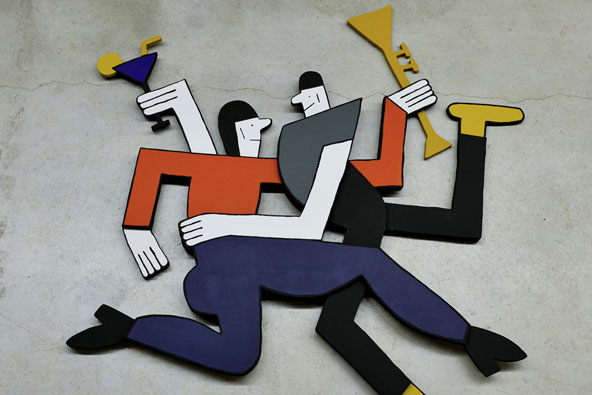
    Installation: This is the most fun part of my work because it’s very hands-on. My installations are generally in painted wood so I have to use a jigsaw puzzle and paint. I also love the change in scale. Illustration is a solitary discipline which demands a lot of attention to fine detail, so it can be really nice to work on a larger scale.

    Workshops: In my workshops I give the participants basic elements or templates to complete, which allows them to have fun whilst using the tools used by graphic design professionals. I’m keen for the participants to be proud, or even surprised, by the quality of their work. It’s a way, for me, to promote creativity.

    How would you describe your illustration work?

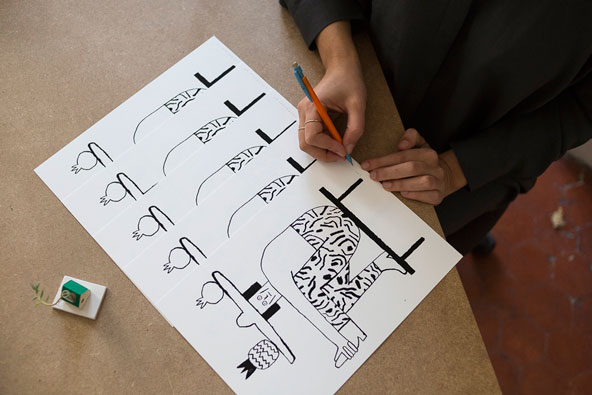
    In my illustrations I especially care about the composition and the balance, working with free materials (charcoal, lead or pencil) before defining the strokes, using the nib or the pencil, and I finally bring into play the digital tools. Drawing inspiration from the popular conceptions and the daily life, I create coloured aesthetics and use a simple stroke to transpose, with a playful touch, the world which surrounds me.

    What are some of your favourite projects you’ve worked on?

    My favourite project was doing shop signs as part of the festival Le Voyage à Nantes “Journey to Nantes”. It was over quite a long period (6 months) and often involved working in a team. I regularly exchanged ideas with the staff of Le Voyage à Nantes, as well as with the shopkeepers. We did a lot of DIY and painting, the atmosphere was really great and I’m really happy with the final result.

    What are your plans for the upcoming months?

    Currently I am working on a children’s book about boats with Fotokino (a wonderful gallery in Marseille). It’s a book-game, which we tried with kids at the Marseille shipyard. I’m also making a giant banana with children from the northern neighborhoods of Marseille and starting a new collaboration with Atelier Bingo. This summer I will create some ceramics with my friend Émil in Luxembourg. We’re going to make big vases with naked women on them. At the moment, we’re sending each other drawings with naked women from space, on the beach, with tigers, etc.

  • Small Bodies of the Solar System

    Small Bodies of the Solar System

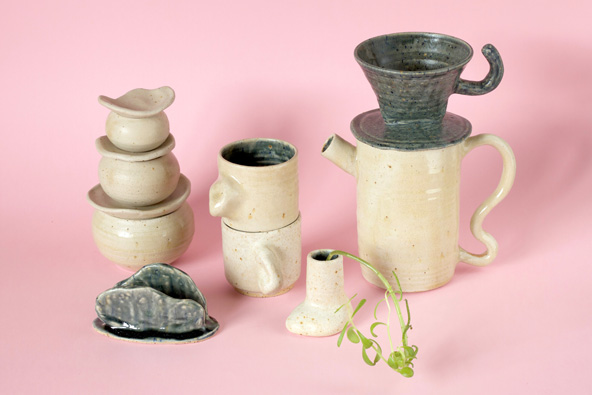
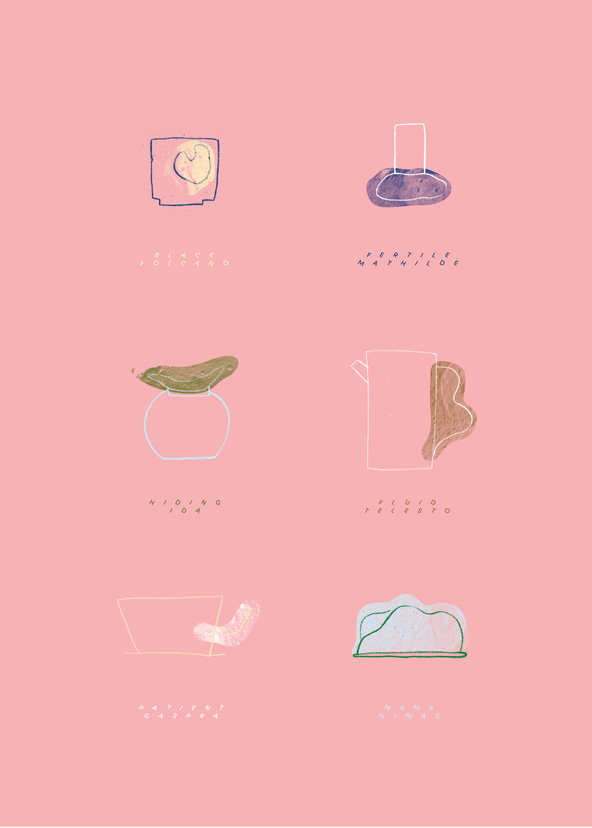
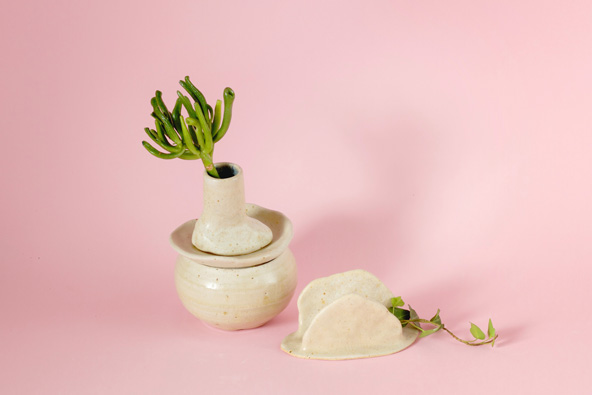
    We’ve talked about the work of Antwerp-based designer Stephanie Specht before here on our blog. She has now collaborated with artist and designer Lilit Asiryan and potter Thomas Salzer to create Small Bodies of the Solar System, a capsule collection of tableware and graphics inspired by fluid shapes and everyday functionality.

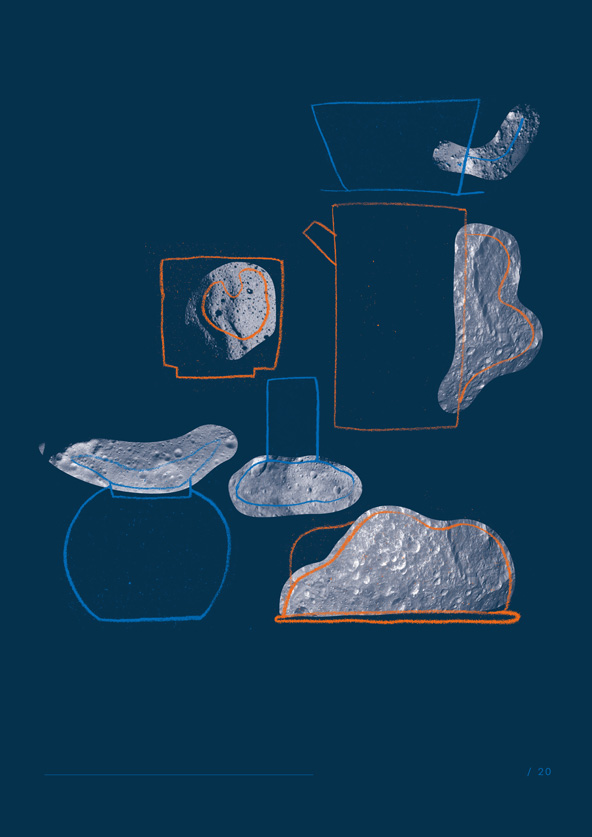
    The pieces reflect the creative clash of ideas between the three of them, mingling timeless craft with free artistry drawing inspiration from space and nature. All pieces are made using clay from Swedish soil, taking inspiration from the the shape of moons and asteroids present in the solar system.

    The mix of craft, art, graphics and illustration reflect the three artists’ creative heritage.  The collection includes jugs, cups, coffee pots, letter holders and posters, and every piece is one of a kind and produced in a very limited edition.

    Small Bodies of the Solar System will be presented at Studio Specht in Antwerp on June the 17th and the collection will be available to purchase on the website below.

    www.asiryan.com

    Future-Positive-Bodies-Solar-System-3-low Future-Positive-Bodies-Solar-System-4-low Future-Positive-Bodies-Solar-System-1-low Future-Positive-Bodies-Solar-System-5-low Future-Positive-Bodies-Solar-System-2-low