Tag: graphic design

  • Small Bodies of the Solar System

    Small Bodies of the Solar System

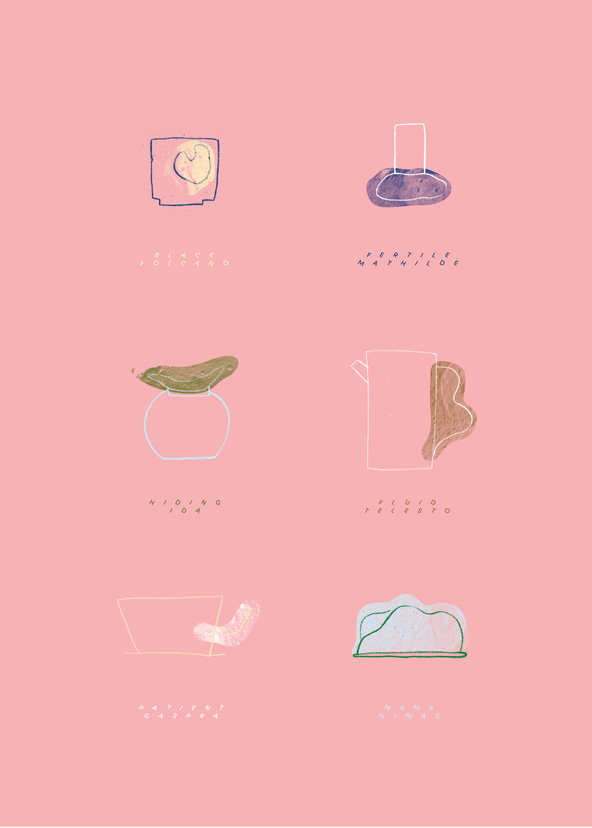
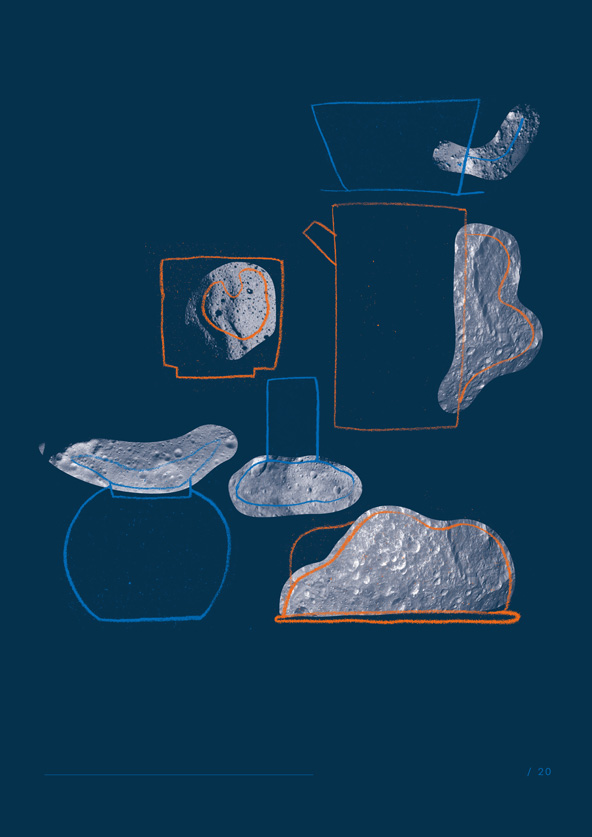
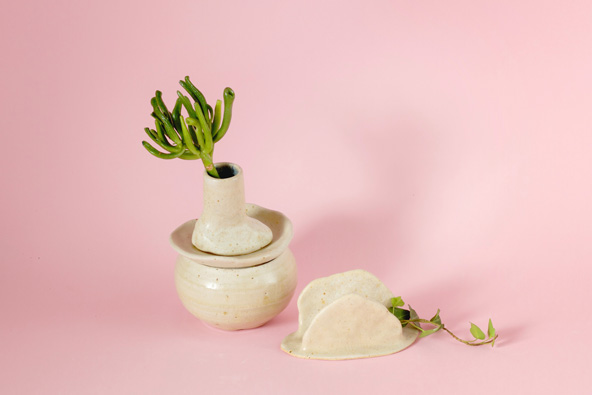
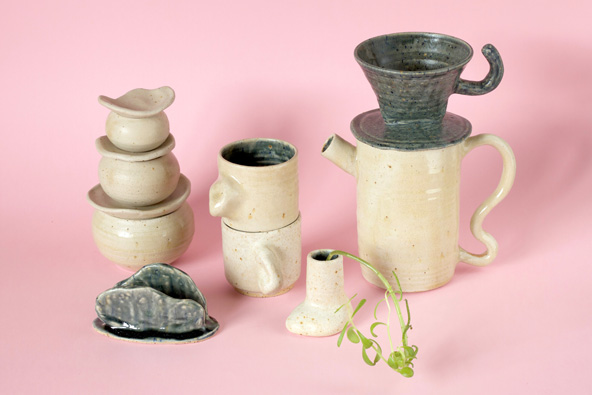
    We’ve talked about the work of Antwerp-based designer Stephanie Specht before here on our blog. She has now collaborated with artist and designer Lilit Asiryan and potter Thomas Salzer to create Small Bodies of the Solar System, a capsule collection of tableware and graphics inspired by fluid shapes and everyday functionality.

    The pieces reflect the creative clash of ideas between the three of them, mingling timeless craft with free artistry drawing inspiration from space and nature. All pieces are made using clay from Swedish soil, taking inspiration from the the shape of moons and asteroids present in the solar system.

    The mix of craft, art, graphics and illustration reflect the three artists’ creative heritage.  The collection includes jugs, cups, coffee pots, letter holders and posters, and every piece is one of a kind and produced in a very limited edition.

    Small Bodies of the Solar System will be presented at Studio Specht in Antwerp on June the 17th and the collection will be available to purchase on the website below.

    www.asiryan.com

    Future-Positive-Bodies-Solar-System-3-low Future-Positive-Bodies-Solar-System-4-low Future-Positive-Bodies-Solar-System-1-low Future-Positive-Bodies-Solar-System-5-low Future-Positive-Bodies-Solar-System-2-low

  • Typodarium Calendar 2016

    Typodarium Calendar 2016

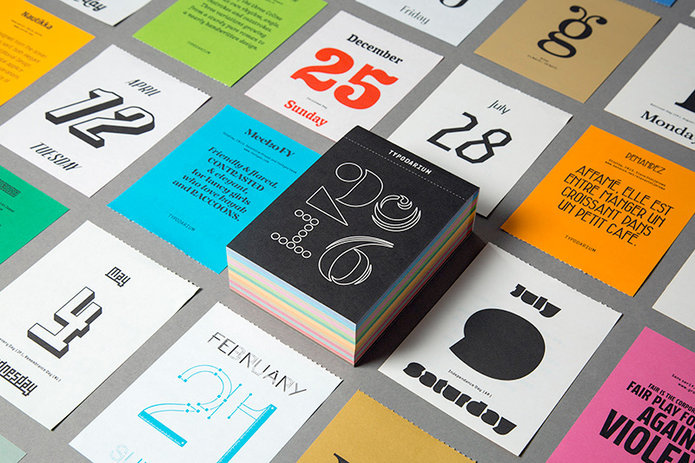
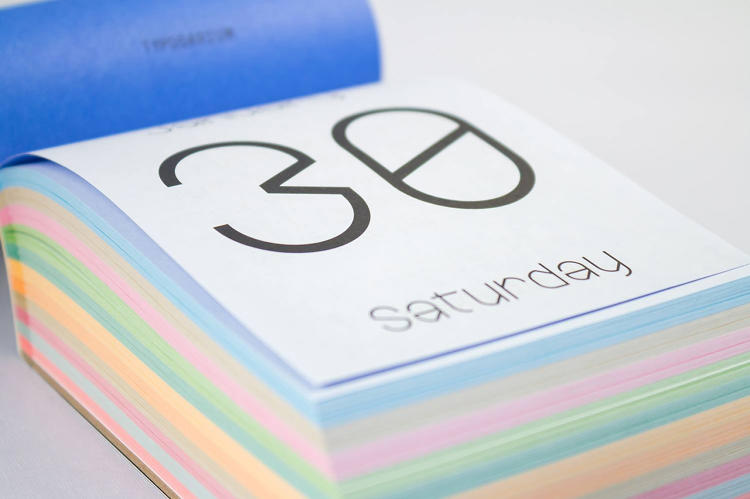
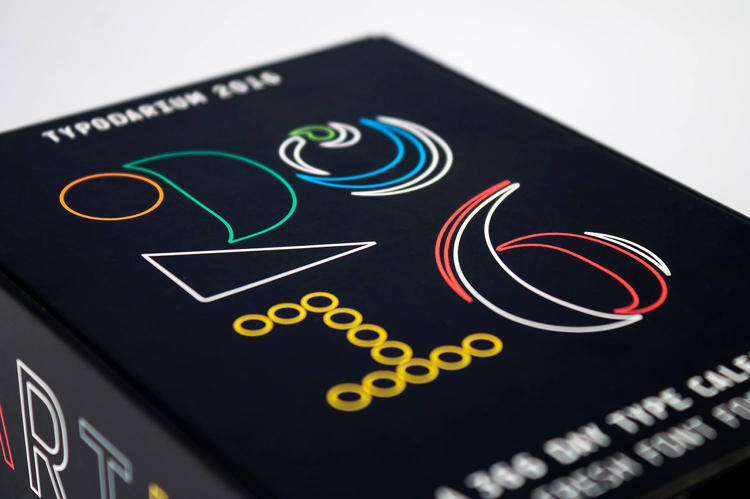
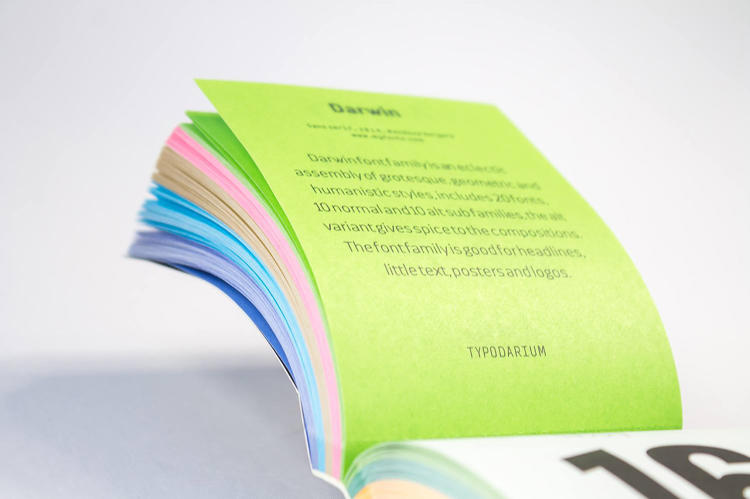
    Typodarium 2016 is a tear-off calendar, just like the one our grandmas used to hang in the kitchen, but this calendar unveils a new font everyday. On the front, the font is prominently displayed, and on the back it’s described in more detail – how it originated, from what or who came the inspiration and where we can obtain the font. Typodarium 2016 is published by Verlag Hermann Schmidt Mainz.

    www.2016.typodarium.de

    typodarium2016_01_ 3051416-slide-s-3-366-days-of-typography-the-calendar 3051416-slide-s-4-366-days-of-typography-the-calendar 3051416-slide-s-2-366-days-of-typography-the-calendar

    Images courtesy of Typodarium

  • La Charrette by Antonin+Margaux

    La Charrette by Antonin+Margaux

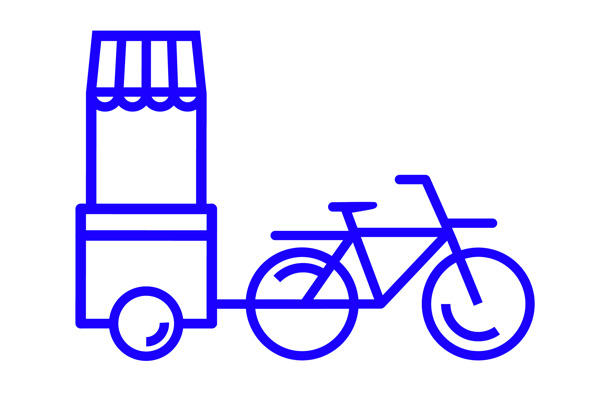
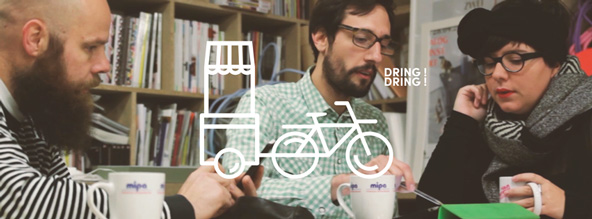
    Antonin+Margaux is a Nantes-based graphic design and screen printing studio. Founded in 2011, Antonin+Margaux do client work, have an online shop where they sell their own screen printed products and also run numerous workshops. Their love for screen printing has turned into La Charrette, a project in which they’re planning to transform a bike into a screen printing trailer and travel across France and even Europe. We invite you to find out more about this innovative idea on the video below and to contribute to Antonin+Margaux’s crowdfunding campaign.

    www.kisskissbankbank.com/la-charrette-print-ride

    Future-Positive-La-Charrette-1

    Future-Positive-La-Charrette-2

    Future-Positive-La-Charrette-4

  • Stephanie Specht

    Stephanie Specht

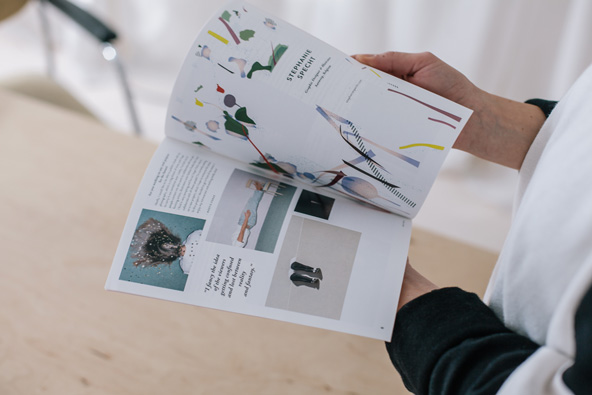
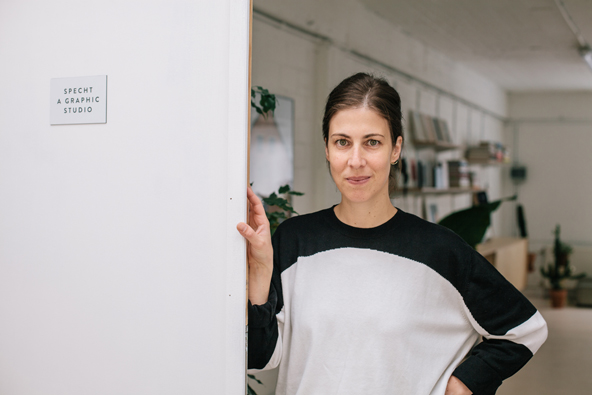
    Stephanie Specht is a freelance graphic designer based in Antwerp, Belgium. Inspired by music, art and fashion, Stephanie describes her work as intuitive, abstract, typographic and minimalistic.

    We chat with Stephanie to find out more about what made her become a graphic designer, her workspace and plans for the upcoming months.

    www.stephaniespecht.com

    Studio photographs by Christophe Derivière.
    Future-Positive-Stephanie-Specht-2

    Please tell us a little about your background and education. The bio on your website mentions that you lived and worked in so many places before going back to Antwerp!

    I was born in Antwerp and I studied Graphic Design at the Royal Academy for Fine Arts. I worked at a company for a year and quickly realized I didn’t belong in a structure like that. Also, the routine was killing my creativity. I wanted to do my own thing.

    I became self-employed in 2007. Initially, my plan was to stay in Antwerp but, due to a past relationship, I moved to all those different places: Cape Town, Brussels, Princeton and New York. I was living a modern nomadic life which was really inspiring but at the same time exhausting. After a while I really felt I wanted to settle down somewhere. Suddenly I wanted the opposite lifestyle than the one I was living. I was used to working from ‘home’, wherever ‘home’ would be but, if I look back at those couple of years, I think I wasn’t really 100% focused on my work. There was too much distraction.

    It’s only been since 2014 that things really started changing for me. I decided I would stay in Antwerp for a longer time. I did not plan on moving anywhere soon again. I became more focused on my work and somehow attracted more interesting clients.
    Future-Positive-Stephanie-Specht-8
    Future-Positive-Stephanie-Specht-3

    What made you interested in graphic design in the first place?

    Initially, I wanted to become an architect. In Antwerp, where I grew up, I started an architectural design course when I was 16. I didn’t know what graphic design was, but I’d always loved to draw. At one point, one of my teachers advised me to change direction since my maths weren’t good enough. So I started a more general art course, and instead of focusing on buildings, I began looking at the style of architectural movements (Bauhaus, Brutalism, De Stijl, Modernism). I became fascinated by the lettering on buildings. Only by looking at these typefaces, you could tell the years in which these buildings were built. During my last year in high school, a typography teacher introduced me to graphic design.
    Future-Positive-Stephanie-Specht-5
    Future-Positive-Stephanie-Specht-6

    Tell us about your workspace, Studio Specht, and its uses.

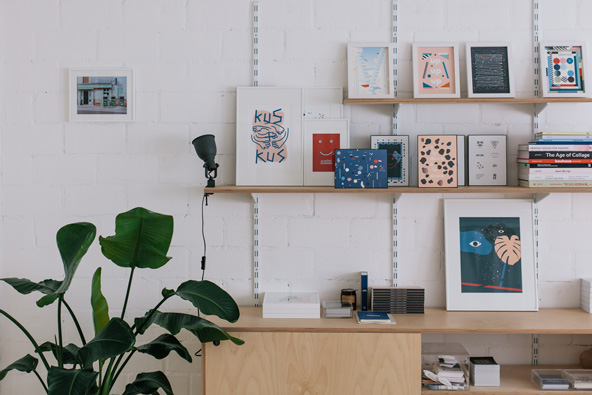
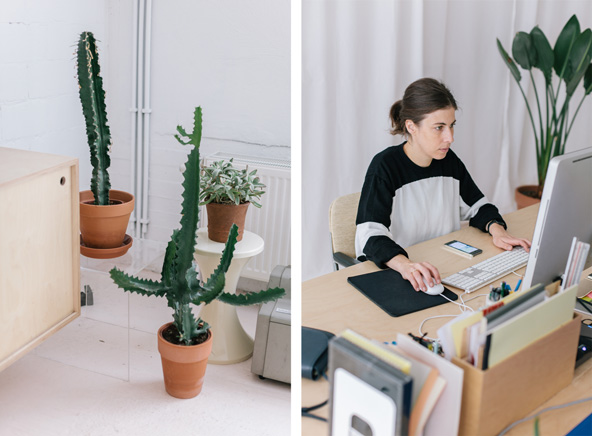
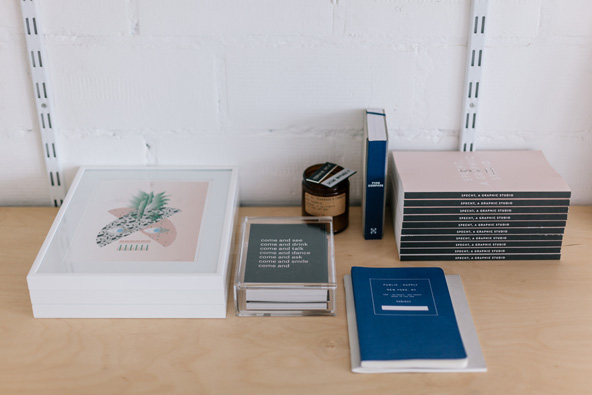
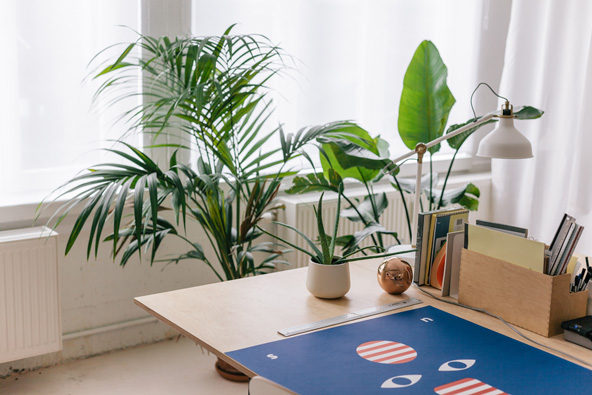
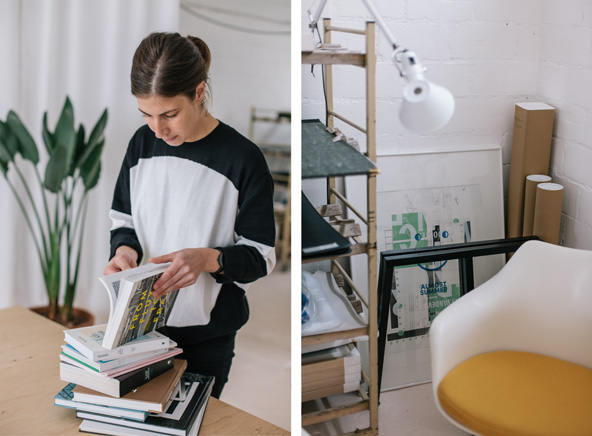
    I moved into my first real ‘office’ at the beginning of this year. I really dislike the word office – it’s more like a creation room, a work space, a studio! My studio is in an old building materials warehouse. There are 12 studios in total, all occupied by creatives. The interior was designed by Nicolas Petillon. The space is really rectangular and when he suggested to use a ceiling-high curtain line in the form of a wave through the space, my first reaction was ‘why break this space!?’ But he was right. The curtain gives the space even more ‘space.’ I can open the curtain wherever I want and change the whole room.

    I also have a marble Knoll table in my meeting room. It belonged to my grandmother who passed away a few weeks before I opened up the studio and I inherited it. The curtain follows the shape of the table and this space now almost feels like a sanctuary. It’s beautiful. I decided to paint my floor apricot white which adds a certain warmth and feminine touch to the all concrete white space. I also have a lot of plants. It feels like a soft jungle. Every time I walk into the studio I feel inspired and happy. Nicolas did a great job, really.

    The first couple of months I organized a few Open Days where people could just come, walk in and look at new works I produced. I have done some collaborations that I’m really happy with and those works are also on view here. From time to time, I get emails from people who want to make an appointment to come and have a look at my studio. Sometimes they are just curious to see where I work, sometimes they want to buy an illustration. It’s nice to meet people this way, because they are different to my clients.
    Future-Positive-Stephanie-Specht-4
    Future-Positive-Stephanie-Specht-10

    How would you describe your work? Where do you draw inspiration from?

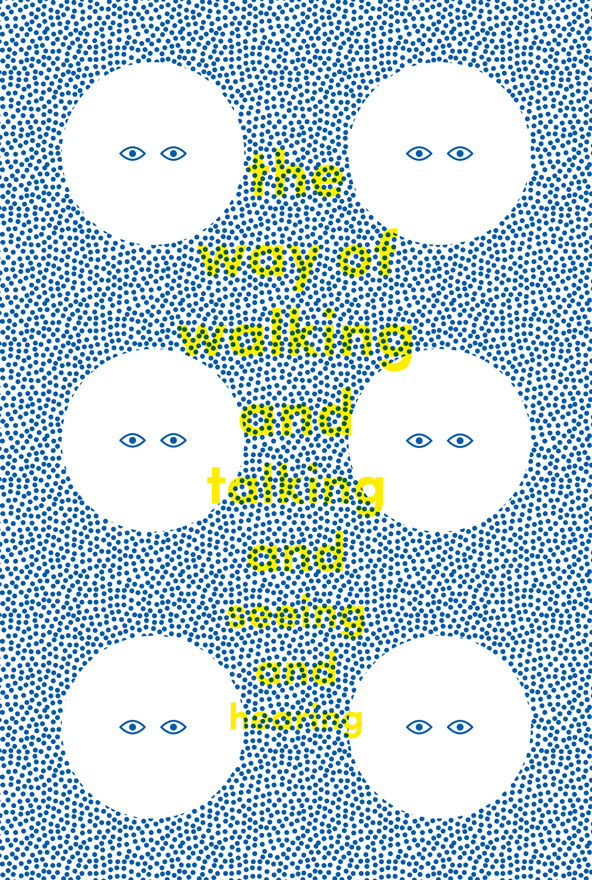
    My work is intuitive, abstract, typographic and minimalistic. I love to find purity in lines and forms.

    Music, art and fashion are a big source of inspiration for me – but it can be anything really; a conversation, a photograph…
    Future-Positive-Stephanie-Specht-11 Future-Positive-Stephanie-Specht-7

    Do you have a particular favourite piece of work or something you feel especially proud of?

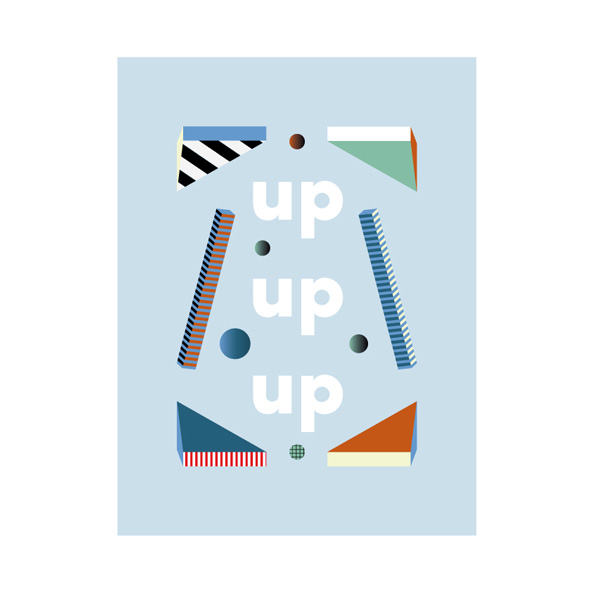
    I think the Up Up Up illustration is one of my favorite personal works now. I recently created the identity for this new music documentary television show called Off the Record. It was the first time I designed something for TV. I am very happy with the result. It’s great to see my designs moving on screen!
    Future-Positive-Stephanie-Specht-1

    What are your plans for the upcoming months?

    I just finished a really intense book project in New York. I was there for two months. I am really tired so I am working on just a few jobs – I need to relax a little. Right now I am working on a redesign for S Magazine. S is a deluxe art and fashion biannual committed to gorgeous fashion photography, intelligent long-form articles, and experimental visual art. The magazine often changes style (designer). They have an identity but they like to play around with different typography and layout within the magazine itself.

    I’m also busy updating Belgian artist Leon Vranken’s website. His work is amazing – I love working with his beautiful images. I also might design some new book covers for Das Mag, a new young Amsterdam based publisher.



  • Monochrome Lab

    Monochrome Lab

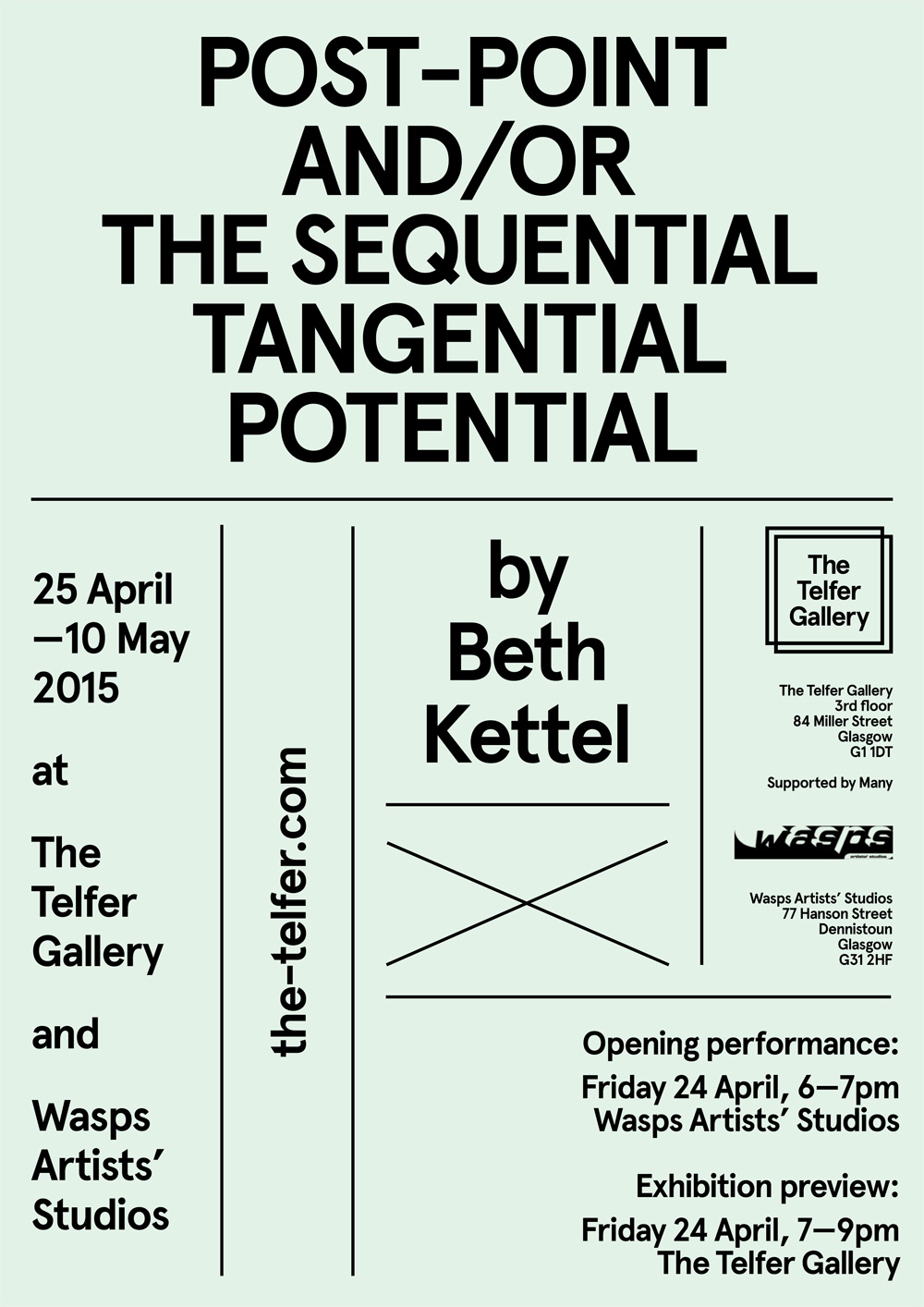
    Monochrome Lab is a new graphic design studio founded by Glasgow-based Dutch designer Bart Manders. After studying Graphic Design at the Willem de Kooning Academy in Rotterdam and an exchange year at Glasgow School of Art, Bart started working on numerous projects for galleries and festivals such as The Telfer Gallery, GoMA and Glasgow International Festival of Visual Art, and started Monochrome Lab in February 2015. We caught up with Bart to find out more about his studio, what made him choose graphic design as a career and the differences in design trends between Glasgow and the Netherlands.

    www.monochromelab.net

    Future-Positive-Monochrome-Lab-2

    Please describe your path to becoming a graphic designer.

    I was born and raised in the Netherlands and from an early age it became clear that I had a creative mind. After high school I went on to do a college course in Communication and Design where the curriculum of the first 2 years consisted of all kinds of creative disciplines such as industrial design, graphic design, styling and photography. When I finished high school I was unsure about what kind of creative course I wanted to do so this particular course offered me the opportunity to put off the decision making for a few more years. I ended up graduating in Styling and Applied Spatial Design, which could be described as a mix of industrial design and (interior) architecture.

    When graduating, I realised my true passion was actually graphic design, and after a gap year, during which I researched Dutch art schools, I started a course in Graphic Design at the Willem de Kooning Academy in Rotterdam. I had a bit of a bumpy start, having trouble adapting to the course curriculum and thinking about transferring to the Fine Art department. Eventually though, I had a really good 3rd year which ended with a publication I had designed being nominated for a regional design award. During this year I had met a lot of people who were on exchange from various places, and as I had visited Glasgow for the first time the year before, I decided I wanted to do an exchange at the Glasgow School of Art, which I ended up doing in late 2008.

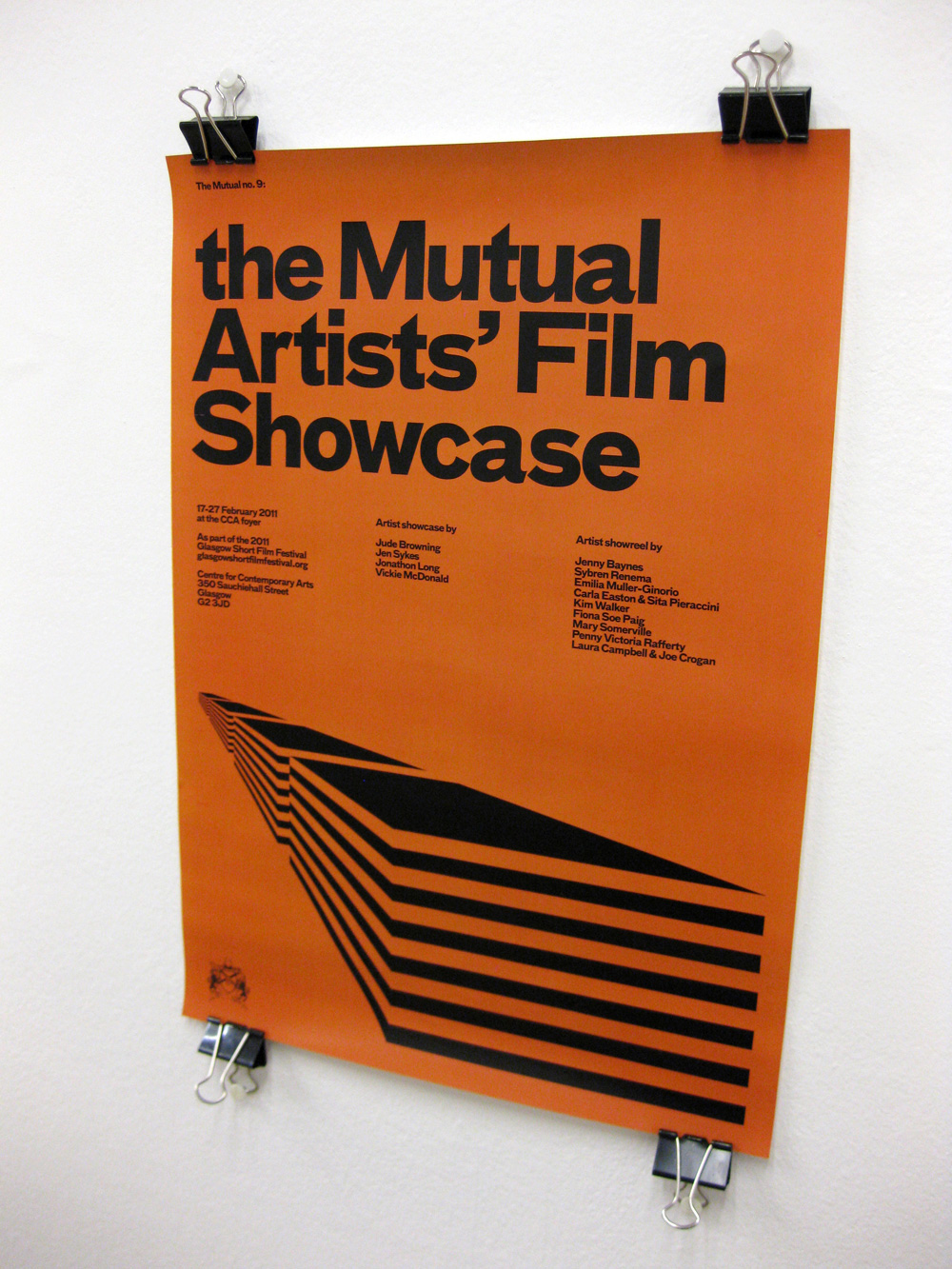
    After my exchange I did two internships, which are mandatory in most Dutch art schools; one with a magazine designer who had been my tutor during my second year and one with two designers who I had become friends with, that were running a joint independent online design project called Connected Project. I had a somewhat troublesome, yet positively minded graduation period and after a few months of thinking about what I wanted to do next I decided to move to Glasgow as I had been wanting to spend more time there since my exchange. I still had quite a few contacts in Glasgow and only 2 months after my move there I got offered my first project which was an exhibition poster for a local artist collective called The Mutual, after which I ended up doing 2 more poster projects for them.

    In the summer of 2011 I met Marc Cairns, an architectural designer, at an exhibition opening by The Mutual and in 2011 I was invited to join him and a few other people to run a new exhibition space called the Telfer Gallery as a committee, for which I’ve been doing the in-house graphic design as well as filling the shared role of programme coordinator. The Telfer Gallery has so far brought me the most consistency in my design career as well as some other projects I did for organisations such as GoMA and projects related to GI, the Glasgow International Festival of Visual Art, things I would have never been involved in if it hadn’t been for The Telfer Gallery.

    Future-Positive-Monochrome-Lab-3

    What made you start your own design studio?

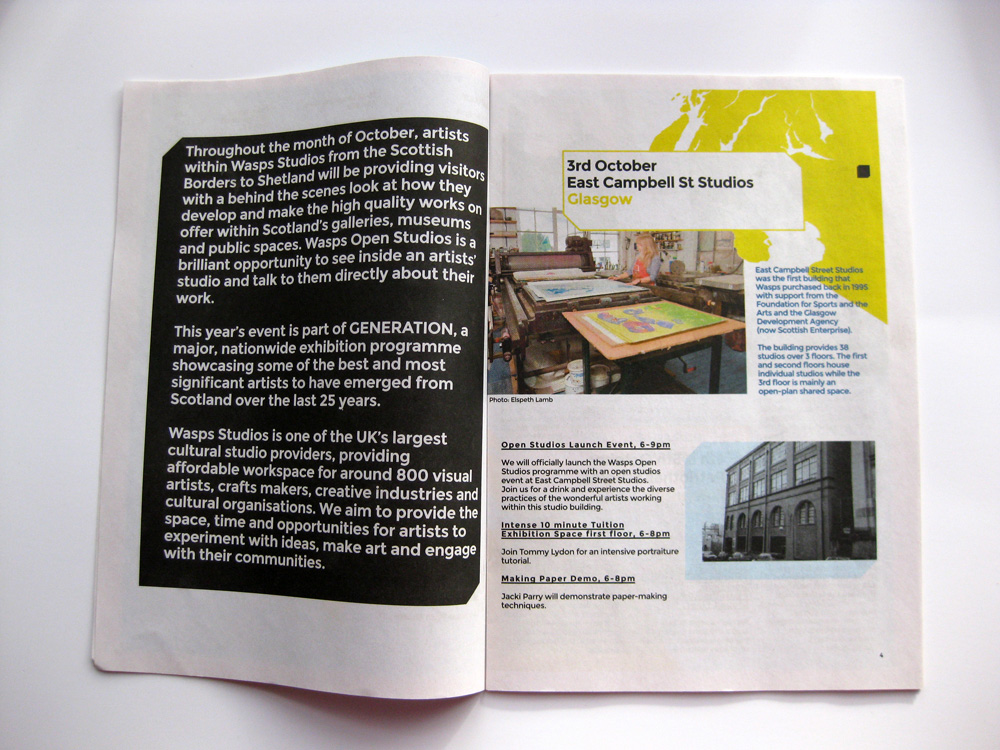
    In April 2014 I had sacrificed a stable income from a rather uninteresting retail job to free myself up for doing more freelance work. By the time it was Christmas, I had done projects for Glasgow University Magazine, an exhibition for Glasgow Open House Art Festival, a vinyl sleeve design for a local band and 2 projects for Wasps Studios. I had just started redeveloping The Telfer Gallery’s visual identity for its 2015 programme and I felt I needed to come across as a somewhat more settled designer instead of that designer who’s out and about doing jobs here and there. That’s when I decided to start working under a studio name, and after preparing for it for two months I launched Monochrome Lab last February.

    You’re from the Netherlands but live in Glasgow. Do you see any differences in design trends and aesthetics between these two places?

    Definitely, but I have to say that especially in the Netherlands it’s hard to define design trends. The very basis of good graphic design is to be able to organise and (re)structure information, to communicate. In the Netherlands I guess there isn’t a specific visual style, but more a way of thinking. It’s a place where the visual basics of graphic design are so established and common that on top of that graphic designers have become much more conceptual, finding intelligent ways to connect information to a certain context and experiment with images. In Glasgow I feel many design studios have only just started mastering the very basics over the past few years.

    Future-Positive-Monochrome-Lab-1

    What inspires your work? What other designers do you admire?

    I’m mainly inspired by designs with an innovative way of applying typography and white space, but I’m also very fond of really primary things like geometric shapes and illustrators. In art school I admired well respected designers such as Wim Crouwel, Experimental Jetset and Karel Martens but nowadays it has shifted more towards less known Rotterdam-based designers like Almost Modern and my old classmates at OONA.

    What are your plans with Monochrome Lab for the upcoming months?

    Well, I’ve just landed a long-term visual identity project with the Scottish Sculpture Workshop in Lumsden, Aberdeenshire and I’ve also just started a new collaboration with Wasps Studios which involves designing signage for a travelling project space. There is also a considerable Telfer Gallery workload as the size of it has slightly increased due to the higher standards for its printed materials this year. This year I’m also hoping to get involved in some publication design again, either as a self initiated project or as a freelance job. But as many independent designers can testify, one’s workload can unexpectedly increase as projects aren’t usually planned very far ahead.

    Future-Positive-Monochrome-Lab-4