Tag: graduate

  • Meet the Graduate: Alannah Cooper

    Meet the Graduate: Alannah Cooper

    Alannah Cooper is a Fashion Communication graduate from Heriot-Watt University in Scotland. We talked to Alannah to find out more about her course, her final project ‘Teran’ and how it feels to graduate in 2017.

    www.alannaheileen.com

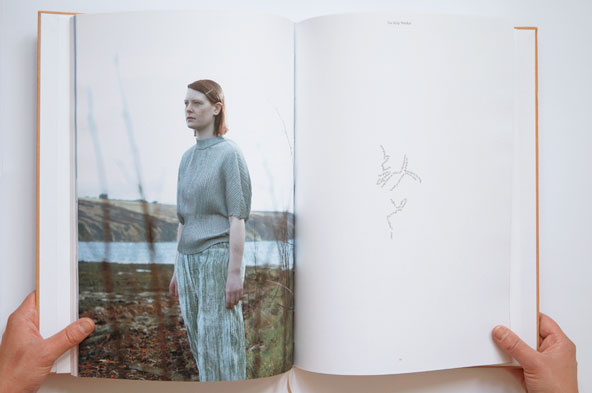
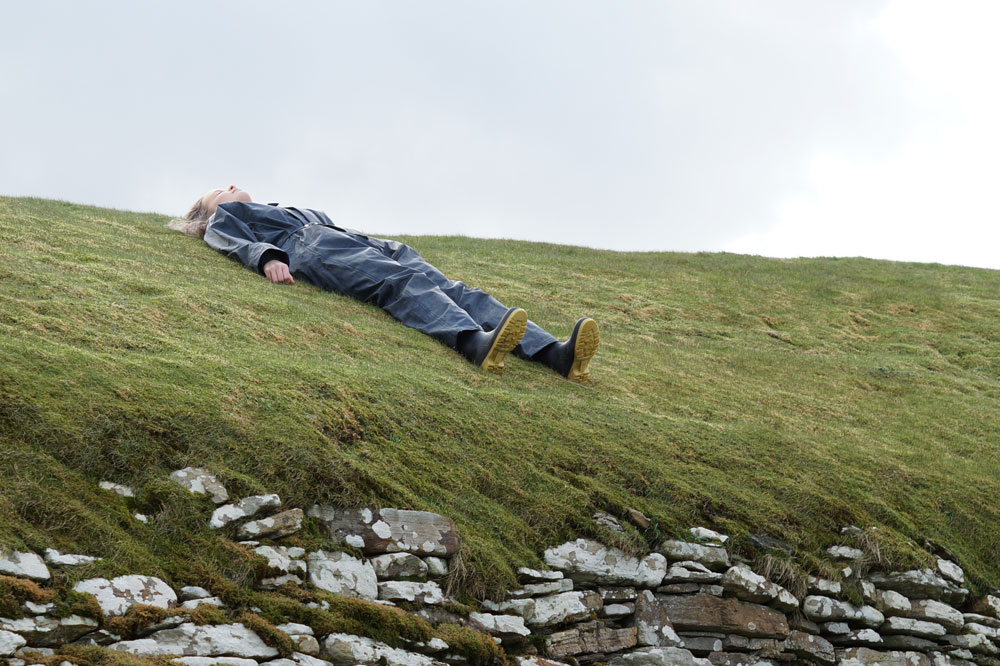
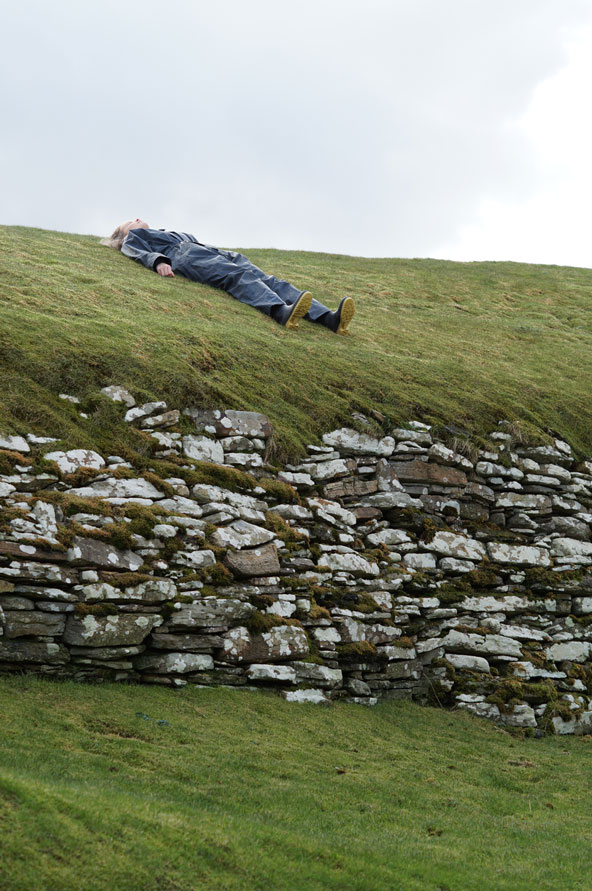
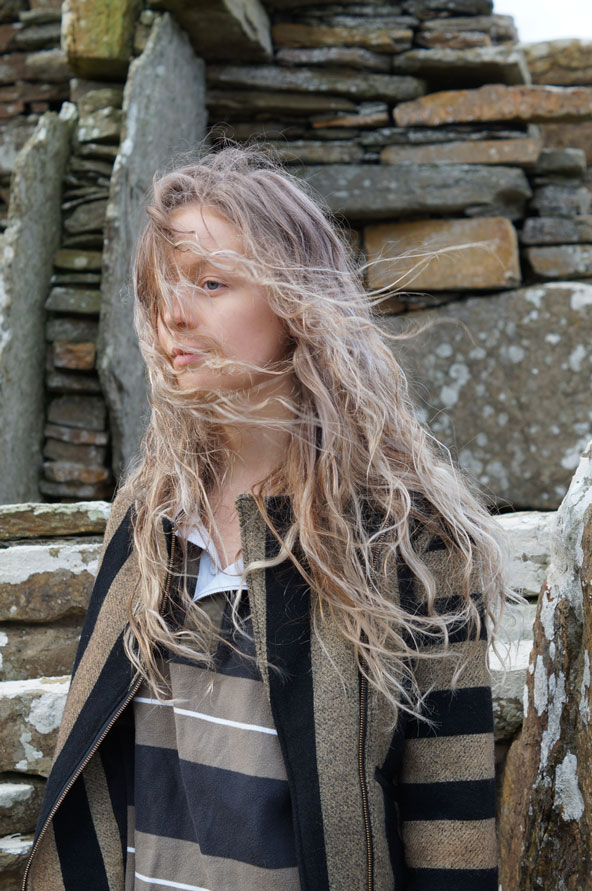
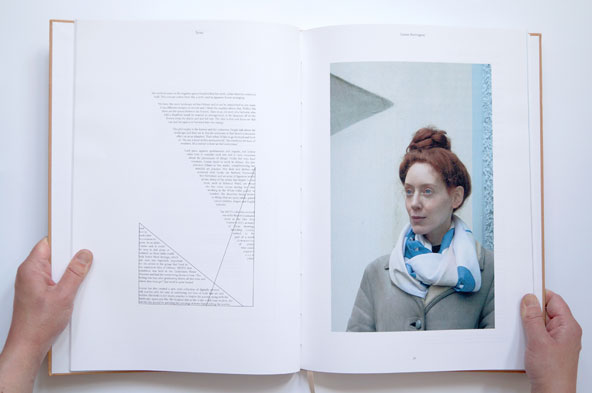
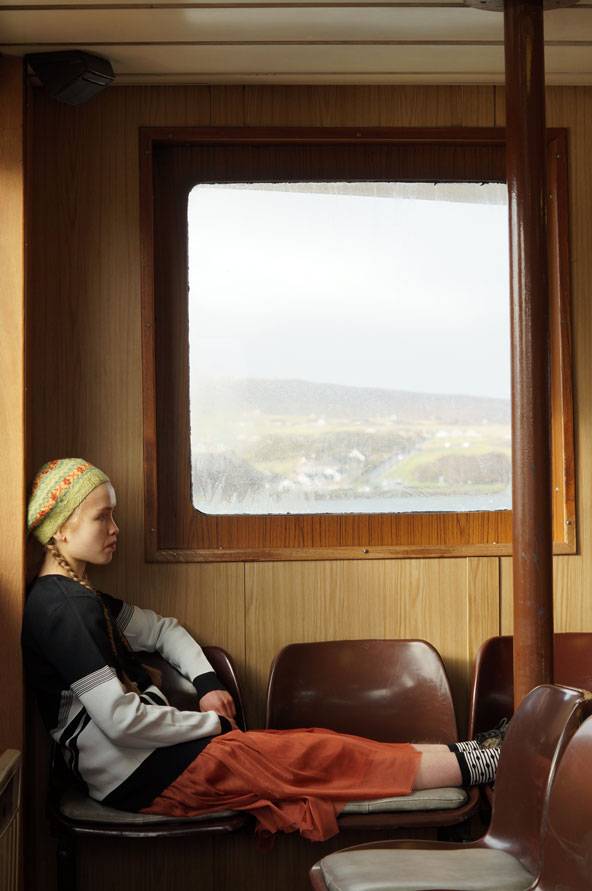
    Photographs taken from ‘Teran’.


    Can you tell us about yourself and your course?

    I grew up in the Orkney Islands in the very north of Scotland. It is very cold and windy there but you get to see a lot of beautiful things, like waves crashing into cliffs and the Aurora Borealis (known locally as the ‘merry dancers’). I spent a lot of time cutting pictures out of magazines and sticking them to my bedroom wall, as well as painting and charity shopping.

    Then I moved to the Scottish Borders to study Fashion Communication at Heriot-Watt University, where I spent even more time cutting pictures out of magazines, painting and charity shopping. My course included a broad mix of subjects, such as photography, graphic design, journalism, styling, events and marketing. It suited me well because I loved doing everything and was initially unsure what I specifically wanted to pursue as a career. By the end of the course, each one of us had found our own individual handwriting and was able to demonstrate it within our work. I was very fortunate to receive the Bernat Klein Award and Watt Club Medal from my university, as well as being awarded the Fashion Photography Award at Graduate Fashion Week. In January, I will begin a Masters in Fashion Communication and Promotion at Central Saint Martins, where I will be focussing on image-making.

    Can you tell us more about your final project?

    I created a publication titled ‘Teran’, which focussed on rural out-migration within youths. It’s common for young people to be encouraged to leave their home following school to attend university and pursue career ambitions but I questioned whether creatives could be missing out on unique and interesting opportunities where they lived. Whilst reading poetry written by my great grandfather’s cousin, Robert Rendall, I could see my own personal experiences of growing up in Orkney – as opposed to picturing his own stories. I decided to use these poems to inspire each editorial, in an attempt to show my own interpretation.

    I made a conscious decision to include no makeup or retouching and to use only natural light. I cast people who weren’t models professionally but I felt were interesting and beautiful. The clothes were all second hand, vintage or borrowed because there are no high street shops in Orkney and I wanted to stay true to that. I interviewed some really interesting people who were having successful creative careers in the islands, such as the Cathedral Stonemason, who as a 24-year old woman was likely to be the first female in the position, and had taken such an interesting creative career path.

    How has your course and school prepared you for life after graduating?

    My course was quite demanding, which I think helped me to build a strong work ethic. I think having a balance of internships/jobs as well as academic learning was really important, because I gained experience and skills through working but refined my knowledge and expertise within university. My course gave me the room to experiment, make mistakes and figure out what worked for me. I learned in depth about ethics, sustainability and a number of other important issues within the industry, which has shaped my perspective dramatically. I have left university feeling very aware of my responsibility to create positive change within fashion.

    How does a graduate feel in 2017?

    Personally, 2017 has been a very surreal year because I went from showing my work to mostly friends and family to exhibiting my work in London and being interviewed by ELLE magazine. I am feeling really excited about creating new work and motivated to improve my abilities. I’ve been reading a lot, trying to see as much art as possible and exploring topics that could be interesting subjects for editorials. After this year, I really believe that if I work hard enough and am persistent, I can achieve my goals.
    If you’ve graduated in 2017 and would like to be featured on our blog, please send us an email to hello@thefuturepositive.com with some information about yourself and your graduation project.
  • Peony Gent

    Peony Gent

    Peony Gent is a freelance multimedia illustrator currently based in London, specialising in visual poetry and observational drawing. Working across different media – from comics to ceramics – Peony likes to keep a sense of play in her work, whilst maintaining her practice fluid and always open to change. We chatted with Peony to find out more about her education, her favourite projects and plans for the upcoming months.

    www.peonygent.com

    Can you introduce yourself and tell us about your education?

    Originally from Cambridgeshire I’ve lived in Edinburgh for the past five years, where I completed an undergrad at the Edinburgh College of Art. After a year out of education I’ve recently moved to London, where I’m just starting a two-year master’s in Visual Communication at the RCA here.

    How would you describe your illustrations?

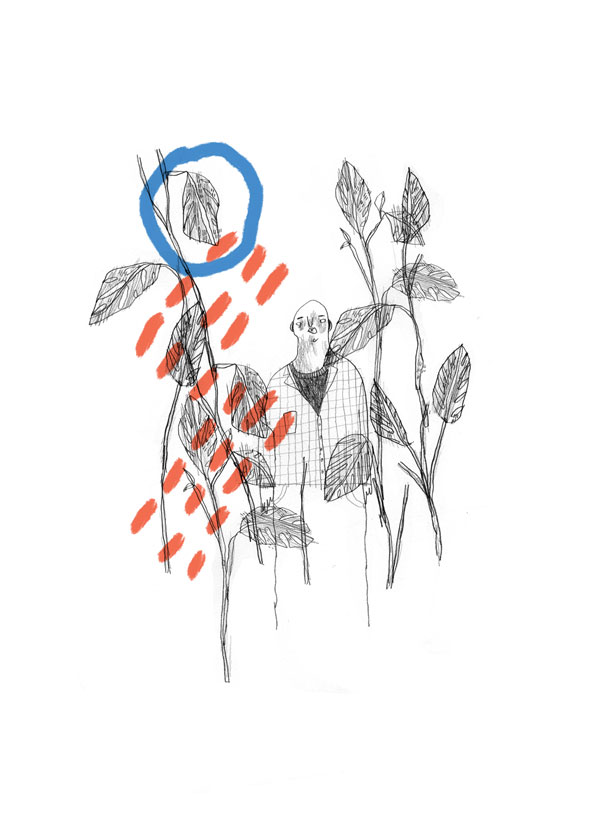
    Describing my own work is something I’ve never been quite good at, even though I really should have gotten used to it by now. I do like to keep my practice really varied though, and enjoy doing a wide selection of jobs, from bold commercial designs to contemplative visual poetry. I would say, however, that my main love in illustration is the visual narrative/comics making side, and it’s definitely the most personal work I create. The interplay between word and image is really important to me in those projects, and the writing is just as valuable as my drawings to me there.

    In terms of a consistent visual style though, I mainly work in just pencils and then edit and add colour to my work digitally in Photoshop. That organic hand drawn element is very valuable to me, so even though I could just do a lot of my sketches directly on a tablet, I still like to keep it in a sketchbook first. I feel it stays a bit more free and fluid that way.

    A large part of my illustration style is about trying to capture a sense of place and/or character without just directly copying the subject, if that makes sense. A photo-realistic drawing that just copies a subjects appearance without showing any of its energy simply isn’t for me. To that end I often create a lot of my work by quickly redrawing the same subject over and over, until I feel like one has really captured the energy I’m searching for. I always keep a sketchbook with me for these observational drawings, and try to use it as often as I can. Often, I’d say around 70% of these drawings turn out like total trash, but it’s still worth it for the ones that do turn out well. I’ll also often return to drawings from those sketchbooks that I did weeks or months ago and find something valuable there that I hadn’t originally seen or needed.

    You work across different formats, can you tell us a little bit about each of them?

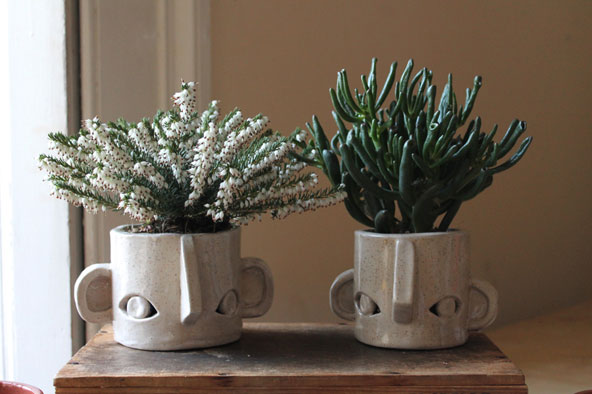
    Whilst pencil drawings are the most common medium I use, I do really love to experiment and have recently got really into ceramics. In contrast to typical illustration work, it’s nice that you don’t have to worry about deeper meanings or anything, you can just concentrate on making something aesthetically pleasing. I’d love to work on a more cohesive range this year and ideally get a space with a wheel to cut down on production times. In the past all my ceramics have been made very informally in my room without any proper equipment or tools, and I’d like to learn a lot more about glazing and different clays as well.

    And whilst I enjoyed printmaking at uni it’s been difficult to access any facilities since leaving ECA, but I have kept up making some risograph prints. It’s been the only way for me to print large runs fairly cheaply and I do like that organic texture and ability to layer colours that risograph printers give. I’ll often take bits of other projects and transfer them into these prints, rather than sitting down with the direct intention to design a new one from scratch.

    What are some of your favourite projects you’ve worked on?

    The ones I value the most have to be my own comics and poetry projects, they’re the ones that always take me the longest to do and they’re definitely the most personal. It really means a lot to me when those stories strike a chord with people, and some of the responses I’ve had to them have been honestly very touching. With each new one I make there’s always an element of fear: that I’ve put too much of myself into a piece of work or made myself too vulnerable.

    On the other hand I also enjoy the pay off of making ceramics, it’s just very pleasing to be able to use things you’ve made yourself for everyday practical purposes. Especially when so many illustrations I make only exist digitally in their finished form – it’s a nice balance to have physical results of things you’ve made.

    I was also lucky enough to be one of It’s Nice That’s 2016 graduates and really appreciated the opportunities I got through that. In particular, each of the grads that year got the chance to make a book in collaboration with GF Smith papers and it’s still easily the nicest thing I own with my illustrations in it. I made mine as a kind of formal presentation of my sketchbooks and it’s a collection of my photography, drawings and writings from the two previous years.

    What are your plans for the upcoming months?

    Mainly settling into London! I’ve honestly only ever lived in Cambridgeshire where I grew up or in Edinburgh, so it’s an exciting change to live somewhere new and see what opportunities there are here. I’ve also been working on my very first long form comic and hope to make some good headway on it before Christmas, at least. Having only made short self-published zines before this is a big change for me, especially since I’m usually so bad at committing to one theme or idea long enough to carry it through to the end. It is still very much in the early stages though, so we’ll have to see how it goes…

  • Meet the Graduate: Julia Krewinkel

    Meet the Graduate: Julia Krewinkel

    We’re starting a new series of posts in which you can meet students from art schools around the world that are graduating in 2017. If you’d like to be featured on our blog, please send us an email to hello@thefuturepositive.com with some information about your graduation project.

    Julia Krewinkel is an illustration student who is about to graduate from the art academy AKV|St. Joost in the Netherlands. We talked to Julia to find out more about her course, her project ‘This must be the place’ and how someone graduating in 2017 feels.

    www.juliakrewinkel.com

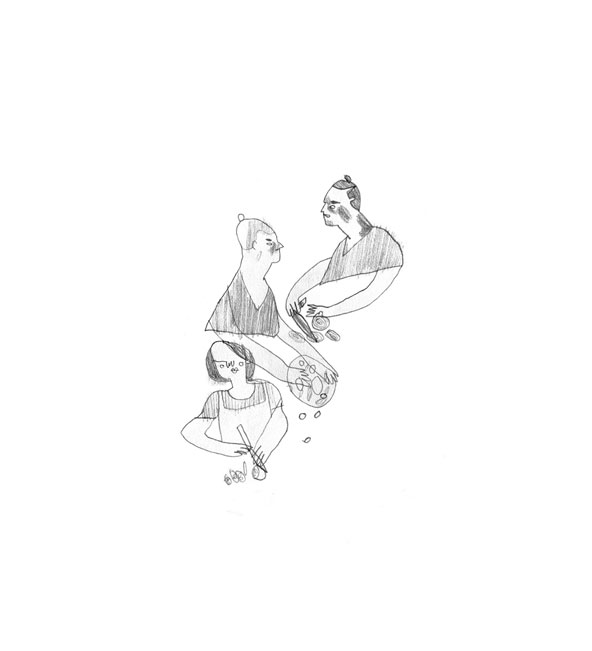
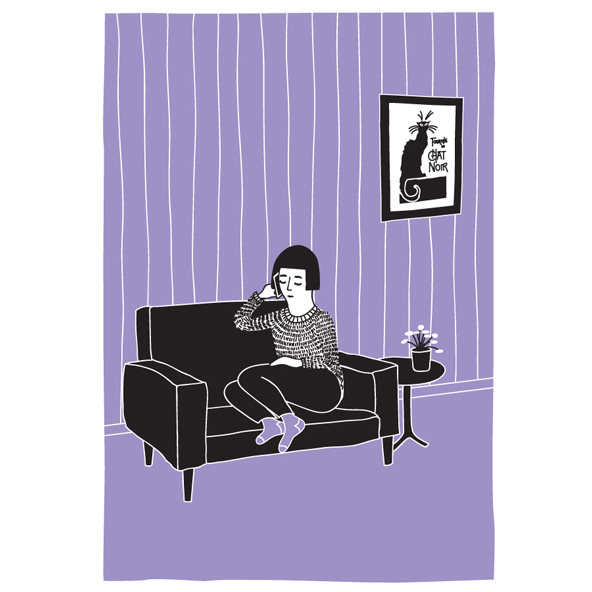
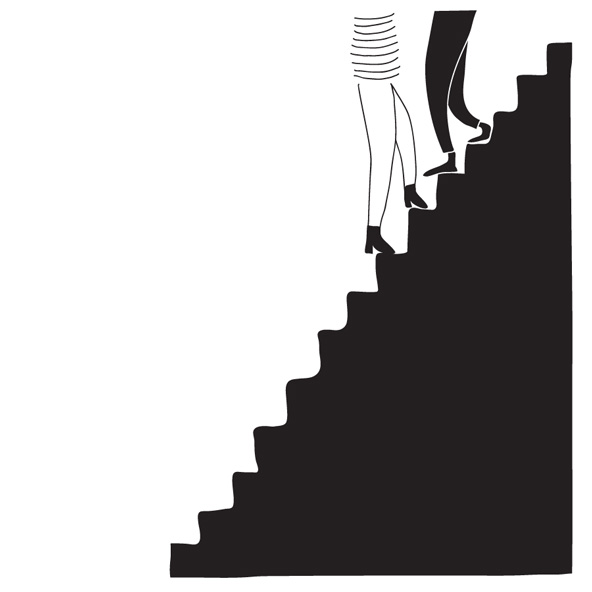
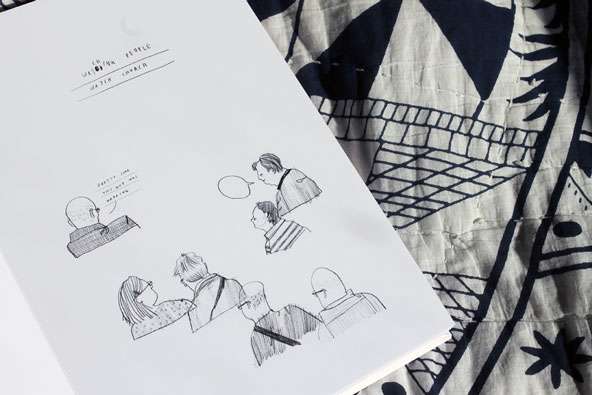
    Illustrations taken from ‘This must be the place’.

    Can you tell us about yourself and your course?

    I literally grew up with a pencil in my hand. With my mother as a goldsmith and my father as a painter, my brother and I grew up in a very free and creative environment where I learned to look at the world around me with curiosity and to react with it accordingly. In high school I didn’t have a creative outlet, so when I started my first course in graphic design I felt that I was really in the right place. Here I was encouraged to think big in a conceptual way, but also to think about working with clients. After graduating I decided to continue my education with a programme in illustrative design at the art academy. During this course, I learned to position myself in the art world and to make my place in the world. I have become an independent designer; I try to distinguish myself and to use my education in the best way.

    Can you tell us more about your project ‘This must be the place’?

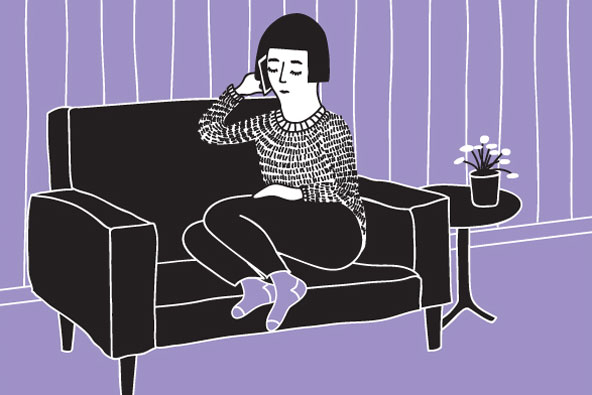
    For the last four years I have been living in an international student campus in the Netherlands. More than 200 people, from all over the world, live in my building and from the beginning I was intrigued with who my 199 housemates are. I decided to interview these international residents and ask them how they experience their lives in the Netherlands, how they organize their lives and what problems they may encounter. Through the interviews it became clear that many of the residents didn’t know their neighbours either and that sometimes they felt isolated and lonely. I decided to tell their stories in a graphic novel where I could show, through many short stories, some of the different ways these people experienced these types of loneliness. The stories show that although everyone experiences loneliness in a different way, the essence of the experience is the same. Ultimately my goal is for the reader to see that loneliness can be relieved if you realize that you are not the only one who has these feelings.

    How has your course and school prepared you for life after graduating?

    During my education I learned to position myself as a designer. I worked for four years to find my distinctive abilities and apply them. In my third year I worked as an intern in a design studio with a number of classmates, where we worked on numerous different projects and had intensive contact with clients. These experiences taught me how to maintain my own aesthetic while working with the needs of a particular client and project. Alongside my education I have worked independently over the last four years, participating in various art fairs in the Netherlands. Since 2016 I have also been selling my work in an art store in Maastricht.

    How does a graduate feel in 2017?

    Graduating and discovering the workplace is exciting for everyone, but perhaps especially for art students. You don’t have the quick guarantee of a steady job and income, so the future may feel unsure and that’s unsettling. However, there are some advantages to my situation; I often work digitally and when I have my computer and drawing tablet, my immediate surroundings are irrelevant – the world is virtually at my feet. I’m eager to become part of the creative world and to show people my vision of events.