Tag: glasgow

  • Glasgow Print Fair: Bringing Together People Passionate About Print

    Glasgow Print Fair: Bringing Together People Passionate About Print

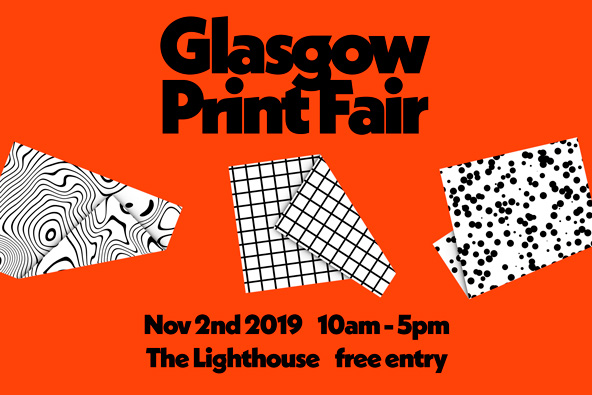
    Print is still on the rise and the best example is Glasgow Print Fair, a new festival and the first of its kind taking place in Glasgow. Organised by local creatives Jane McDevitt, partner at Maraid Design, and Kaye Symington, co-founder at Paved with Gold, this festival celebrates established and new printmakers, and brings people together for a day of print-based fun.

    Glasgow Print Fair will take place on Saturday 2nd November (10am – 5pm) with free entry at The Lighthouse.  The festival will showcase prints and other products by over 50 makers from the UK and Europe. With work by established studios and artists like Lesley Barnes and Risotto Studio (read our interview with its founder!), collectives and design shops like Yuk Fun Now and Welcome Home, and also some emerging talent from Glasgow School of Art.

    Do not miss this opportunity to support print and take home with you textiles, zines, posters and much more!

    www.glasgowprintfair.co.uk

  • Newspaper Club, Print’s Not Dead

    Newspaper Club, Print’s Not Dead

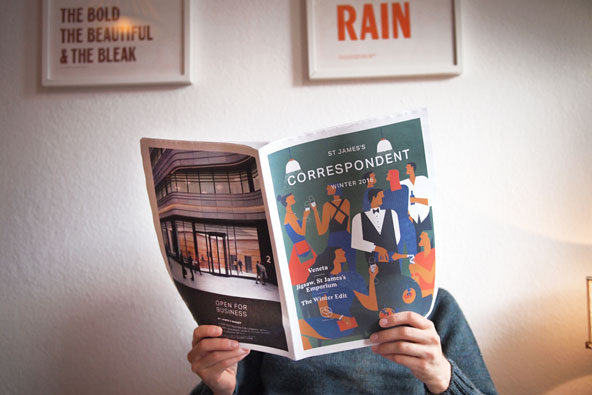
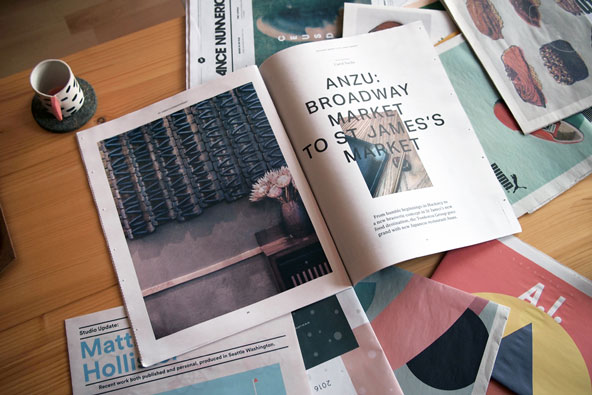
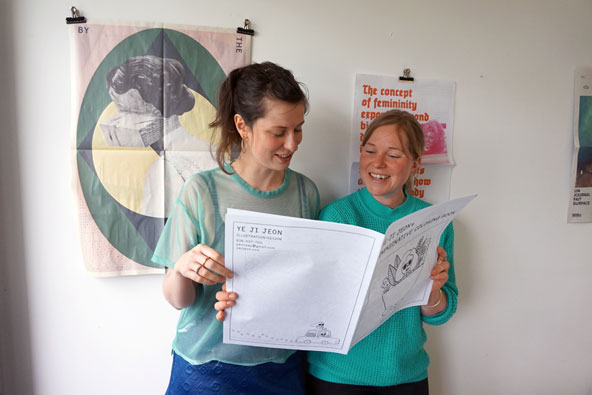
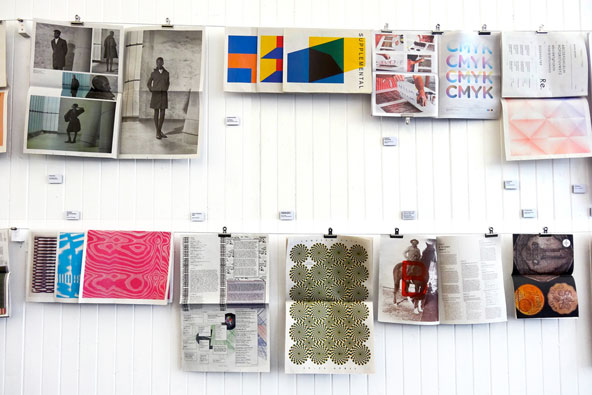
    Since 2009, Glasgow-based printing company Newspaper Club has been helping people self-publish their work on newsprint. Inspired by newspapers’ history and tradition, the team behind Newspaper Club decided to open the industry up for non-traditional publishers in order to see how this medium adapts to the 21st century.

    Working with all types of clients – from students and photographers to tech companies like Facebook and MailChimp – Newspaper Club has printed more than 12 million newspapers for thousands of customers all around the world.

    We chatted with Newspaper Club’s CEO Anne Ward and the rest of the team to find out more about their services and they’re also offering 20% off the first order (up to a discount of £100 and until 30 November 2017) to all our readers using the code FUTURE20 at checkout.

    www.newspaperclub.com

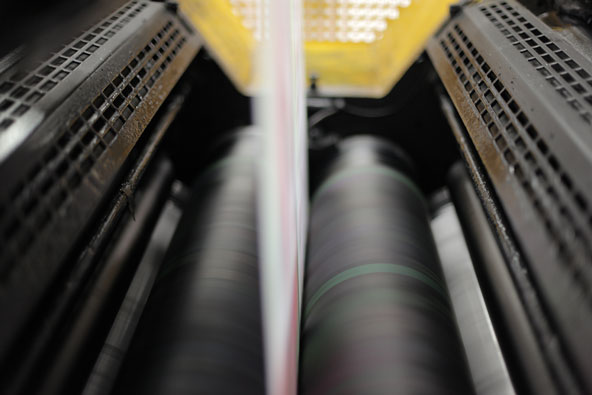
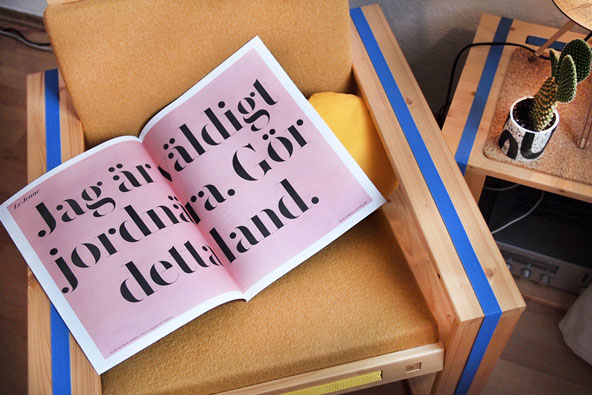
    Photos by Newspaper Club.

    When and how did your love for print begin?

    In childhood! Most of us are old enough to have grown up in a pre-digital world, surrounded by books, newspapers, notebooks and all kinds of printed goodness. It’s a medium with an evocative feel and a rich heritage. We want to help print have a bright future too.

    Can you tell us about what made you start Newspaper Club?

    Yes, we felt that rumours of print’s death had been greatly exaggerated. When we used the slogan ‘Print’s Not Dead’ it really resonated with people and it became clear there were a lot of people who were keen to print their own newspapers.

    Our first newspaper was a design project (which won Design of the Year in 2010). Getting this printed proved how difficult it was for small designers and publishers to get a newspaper printed. There’s a lot of technical knowledge required, which can be intimidating and many big printers won’t take on small jobs. We wanted to make newsprint accessible to everyone and have worked ever since to make newspaper printing easier.

    Can you tell us about the different services you offer at Newspaper Club?

    Our main service is printing newspapers to order. You design ’em, we print ’em! You can use software like InDesign, or our own free design software to make your newspaper.

    You can print one copy or thousands, and choose from three handy formats: minis, tabloids and broadsheets. Our business is totally online so you can order 24/7 and we’ll ship just about anywhere in the world. We offer clear guidance and friendly support, so we’re always here to help.

    You’ve worked with some big names in the digital industry like Facebook and MailChimp, how can print support or enrich digital content?

    A few years ago Wired said Newspaper Club is “what happens when the internet gets hold of a printing press.” We think digital and print can work really well together, and it’s exciting to see customers experiment with that dynamic.

    MailChimp use The Chimpington Post as a recruiting tool. It’s a friendly format that lends itself well to MailChimp’s voice, and they clearly had a lot of fun with the design. As a piece of print, it still feels very of the web.

    We printed a lovely broadsheet for Zendesk when they launched their rebrand last year. It was a great way to showcase their playful new visuals in a big format, something that people could flip through and interact with off the screen.

    And then there’s a project like Printed Web, which is literally bits of the internet turned into a newspaper by designer and teacher Paul Soulellis. He’s published 5 issues with contributions from hundreds of artists – the newspapers are moving into the MoMA Library later this year!

    What are your plans for the upcoming months?

    The good news is our business is booming at the moment! We’re expanding our team, looking at some new products and generally thinking about how we can help more people get their first newspaper off to print.

  • Freytag Anderson

    Freytag Anderson

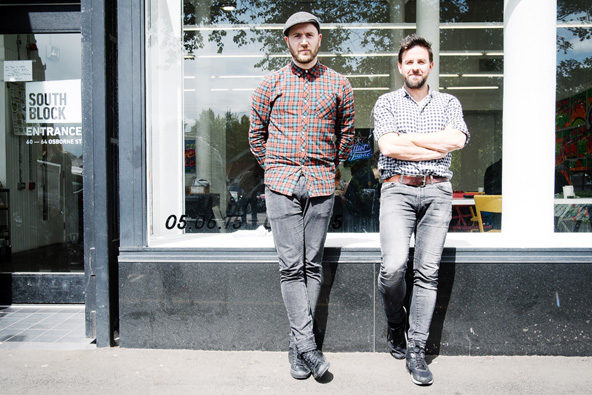
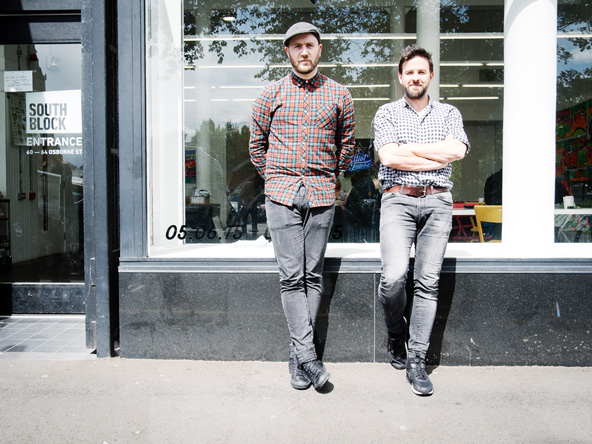
    Founded by Daniel Freytag and Greig Anderson, Freytag Anderson is a design studio based in Glasgow and working with people all over the world. Our contributor Morgane Bigault visited their studio and chatted with Daniel and Greig about how they started their company, the influence of their workspace in their work and where they draw inspiration from.

    www.freytaganderson.com

    Photographs & interview by Morgane Bigault.
    future-positive-freytag-anderson-6-low

    Could you tell us about your backgrounds?

    Daniel Freytag: I’m a designer, photographer and serial idealist. I’m creative director and co-founder at Freytag Anderson, an award-winning branding and design studio. My work as a designer has taken me all over the world – allowing me to see some interesting things and meet some great people along the way.

    When I’m not designing I work on other creative ventures such as curating Editions of 100 (an online print store by a global community of designers), setting up a children’s app business with my wife (junoberry.com) or most recently, working on a publishing concept, for customized children’s books.

    I grew up in the small village of Bühlertal on the edge of the Schwarzwald in Germany. Since then, I’ve lived and worked in Dubai, New York, Sydney, Seoul and London. I recently moved back to Scotland where I now live with my family on the West Coast regularly dipping back into the big smoke!

    Greig Anderson: I’m creative director and co-founder of Freytag Anderson, originally from Aberdeen, and educated in Glasgow. I’m a brand and design professional with over 11 years’ experience working locally and internationally with a wide variety of clients.

    My main interest lies in brand creation and visual identity systems and my work has seen me gain experience across a variety of studio environments in both Glasgow and Sydney, from boutique brand studios to multi-disciplinary agencies and experiential environment practices. This variety has allowed me to work across a diverse range of projects from the launch materials of Virgin Mobile Australia, global digital campaigns for Dell EMEA/Latin America to branding and launching a variety of new-to-market whisky, vodka and beer products.

    Alongside my commercial work I also write about design for leading industry blog FormFiftyFive and I am involved in the design debate through social media. I have an obsession with Instagram and anything with two wheels and pedals.
    future-positive-freytag-anderson-5-low

    How did your career as a duo came up?

    We both spent time living and working in Sydney (but not at the same time) and made some mutual friends. When we got back to Glasgow we met up and shared studio space. We found we had a common design aesthetic/process, so it made sense to start working together on a few projects. Out of this came Freytag Anderson – it was really pretty straightforward – the hardest thing was coming up with the studio name – that took months!

    Was it hard to find clients at first?

    Because we had both come from running our own independent studios (Berg/Effektive), we already had a good online profile and several clients. This made things a lot easier as we had a substantial body of work to promote the new studio, allowing us to hit the ground running. Overall the transition to Freytag Anderson was pretty quick – we found working with two heads much more productive and satisfying.
    future-positive-freytag-anderson-2-low

    When did you move in to your studio and why did you choose this location?

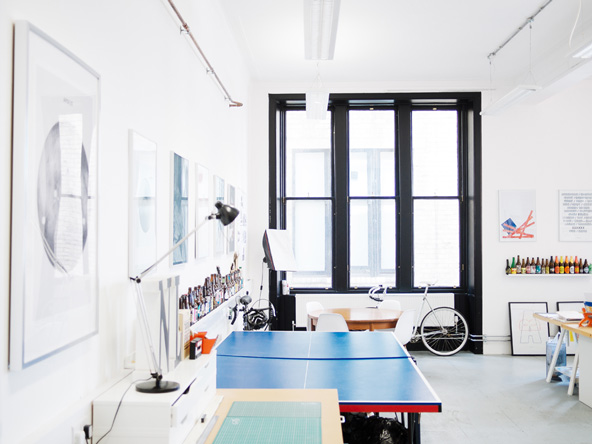
    Our first studio was tiny – literally a shoebox. We were therefore very keen to work in a larger space. This would also allow us to create a shared working environment where we could collaborate with other designers and friends. This was a crucial part of our business strategy – we didn’t want the stress of employing people full-time but equally understood the benefits from working with other like-minded individuals.

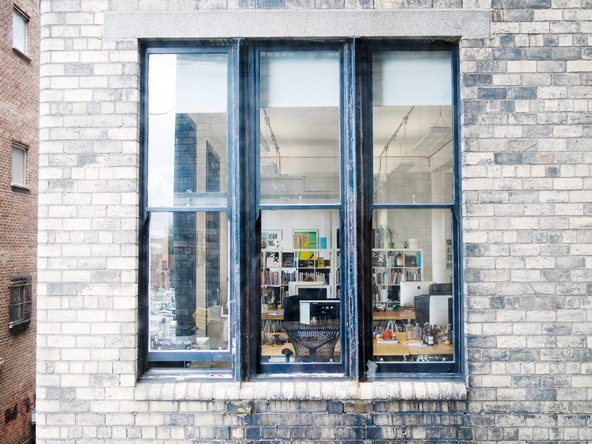
    At the time the Southblock building was a new creative space in the city centre. Run by WASPS, the building caters for commercial creative businesses and art-based practices. It was perfect for our needs and aspirations as a studio. There are also many other studios in the building, which gives the place a real creative buzz, something we find inspiring and exciting.

    Does the workspace influence your creativity?

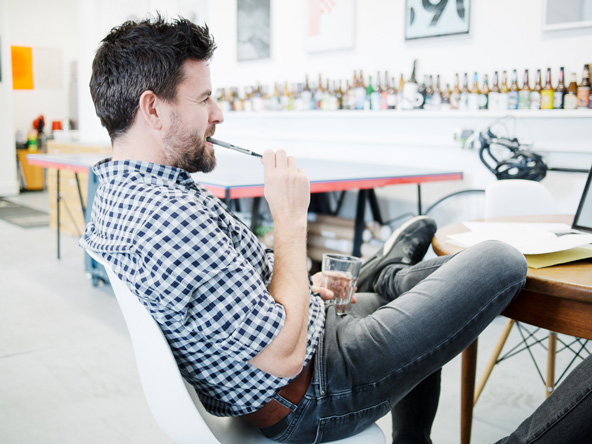
    Absolutely – creativity is all about doing new things, going out on a limb and experimenting. Having the right workspace is critical to this – but more importantly, you need to surround yourself with the right people. People that inspire you.
    future-positive-freytag-anderson-1-low

    What does Glasgow mean to you? What are your favourite places in this city?

    Glasgow is a vibrant, energetic city. It’s a hard, funny, honest place where folk aren’t afraid to speak their minds. When I think of Glasgow I think of the old adage “A hard life makes for quality”. It’s a great place to be a creative person; it keeps you on your toes and allows you the freedom to explore.

    In terms of favourite places, although a relatively small city, Glasgow is very diverse – leafy West-End with its bohemian vibe, universities, cafés, galleries and bars – Ashton Lane is a definite favourite down there. The Merchant City to the east of the city centre (where our studio is based) is fast becoming a creative hub for all things art and design. Great coffee shops, bars, shops and galleries add to the creative vibe and encourage a lot of pop-up events and festivals in the area. It feels like there is something happening and it’s great to be part of it.

    You do client work. Could you give us an insight into how you approach each particular client, as they are very different, going from a wine company to an art gallery?

    Our design process is all about getting to know people and their businesses. People are at the heart of design. As designers we understand people, communicate with them, and create for them. It’s the best thing about being a designer.

    We like our clients, often becoming friends beyond the project. Getting to know them well is crucial as ultimately our design thinking and executions need to speak for them, whether it’s a logo, product or website.

    We work with people all over the world doing all sorts of things. I can’t think of another industry where you’re learning about craft beer one week and the next you’re into server systems and data management. For us it’s this variety that keeps things fresh and interesting. It’s learning about new things that gets us out of bed in the morning.
    future-positive-freytag-anderson-3-low

    You have been awarded Scottish Design Agency of The Year. What is the project you are the most proud of?

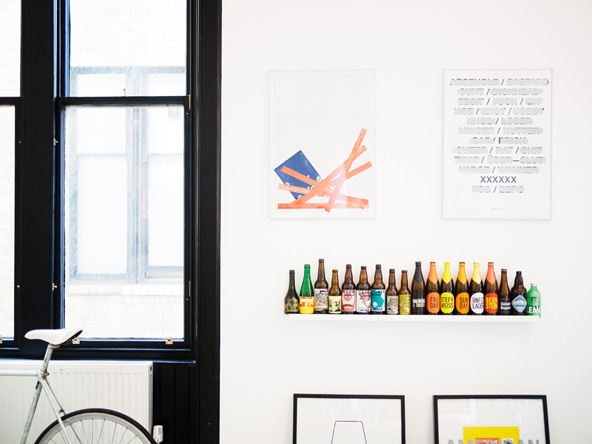
    That’s hard to say. We’re proud of all of our projects in different ways. I’d say the work we did with Fyne Ales Craft Brewery stands out. It was a collaborative project with our studio mate Matt Burns where we were asked to design a beer label for their limited editions beer, 48 Miles Later. What made it a great project is that we saw the brewing process from start to finish: meeting the brewers, brewing the beer and ultimately seeing the bottles in the pub. The project was also recognized by the industry and awarded both Best Packaging as well as the prestigious Chairman’s Award at the Scottish Design Awards.

    You describe your work process as listening, questioning, exploring and researching. Where do you draw your inspiration from?

    Our inspiration and ideas come from experiences, from the world around us, from the things we see and people we meet. As designers we watch, listen and observe – we’re compulsive hoarders of interesting things. The more we experience, the more we accumulate, thereby creating a rich visual vocabulary. The better the vocabulary the better the ideas.
    future-positive-freytag-anderson-4-low

    What would you say is the Freytag Anderson signature?

    I guess we try to keep things simple. Whether that’s running the project or creating the work. We believe in reducing any design work to the essential elements, stripping out the superfluous. As Dieter Rams says: “Good design is as little design as possible.” We think simple is good.

    What is your next big goal?

    We don’t really have one. We want to continue to develop our studio and the work that we produce. We are excited by new challenges and experiences and every day can be different. We feel lucky to be able to run our own studio and work directly with our clients. Ultimately, we want to continue to do good work and get paid (well) for it.
    future-positive-freytag-anderson-7-low

    Save

  • Jennifer Argo

    Jennifer Argo

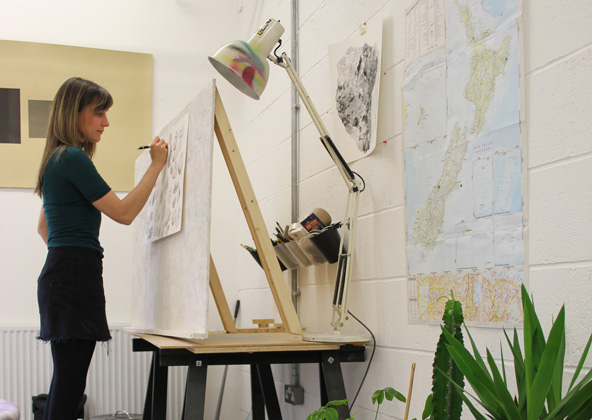
    Jennifer Argo is a Glasgow-based artist, working across different fields and looking at complex adaptive systems in nature as inspiration for smart design, and as a metaphor for the way communities develop and grow. We interviewed Jennifer to discover more about her practice, her work designing sanctuaries and her plans for the next few months.

    www.jenniferargo.com

    Future-Positive-Jennifer-Argo-1-Low

    Could you please tell us about your education and background?

    I studied at Gray’s School of Art in Aberdeen, in the north-east of Scotland, specialising in Photographic Electronic Media, which was then combined with sculpture in the last year, which was great! I loved getting into the workshops and working with the technicians, doing more hands-on stuff. I developed a practice that utilised illustration, photography and sculpture, as separate mediums or combined to create installations.

    Future-Positive-Jennifer-Argo-2-Low

    You work across different fields, ranging from photography to installation. Could you tell us a little bit each of these and how they relate to each other?

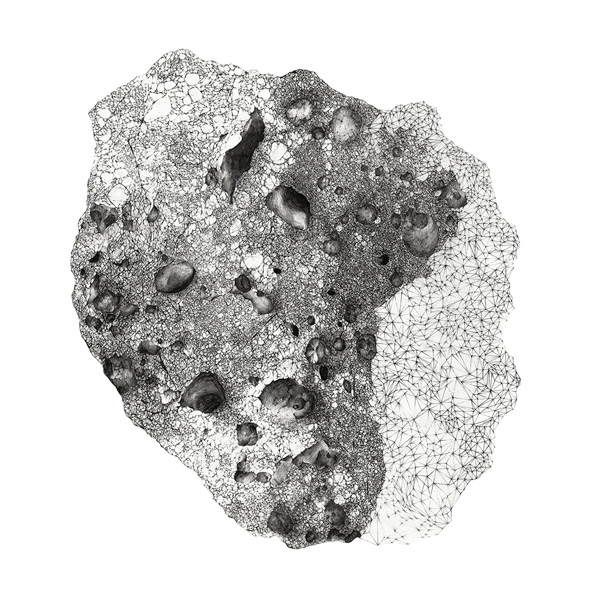
    I like working on different types of projects, it’s nice going from working on intricate drawing studies in the studio then getting outside and working on large-scale structures, or documenting sites to draw from.

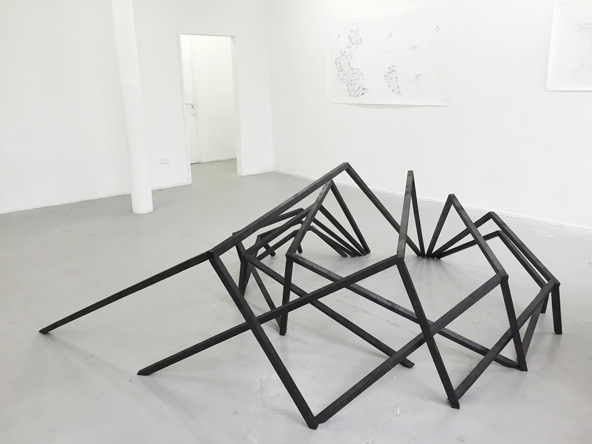
    Both my illustrative and sculptural work looks at natural structures, as inspiration for sustainable design, and as a metaphor for communities, the way they develop and bridge, and as a reminder that we are part of a much broader environment and timescale. I try to do this through referencing timeless, ubiquitous structures.

    Photography feeds in to this too, in that I like to document interesting geological and botanical formations as a starting point for illustrative works and as stand-alone images. I spent time in Iceland a wee while ago looking at the complex, ever-changing formations of glaciers, basalt formations and the tectonic ridge for inspiration, and to highlight the breath-taking characteristics of sites that change and form over millions of years.

    Future-Positive-Jennifer-Argo-3-Low

    We’re interested in finding out more about your collaborative work designing sanctuaries. How did it start? Can you take us through the different projects you’ve worked on so far?

    I started working with an architect called Lee Ivett on a series of workshops at Glasgow Sculpture Studios with a group of teenagers from an arts charity called Depot Arts, designing an entrance structure for a local nature reserve. We had similar ideas about building relaxing environments in the city, spaces that provided a similar sense of peace that churches do, without any religious bias, where people could relax individually or collectively.

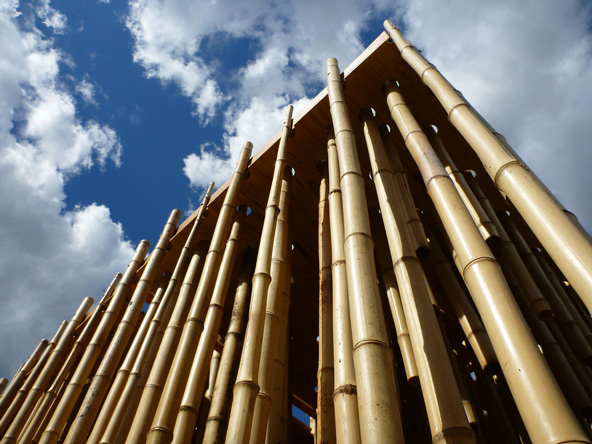
    We ended up designing and installing a bamboo sanctuary in Caledonia Road Church ruin, a beautiful site with lots of plant-life, which is run by arts organisation Wave Particle who had opened the site up to artists and students to test ideas. The space is one of a number of Stalled Spaces sites around Glasgow, provided by Glasgow City Council to regenerate spaces through creative activity and open them up to their local communities again through series’ of events and on-going projects.

    Lee and I created a second sanctuary space last year at Hello Wood: Project Village in Hungary, working with a group of 10 students, designers, artists, and creatives to develop and build a sanctuary over the space of 10 days. Project Village is a live-build blueprint for different types of sustainable community dynamics and communal spaces, including the festival itself and the way everyone works and lives together during it. Applications just opened for the next round of the 3-year project due to start in July, I recommend it to anyone interested to get involved!

    I’m working with a small team of architects, engineers, joiner/carpenters, musicians, designers and tacticians at the moment on a project for this year’s ArchiFringe festival in Scotland in July. We’re in the process of designing a sound installation and sanctuary space that we will be installing in a woodland area near Glasgow, working with the elements to create gentle music for inhabitants in the space.

    Future-Positive-Jennifer-Argo-4-Low

    You’ve recently won a travel award from J.D.Fergusson Arts Award Trust to travel to New Zealand. Could you tell us a little more about it and what will you be working on during the trip?

    I’ll be heading to New Zealand at the end of this year, to trek and travel across areas of the alpine ridge in the south and the sub-tropical regions in the north, to document rare geological and botanical structures. I’ll also be visiting the Longbush Eco Sanctuary and Welcome Centre near Grisbourne to meet with the anthropologists, ecologists and architect behind the Welcome Centre, to find out about the work they do there and to volunteer for a few days. I’ll be gathering lots of imagery to make new work and get some inspiration for new installations based on the natural structures I find. I’m interested in forms, and organisms that use closed-cycles of resource management, mutually-supportive ecological systems, or natural structures that are extremely strong and durable, while using as little material as possible, as inspiration for sustainable design and architecture.

    Future-Positive-Jennifer-Argo-5-LowWhat else will you be working on in the upcoming months?

    In the next few months I have a few small shows opening at ForFikaSake and Glad Café in Glasgow, as well as workshops and a pop-up shop at Fika  on 21st-22nd of May.

    I’ll be working with the team I’m taking part in ArchiFringe with (Shirley Hottier, Therry Lye, Grace Mark, Michael Bleach and Douglas MacGregor) on the sanctuary. We will be finalising the structural design and how we are going to install it across a stream, making our own recycled materials at the Sculpture Studios to clad the space, before installing it at the end of June.

    I’ll be hosting a public workshop at Glasgow Sculpture Studios in July, constructing temporary den spaces in the community garden. I’ll also be working on a few commissions; designing and making planters and light fixings for the interior of a house, furniture design for the garden of a public library, and a large-scale illustration for a shop front, then illustrations based on coffee-plant molecules for a coffee festival in Glasgow.

  • Monochrome Lab

    Monochrome Lab

    Monochrome Lab is a new graphic design studio founded by Glasgow-based Dutch designer Bart Manders. After studying Graphic Design at the Willem de Kooning Academy in Rotterdam and an exchange year at Glasgow School of Art, Bart started working on numerous projects for galleries and festivals such as The Telfer Gallery, GoMA and Glasgow International Festival of Visual Art, and started Monochrome Lab in February 2015. We caught up with Bart to find out more about his studio, what made him choose graphic design as a career and the differences in design trends between Glasgow and the Netherlands.

    www.monochromelab.net

    Future-Positive-Monochrome-Lab-2

    Please describe your path to becoming a graphic designer.

    I was born and raised in the Netherlands and from an early age it became clear that I had a creative mind. After high school I went on to do a college course in Communication and Design where the curriculum of the first 2 years consisted of all kinds of creative disciplines such as industrial design, graphic design, styling and photography. When I finished high school I was unsure about what kind of creative course I wanted to do so this particular course offered me the opportunity to put off the decision making for a few more years. I ended up graduating in Styling and Applied Spatial Design, which could be described as a mix of industrial design and (interior) architecture.

    When graduating, I realised my true passion was actually graphic design, and after a gap year, during which I researched Dutch art schools, I started a course in Graphic Design at the Willem de Kooning Academy in Rotterdam. I had a bit of a bumpy start, having trouble adapting to the course curriculum and thinking about transferring to the Fine Art department. Eventually though, I had a really good 3rd year which ended with a publication I had designed being nominated for a regional design award. During this year I had met a lot of people who were on exchange from various places, and as I had visited Glasgow for the first time the year before, I decided I wanted to do an exchange at the Glasgow School of Art, which I ended up doing in late 2008.

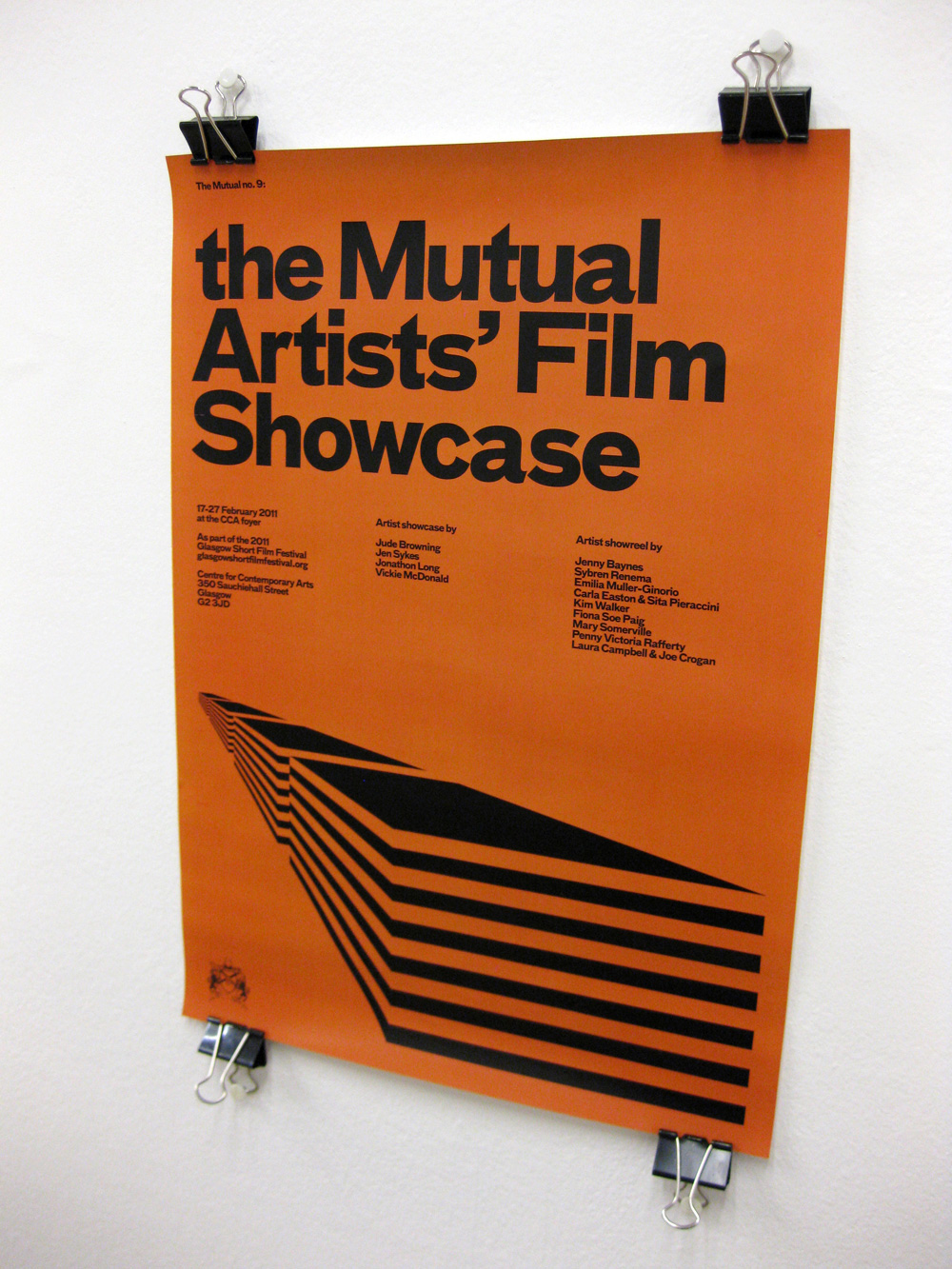
    After my exchange I did two internships, which are mandatory in most Dutch art schools; one with a magazine designer who had been my tutor during my second year and one with two designers who I had become friends with, that were running a joint independent online design project called Connected Project. I had a somewhat troublesome, yet positively minded graduation period and after a few months of thinking about what I wanted to do next I decided to move to Glasgow as I had been wanting to spend more time there since my exchange. I still had quite a few contacts in Glasgow and only 2 months after my move there I got offered my first project which was an exhibition poster for a local artist collective called The Mutual, after which I ended up doing 2 more poster projects for them.

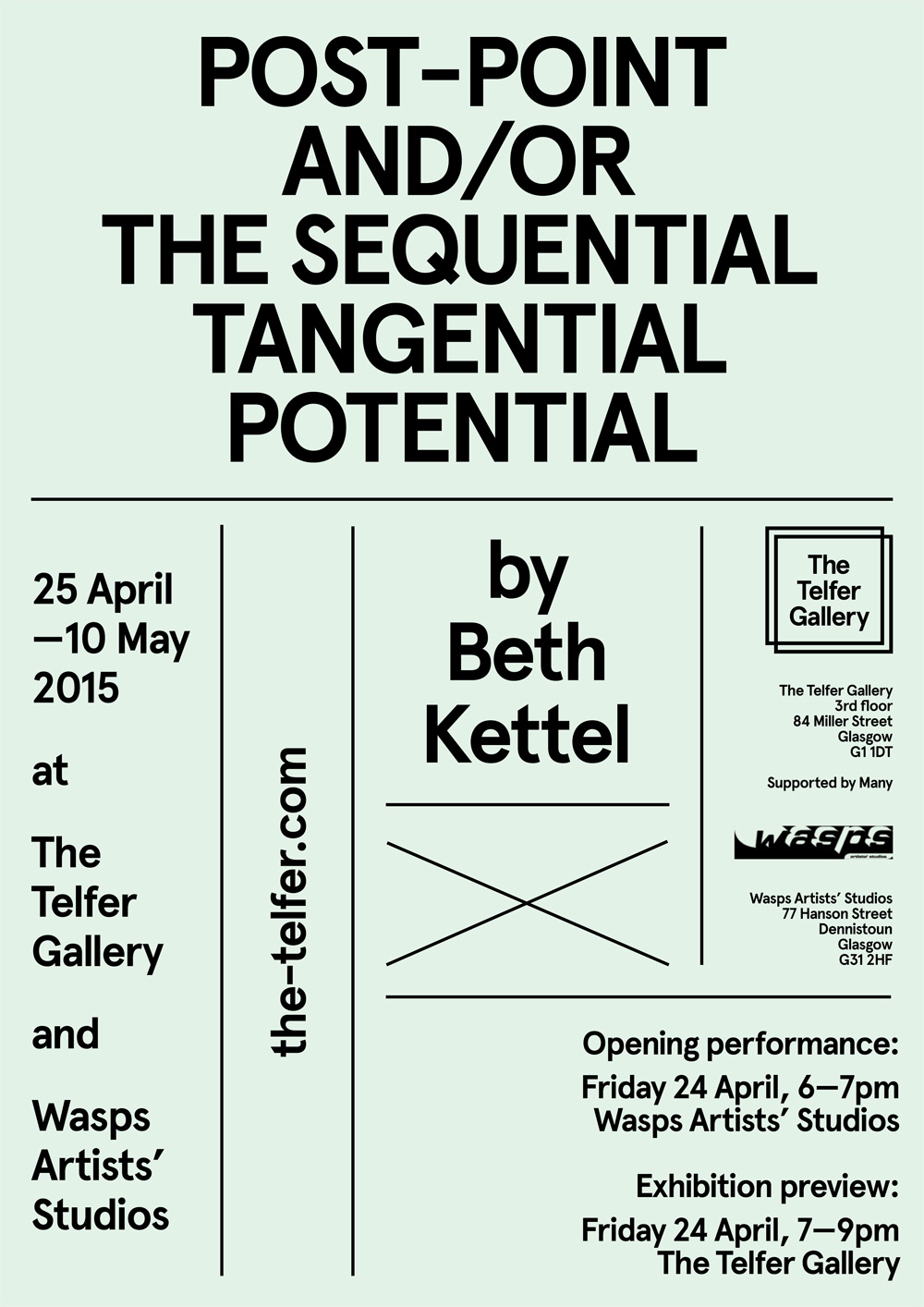
    In the summer of 2011 I met Marc Cairns, an architectural designer, at an exhibition opening by The Mutual and in 2011 I was invited to join him and a few other people to run a new exhibition space called the Telfer Gallery as a committee, for which I’ve been doing the in-house graphic design as well as filling the shared role of programme coordinator. The Telfer Gallery has so far brought me the most consistency in my design career as well as some other projects I did for organisations such as GoMA and projects related to GI, the Glasgow International Festival of Visual Art, things I would have never been involved in if it hadn’t been for The Telfer Gallery.

    Future-Positive-Monochrome-Lab-3

    What made you start your own design studio?

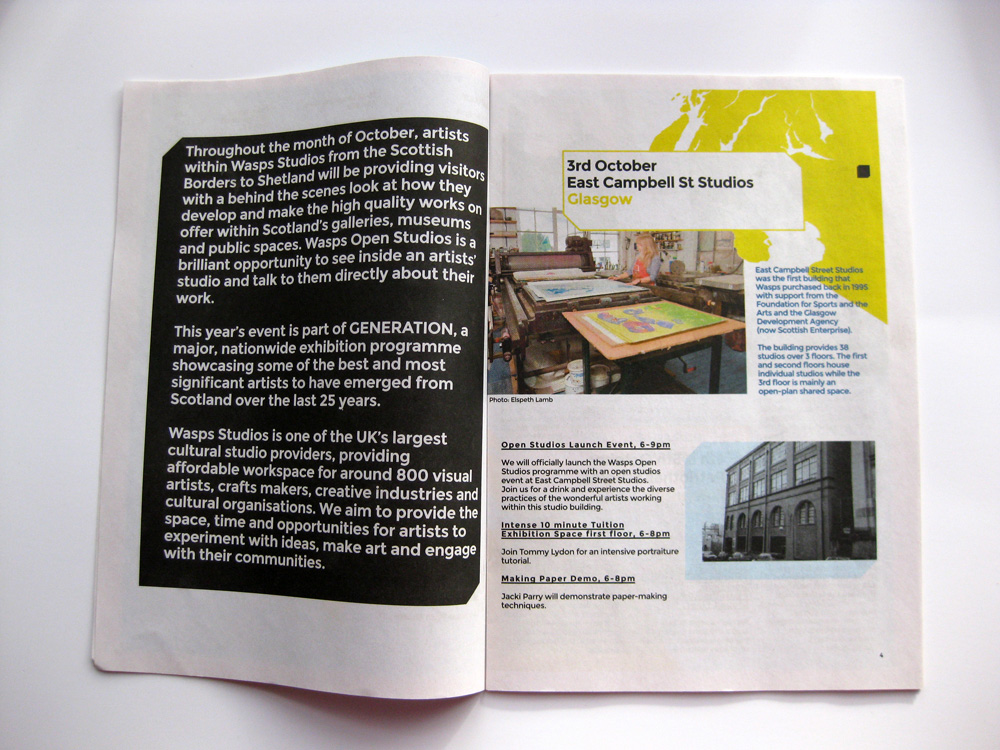
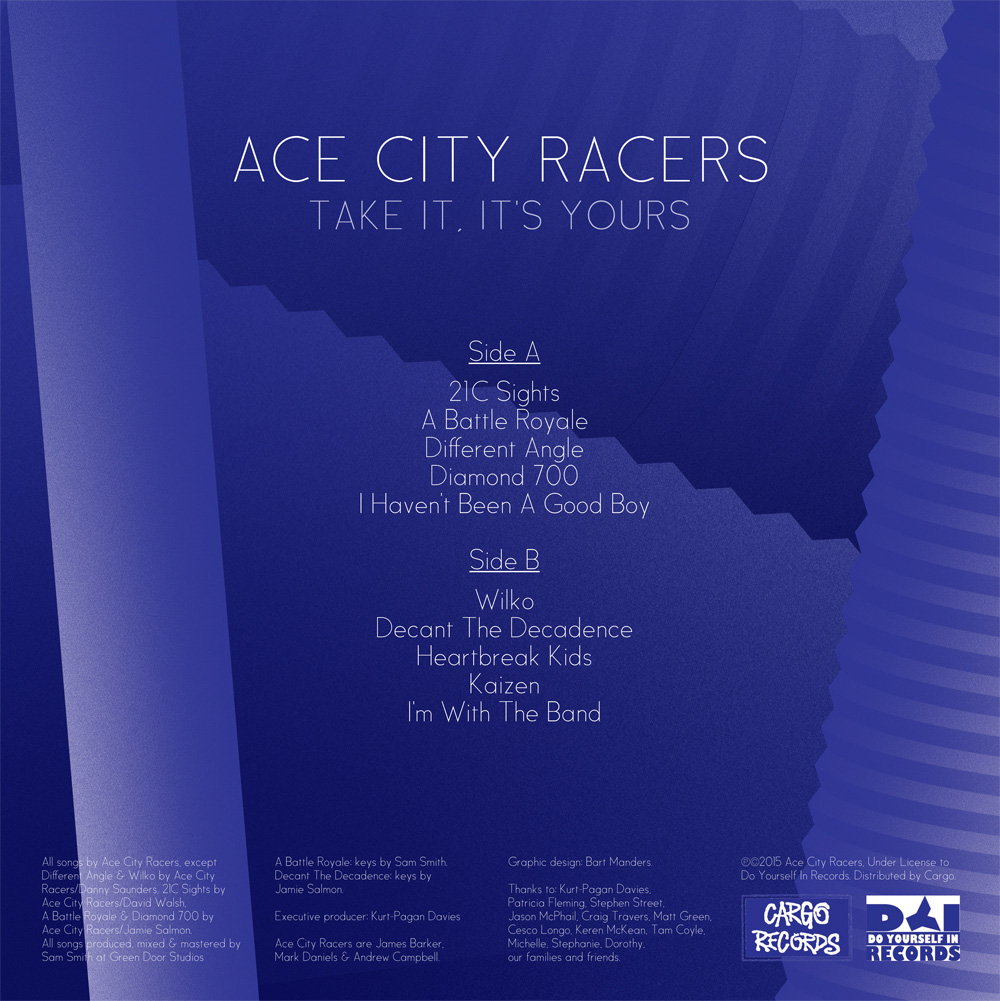
    In April 2014 I had sacrificed a stable income from a rather uninteresting retail job to free myself up for doing more freelance work. By the time it was Christmas, I had done projects for Glasgow University Magazine, an exhibition for Glasgow Open House Art Festival, a vinyl sleeve design for a local band and 2 projects for Wasps Studios. I had just started redeveloping The Telfer Gallery’s visual identity for its 2015 programme and I felt I needed to come across as a somewhat more settled designer instead of that designer who’s out and about doing jobs here and there. That’s when I decided to start working under a studio name, and after preparing for it for two months I launched Monochrome Lab last February.

    You’re from the Netherlands but live in Glasgow. Do you see any differences in design trends and aesthetics between these two places?

    Definitely, but I have to say that especially in the Netherlands it’s hard to define design trends. The very basis of good graphic design is to be able to organise and (re)structure information, to communicate. In the Netherlands I guess there isn’t a specific visual style, but more a way of thinking. It’s a place where the visual basics of graphic design are so established and common that on top of that graphic designers have become much more conceptual, finding intelligent ways to connect information to a certain context and experiment with images. In Glasgow I feel many design studios have only just started mastering the very basics over the past few years.

    Future-Positive-Monochrome-Lab-1

    What inspires your work? What other designers do you admire?

    I’m mainly inspired by designs with an innovative way of applying typography and white space, but I’m also very fond of really primary things like geometric shapes and illustrators. In art school I admired well respected designers such as Wim Crouwel, Experimental Jetset and Karel Martens but nowadays it has shifted more towards less known Rotterdam-based designers like Almost Modern and my old classmates at OONA.

    What are your plans with Monochrome Lab for the upcoming months?

    Well, I’ve just landed a long-term visual identity project with the Scottish Sculpture Workshop in Lumsden, Aberdeenshire and I’ve also just started a new collaboration with Wasps Studios which involves designing signage for a travelling project space. There is also a considerable Telfer Gallery workload as the size of it has slightly increased due to the higher standards for its printed materials this year. This year I’m also hoping to get involved in some publication design again, either as a self initiated project or as a freelance job. But as many independent designers can testify, one’s workload can unexpectedly increase as projects aren’t usually planned very far ahead.

    Future-Positive-Monochrome-Lab-4