Tag: ceramics

  • The Future of UK’s Independent Ceramic Industry

    The Future of UK’s Independent Ceramic Industry

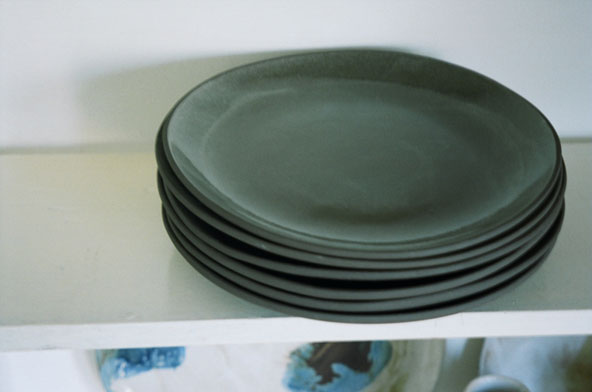
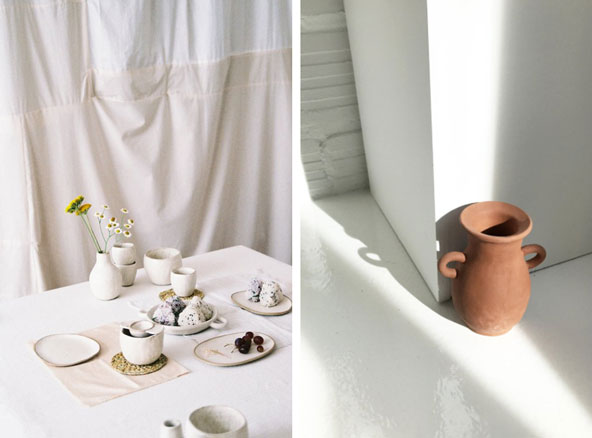
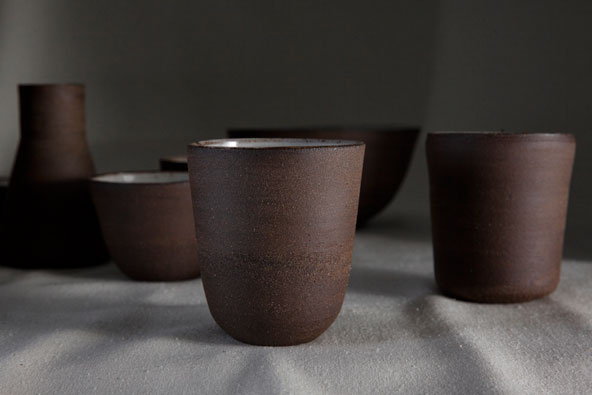
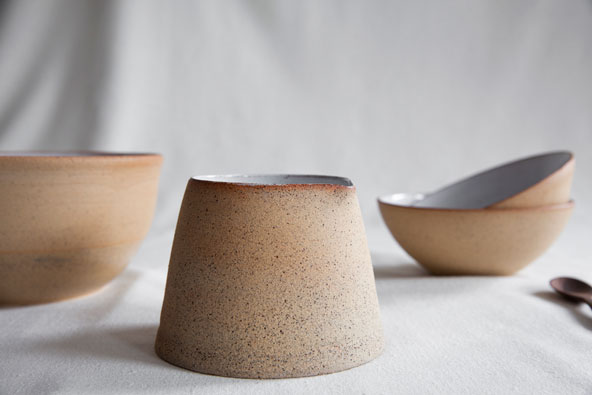
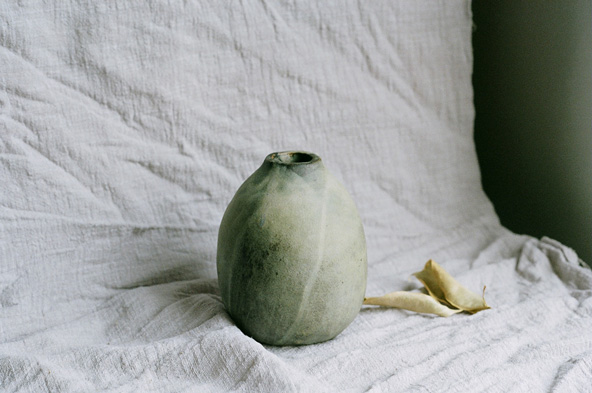
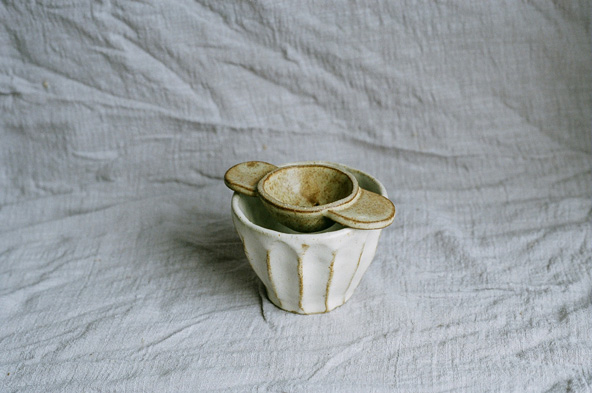
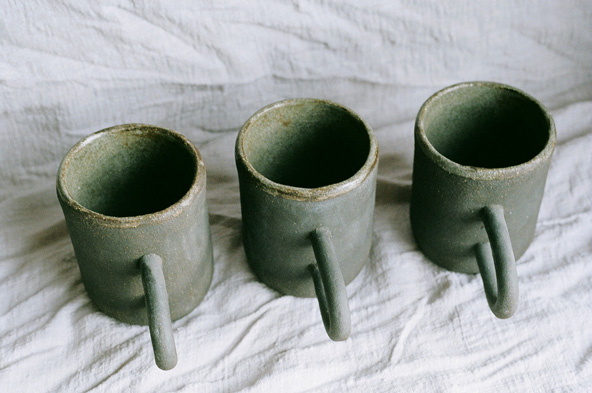
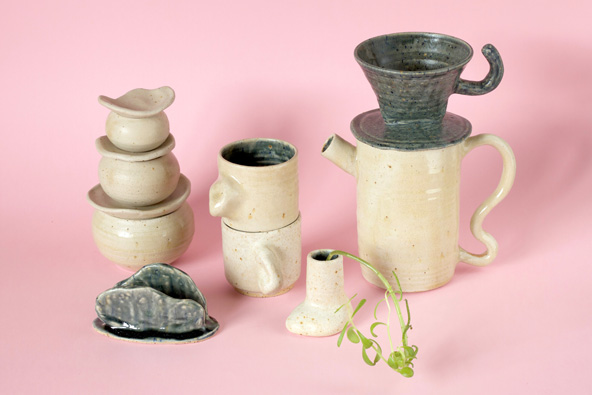
    The UK has always been associated with ceramics and pottery and, over the past few years, the country’s ceramic industry has gone through a revival thanks to independent makers and designers celebrating craftsmanship and using social media to connect with their customers. According to data, the sector grew 45% between 2009 and 2013, and since 2013 the employment in this industry has kept on increasing.

    To find out about the current situation and what’s next, we chatted with 4 ceramicists and potters across the country to hear their views and predictions.

    Olivia Fiddes

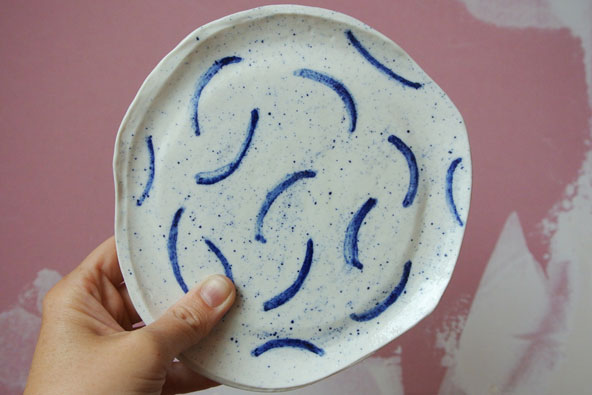
    Olivia Fiddes is a Scottish ceramic artist based in London that creates homeware and objects using hand building techniques. When asked about why ceramics have become so popular over the past years Olivia says “There’s clearly been a shift away from ‘fast-fashion’ and consumption to more support for local, ethical and traditional businesses. Even if you aren’t able to be a ‘maker’ yourself you can be involved in that lifestyle by supporting makers and by having these goods in your home. I think shops and businesses definitely see this and have looked to sourcing products from artists, designers and craftspeople who value quality and self-expression. As a customer there is nothing more special than a one-off or limited run product, which handmade ceramics tend to be.


    Photo by Olivia Fiddes

    For Olivia, this shift in the way we consume products is also influenced by the current financial situation, “We’re spending rather than saving our money more because houses and families are more distant. We’re willing to spend money enjoying our everyday and living in the present, whether that is on special tableware, a holiday or going out for meals.


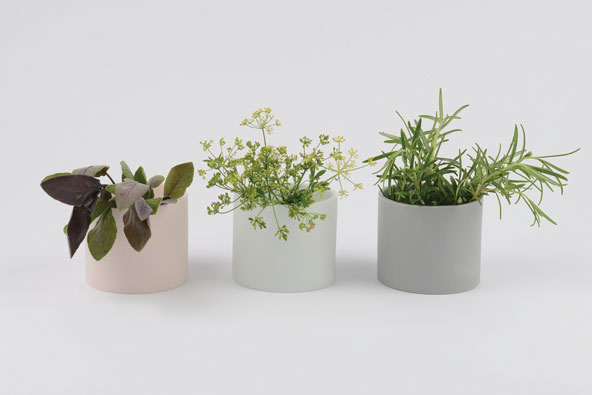
    Photo by Johanna Tagada / Photo by Association

    Ana Abellán

    Spanish ceramicist Ana Abellán started working with ceramics 5 years ago after moving to Edinburgh and attending an evening course for adults. Ana agrees with Olivia when it comes to the value of owning something special, “We all want to have unique things, things that have a meaning – I really believe in quality over quantity. I don’t want to have ten cups made with a machine somewhere in China, I’d rather have one handmade cup that has some kind of special energy“. The way we live right now has also influenced how we interact with things around us and Ana thinks that “Society has lost the connection with nature and beauty. I think we need to relearn how to slow down and appreciate the beauty inherent in simple things we have around us, although I am the first one on that list – I am always rushing everywhere trying to get too many things done.


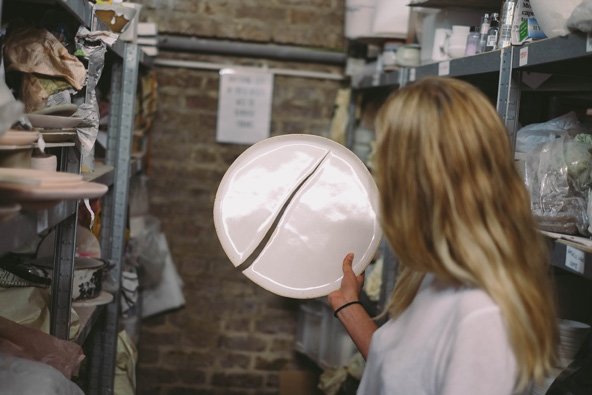
    Photo by David Guillen

    When asked about what ceramic artists need to do to supply customer needs in the near future Ana says that “Ceramic artists have done a great job over the last few years, promoting themselves, sharing more and making ceramics more attractive. Getting in touch with customers and listening to them is important, as well as being affordable but valued.


    Photo by David Guillen

    Home Thrown Studio

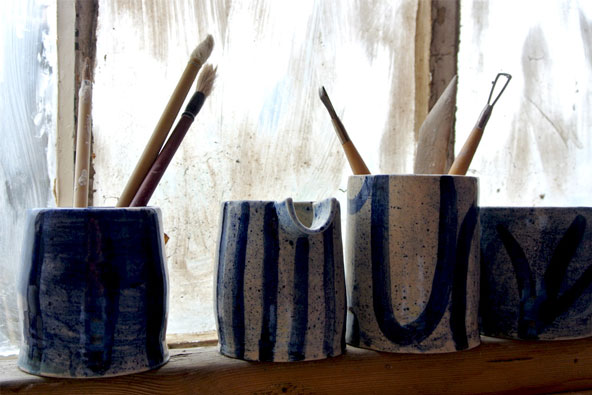
    Gem Mordle from Home Thrown Studio also got interested in ceramics after taking up an evening class when she moved to Dorset 8 years ago. For Gem, the recession has had a positive impact on consumer behaviour, “I’ve definitely seen a rise in appreciation for ceramics and everything and anything hand crafted over the last couple of years. People want to spend their money on objects or clothing that are hand made and have a sense of authenticity about them. Lots of my customers seem to really appreciate the personality of my wares and the fact they are all original and have a story. It’s also really nice to be able to meet customers face to face at local markets, as so much shopping is done online these days.


    Photo by Home Thrown Studio

    Despite oversees manufacturing and the easy access to cheap homeware, Gem feels positive about the current situation of the industry and its future, “I feel over the past years that ceramicists and potters are being put back on the map. There has been a bit of a revival with the Great British Throw Down, the Kickstarter campaign for The Clay College in Stoke and a handful of universities are starting up their ceramic courses again so I think we can be hopeful. I am inspired daily by the ceramic community on Instagram, and feel that social media is a great platform for contemporary potters to exhibit their work and keep in touch with their customers.


    Photo by Home Thrown Studio

    Natalie J Wood

    Scottish designer Natalie J Wood studied at Gray’s School of Art and felt attracted to ceramics due to its complexity and flexibility. For Natalie, social media has played a key role in the development of her businesses and educating customers about what’s behind a product, “It has helped me connect to new audiences. To promote events I’m linked with. I feel as a designer/maker Instagram has been a great platform for visual based work. You can instantly gauge what about your work people connect to the most. It challenges you in a way to create a larger story with your work. Now people want to understand more about behind the scenes and how making is a part of your life. In turn that gives the work more value because people can understand it on more than just a visual level.


    Photo by Sean Dooley
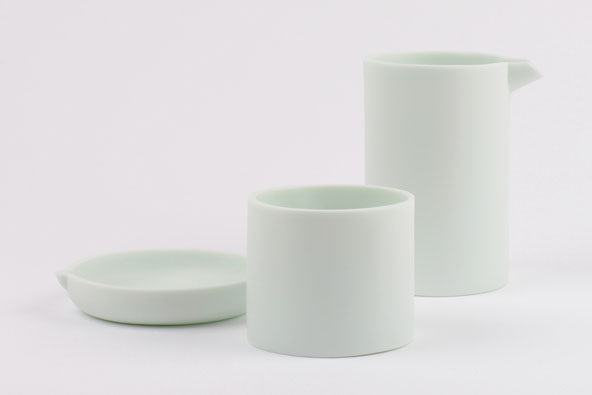
    Natalie considers function an important factor for current and future customers, “I think the industry is becoming more about micro manufacturing and independent brands. People are becoming more concerned about where the products they buy are coming from and having a story behind a piece makes it something special. I also think that in a backlash to throwaway culture our society is less about the ornate and there is a rise in the beauty of function. Objects that have purpose but also become decoration. I know I sell water carafes but a large number of people use them as vases, which I think is great! I’ve been a long time advocate of the William Morris quote ‘Have nothing in your house that you do not know to be useful, or believe to be beautiful.’ But I think now that use and beauty are becoming one and the same.


    Photo by Sean Dooley
  • Olivia Fiddes

    Olivia Fiddes

    Originally from Edinburgh, Olivia Fiddes makes ceramic objects and homeware from her studio in London. What makes Olivia’s pieces unique is that they’re solely made using meticulous hand building techniques. We chatted with Olivia to find out more about her interest in ceramics, her design process and future plans.

    www.oliviafiddes.com

    Product photos by Ben Seeley and studio photos by Alex McLuckie.

    Future-Positive-Olivia-Fiddes-1-Low

    When did you get interested in ceramics? Do you remember the first piece you ever made?

    My first experience of ceramics was during A Level Art, when our very optimistic teachers asked everyone in the year to make a life-size self-portrait bust out of clay. This had very mixed results. Mine was OK but didn’t look anything like me. My mum has it looking at you right when you walk into the house and puts tinsel on ‘my’ head at Christmas. Whilst this didn’t go amazingly, I loved the process and working with clay. A few years later I started pottery evening classes because of my interest in clay and it went from there.

    Future-Positive-Olivia-Fiddes-3-Low

    All of your pieces are handmade, please tell us a little bit more about this process and the different techniques you use.

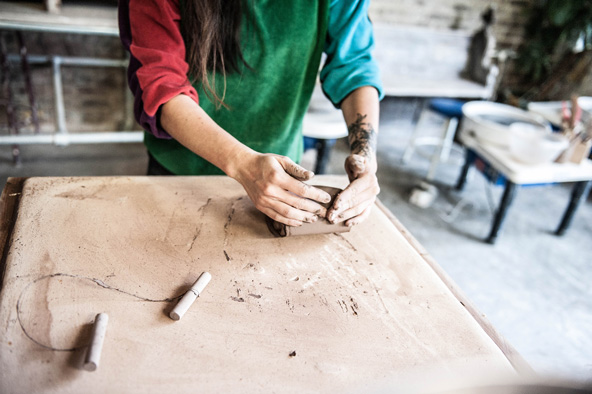
    Everything I make is ‘hand built’ which basically means, in pottery terms, that I don’t use a wheel, moulds, or slip cast. This is quite a traditional way of working as it requires very little equipment. I mainly use my hands and just some small tools. Some of the techniques I use are: coiling, slab building and pinching. These are techniques that you can be taught in a few evening classes but I suppose the hard bit is getting pieces how you want them, being neat, and making two pieces that look the same. It’s a slower method of working but I think it’s this that makes the pieces unique and more expressive. Everything is a one-off when it is hand built which I love.

    Future-Positive-Olivia-Fiddes-4-Low

    You use reclaimed clay to create your pieces, are there other measures you take to ensure your business is as sustainable as possible?

    It’s important to me that I don’t waste. Especially with clay, there is no excuse for it as you can always give it new life. That is why I use the reclaimed clay from the other ceramicists at my studio. The shared studio I’m a part of, Turning Earth, is very environmentally conscious, from the energy companies they use and the packaging we provide, so it works nicely.

    5% of the profits from each piece you sell go to Survival International, could you tell us a little bit about this organisation?

    It’s a charity I used to work for and have been very passionate about for years so I wanted to make it an in-built part of what I do. Survival campaigns for tribal (or indigenous) peoples’ rights which are often disrespected. I find it crazy that to this day tribal peoples are regarded as ‘primitive’ or ‘other’ when it simply isn’t the case. It’s these discriminatory attitudes that enable people, governments and companies to continuously take advantage of them and violate their human rights. Hopefully my spreading the word and contributing, even in a very small way, will mean one or two people will change their perception about tribal peoples. Please visit their website.

    Future-Positive-Olivia-Fiddes-2-Low

    Do you think there has been a change in the way people consume design in the recent years?

    I think being able to make your own website and online shop quite easily and cheaply has really changed the way people consume design. I think people are now much more likely to buy from independent designers or businesses because it’s much more common and trustworthy – which is great! Although, I think things like Pinterest and Instagram mean that massive waves of design and style trends sweep internationally now. You often see the same things over and over again but this is a good incentive to stay yourself and different.

    Future-Positive-Olivia-Fiddes-5-Low

    What are your plans for the upcoming months?

    I’ve got a lovely series of light coloured pieces coming out on Bonjour Supermarket, curated by Johanna Tagada. I’m so delighted to have been able to contribute to this beautiful shop. We’ve also got some new collaborative ideas up our sleeves.

    I will be going to LA for a couple of weeks at the end of the month for some work and a bit of lazing around! When I get back I’ll be exhibiting work as part London Design Festival (19th-24th September). My studio, Turning Earth, will be holding another incredible sale to coincide with the end of this on Sunday 25th September which I’ll be taking part in too. I hope you’ll join us!

    After this, I’ll be working on special ranges for some shops and also organising some hand building workshops which are due to start in October in London and Leicestershire. I’ll be posting info and dates for these on my website and Instagram soon. Come along and try your hand at ceramics yourself!

  • Small Bodies of the Solar System

    Small Bodies of the Solar System

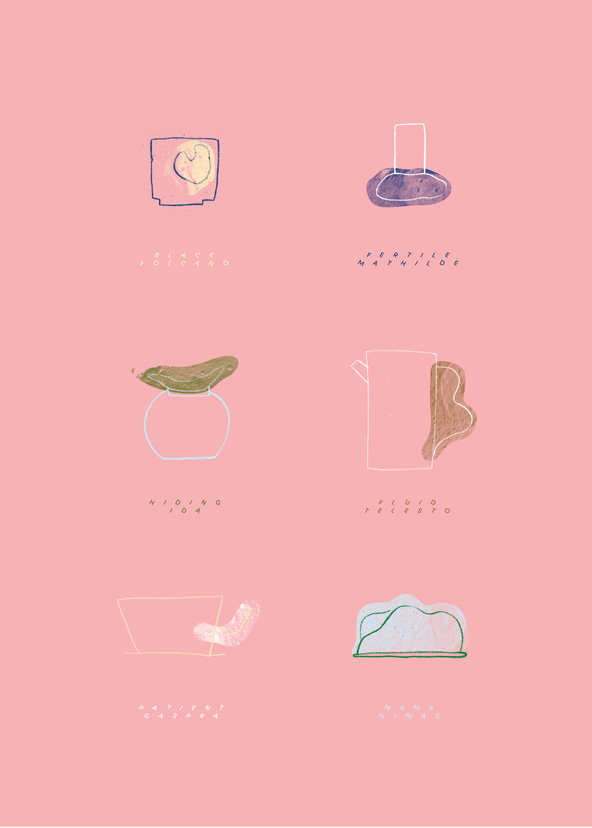
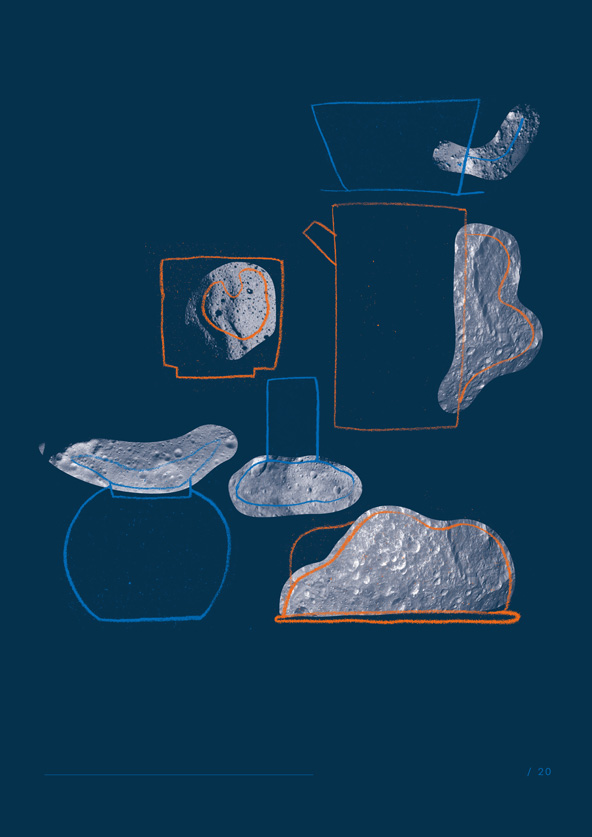
    We’ve talked about the work of Antwerp-based designer Stephanie Specht before here on our blog. She has now collaborated with artist and designer Lilit Asiryan and potter Thomas Salzer to create Small Bodies of the Solar System, a capsule collection of tableware and graphics inspired by fluid shapes and everyday functionality.

    The pieces reflect the creative clash of ideas between the three of them, mingling timeless craft with free artistry drawing inspiration from space and nature. All pieces are made using clay from Swedish soil, taking inspiration from the the shape of moons and asteroids present in the solar system.

    The mix of craft, art, graphics and illustration reflect the three artists’ creative heritage.  The collection includes jugs, cups, coffee pots, letter holders and posters, and every piece is one of a kind and produced in a very limited edition.

    Small Bodies of the Solar System will be presented at Studio Specht in Antwerp on June the 17th and the collection will be available to purchase on the website below.

    www.asiryan.com

    Future-Positive-Bodies-Solar-System-3-low Future-Positive-Bodies-Solar-System-4-low Future-Positive-Bodies-Solar-System-1-low Future-Positive-Bodies-Solar-System-5-low Future-Positive-Bodies-Solar-System-2-low

  • A R Ceramics

    A R Ceramics

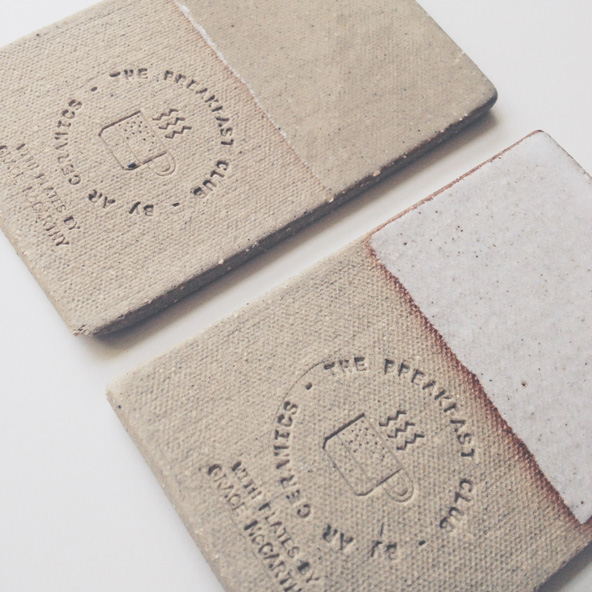
    A R Ceramics was founded by Andrea Roman, a Mexican product designer currently based in East London. Andrea’s pieces are hand thrown over the wheel and then trimmed, fired, glazed and fired again. We chatted with Andrea to find out more about what attracted her to ceramics, sources of inspiration and her ceramics subscription service The Breakfast Club.

    Studio images by Sabrina Dallot Seguro
    www.arceramics.co.uk

    Future-Positive-AR-Ceramics-1-low

    Could you please tell us a little bit about yourself and your background?

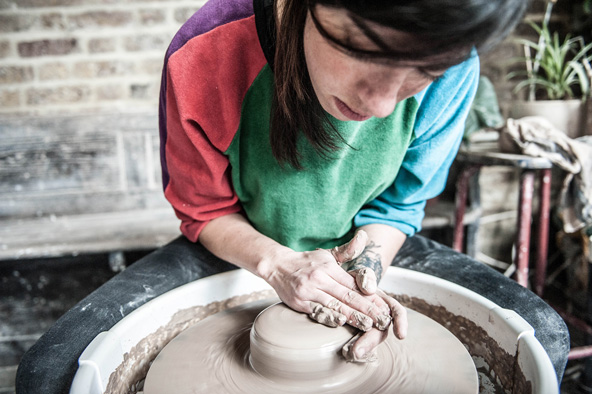
    I’m Mexican and I’ve lived in London since 2013. I studied Product Design specialising in Ceramics. When I arrived in London I found an amazing shared member studio called Turning Earth, there I learnt how to throw on the potters wheel and started experimenting with local clays and shapes.

    Future-Positive-AR-Ceramics-3-low

    What attracted you to ceramics?

    The ability to create something functional and durable in a short period of time and all the possibilities clay involves. I just find hand made objects much more meaningful, we live in the era of mass consumption and mass disposal, I think creating these meaningful objects help people to treasure their daily-use products for a longer time.

    Future-Positive-AR-Ceramics-5-low

    Where do you draw inspiration from to create your pieces?

    I like to play with textures, I love when my pieces become a resemblance of their ‘muddy’ origin: sand, rocks, dirt and mud.

    Future-Positive-AR-Ceramics-2-low

    Please tell us about The Breakfast Club Membership.

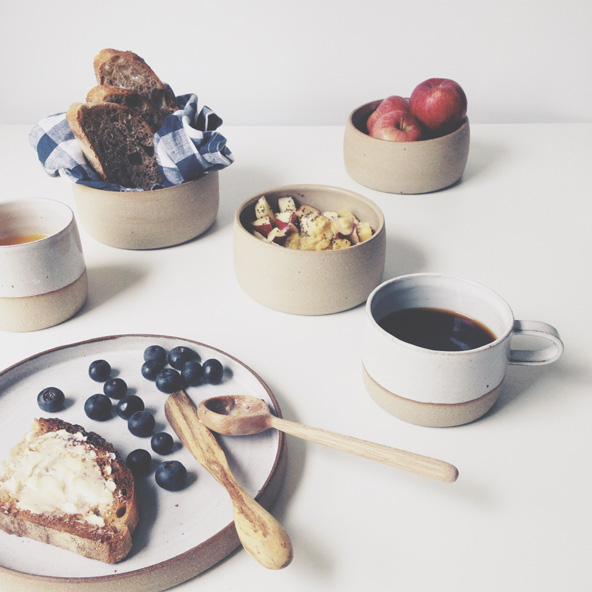
    I came up with this idea to offer people a more affordable way to get a hand-thrown table set. I consider it’s important to take the time to enjoy small details from everyday life and breakfast is one of those moments that people tend to skip or rush. I hope the set from The Breakfast Club inspires people to take it slow and share this moment with the ones they love, using these pieces on a daily basis, becoming part of their daily rituals.

    Sometimes ceramics can become really introspective and in a way it is a job that isolates you, so for the second edition of The Breakfast Club I decided to invite a very talented designer working in the same studio as I do, Grace McCarthy, to do a sort of collaboration and include her beautiful hand-thrown plates to the Breakfast Club collection. So far, it’s been definitely much more fun to work as a team.

    The entire table set consists of 16 pieces: 4 tumblers, 4 cups, 4 bowls and 4 flat plates. You pay £84 each month during a 4 month period. I plan to do it once every year, this year was the second edition actually. Each year there are only 6 memberships available, so in a sort of way it becomes a very special way of purchasing something and creating a close relationship between maker and customer.

    Future-Positive-AR-Ceramics-4-low

    What other projects are you working on at the moment?

    Small commissions for wedding presents, throwing new pieces for my stockists, and on a very exciting project. I’ve been commissioned to develop a dinner set for 12 people that bends into an architectural residence project in Whistler, Canada. The project is fascinating, the site had a big rock in it, instead of destroying the rock to start building the house, the architects decided to leave the rock and develop the design around it, making the rock the main appeal. I’m now in the process of developing the correct clay shades and textures for this project and I’ll start soon the next stage which will be the developing of shapes. Can’t wait!

    Future-Positive-AR-Ceramics-6-low

  • Ann Linnemann Studio Gallery

    Ann Linnemann Studio Gallery

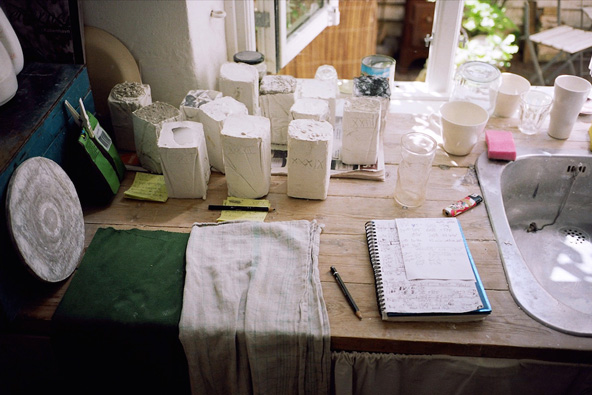
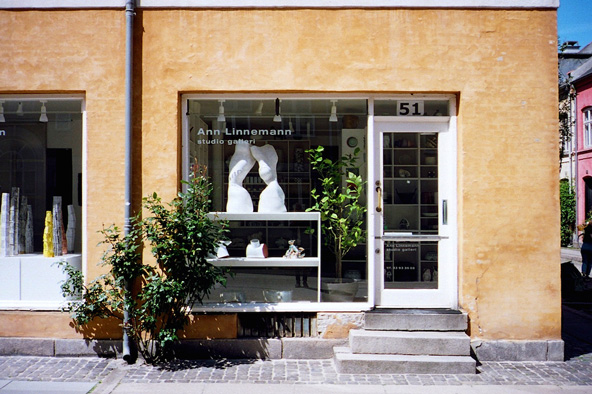
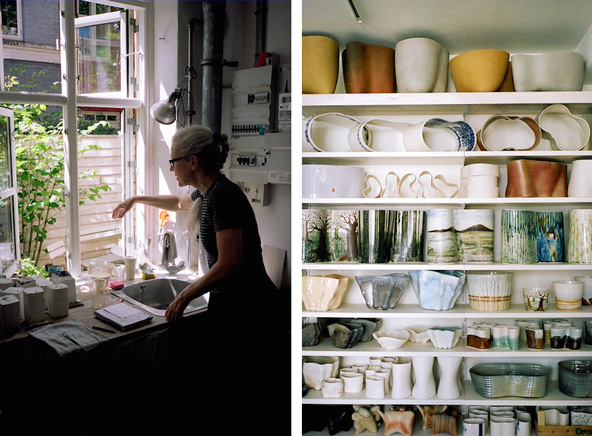
    Ann Linnemann is a Danish ceramic artist and gallerist producing both functional homeware and sculptural work. From her studio and gallery space in Copenhagen, Ann works on her own pieces and exhibits work by ceramic artists from around the world.

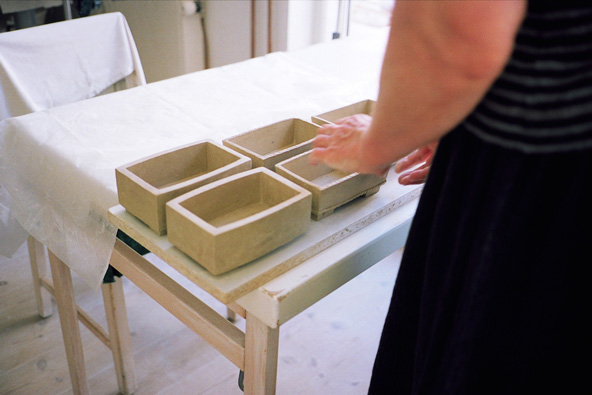
    Educated at Denmark’s Design School, Ann describers her work as ‘hand-thrown table ware, vessels and sculptural forms based on conceptual ideas’. Ann’s design process is centred around the symbiosis between idea, function, form and material, and her pieces are often altered from a round basic model to an asymmetric form.

    In her gallery space, Ann curates the work of international artists as part of a permanent collection which is exhibited alongside temporary shows featuring pieces by exciting contemporary ceramic designers and artists.

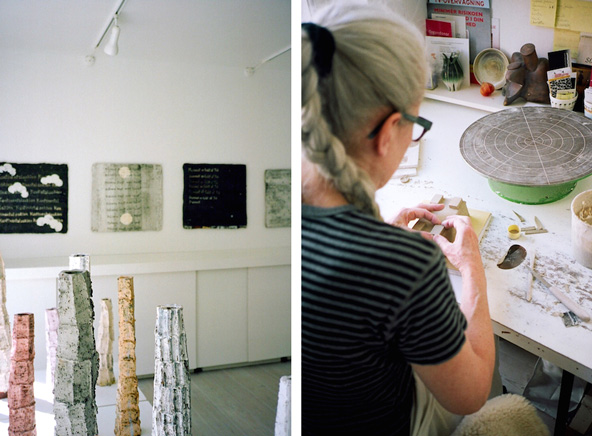
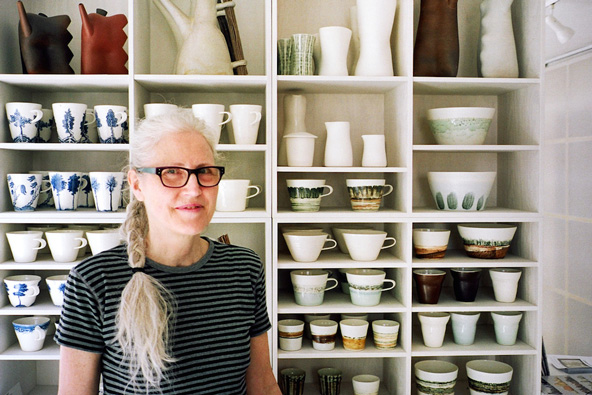
    Our contributing photographer Benjamin Evans visited Ann’s gallery and studio on his recent trip to Copenhagen and shared his images with us.

    www.annlinnemann-english.blogspot.co.uk

    Photos by Benjamin Evans.

    Future-Positive-Ann-Linnemann-1 Future-Positive-Ann-Linnemann-5 Future-Positive-Ann-Linnemann-2 Future-Positive-Ann-Linnemann-3 Future-Positive-Ann-Linnemann-6 Future-Positive-Ann-Linnemann-4