Tag: business

  • Why Business Strategy and Payment Strategy Can No Longer Be Separated

    Why Business Strategy and Payment Strategy Can No Longer Be Separated

    For years, it was the norm for companies to treat payments like an afterthought at the bottom of the customer experience funnel; first, the product is built, then the offer is shaped, win the customer, and lastly – we figure out how to get paid.

    That division no longer holds up.

    Today, payment strategies are part of business strategies. It has an enormous impact on whether customers complete their purchase, whether they trust you with their information, whether they will continue to support your business, and whether you can smoothly grow into new markets. Payments are no longer simply a financial or technical challenge. Payments have a direct effect on your commercial success.

    Via Unsplash

    Payments Are Part of the Customer Experience

    Business owners often spend weeks refining websites, messaging, pricing, and onboarding. Then the customer reaches checkout and hits friction: a preferred payment method is missing, the page feels clunky, or the transaction fails for no obvious reason.

    That is not a small issue. It is part of the customer experience.

    As far as customers are concerned, there is no separation between the promises made by your company and the payment options presented. To them, these two things make up the overall journey. So if making a purchase is muddled due to difficult payments, trust will drop quickly. A decline at the credit card processor, a poorly designed form that asks for unnecessary information, and a redirect to another website unexpectedly can all be enough to destroy the confidence in your company that was established through all the other interactions.

    A lot of businesses miss this because payment problems often show up as abandoned carts, support tickets, or quiet churn. They do not always get labeled as strategy issues. But they are.

    Different Payment Methods Support Different Strategic Goals

    Payment strategy becomes more useful when you stop treating every method as interchangeable. Different options solve different business problems.

    Cards are still essential because customers are familiar with them. Digital wallets can speed up mobile checkout and reduce drop-off. Bank transfers or account-to-account payments can lower costs and improve settlement in some markets. For subscription businesses, the real priority may be reducing failed renewals and recovering revenue before churn happens.

    Some businesses need more specialized support. Adult businesses, gaming platforms, CBD sellers, travel companies, and high-chargeback subscription models are often seen as higher risk by banks and processors because they face more fraud exposure, refunds, chargebacks, or regulatory scrutiny. In those cases, a specialist provider such as adult payment processing from Humboldt can be a practical fit. The value is not just access to processing, but a setup better designed for the compliance, underwriting, and approval challenges those businesses face.

    Payment Problems Affect More Than Checkout Completion

    A poorly implemented payment process has far-reaching consequences for a business. Recurring revenue will be negatively affected. Conversion rates with particular segments of customers will drop if there are limited payment options. Poor cross-border performance will cause potential expansion efforts to look weak. Support teams end up handling avoidable payment complaints. Finance teams spend extra time reconciling issues that should have been automated in the first place.

    Businesses tend to overlook the fact that payment friction does not just cost you sales. It affects retention, operating efficiency, forecasting, and customer trust.

    Growth Gets Harder When Payments Are Treated as an Afterthought

    As a company grows, the cracks begin to show. New markets, new billing models, and new customer expectations all put pressure on the payment layer. What once looked “good enough” starts holding back performance.

    Your business strategy must include a well-designed payment strategy from the beginning because a good payment strategy directly impacts whether or not your overall business strategy is successful.

    Your business’s payment strategy cannot exist independently. It will impact the customer experience. It will affect conversions. It will protect your recurring revenue. It will help make future growth more sustainable.

    Businesses that recognize this issue early on are able to make informed decisions faster. These businesses will not treat payments as simply another administrative function behind the scenes. They’ll see their payments as part of how the business builds trust, removes friction, and operates.


  • Act

    Act

    Act is an espadrilles and accessories brand based between Mallorca and Berlin founded by Isabel Rotger and Alex Drobovolny in 2013. After working in communication for several fashion companies, Isabel moved to Berlin and met Alex, CEO of Label Agent. They came up with the idea of Act on a Friday afternoon and the week after, they were already looking for manufacturers for their first collection.

    Act is born out of the Mediterranean and each of the brand’s collections is designed around a concept of an everyday, spontaneous act, using series instead of seasons. In 2014, Act launched their first series “Walking” and in 2015 the brand has focused on “Living Room” as the topic for their collection. Act’s great attention to detail not only shows on their products, hand-made in Spain using 100% natural leather and suede, but on the campaigns for their series and the design of their website and promotional materials.

    Isabel and Alex have just embarked on their next adventure and have started collaborating on the design of their first sunglasses collection and a line of sweaters that will see the light later this year.

    www.act-series.com

    Future-Positive-Act-2 Future-Positive-Act-3 Future-Positive-Act-1 Future-Positive-Act-4 Future-Positive-Act-5 Future-Positive-Act-6 Future-Positive-Act-7

    Studio photographs by Alex Marcús

  • Make your Mark: the Creative’s Guide to Building a Business with Impact

    Make your Mark: the Creative’s Guide to Building a Business with Impact

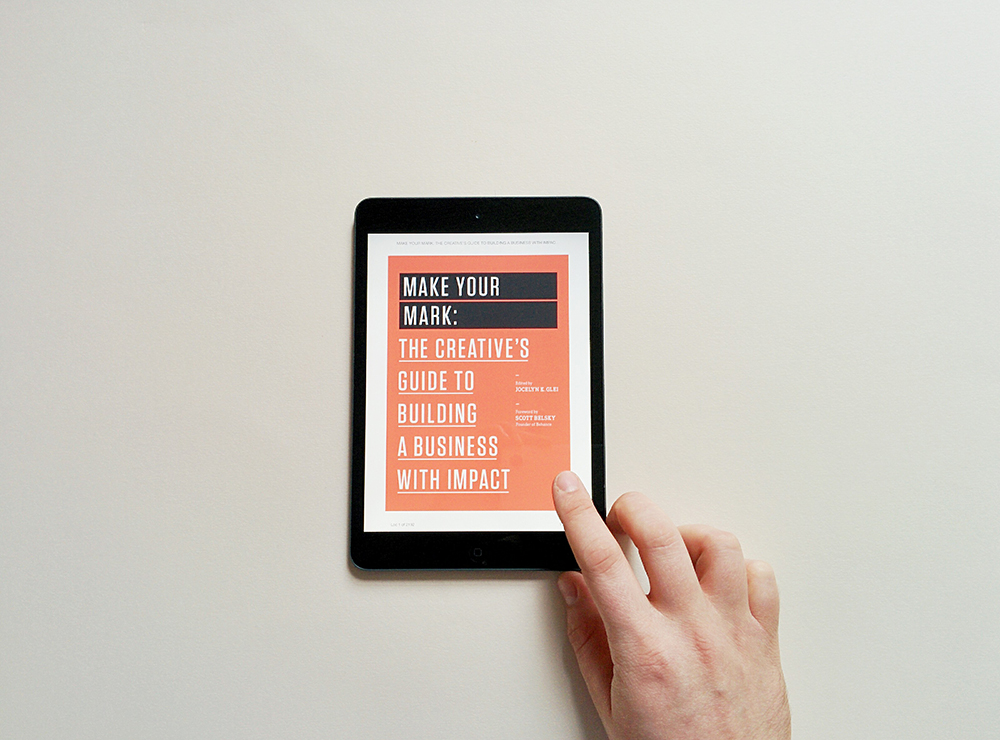
    We follow 99U by Behance religiously – it’s an award winning online magazine, an annual conference and a series of books, all providing insights on creativity and how to make your ideas happen.

    Make your Mark: the Creative’s Guide to Building a Business with Impact is the latest title from the ongoing 99U book series in which entrepreneurs and designers behind some of the world’s most known companies – such as Google, Facebook or Buffer – share their knowledge about starting up and “making a dent in the universe”.

    As you may know, we’ve recently launched Future Positive Studio, the digital and creative consultancy arm of Future Positive, and Make Your Mark is an integral part of our start up journey. Beautifully designed and described as “a business book for makers, not managers”, this title is a collection of short essays full of actionable inspiration and examples on how to build a successful and creative business or project. A motivating, quick to read book, full of transferable concepts which can be used both in setting up a business and everyday situations.

    99u.com

    Make-Your-Mark

  • The Monocle Guide to Good Business

    The Monocle Guide to Good Business

    We are big fans of Monocle Magazine and their Monocle Radio shows. Founded in 2007 by Tyler Brûlé, also the founder of Wallpaper magazine, Monocle provides opinions on business, culture, fashion, design and international affairs.

    A year ago, together with German publisher Gestalten, Monocle published its first book – The Monocle Guide to Better Living. The Monocle Guide to Good Business is the second book in the series that has just hit the shelves.

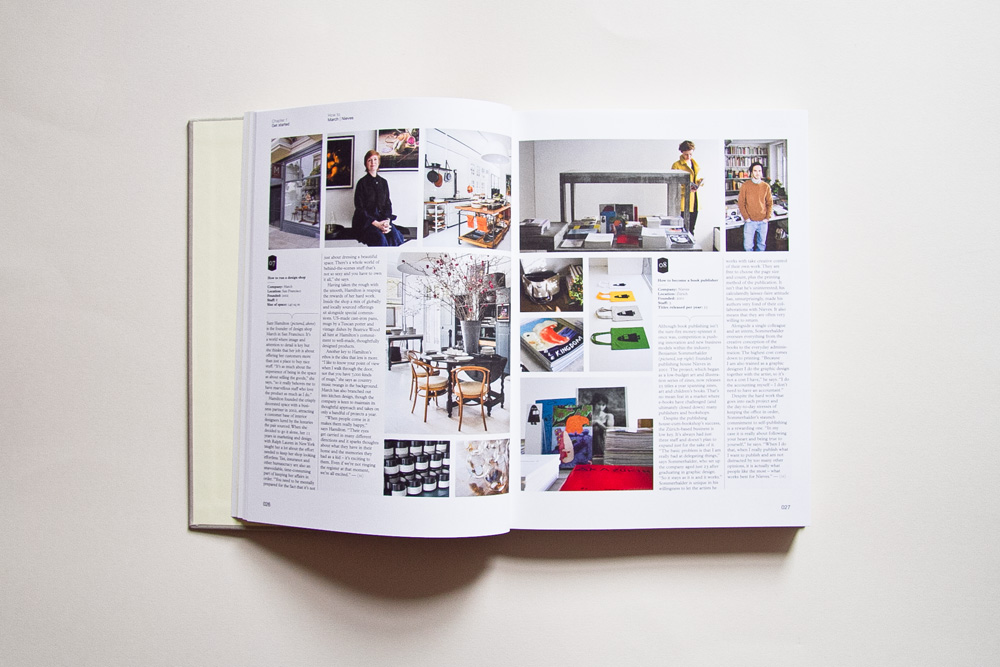
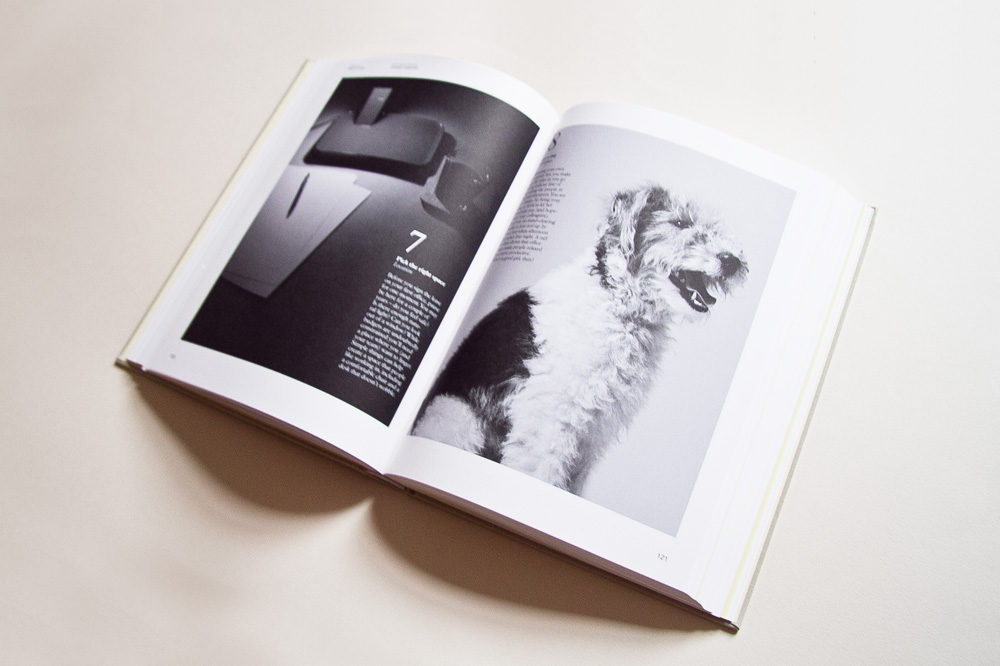
    The book takes you on a journey from getting started and creating a brand to advice on how to manage your employees and even decorate your office. Whether you’re about to start a new business or just daydreaming about it, The Monocle Guide to Good Business is a great source of advice and inspiration. Each page is full of beautiful photography and illustrations, as well as mini essays introducing each aspect of being an entrepreneur. As told by Tyler Brûlé in the foreword – “the best way to be inspired and stay on top of your game is to get out in the world and observe the people who are doing it best”.

    www.book.monocle.com

    Future-Positive-Monocle-Guide-Good-Business-1 Future-Positive-Monocle-Guide-Good-Business-3 Future-Positive-Monocle-Guide-Good-Business-2 Future-Positive-Monocle-Guide-Good-Business-4

  • Bookshelf: Métier, Small Businesses in London

    Bookshelf: Métier, Small Businesses in London

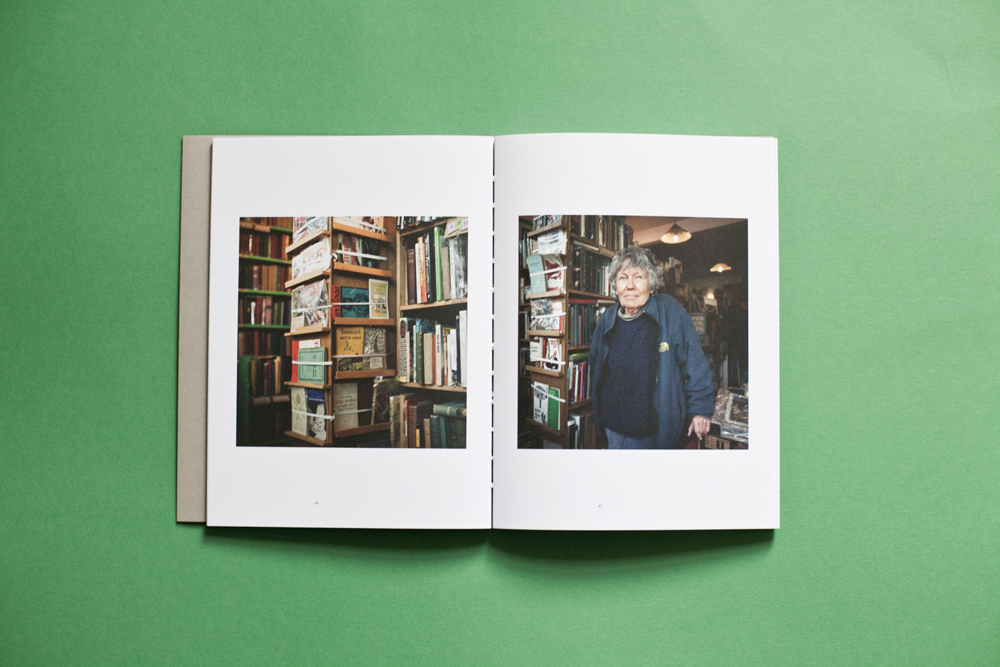
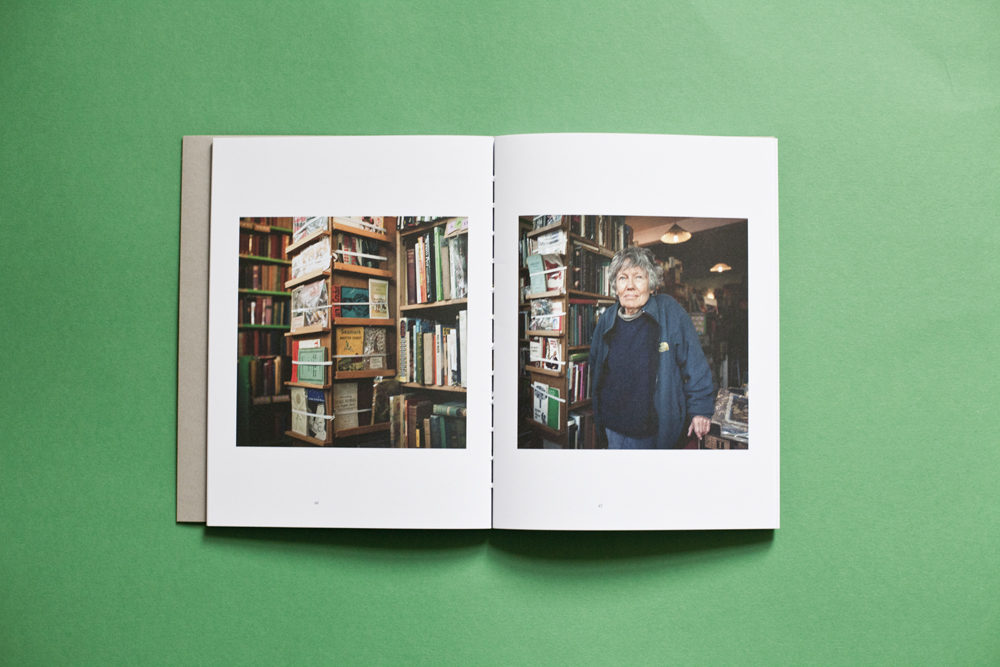
    Métier, Small Businesses in London, is a book by Laura Braun about small-scale independent and specialist businesses in the capital and the people who run them. In a time when the high streets of London are taking on a more and more corporate character, this book offers an unusual and interesting perspective on the city and an insight into the working lives of people who strongly identify with their occupation.

    The book was published by Paper Tigers Books – an independent publisher of limited edition artists’ books also founded by Laura in 2011.

    Read on for our short interview with Laura where she tell us about the process of creating Métier and what interested her in small businesses in the first place.

    The book was 6 years in the making – could you please tell us about the process of creating Métier? 

    LB: I started the project in 2007 really not thinking that I’d be working on it for 6 years. I wanted to add some more portraits to my portfolio and on the look-out for interesting sitters I stumbled upon this project about small businesses and the often very passionate and a little eccentric people who run them. Early on in the project The Photographers’ Gallery in London commissioned me to photograph a few businesses in Soho as part of their Soho projects when they were moving the gallery from Covent Garden to Soho. Those photographs became part of Métier as well and over the years I just kept adding to the project slowly whenever I came across another interesting business. I never set out to create any kind of index of London businesses. I found them all by chance, by walking around, through recommendations from friends and people who knew about my project and quite a few just because I needed their products or services. So the selection in the book is very personal. It’s to do with my interests and the parts of the city that I move around in my daily life.

    What interested you in independent businesses and their owners?

    LB: I spent a bit of time with each of the people in the book. I got to know them a little and heard how they ended up doing what they do. I don’t want to romanticise them. Their day to day lives are often difficult and of course also very mundane. Nonetheless for the most part they have a strong personal connection to the work they do. Their biographies are very closely intertwined with their profession or their business. The people are shaped by their work and the work and workplaces are shaped by the people in a way that is more and more the exception in our current corporate consumer landscape. The people running such small businesses have knowledge and often manual skills which you don’t find in employees of many large companies who are just much less personally invested in their work.

    Again, without disregarding the down sides of running a small business on one’s own, over all, how the people in this book engage with their work, seems to me in many ways preferable to the kind of career focus that is common in a more corporate environment.

    Also I think this small commerce, where a real exchange takes place, is really important for the life of this city, London, – and by extension any other place where people live. It’s what distinguishes one street from another, one area from another… I wanted to show and celebrate this.

    Métier – Small businesses in London is available directly from the publisher as a numbered edition of 500 for £18.

    www.papertigersbooks.com