Tag: art

  • Mairi Timoney

    Mairi Timoney

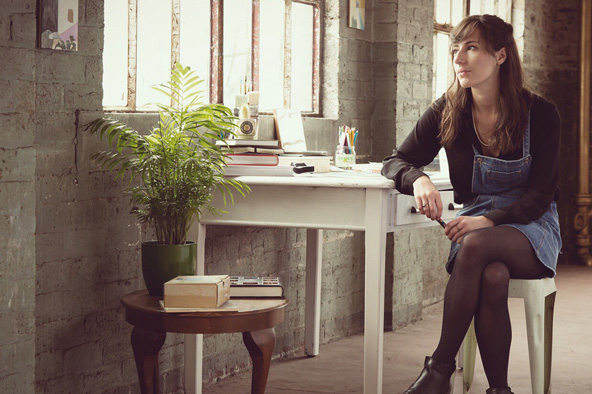
    Mairi Timoney is an artist working and living in Edinburgh. Her work is inspired by architecture, interiors and landscapes, and has been shown in The Whitechapel Gallery in London, The National Gallery of Modern Art and The Royal Scottish Academy in Edinburgh. We chatted with Mairi to find out more about how she first got interested in art, the common elements in her work and the projects she’s currently working on.

    www.mairitimoney.com

    Can you introduce yourself and tell us a little bit about your background and education?

    My name is Mairi, I’m a Scottish Artist currently living and working in Edinburgh. I studied Painting and then continued to study a Masters in Graphic Design at Edinburgh College of Art. My work takes a lot of elements from both disciplines and since graduating I have continued to develop my practice and personal style.

    Do you remember the first artwork you created?

    I remember drawing my dream house when I was about 5. I’m not sure if I’d really call it a piece of artwork but it’s definitely my first memory of loving to make and draw.

    How do you describe your work? What are some of the common elements we can find in your pieces?

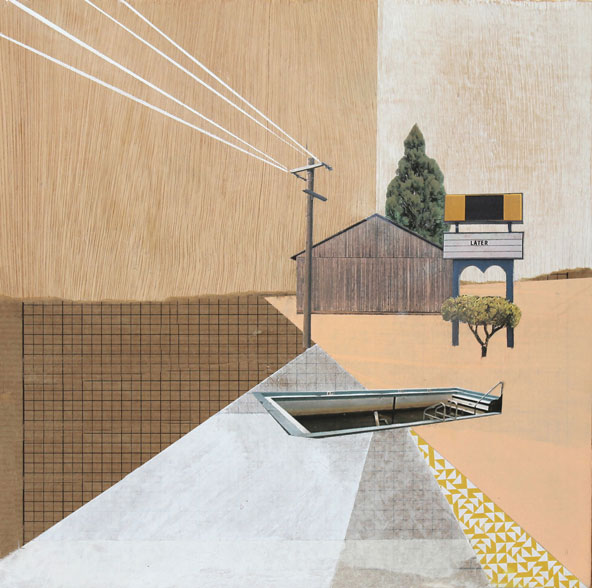
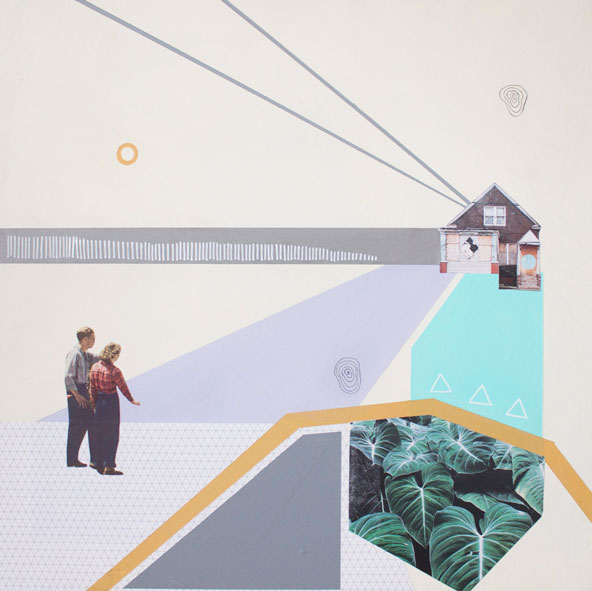
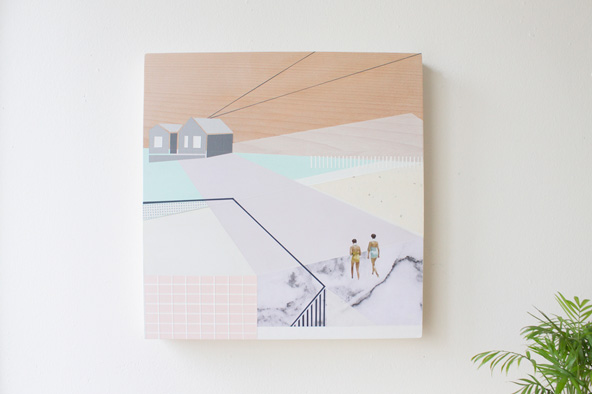
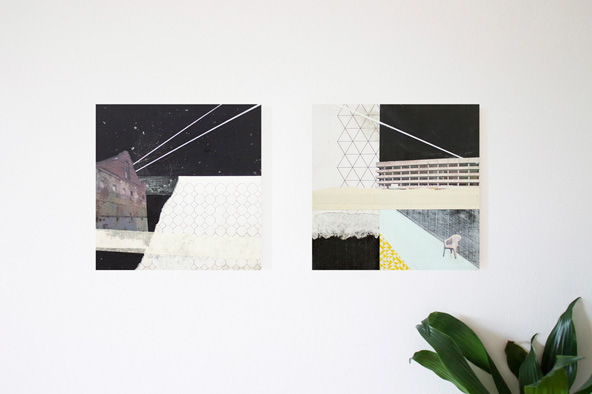
    Within my practice I mainly focus on making multi media images that portray fictional places and scenes that I build through a mixture of collage and painting. I like to collect imagery and materials from various sources to piece together visuals which are both aesthetically and compositionally engaging. I also enjoy juxtaposing different media to consider surface, space, pattern and colour whilst the overlaying imagery allows me to explore my interest in place and narrative. The fragmented landscapes which appear in my work come from an attraction to unfamiliar surroundings, quiet landscapes, architecture and the lives and stories of the people that inhabit these spaces.

    Where do you draw inspiration from?

    I’m always inspired by architecture, interiors and landscapes that I see in day to day life or when I travel. The structures and colour combinations give me ideas to include in new pieces and I always try to take photographs that I can use later. I also find creative blogs and magazines really useful for finding inspiring new projects, as well as being able to look at the work of my favourite artists and designers too.

    What are some of the projects you’re working on?

    I recently started a year long Artist in Residence position based in a school in Edinburgh called George Watson’s College. Here I will have the opportunity to run workshops and teach pupils in the Art & Design department whilst also having time to focus on my own practice. I am provided with materials and a new studio space to work in and I plan to spend my time developing a body of work which I will exhibit in a solo show next July.

  • Peony Gent

    Peony Gent

    Peony Gent is a freelance multimedia illustrator currently based in London, specialising in visual poetry and observational drawing. Working across different media – from comics to ceramics – Peony likes to keep a sense of play in her work, whilst maintaining her practice fluid and always open to change. We chatted with Peony to find out more about her education, her favourite projects and plans for the upcoming months.

    www.peonygent.com
    Can you introduce yourself and tell us about your education?

    Originally from Cambridgeshire I’ve lived in Edinburgh for the past five years, where I completed an undergrad at the Edinburgh College of Art. After a year out of education I’ve recently moved to London, where I’m just starting a two-year master’s in Visual Communication at the RCA here.

    How would you describe your illustrations?

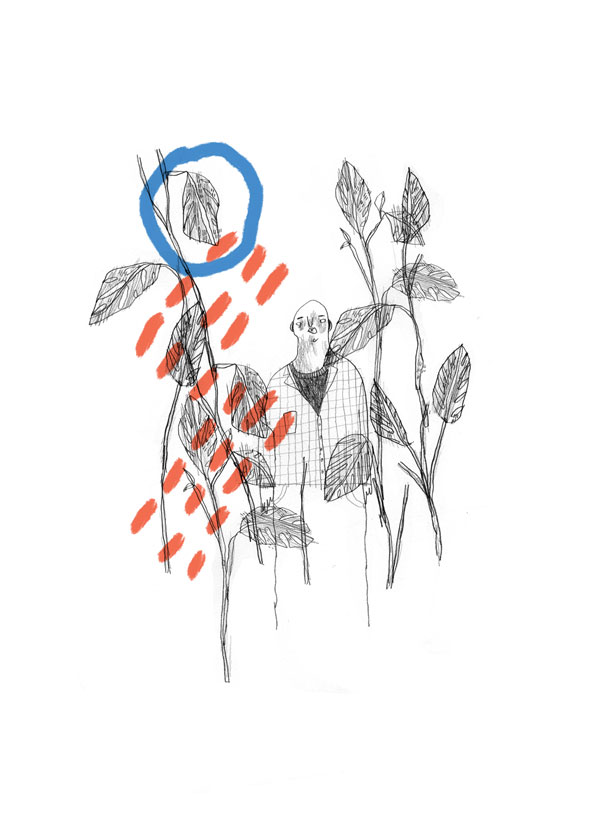
    Describing my own work is something I’ve never been quite good at, even though I really should have gotten used to it by now. I do like to keep my practice really varied though, and enjoy doing a wide selection of jobs, from bold commercial designs to contemplative visual poetry. I would say, however, that my main love in illustration is the visual narrative/comics making side, and it’s definitely the most personal work I create. The interplay between word and image is really important to me in those projects, and the writing is just as valuable as my drawings to me there.

    In terms of a consistent visual style though, I mainly work in just pencils and then edit and add colour to my work digitally in Photoshop. That organic hand drawn element is very valuable to me, so even though I could just do a lot of my sketches directly on a tablet, I still like to keep it in a sketchbook first. I feel it stays a bit more free and fluid that way.

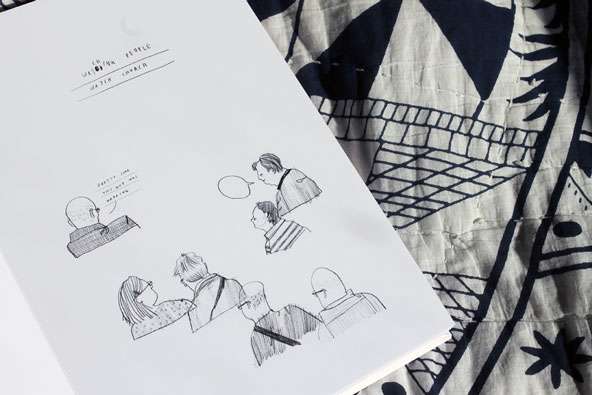
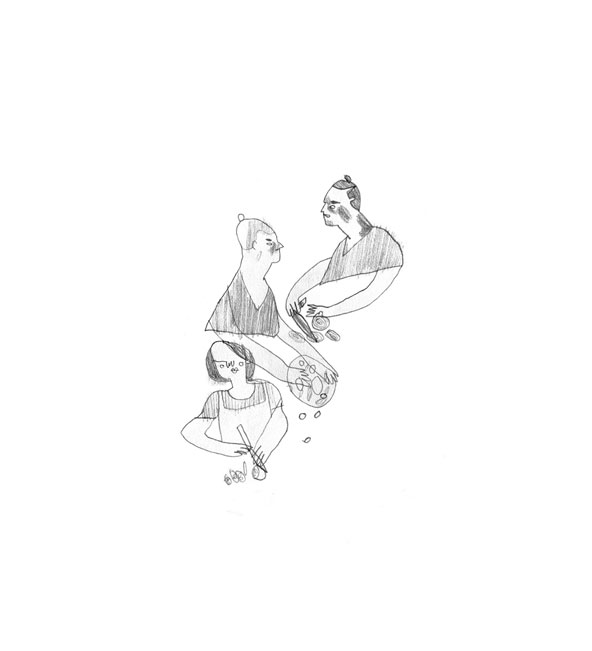
    A large part of my illustration style is about trying to capture a sense of place and/or character without just directly copying the subject, if that makes sense. A photo-realistic drawing that just copies a subjects appearance without showing any of its energy simply isn’t for me. To that end I often create a lot of my work by quickly redrawing the same subject over and over, until I feel like one has really captured the energy I’m searching for. I always keep a sketchbook with me for these observational drawings, and try to use it as often as I can. Often, I’d say around 70% of these drawings turn out like total trash, but it’s still worth it for the ones that do turn out well. I’ll also often return to drawings from those sketchbooks that I did weeks or months ago and find something valuable there that I hadn’t originally seen or needed.
    You work across different formats, can you tell us a little bit about each of them?

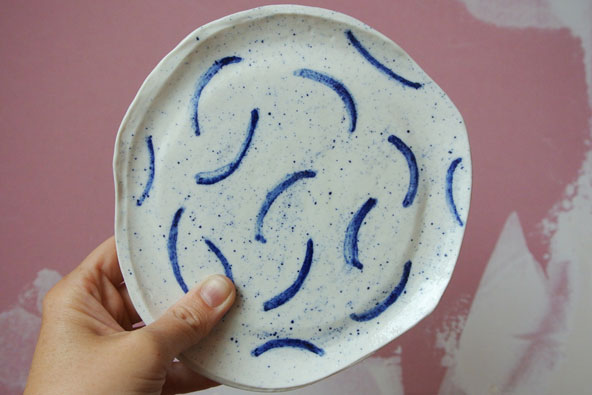
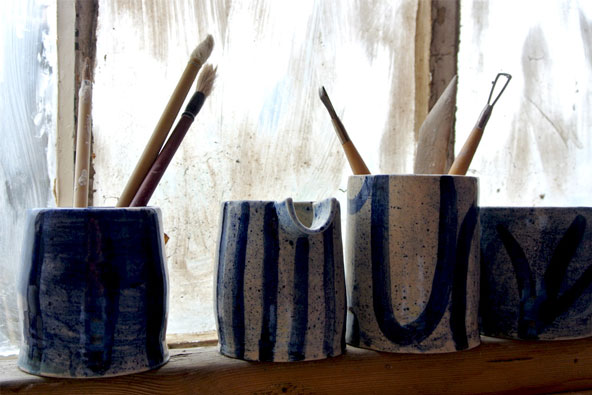
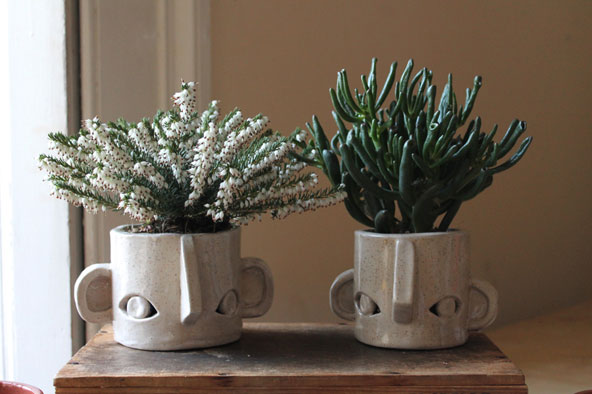
    Whilst pencil drawings are the most common medium I use, I do really love to experiment and have recently got really into ceramics. In contrast to typical illustration work, it’s nice that you don’t have to worry about deeper meanings or anything, you can just concentrate on making something aesthetically pleasing. I’d love to work on a more cohesive range this year and ideally get a space with a wheel to cut down on production times. In the past all my ceramics have been made very informally in my room without any proper equipment or tools, and I’d like to learn a lot more about glazing and different clays as well.

    And whilst I enjoyed printmaking at uni it’s been difficult to access any facilities since leaving ECA, but I have kept up making some risograph prints. It’s been the only way for me to print large runs fairly cheaply and I do like that organic texture and ability to layer colours that risograph printers give. I’ll often take bits of other projects and transfer them into these prints, rather than sitting down with the direct intention to design a new one from scratch.
    What are some of your favourite projects you’ve worked on?

    The ones I value the most have to be my own comics and poetry projects, they’re the ones that always take me the longest to do and they’re definitely the most personal. It really means a lot to me when those stories strike a chord with people, and some of the responses I’ve had to them have been honestly very touching. With each new one I make there’s always an element of fear: that I’ve put too much of myself into a piece of work or made myself too vulnerable.

    On the other hand I also enjoy the pay off of making ceramics, it’s just very pleasing to be able to use things you’ve made yourself for everyday practical purposes. Especially when so many illustrations I make only exist digitally in their finished form – it’s a nice balance to have physical results of things you’ve made.

    I was also lucky enough to be one of It’s Nice That’s 2016 graduates and really appreciated the opportunities I got through that. In particular, each of the grads that year got the chance to make a book in collaboration with GF Smith papers and it’s still easily the nicest thing I own with my illustrations in it. I made mine as a kind of formal presentation of my sketchbooks and it’s a collection of my photography, drawings and writings from the two previous years.
    What are your plans for the upcoming months?

    Mainly settling into London! I’ve honestly only ever lived in Cambridgeshire where I grew up or in Edinburgh, so it’s an exciting change to live somewhere new and see what opportunities there are here. I’ve also been working on my very first long form comic and hope to make some good headway on it before Christmas, at least. Having only made short self-published zines before this is a big change for me, especially since I’m usually so bad at committing to one theme or idea long enough to carry it through to the end. It is still very much in the early stages though, so we’ll have to see how it goes…
  • The Jaunt, art and travel

    The Jaunt, art and travel

    The Jaunt is a project by Jeroen Smeets sending artists all over the world to find inspiration and create a new artwork which is printed in a limited edition. Before the trip, you can purchase the print sight unseen only knowing about the artist and their destination – a place they’ve never visited before. During the trip, you can follow the artist whilst they get immersed in the destination and get inspired to produce their artwork.

    In this short interview, Jeroen tells us about how the idea behind The Jaunt started, how people have reacted to this innovative project and the last trip with artist Kristin Texeira.

    www.thejaunt.net

    Photos by The Jaunt

    Jaunt #021 – Scott Albrecht – Masaya

    Can you introduce yourself and tell us about how The Jaunt started?

    My name is Jeroen Smeets. I’m from the Netherlands originally, but living in Copenhagen these days with my family. I’ve been working with artists for a while now through different jobs and projects. Ranging from editor-in-chief, creative director, art agency, gallery manager, publisher, journalist and everything in between.

    The Jaunt started about five years ago when I first started talking about this project with friends and artists, trying to shape this idea I had of sending artists on trips all over the world to find inspiration. After a year of conversations we organised our first trip in April 2013, and have been running ever since up to trip number 35.

    Jaunt #030 – Jean Jullien – Marfa

    The Jaunt is an innovative take on the traditional artist residency. Can you explain briefly how it works?

    We send artists on trips all over the world with the sole purpose of finding inspiration. There is no agenda and no briefing. The artists make their own trip and their own adventure. Once the artist returns from their trip, they create an artwork which we then produce as a limited edition silk screen print. We sell this print before the trip takes place. Meaning you have no clue about the outcome of the artwork until the artist has returned and you receive your print at home.

    This way when you buy a print you become part of the experience and make it possible for the artist to go on their trip.

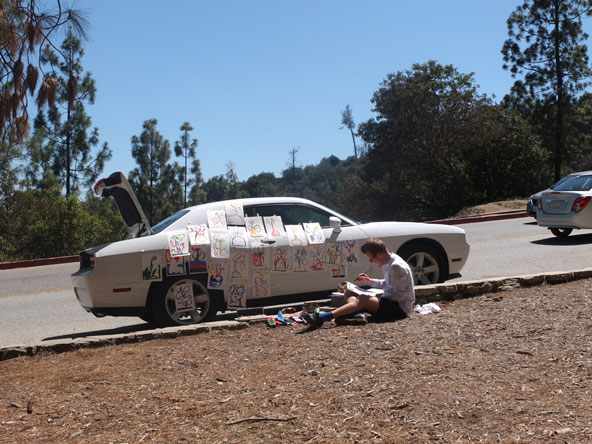
    The Jaunt #007 – Jordy van den Nieuwendijk at work on location in Los Angeles
    We love the surprise element of buying the print before the artist travels to their destination, without knowing what they’re going to create. How did your first customers react to this? Can you share some of the feedback or comments you’ve received since you started The Jaunt?

    We work with a variety of established and upcoming artists, and this way we get to introduce artist whose work we admire to a new audience. One of the things I personally enjoy hearing the most is when people order a print from an artist they did not know before, but are very pleased with in the end and the artwork ends up hanging on the walls in their house.

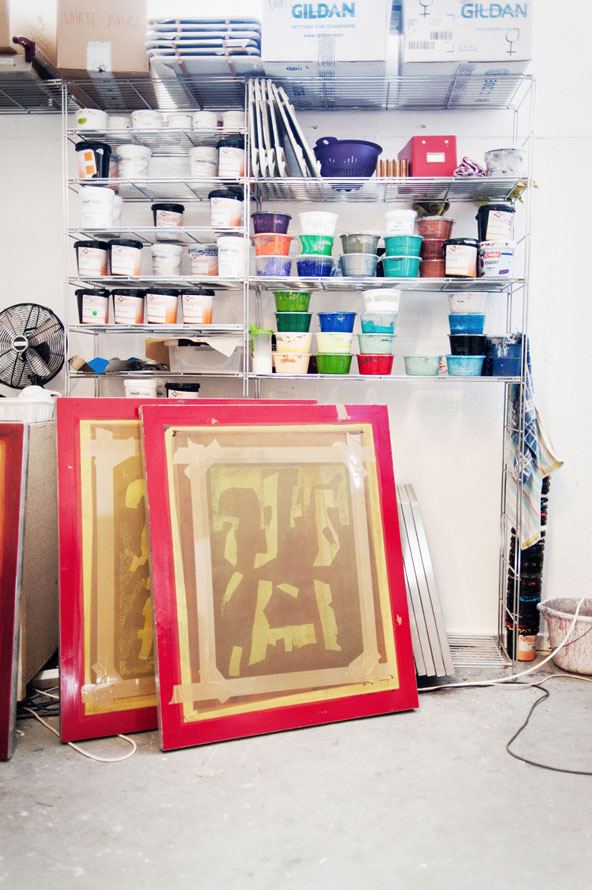
    The screenprint studio of Joris Diks where the artworks are printed
    Your last trip has been with artist Kristin Texeira, whom we’ve interviewed before. Why did you choose Kristin and her destination, Newfoundland?

    I actually just stumbled upon her work by clicking through different hashtags on Instagram, and it immediately captured my eye. Her work is to me a great example of an artist putting her own feelings and experiences into the artworks. Meanwhile she is able to tell a vivid story with her quite abstract work. So I got in touch with her and two weeks later her tickets were booked.

    Originally I was looking into the Caribbean islands for her trip, but Kristin expressed a bigger interest in less tropical climates, enjoying the different elements of the weather and nature. Newfoundland, Canada seemed like a perfect fit for her.

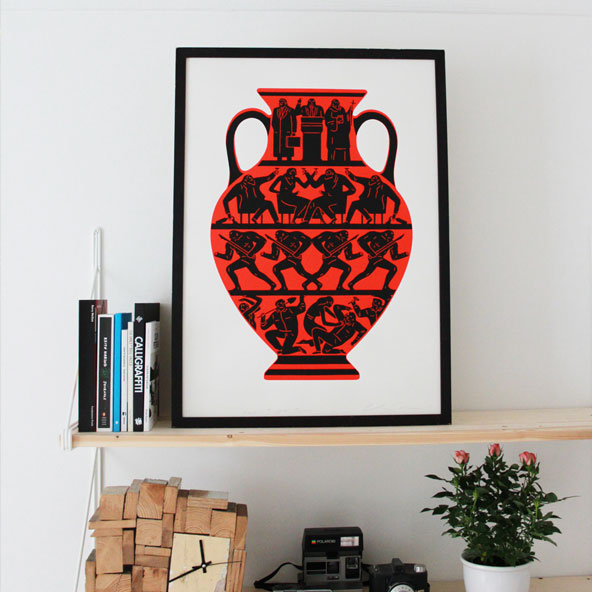
    Jaunt #012 – Cleon Peterson – Athens
    You have published a book about your first 10 artists and their trips. Are you planning a second volume or other ways to expand the project outside of prints?

    It’s in the works. The first book was self-published which is a big challenge, especially on the distribution end of things. So ideally I would like to collaborate with a publisher on the second book and make sure it gets the proper international distribution.


  • The Future of UK’s Independent Ceramic Industry

    The Future of UK’s Independent Ceramic Industry

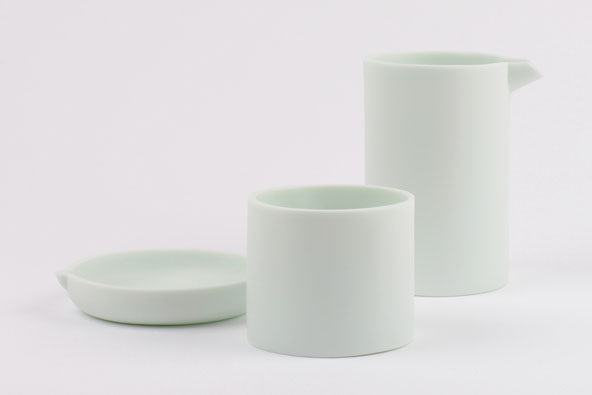
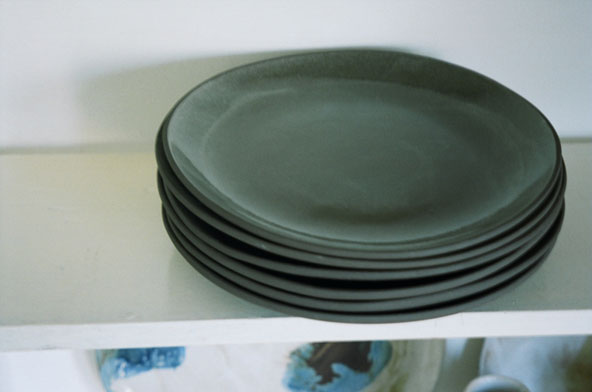
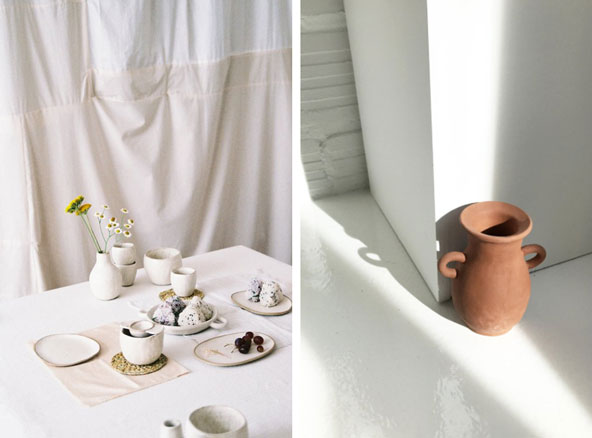
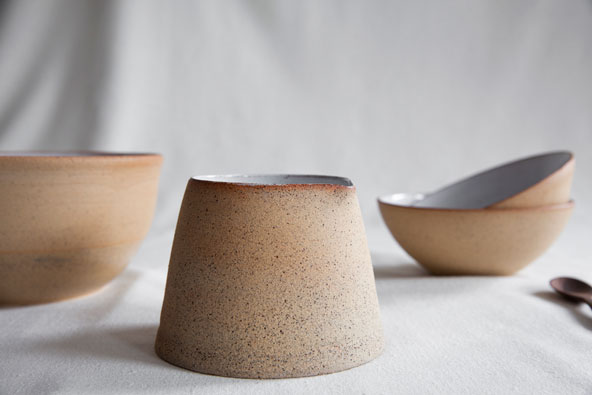
    The UK has always been associated with ceramics and pottery and, over the past few years, the country’s ceramic industry has gone through a revival thanks to independent makers and designers celebrating craftsmanship and using social media to connect with their customers. According to data, the sector grew 45% between 2009 and 2013, and since 2013 the employment in this industry has kept on increasing.

    To find out about the current situation and what’s next, we chatted with 4 ceramicists and potters across the country to hear their views and predictions.

    Olivia Fiddes

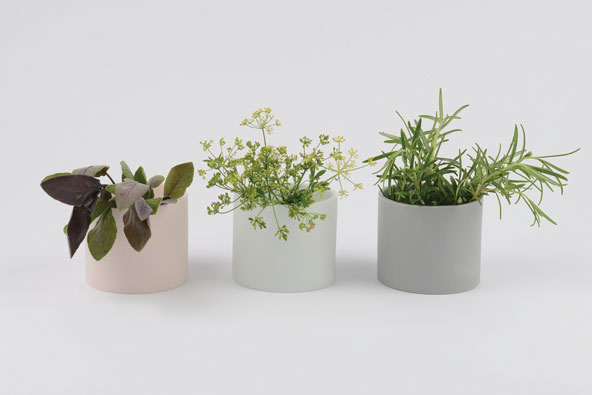
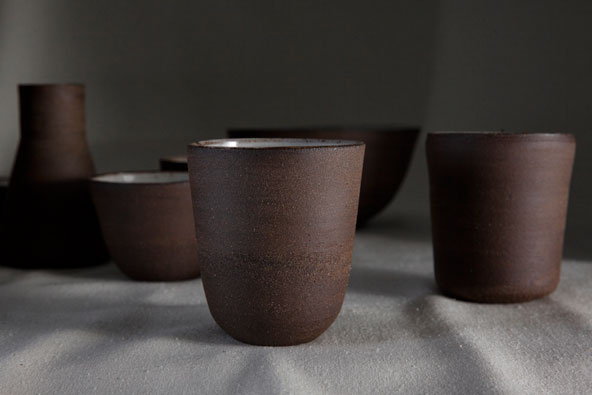
    Olivia Fiddes is a Scottish ceramic artist based in London that creates homeware and objects using hand building techniques. When asked about why ceramics have become so popular over the past years Olivia says “There’s clearly been a shift away from ‘fast-fashion’ and consumption to more support for local, ethical and traditional businesses. Even if you aren’t able to be a ‘maker’ yourself you can be involved in that lifestyle by supporting makers and by having these goods in your home. I think shops and businesses definitely see this and have looked to sourcing products from artists, designers and craftspeople who value quality and self-expression. As a customer there is nothing more special than a one-off or limited run product, which handmade ceramics tend to be.


    Photo by Olivia Fiddes

    For Olivia, this shift in the way we consume products is also influenced by the current financial situation, “We’re spending rather than saving our money more because houses and families are more distant. We’re willing to spend money enjoying our everyday and living in the present, whether that is on special tableware, a holiday or going out for meals.


    Photo by Johanna Tagada / Photo by Association

    Ana Abellán

    Spanish ceramicist Ana Abellán started working with ceramics 5 years ago after moving to Edinburgh and attending an evening course for adults. Ana agrees with Olivia when it comes to the value of owning something special, “We all want to have unique things, things that have a meaning – I really believe in quality over quantity. I don’t want to have ten cups made with a machine somewhere in China, I’d rather have one handmade cup that has some kind of special energy“. The way we live right now has also influenced how we interact with things around us and Ana thinks that “Society has lost the connection with nature and beauty. I think we need to relearn how to slow down and appreciate the beauty inherent in simple things we have around us, although I am the first one on that list – I am always rushing everywhere trying to get too many things done.


    Photo by David Guillen

    When asked about what ceramic artists need to do to supply customer needs in the near future Ana says that “Ceramic artists have done a great job over the last few years, promoting themselves, sharing more and making ceramics more attractive. Getting in touch with customers and listening to them is important, as well as being affordable but valued.


    Photo by David Guillen

    Home Thrown Studio

    Gem Mordle from Home Thrown Studio also got interested in ceramics after taking up an evening class when she moved to Dorset 8 years ago. For Gem, the recession has had a positive impact on consumer behaviour, “I’ve definitely seen a rise in appreciation for ceramics and everything and anything hand crafted over the last couple of years. People want to spend their money on objects or clothing that are hand made and have a sense of authenticity about them. Lots of my customers seem to really appreciate the personality of my wares and the fact they are all original and have a story. It’s also really nice to be able to meet customers face to face at local markets, as so much shopping is done online these days.


    Photo by Home Thrown Studio

    Despite oversees manufacturing and the easy access to cheap homeware, Gem feels positive about the current situation of the industry and its future, “I feel over the past years that ceramicists and potters are being put back on the map. There has been a bit of a revival with the Great British Throw Down, the Kickstarter campaign for The Clay College in Stoke and a handful of universities are starting up their ceramic courses again so I think we can be hopeful. I am inspired daily by the ceramic community on Instagram, and feel that social media is a great platform for contemporary potters to exhibit their work and keep in touch with their customers.


    Photo by Home Thrown Studio

    Natalie J Wood

    Scottish designer Natalie J Wood studied at Gray’s School of Art and felt attracted to ceramics due to its complexity and flexibility. For Natalie, social media has played a key role in the development of her businesses and educating customers about what’s behind a product, “It has helped me connect to new audiences. To promote events I’m linked with. I feel as a designer/maker Instagram has been a great platform for visual based work. You can instantly gauge what about your work people connect to the most. It challenges you in a way to create a larger story with your work. Now people want to understand more about behind the scenes and how making is a part of your life. In turn that gives the work more value because people can understand it on more than just a visual level.


    Photo by Sean Dooley

    Natalie considers function an important factor for current and future customers, “I think the industry is becoming more about micro manufacturing and independent brands. People are becoming more concerned about where the products they buy are coming from and having a story behind a piece makes it something special. I also think that in a backlash to throwaway culture our society is less about the ornate and there is a rise in the beauty of function. Objects that have purpose but also become decoration. I know I sell water carafes but a large number of people use them as vases, which I think is great! I’ve been a long time advocate of the William Morris quote ‘Have nothing in your house that you do not know to be useful, or believe to be beautiful.’ But I think now that use and beauty are becoming one and the same.


    Photo by Sean Dooley

  • Lisa Laubreaux

    Lisa Laubreaux

    Lisa Laubreaux is a French multidisciplinary creative working across different fields, from illustration to set design. We chatted with Lisa to find out more about her playful works, her favourite projects she’s worked on and plans for the upcoming months.

    lisalaubreaux.fr

    Studio images by Maïa Izzo-Foulquier.

    Could you introduce yourself and tell us about your education and background?

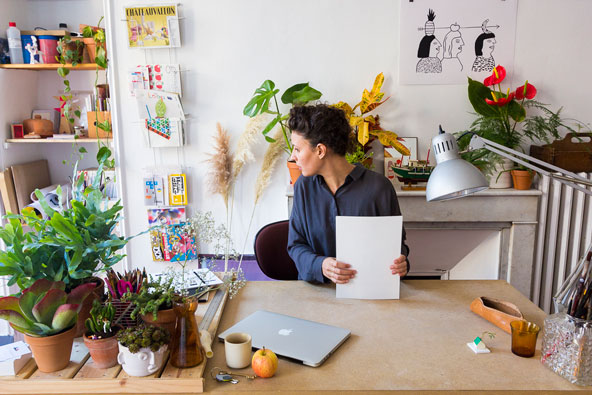
    I’m Lisa Laubreaux and I’m a French illustrator. I was born in Marseille in 1987. After graduating from the Duperré school of Paris in fashion and environment (DSAA Mode & environnement), I co-founded the Super Groupe collective.

    Currently flying solo, I’m now working freelance for a range of different clients (illustration, installation, set design…). Through each discipline, I develop multidisciplinary experiences with an experimental and artistic approach that drive me to use a variety of media and techniques throughout my work. In addition to my usual practice, I also run participatory workshops in museums and festivals always in a fun and educational way, allowing every participant to take over the professional tools of graphic design.

    You work across different fields, could you tell us a little bit about each of them?

    Illustration: I do work for clients (I generally do commissions for the press or PR) and also my personal work. I use the same techniques for client work and personal projects but the subjects of my drawings are different. It’s interesting to have constraints – that way I can discovering new things about my work and my own possibilities.

    Set design: What I really like about set design is working with a team. When doing a shoot, you have to design elements which bring out the best in both the clothes and the model. It’s a question of working with the photographer, stylist and model to create the best possible photo.

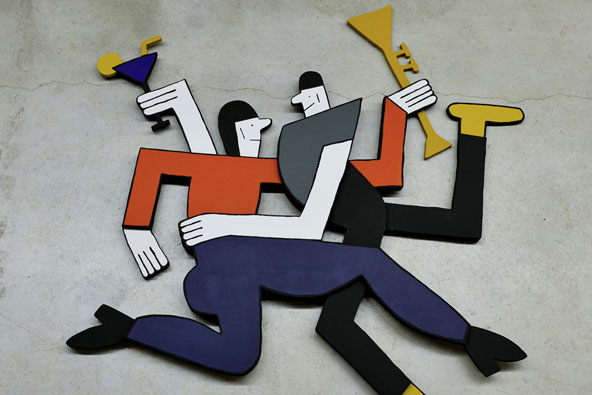
    Installation: This is the most fun part of my work because it’s very hands-on. My installations are generally in painted wood so I have to use a jigsaw puzzle and paint. I also love the change in scale. Illustration is a solitary discipline which demands a lot of attention to fine detail, so it can be really nice to work on a larger scale.

    Workshops: In my workshops I give the participants basic elements or templates to complete, which allows them to have fun whilst using the tools used by graphic design professionals. I’m keen for the participants to be proud, or even surprised, by the quality of their work. It’s a way, for me, to promote creativity.

    How would you describe your illustration work?

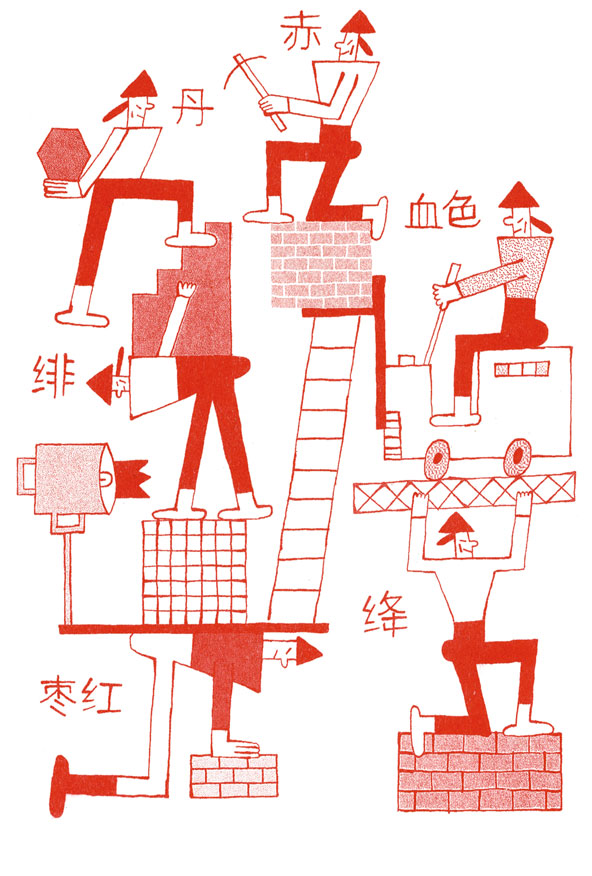
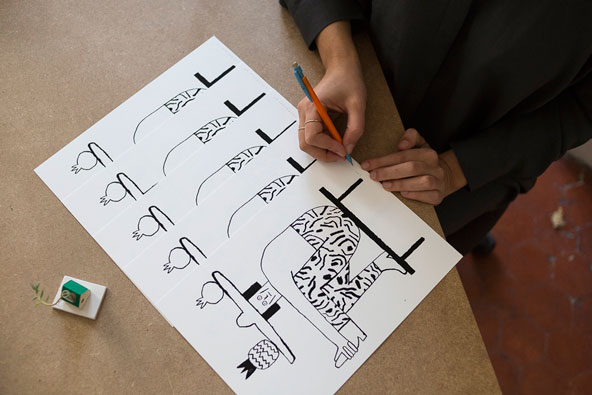
    In my illustrations I especially care about the composition and the balance, working with free materials (charcoal, lead or pencil) before defining the strokes, using the nib or the pencil, and I finally bring into play the digital tools. Drawing inspiration from the popular conceptions and the daily life, I create coloured aesthetics and use a simple stroke to transpose, with a playful touch, the world which surrounds me.

    What are some of your favourite projects you’ve worked on?

    My favourite project was doing shop signs as part of the festival Le Voyage à Nantes “Journey to Nantes”. It was over quite a long period (6 months) and often involved working in a team. I regularly exchanged ideas with the staff of Le Voyage à Nantes, as well as with the shopkeepers. We did a lot of DIY and painting, the atmosphere was really great and I’m really happy with the final result.

    What are your plans for the upcoming months?

    Currently I am working on a children’s book about boats with Fotokino (a wonderful gallery in Marseille). It’s a book-game, which we tried with kids at the Marseille shipyard. I’m also making a giant banana with children from the northern neighborhoods of Marseille and starting a new collaboration with Atelier Bingo. This summer I will create some ceramics with my friend Émil in Luxembourg. We’re going to make big vases with naked women on them. At the moment, we’re sending each other drawings with naked women from space, on the beach, with tigers, etc.