Category: Uncategorized

  • Why you should work in Insurance

    There are many different reasons that an insurance career can be perfect for you and you just have to take a look at why so many other people love it to know if it’s really for you. It takes a lot to get your insurance license and you want to make sure that it’s the right career move for you before you start looking for Arizona insurance license exams prep to get you ready for your license exam. Here are some of the biggest reasons that working in insurance can be a great move.

    The first thing you have to figure out is which kind of insurance you want to work in and that’s going to have the biggest impact on your day-to-day life. Life insurance is a great choice because you get to help people out when they need it the most and you’ll feel like you’re doing some good with your job. The other option is to get into property and casualty insurance, which will ensure that you’re always there when someone needs your help the most.

    Benefits of Working in Insurance

    When you want to get down to the real benefits of working in insurance, you just have to consider what the culture is like and how well you can fit into it. There is a wide range of insurance jobs and that means that there’s always going to be a demand for licensed agents to fill open roles. It’s difficult to find that kind of job security in any other field.

    You’re also going to be able to enjoy a diverse culture of people that you get to work with. Insurance companies hire people from all education levels and backgrounds, so you’re never going to get bored with the people surrounding you.

    Get ready for your License Exam Today

    If you want to embark on a career that’s going to be fulfilling and profitable then there’s no better option than insurance. You’ll get to work with lots of different people and make a positive difference in other individuals’ lives.

    Get started on your new career path right now by signing up for exam courses. That’s your first step toward getting licensed and everything will start to fall into place after that. You’ll be making the best decision for your life that you’ve ever made and you’ll never want to look back!

  • What Are the Different Types of Office Furniture?

    There’s a lot more to buying office furniture than meets the eye. When you are outfitting an office space, your choices in furnishings are broad and diverse. It simply does not involve picking out some desks and a few chairs. 

    Office furniture creates your environment. It includes office seating, desks, conference tables and chairs, reception room furnishings, break room furniture, file cabinets, storage closets, computer tables, sit-to-stand tables, and printer tables. You’ll also have to add office lights and accessories in the design.

    Questions You Need to Ask

    When shopping online at an office furniture store website then, you’ll first have to assess the layout of your office space. Where do you need furniture? Who will be using it?. What are the dimensions of rooms where you will be adding the furnishings?

    Types of Furniture

    As you can see, office furniture covers a broad base of products – products that are an integral part of your operational success. Let’s take a more indepth look at some of these products.

    Sustainable Steel Desks

    The use of steel in a desk means that waste is completely reduced. Therefore, this material is ecologically friendly – both sustainable and reusable. 

    Desks made of this strong material can withstand abuse in high-traffic areas, thus making them a long-term investment. Steel is also easy to clean and resistant to bacteria.

    Ergonomic Furnishings and Lighting

    Consider how you’re angled at your computer. Look at the height of your desk. Do you feel eye strain at the end of a workday? Do your wrists hurt when you type? 

    Ergonomic chairs and desks place emphasis on the user’s posture, which also prevents workplace injuries and increases production.

    In the past, traditional office furniture promoted a stiff and fixed posture, offering little movement. However, today’s furniture enables you to stand or sit, and adjust your desk or chair accordingly. The sedentary office is now a more active and healthier culture.

    Conference Table

    A conference table is more than a table used for meetings. It can also be used for lunches or as a spot to organize materials. You can also use the tables to display your company’s products. 

    Moreover, studies show that standing at a conference table inspires employees to be more creative when working on a project. Therefore, the table is even more important than the chairs.

    Reception Room Furniture

    Your reception area is where clients get a first-hand look at your business. Therefore, you want to make sure it features tasteful and impressive furnishings. Not only will you need to choose the reception desk, you’ll  have to choose comfortable seating as well.

    Modular seating is a great way to scale what you need in your reception area and support your company’s growth. For example, you can use a trio of modular chairs and turn them into a sofa or place them separately.

    One Final Thought

    Do you need office furniture? Make sure you plan ahead before you make a purchase online.

  • Types of Weapon Detection Systems

    In today’s security-conscious world, weapon detection systems are becoming increasingly important to ensure public safety at airports, schools, and events. These systems employ various technologies to identify and locate potential threats quickly and accurately. 

    1. Metal Detectors

    The most common type of weapons detection system  (WDS) is the metal detector. These devices use electromagnetic fields to detect metallic objects, such as guns and knives. Walk-through archway metal detectors are often seen in airports and other high-security areas, while handheld wands are frequently used for portable screening needs.

    You can upgrade this type of system by integrating it with electronic devices and apps. By taking this approach, you can deter any problems with threats that involve handguns, rifles, and shotguns. Today’s technology allows people to pass through a checkpoint without having to remove items from purses or pockets, which improves security operations overall.

    Systems may be integrated so both concealed weapons and visible weapons can be detected at a site.

    2. X-Ray Scanners and Thermal Imaging

    X-ray scanners provide a more in-depth analysis of an individual’s belongings by producing detailed images of the contents of bags or packages. This technology, as well as thermal imaging, allows security personnel to identify concealed weapons or explosives.

    3. Millimeter Wave Body Scanners

    These advanced scanners utilize millimeter wave technology to generate a 3D holographic image of an individual’s body while simultaneously identifying any concealed items under their clothes. Proponents of millimeter wave scanners argue that they provide accurate results and reduce false alarms.

    4. Explosive Trace Detection (ETD) Systems

    ETD devices are designed to identify traces of explosives on an individual or their belongings. These systems typically use swabbing techniques to collect samples from a person or object’s surface, then analyze the samples for any trace of explosives.

    They are often used after a person passes through an x-ray scanner. The ETD device confirms if explosive components are present. If they exist, the machine determines the type.

    5. Acoustic Gunshot Detection Systems

    These systems are specifically designed to identify and locate the source of gunfire in real-time. Acoustic gunshot detection systems use microphones strategically placed within an area. The microphones continuously monitor sound waves to detect distinctive gunshot sounds so they can triangulate their origin quickly and efficiently.

    6. Video Analytics Systems

    Video analytics technology uses advanced algorithms to analyze surveillance footage, identifying weapons or suspicious behavior that may indicate a potential threat.

    Final Thoughts

    As you can see, WDS spans a number of technologies – technologies that can add an extra layer of protection – protection that can mean the difference between safety and vulnerability. What you choose in a product will depend on your current security procedures and what you need to support a safer environment.


  • What To Know About Travel Vaccines

    Travel vaccines are essential for anyone planning to travel overseas, but the topic can be overwhelming. That’s why we’re here to provide you with a clear and concise rundown of what you need to know.

    What are Travel Vaccines?

    travel vaccines are designed to protect you from a range of diseases and infections that you may encounter while travelling. The type of vaccine you need will depend on factors such as where you’re travelling to, your medical history, and your age. Getting vaccinated is an important step in safeguarding your health and ensuring that you can enjoy your trip to the fullest.

    How Do You Get Vaccinated For Travel?

    Most people who get vaccinated before they travel will approach their usual doctor to see if they have a specialised travel doctor clinic. This is different from regular doctor appointments as it requires a doctor with a certain level of knowledge about the right vaccines for travel and the ability to offer advice to patients. In addition, you should expect it to cost more because this is a special service from the regular 15-minute check-ups. 

    These clinics are hard to book for last-minute appointments, so you should book at least six weeks before your travel date. This will ensure you can get all your shots in time through follow-up appointments and get an appointment during the busier travel months or iron out any problems that may arise through the process.

    Travel Vaccines Aren’t Fool Proof

    Despite how incredible vaccines are, they are not 100% guaranteed to avoid inflection or disease. Therefore, you should always be cautious whilst travelling, drink clean water and food, clean your hands before and after every meal, and be well-informed of the latest medical news in your travel destination.

    Some Vaccines Need Boosters

    Even if you are entirely up to date with your shots, you should check with your travel doctor to see if you need any boosters. Nowadays, many older vaccines are now turning the tables and offering lifelong immunity. However, some still need to be refreshed with the emergence of new viral variants, such as Covoid-19. 

    Some Vaccines May Be Funded 

    To encourage more people to get vaccinated, governments fund many of the most devastating illnesses with vaccines to combat their effects. If you’re concerned about the cost of all these jabs into your travel fund, you should check if these can be funded and, if you are in the US, if your insurance can cover the cost. Some, if not all, your shots may leave you with zero dollars out of your account, except with the travel doctor’s cost to get them. 

    Some Vaccines Have Side Effects

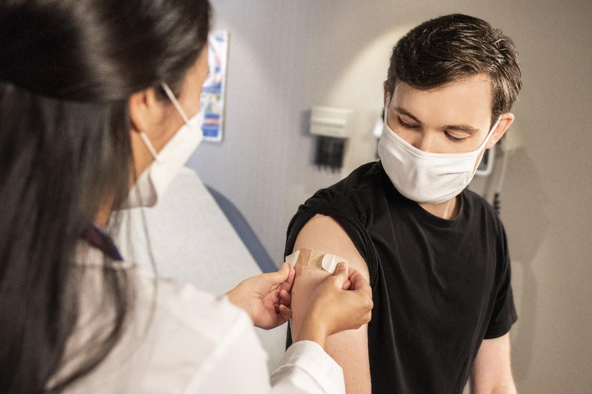
    Vaccines are safe due to years of trials on human hosts and studying their effectiveness on the ailments they are countering. However, they sometimes have side effects depending on who you are and the infected vaccine. Most will leave with a sore arm, but some hosts may feel tired or have a headache, with all symptoms passing by the next say. 

  • Major Sock Types and How to Wear Them

    If you’ve been an adult for awhile, you know that life takes you into all kinds of circumstances—from work to play to exercise to travel to celebration. Hopefully, you have discovered that just as there is more than one occasion, there is more than one kind of socks. Pairing the right kind of sock to the right occasion is not only good fashion sense for men—it’s also fun! There’s more to socks than we ever imagined when we were carelessly pulling sneakers over our white socks as kids.

    What? You haven’t learned the ins and outs of the different kinds of socks? Then you’re in for a treat! Upping your sock IQ is one of the easiest and most affordable ways to upgrade your sartorial flair. People notice your socks. If you choose the right sock at the right time, you’ll get filed in their memory banks as a guy who minds the details and comes correct.
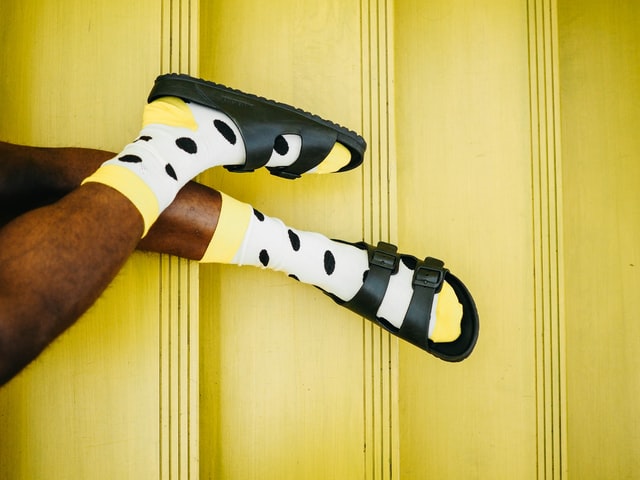
    Image via Unsplash

    1. No-Show Socks

    “No-show” socks, sometimes called “slip-ons” or “slip-on padding,” are the lowest-profile socks, only coming up to mid-foot and not even reaching the ankle.  They’re what you want to wear if you really want to present the image that you are wearing no socks at all. Women pair these kinds of socks with low-cut pumps and heels, as well as ballerina slippers. Men often pair them with low-cut loafers or moccasins. This can be a rakish, devil-may-care look that communicates unshakeable confidence. Socks? Who needs ‘em?

    If that’s the sentiment, do you need ‘em? Why not go sockless? Think twice. Not only do socks make even the lowest-profile shoes more comfortable, but they also wick moisture away from your feet and keep them from stinking, which in turn prevents your shoe from acquiring a permanent stink. If stinky feet concern you, wear socks, even invisible ones.

    Since no one will see them, the color of these socks does not matter. However, since there’s a chance they will poke out or you might kick off your loafers, you might as well be on point. Pick a color that matches your outfit and avoid white socks unless you are participating in an athletic event.

    2. Ankle Socks

    Ankle socks are similar to no-show socks—low profile, but they do rise high enough to cover the ankle. You might pair these with sneakers or boots to achieve the no-sock look while preventing chafing on your ankles. 

    All things being equal, there’s a greater chance that ankle socks will be seen, so be on point with color. Match your outfit and skin tone. Solid colors are the way to go—a pattern will barely be noticed but will look too busy in too small a space if it is noticed. Black ankle socks are a safe choice. You’ll hear this again and again, but it bears repeating—white socks are only appropriate for the gym, the track, or the sports court. 

    3. Quarter Socks

    Quarter socks rise up over the ankle and partially cover the lower calf. They are a little too casual to wear to work or a wedding, but make a great impression at summer picnics and parties, especially in snazzy colors. You can pick a simple pattern or novelty graphic for this kind of sock, but the more you try to cram into this small space, the less effective.

    4. Crew Socks

    At 6-8 inches, crew socks are the lowest socks you expect to see people wearing in the winter. They’re still a little casual for the workplace or a formal celebration, but they work great at an upscale party. Patterns and novelty graphics work well with these socks, as do pairings with lace-ups, loafers, or boots.

    Athletic socks may be crew-length and knit from heavy cotton to be more durable. White crew socks are quite common. You may be tempted to buy one package of white crew socks and wear them both to work out and attend parties. Don’t! White socks are for exercise only.

    5. Mid-Calf Socks

    According to No Cold Feet, the best formal and workplace socks are mid-calf-length. As advertised, they come up to the middle of your calf, right where it is at its thickest. Without the taper of your calf to hold it up, these socks require strong elastic. They may be knit from heavy cotton to last years, but if they are more formal they may be knit from a finer cotton. These socks won’t last as long, but they feel more luxurious, more appropriate for a formal event like a wedding or a ball.

    You can really have fun with mid-calf socks in terms of color or novelty graphic, as well as patterns like thin or multi-color stripes or more sober patterns like checks or argyle. These fun but sober patterns add just the right amount of pizzazz to your office attire.

    6. Calf Socks

    With the calf sock, covering the entire calf just below the knee, we enter a realm of socks primarily limited to athletic applications. These are the socks to wear for a game of baseball, soccer, or rugby. They keep the calf muscle warm and loose and prevent blood clots.

    These socks, usually knit from heavy cotton and elastic to prevent tearing or bunching, come in a variety of cool colors, usually solids. Team colors are popular, as are “barber-pole” dual-color stripes. White calf socks are acceptable, although a stripe of color near the top of the calf adds extra athletic flavor.

    7. Knee Socks

    Knee socks and higher are most commonly worn by women, under knee-high or thigh-high boots. There aren’t too many generally-accepted reasons for men to wear knee-high or thigh-high socks–but rules were meant to be broken. If you’re feeling adventurous, go wild!

    ———————————————————————

    Hopefully this guide has filled your imagination with ideas on how you can expand your sock acumen and maybe even shed light on some footwear faux-pas you never even knew you were making. (No white socks!

    It’s never too late to get your sock game on point. Pick a style that suits you and get on your feet!