Category: Travel

  • The Art of Traveling Alone: Conquering Fears and Discovering Joy

    Traveling alone is a thing that opens opportunities for personal growth; however, taking the first step is always the hardest. But to explore new things, learning the art of solo travel is important. It is a transformative experience that prepares you to be independent, self-aware, and gain fresh perspectives. 

    Statistics show that 73% of solo travelers find the experience life-changing and empowering. It helps conquer anxieties and leads to a kindling of euphoria. So, are you ready to break free from your comfort zone and embrace the world on your terms?

    If yes, we’re here to help! This article mentions a few tricks to ensure you have everything sorted for your first solo trip. It also has ideas to make the experience special. Let’s dig in!

    Preparing for the Journey

    One of the most daunting tasks for a first-time solo traveler is preparing for the journey, but don’t worry! It’s easier than you think! First things first, you should set the goals before starting with any planning—decide if it’s a workcation, a learning journey, or simply a refresher.

    Once this is clear, you can easily find the perfect destination. After choosing your dream place, you should book your tickets and accommodation in advance to avoid last-minute stress. Likewise, packing is a cinch, too; you need to bring essentials and clothes suitable for the weather. 

    Navigating Safety and Security

    Traveling solo has pros and cons, but since you’ll be alone, you need to be double sure about your safety and security. You should always be aware of your surroundings and trust your instincts.

    Another important thing is to avoid poorly lit areas as much as possible. Instead, take the path well-traveled and lit. Likewise, you should keep important documents secure and make digital copies just in case.

    You may carry cash or have valuable items with you, but you should never flash them publicly and be cautious with strangers. And stay connected with friends or family back home and share your itinerary. Remember, being proactive and vigilant is important because your safety is a priority.

    Embracing Solitude

    Your solo travels are a wonderful chance to discover the joys of being with yourself. It’s an opportunity to love and pamper yourself, indulge in self-care, and find inner happiness. How you choose to use this time is completely up to you. For example, some people plan different activities for self-pleasure, like using toys such as the real whizzinator XXX or watching videos about self-exploration. The main focus here is to cherish this time to find joy within yourself. 

    Enjoying your company and appreciating the little things can lead to a deeper understanding of yourself. It is a chance to learn new things about how your mind and body works. Staying alone gives you ample time to be there for yourself and unlearn old patterns.

    Gain Cultural Experiences 

    Engaging with local communities is one of the best ways to broaden your horizons during your solo travels. It opens doors to understanding diverse traditions, customs, and ways of life. YOu can indulge in the local delicacies and cuisines to experience new flavors.

    Likewise, you can learn a few phrases in the local language to ease your living there. It will also help you participate in cultural events and local festivals. Such cultural experiences foster empathy, tolerance, and respect for different perspectives. Also, these cherished encounters leave you with unforgettable memories and a more open-minded, culturally aware outlook on life.

    Capture Memories

    Your first solo trip is a treasure of special moments that will stay close to your heart, so capture as many pictures as possible. It includes everything from the excitement of holding your first tickets to experiencing breathtaking views or enjoying lone dining. Each memory proves how brave you were to take that first step.

    Photographs freeze those cherished instances, allowing you to relive them and share your adventure with others. They can also inspire and motivate you to go on more solo travels. As time passes, reminiscing about these captured memories fills you with nostalgia and a sense of accomplishment.

    Overcoming Common Challenges 

    Challenges are a part of every trip because it includes visiting places that you are not familiar with. However, you should prepare yourself to overcome them. A few of the common challenges are:

    • Loneliness: It can creep in anytime, so you should make social connections at hostels, join group tours or activities, and attend local events to meet fellow travelers and locals.
    • Language barriers: It is common to come across this challenge. Therefore, you should learn basic phrases, carry a translation app, use hand gestures, and be patient while communicating with locals.
    • Budget constraints: You should plan and prioritize expenses, opt for affordable accommodations and meals, and take advantage of free or low-cost attractions.
    • Decision-making: Trust yourself, be confident in your choices, and stay open to new possibilities.
    • Adaptability: Panicking is not the solution to overcoming any challenge; therefore, be flexible in dealing with unexpected situations, embrace change, and see challenges as learning opportunities.

    Bottom Line

    So, are you ready to embrace solo travel, where fears vanish and joy abounds? We hope the above information helps you confidently visit new territories, find serenity in solitude, and set free your wanderlust. Discover the world, one step at a time, as you discover yourself. Travel alone, for within lies the masterpiece of a lifetime.
     

  • Exploring Paris’ brutalist gems

    Exploring Paris’ brutalist gems

    Brutalist architecture is a style that emerged in the 1950s and gained popularity in the 1960s and 1970s. It is characterized by its use of raw, unfinished concrete as the primary building material, and is often associated with an austere, functional aesthetic.

    In Paris, brutalist architecture can be found in a variety of buildings, including government buildings, housing projects, and cultural centers.

    Centre Georges Pompidou

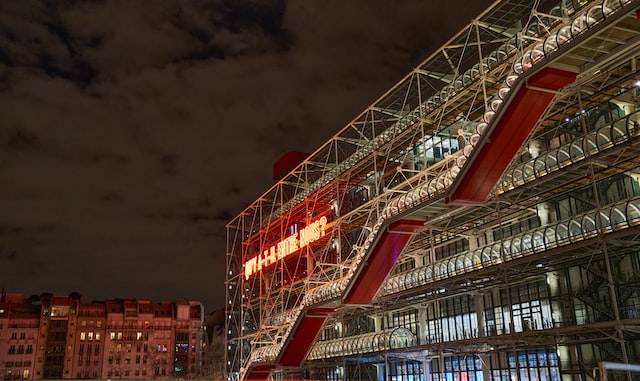
    One of the most well-known examples of brutalist architecture in Paris is the Centre Georges Pompidou, also known as the Beaubourg Museum. Designed by architects Renzo Piano and Richard Rogers, the Centre Georges Pompidou was completed in 1977 and is known for its bold use of color and its unique design, which features all of the building’s functional elements, such as pipes and ducts, on the exterior of the building.

    Image source: Unsplash

    La Cité de la Muette

    Another notable example of brutalist architecture in Paris is the housing project La Cité de la Muette, located in the 16th arrondissement. Designed by Jean Renaudie and completed in 1974, La Cité de la Muette is a complex of high-rise apartment buildings that were designed to provide affordable housing for the city’s residents. The buildings feature a repetitive, modular design and are constructed of raw concrete, giving them a distinctive brutalist aesthetic.

    The Philharmonie de Paris

    In addition to government buildings and housing projects, Paris is also home to a number of cultural centers that showcase brutalist architecture. The Philharmonie de Paris, a concert hall located in the 19th arrondissement, is a good example. Designed by Jean Nouvel and completed in 2015, the Philharmonie de Paris is a massive complex that includes a concert hall, exhibition spaces, and a restaurant. The building’s raw concrete exterior and geometric forms are characteristic of brutalist architecture.


    Image source: Flickr

    Despite the popularity of brutalist architecture in the mid-20th century, it has been met with mixed reactions over the years. Some people appreciate the bold, functional aesthetic of brutalist buildings, while others find them cold and uninviting. In Paris, as in other cities, there have been debates about the preservation of brutalist buildings, with some arguing that they are an important part of the city’s architectural history and others calling for their demolition.

    Overall, brutalist architecture in Paris is a fascinating and distinctive aspect of the city’s built environment. From the Centre Georges Pompidou to the Philharmonie de Paris, these raw concrete structures stand out as landmarks of an architectural style that was once at the forefront of modern design. Whether you love or hate brutalist architecture, it is undeniable that these buildings have made a lasting impact on the city of Paris and continue to be a source of fascination for visitors and residents alike.

  • Heading To The UK? Where Should You Go?

    If you are going to be heading to the UK for your next travel adventure, where should you go? There are lots of places here that are worth visiting, but you’re not going to be able to visit them all on the same trip. In this article, we’re going to be taking a look at some of the nicest places in the UK that you can visit if you want a fantastic first impression. Keep reading if you would like to find out more.

    Credit Link – CC0 License

    Lake District

    The first place that we are going to mention is the Lake District. You know that this place is a fantastic choice as this is where a lot of the UK residents also go when they want a holiday within their own borders. Full of beautiful lakes and tranquil mountains, the Lake District is now a protected site by UNESCO. It is truly one of the most beautiful places that we have ever seen, but you won’t be able to truly understand how gorgeous it is until you experience it for yourself.

    There are some lakes that are more popular than others, so if you want to avoid large crowds at any given time, make sure to do your research as to which lakes tend to be busier than others.

    Cornwall

    CC0 License – Location Source

    Another place that we recommend you visit is Cornwall. Another picturesque location in the UK, Cornwall is the other top place for UK residents to visit on their travels. If you want a trip to the seaside, then this is certainly the place to go. There are some beautiful sandy days ahead for you if you come down to Cornwall, and you can look at all the fantastic sights that are here too. Take some time to really explore this place, because you never know what you might find.

    County Durham

    The final place that we are going to recommend is County Durham. If you are a fan of the older British architecture, then this is certainly a good spot for you to visit. You can head to one of the castles here, or the cathedral that draws in lots of tourists every single year. You can pretty much see all there is to see here in a day or two though, so we recommend an overnight stay in County Durham and then moving on to somewhere else. 

    The UK is quite small, meaning that you can pretty much drive across the country within a matter of hours, so your options are not limited.

    We hope that you have found this article helpful, and now see some of the places that you should make time to visit if you are visiting the UK. Of course, there are plenty more places that you can consider visiting here, but these are just a few of the suggestions that we came up with off the tops of our heads. We wish you the very best of luck, and hope that you now have a few ideas already.

  • 5 Reasons Camping Is Better Than Staying In A Hotel

    When it comes to travelling across the country or elsewhere, one thing you’re likely to do is to stay in a hotel. After all, booking a room at a hotel is easy thanks to the Internet, and you’ll have no trouble finding a great room that is well within your budget.

    However, staying in a hotel isn’t necessarily the best way to experience certain holiday adventures. If you like to go exploring, particularly off the beaten track and away from the tourist traps, you’ll have a more immersive experience if you go camping instead.

    If you’ve never been camping before, you might be wondering whether it’s the right thing for you to do. Take a look at these reasons why camping can be better than staying in a hotel:


    Image Source

    1. You Can Stay In Remote Locations

    Imagine if you want to stay at a picturesque location that offers some stunning views across an expanse of land and is relatively unspoilt by the world around you. It’s something you would love to do, yet it isn’t always possible if you want to stay in a hotel.

    If you don’t want to stay somewhere nearby and prefer to be closer to your perfect yet non-existent accommodation location, the best thing to do is go camping instead of staying in a nearby hotel.

    2. More To Camping Than Sleeping In A Tent

    Some people assume that camping means staying in a tent that you have to spend ages putting up and hoping that it doesn’t fly away if there’s a gust of wind!

    The truth is, camping is a general term that covers staying in a tent and other things like caravans, hybrid campers, campervans, and more.

    3. Cheaper Than Staying In A Hotel

    As you can imagine, staying in a hotel generally means spending a lot of money on accommodation – especially if you’re staying somewhere for several days or weeks.

    If you go camping, you’ll save a lot of money compared with staying at a hotel. That’s especially true if you pitch up somewhere in a tent or have a caravan or campervan that you own.

    The only thing you’d need to pay is any site pitch-up fees – and they don’t cost much money at all.

    4. Making Memories

    Whether you’re a solo traveller that likes road trips or someone that enjoys family holidays, one thing’s for sure: you’ll be making memories when you go camping.

    You can take lots of photos and selfies at stunning locations and have magnificent backdrops, whereas if you stay at a hotel, you won’t really experience the same thing.

    Camping experiences are very memorable, and it’s something you’ll want your children and their children to experience too.

    5. No Noisy People Next Door

    Another advantage camping has over staying in a hotel is that you don’t have any noisy neighbours behind a wall. You can pitch up your tent or caravan, or park your campervan wherever you want away from other people for some real peace and quiet.

  • Do You Need Travel Insurance?

    Travel insurance can often seem like a lot of hassle and paperwork. Booking a holiday is exciting, but can also be difficult when you are working with a budget. So the additional costs of travel insurance, just because something might go wrong, often gets pushed aside. The thought of something going wrong may seem so far out of reach as if it is something that would never happen to you.

    You may look after yourself well while you are on holiday, but unfortunately, you never know when something could go wrong, and travel insurance might just be the lifeline you need. It is therefore important to understand what travel insurance is, and how it can benefit you, to help you make your final decision. 

    Image credit

    What is travel insurance?

    Travel insurance provides you with a layer of protection if something on your holiday doesn’t go as planned. There is a range of different travel insurance policies out there, that can help protect you against a variety of different factors that may go wrong on a holiday, including:

    • Illness
    • Cancellation
    • Injury
    • Delayed departure
    • Missed transport
    • Damaged, stolen, or lost images 

    If you experience any of these unfortunate events while away on holiday, you will have to cover all the costs yourself, including losing your entire holiday if you become ill, which could cost you thousands. If you have sufficient travel insurance, you can save yourself stress, and a lot of money.

    Benefits of travel insurance

    Here are some of the benefits of travel insurance that can help you significantly.

    #1 Cancellation cover

    Imagine how it would feel to have worked hard all year, and saved up for your annual break away in the sun, and you had to cancel it due to an unforeseen circumstance that was out of your control? It would be bad enough knowing you could not go, but how would you feel if you also lost all your hard-earned money? Travel insurance can help you to recover the costs of your holiday. 

    #2 Personal possessions

    Most travel insurance policies will provide cover for certain personal possessions such as the typical items you would carry in your luggage, for example, clothes, shoes, and jewellery, up to a certain value. A policy would cover the items if they have been lost, stolen or damaged.

    #3 Medical expenses 

    In the unfortunate event you or a person you are travelling with becomes ill or injured while you are on holiday, the most important thing is that urgent medical treatment is sought, without any barriers. Travel insurance can be particularly helpful, as it takes away the barrier of finances in this situation. Different countries have different rules and costs associated with medical care, and you don’t want to find yourself in a situation having to pay thousands in medical expenses. 

    #4 Legal expenses

    If you run into any problems while abroad that require legal assistance, for example, someone has hurt you, or you were involved in an accident that wasn’t your fault, you may find yourself in a lot of debt trying to argue the case. Travel insurance may cover you to obtain legal advice, and cover a certain threshold of costs.

    Travel insurance is vital protection for anyone who may encounter legal problems while away from home. Motorcycle accidents are a leading cause of death and injury among travellers, and many of those involved in these accidents face high legal costs. If you are involved in a motorcycle accident while travelling, having travel insurance can help you recover some of these costs. Motorcycle Accident Attorney typically charge high fees, and if you cannot pay these fees, you may be forced to settle for less than you deserve. Travel insurance can help cover these costs, allowing you to focus on getting the best possible outcome for your case. In addition, travel insurance can also cover other legal expenses, such as the cost of hiring a private investigator. While no one likes to think about being involved in a legal dispute while travelling, having travel insurance can give you peace of mind knowing that you are protected if something happens.

    Each travel insurance provider will have different offerings, so you must ensure your policy covers everything you want and need before you go on holiday.

    Before you buy holiday insurance 

    Make sure you follow these tips before you buy your holiday insurance.

    Figure out what you need

    You can get generic travel insurance policies, but it can be more beneficial to take a little time to figure out what you need and find one that ticks all the right boxes for you. For example, if you are going on a more adventurous holiday and will be participating in activities such as skiing, or watersports, then you are going to require cover for your equipment and medical expenses for those specific sports. You should also consider where you are travelling, as in some places, such as the United States, you may need higher medical cover. Any previous medical conditions should also be considered, as this will impact your cover.

    Shop around

    Before you buy holiday insurance, it is important you shop around to see what different providers are offering and which deals you can get on your insurance, such as those at Netvouchercodes.co.uk, to ensure you are getting the best policy possible. 

    Read the policy

    As tempting as it can be, to just accept the terms and conditions, it is vital that you check the conditions of the policy to cover everything you need it to. For example, some policies don’t cover cruises or may need you to add on things like medical cover, which you won’t know unless you take time to read the policy. 

    Travel insurance is an important part of your holiday.