Category: Film

  • HEIS by Anaïs Volpé

    HEIS by Anaïs Volpé

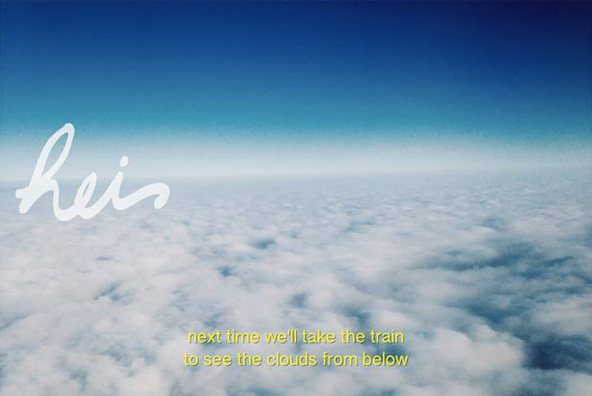
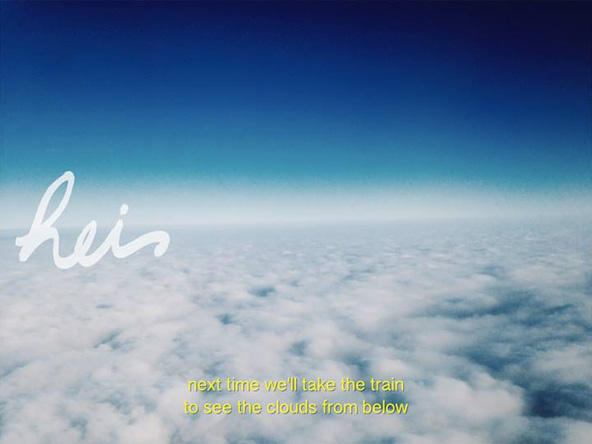
    HEIS is a cross-media project by French artist and filmmaker Anaïs Volpé. This innovative project is composed of a series, a feature film and an art installation. To find out more about it, we spoke with Anaïs about her background, the different elements of HEIS and the places where the project will be screened and exhibited.

    www.heis.fr

    Could you please tell us about yourself and your background?

    I’m a French filmmaker although, initially, I used to work in theatre as an actress. Theatre is kind of my first love. Also, I’m a freelance photographer and videographer for different magazines. I always like new collaborations through creation and I’m also involved in visual arts.

    I left school when I was 17 because I really wanted to work in Arts. I learned many things by being an assistant director for almost two years. After that, I learned a lot from theatre, especially from stage directing and acting – it opened my mind and my imagination. A few years after that, I learnt how to edit videos with tutorials on YouTube and I started to shoot small shortfilms, around 1 and 3 minutes long, in order to practice. I later found a producer who helped me film my first real short movie named ‘BLAST’. The movie has been selected in a few festivals and received the Jury Prize in the International Film Festival Between China and France. Thanks to this prize I was invited by the French Embassy in China to visit the country and I received help from the French Cultural Institute of Beijing in order to work on my next project within an artistic residency in Beijing. That’s how two years ago I started working on my latest project, HEIS, while I was in China.
    Future-Positive-Heis-1

    Could you describe HEIS briefly?

    HEIS is a Greek word (εἷς) meaning one, to be one, not as individualism but as self-fulfilment. This project is about how one human being tries to reach the ‘number one’, the daily struggle of one’s mind, body and heart. HEIS is a cross-media project composed of a feature film (90’), a series (5×11’) and an art-exhibition. The project received help from the French Cultural Institute of Beijing and has been shot between France, China and USA, with so much heart and an independent spirit.

    I can say that the whole project is about universal youth issues -especially in Europe- such as lack of jobs, rising of terrorism in the world… It is about the distress of the youth, of a whole generation that won’t be neither really poor or really rich. But it is also about family guilt: the real question about the duty to stay (close to our family) or the right to go (and to emancipate). In an other words, HEIS is a project for the youth made by the youth.

    Please tell us a little more about each of the parts of this cross-media project.

    The three parts of the project can be enjoyed separately or together. This possibility is the particularity of this cross-media project. It’s complementary but it can be understood
    independently.

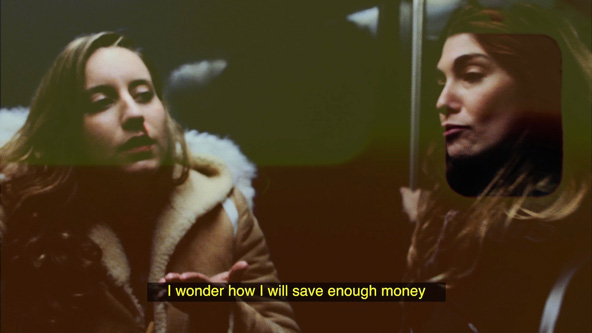
    The feature film is an hybrid film mixing video in HD, old VHS, fiction and fictional documentary. I think it is a two speeds film, two languages dedicated to two generations: youth and parents.
    It is a love and a anger story, an emancipation and a guilt story, a blood and a life story : a family tale. No matter the period, the country or the language, this theme remains complicated.

    The series is very complementary to the feature film because, I’ve used around one quarter of the series in the feature film (in a different order) and if you want to see it completely, you have to watch the series. The series is made of 5 episodes of 11minutes each. The work in the series is more of a ‘voice over’ exercise. Each episode is about an universal struggle that every human being can experiment once in their own life. It’s about contrasts and choices.

    The art exhibition is also complementary to the series and the feature film. It’s a mix between art and digital. You can discover in the exhibition the work of one of the main characters of the feature-film who is also working on art exhibition. The exhibition is composed of digital, sounds and visual artworks in connection with the feature film and the web series: subtitled photographs, QR codes, videos in old TVs and computers…

    What events are you going to be involved at this year with HEIS?

    The feature film is still in Sound post-production right now. I’m going to send it to some film festivals that I really like and support. And I’m currently looking for a distributor in order to release it in theatres in 2017.

    The series has been already selected in film festivals in France and abroad (NYC, Reykjavik, Hong Kong, Chicago…) and I’m currently waiting for answers from others festivals. After that, I will collaborate with a film distributor in order to release the series (TV and web, I hope) by the end of 2016.

    The art-exhibition has been already exhibited in three places in France. The current place is now extending the exhibition for one more month until the end of April, so you can still see it Paris at the moment. In May the exhibition will be shown in London and after that in Berlin.

    I’m also working on releasing the project with all the three parts together in some places suitable for that. I hope that it will be possible. It’s a very long process to release your artistic project and I have to be as patient as the audience is! All the information about where the films are selected and screened are on the Facebook page and you can also check the ‘live exhibition’ of the project on our Instagram account, heis_crossmedia.
    Future-Positive-Heis-3

    Are you currently working on any other projects or have plans to work on something new after HEIS?

    Yes, whenever I have some free time I work on the script of my next feature film. I would like to develop it quite soon. To be honest, in fact, I have two ideas for films. And I’m currently developing and I’ll see which one will be easier to do with a producer. I don’t know yet if I’ll shoot it in France. One of this scripts, named ‘Märlha’, has just been selected by ‘La Maison des Scénarites’ at the ‘Festival de Cannes 2016’ and will be pitched during the Festival to producers.

    Apart from that, I continue writing screenplays for theatre, just for pleasure. I’m constantly working on something related to visual arts – it helps me to keep inspired.
  • Voice Notes: A Tandem Ride with Horst A. Friedrichs

    Voice Notes: A Tandem Ride with Horst A. Friedrichs

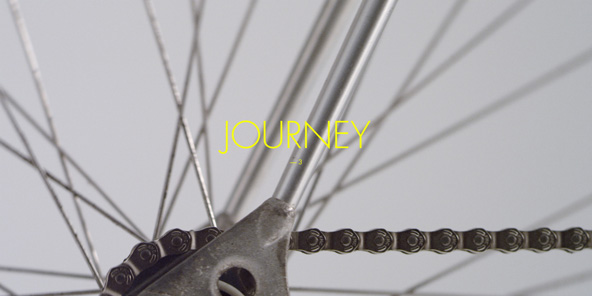
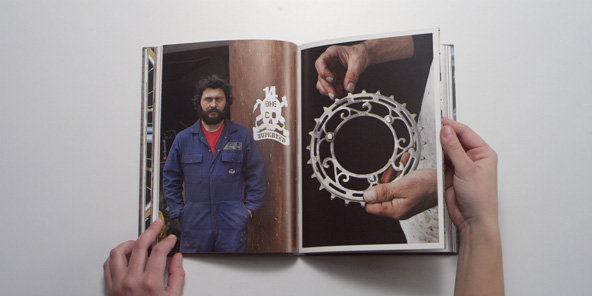
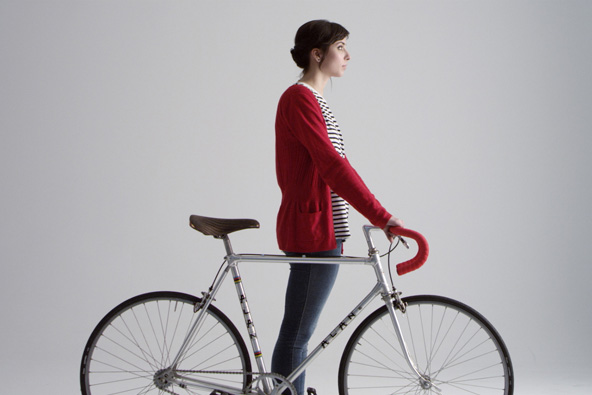
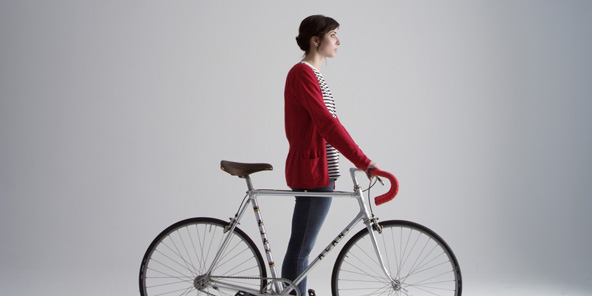
    Voice Notes is a short documentary film directed by Montenegro & Lafont and produced by Spanish design and production firm Beta Studio. Voice Notes focuses on the work of photographer Horst A. Friedrichs and, in particular, his book Cycle Style in which Horst documented London’s cyclists and their unique fashion style during 12 months.

    After a one-time encounter between Montenegro & Lafont and Horst A. Friedrichs, the director got in touch with the photographer to share with him his idea of creating a short film. In the 8 minute documentary, Montenegro & Lafont crafts a fascinating portrait of Horst, in which he reveals his favourite subjects and memories from his book.

    Voice Notes is now available to stream and buy from Vimeo on Demand:

    www.vimeo.com/ondemand/voicenotes

    Future-Positive-Voice-Notes-2-low
    Future-Positive-Voice-Notes-1
    Future-Positive-Voice-Notes-3-low

  • Made By Hand by Tatanja Ross

    Made By Hand by Tatanja Ross

    Made By Hand is a mini documentary by Tatanja Ross, which discusses the revival of handmade approaches in the art world. The director showcases a glimpse of this movement through work of emerging artists based in Melbourne, Australia. The portrayed illustrators, paper crafts, screen printing and textile artists discuss how the handmade movement inspires and benefits their work.

    As Tatanja mentions in the documentary, “the DIY culture is less of a simple art trend but a lifestyle that many makers encompass and put back into the world”. In the world of mass manufactured products, the director hopes to inspire other young artists to work with their hands and show that supporting local artists and makers is important and worthwhile.

    madebyhand-mezzo.tumblr.com

    [x_video_embed no_container=”true”]

    Made By Hand from Tatanja Ross on Vimeo.

    [/x_video_embed]

  • Why James Bond Is As Relevant Today As He Was In 1962

    James Bond is a British intelligence agent, who made his movie debut in 1962, played by Sean Connery in Dr No. All these years later, Bond is every bit as popular as he was then. There aren’t many characters that have stood the test of time as successfully as 007, and the franchise is one of the longest-running and most successful ever. But why is Bond still so popular?

    Image via Unsplash

    1. He’s a hero. James Bond is never afraid to be in danger. Bond is a symbol of heroism, for men in particular, and this is very appealing. James Bond also represents freedom and power. He is self-assured, unapologetic, and confident. All of us sometimes feel self-doubt except James Bond. Bond knows who he is and displays no self-doubt at all. We see Bond on the screen being very cool and confident, no matter what happens around him.
    2. He’s classy. Bond is different from other more masculine-coded heroes in that he is classy. Bond is as famous for his chic suits and love of martinis as he is for his fighting skills. 007 is confident, knowledgeable, and sophisticated. When the character was created by Ian Fleming, Bond was written with a uniquely British attitude, which made him stand. Bond is not just a man who can fight; he’s also a man with a perfectly tailored suit.
    3. He’s tech-savvy. One of the reasons we still love to watch Bond movies is gadgets. A lot of heroes use guns and drive fast cars, but Bond is the true master of the gadget. At the time Bond was first written, he was the first pop culture icon to really embrace technology. In a lot of writing at the time, the tech was shown as untrustworthy and dangerous. Instead, Bond uses exploding pens, invisible cars, and jetpacks, and succeeds because of them.
    4. He’s well-cast. Eight different actors have portrayed James Bond on screen, and each has brought their own style to Bond while still keeping the essential parts of the character intact. No matter which Bond film is the best, each actor brings something new to the role, while still being very much Bond.
    5. He’s timeless. 007 has stood the test of time as he has always been written to be both of his time and above it. The essential character of Bond is constant, but each actor and new film adapts him to the time period he finds himself in, shifting to meet the changing tastes of the audience. Bond films have changed a lot over time, from their beginning point of adventure-spy films to being comedies in the ‘70s, and the grittier movies made now. 

    The legacy of Bond is also part of why he is still so beloved. The franchise remains as popular as it is, as the films are both old-fashioned and completely timeless.

    Which Bond is your favourite Bond? Which Bond film is the best one, in your opinion, and why do we still love 007 so much?

  • What To Do when Sick in Bed

    Nobody likes being sick, and in the hustle and bustle of today’s lifestyle, it may feel as if you don’t even have the time to be sick, never mind doctoring yourself back to health. But, the truth is that the sooner you get cracking on getting better, the sooner you’ll kick that bug to the curb and be on top of your game again. That said, here are some tips on what to do when you’re sick in bed.

    Photo by Andrea Piacquadio from Pexels

    Stay Hydrated

    Drink lots of fluids to keep your immune system strong and head off dehydration, which is one of the most common side effects when you’re not feeling well. Try herbal tea or hot water with lemon (or just stick with good old H20). You could also try drinking something packed with loads of electrolytes, especially if you’ve come down with something that makes you nauseous the entire time. According to this dentist in Henderson NV, hydration helps your body flush out toxins, supports vital bodily functions, and aids in recovery.

    Take Your Meds

    It’s important to get the meds that you need to feel better. If you’re unsure what medication you should be taking, consult your doctor or pharmacist for advice on when to take which drug and what would be best for your specific illness. It would also be advisable not to try and drive anywhere, as your judgment may not be the best.

    Also, when you go to bed for the night, make sure that there are some basic necessities with you so that if something happens during the night (like needing medicine), it will be right next to you. For example, it would help if you packed things like water bottles, painkillers/anti-inflammatory drugs, headache relief medicine (you know what your specific needs are), tissues or a box of kleenex, and even some snacks to keep on the nightstand.

    Stay in Bed

    You’re feeling lousy, and staying in bed is good for you, so do it! Get plenty of rest to help heal what ails you. If getting comfortable on your mattress isn’t working out too well, try adding some pillows or blankets to make yourself comfier. you’re going to need all the rest that you can get if you want your body and mind to heal. If not, you may just feel worse or have a relapse because of too little sleep. Make sure that when you do go to bed for the night, there aren’t any lights on in the room (even from cell phones) and that you’re in a dark, quiet environment.

    Keep Yourself Entertained

    It might sound like an oxymoron, but boredom is one of the worst things for someone who’s not feeling well. So naturally, you’ll want to stay entertained, and something you can do is watch TV shows or movies on Netflix, take up a new hobby like knitting or reading, or even make your own soup. There are plenty of things that will keep boredom at bay while providing some much-needed distraction from the symptoms that have you down.

    By utilizing the above tips, you’ll be back on your feet in no time! You may feel lousy right now, but if you spend one or two days doing the above and focus all your energy on getting better, you’ll beat this illness in record time!