Category: Fashion

  • Travelling to Svalbard with Parajumpers

    Travelling to Svalbard with Parajumpers

    Adventure, tradition, culture, exceptional pursuits and extreme professions all meet in the latest project from Italian luxury outerwear label Parajumpers. The combined creation of Ape S.P.A. and designer Massimo Rossetti, Parajumpers has just released ‘Stories’, a travelogue that tells stories of  lives outside the ordinary in the remotest corners of earth.

    To find out more about this project, we spoke with the label about the inspiration behind the campaign and the character we can meet in the first video.
    www.parajumpers.it

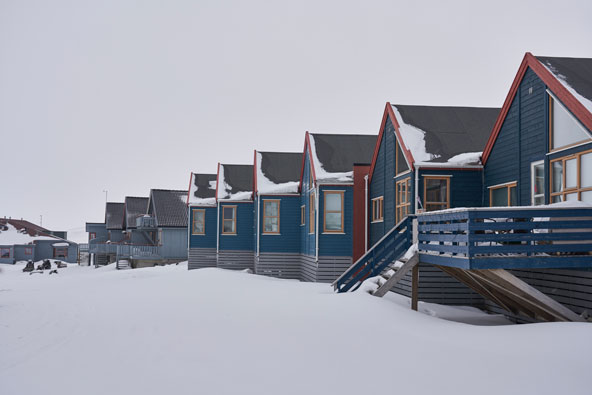
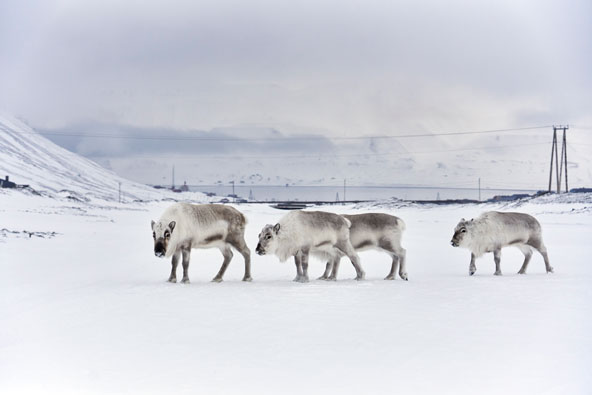
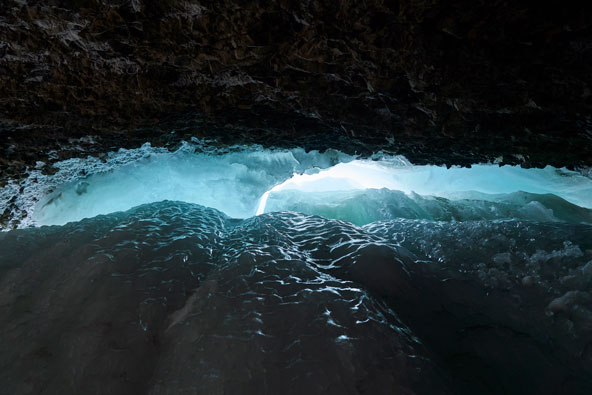
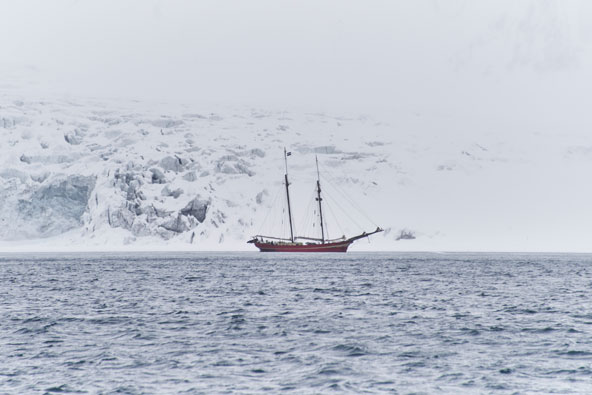
    The chosen destination for the first story is Svalbard, a Norwegian archipelago located just 1,000Km away from the North Pole. Here is where nature can be experienced at its most extreme, with extensive white landscapes, incredible wildlife and the contrasts between the midnight sun during summer and the long, polar nights in winter.

    Its inhabitants embrace isolation and enjoy an extraordinary lifestyle, thanks to its enticing mix of 51 cultures, sense of community and eerie beauty.
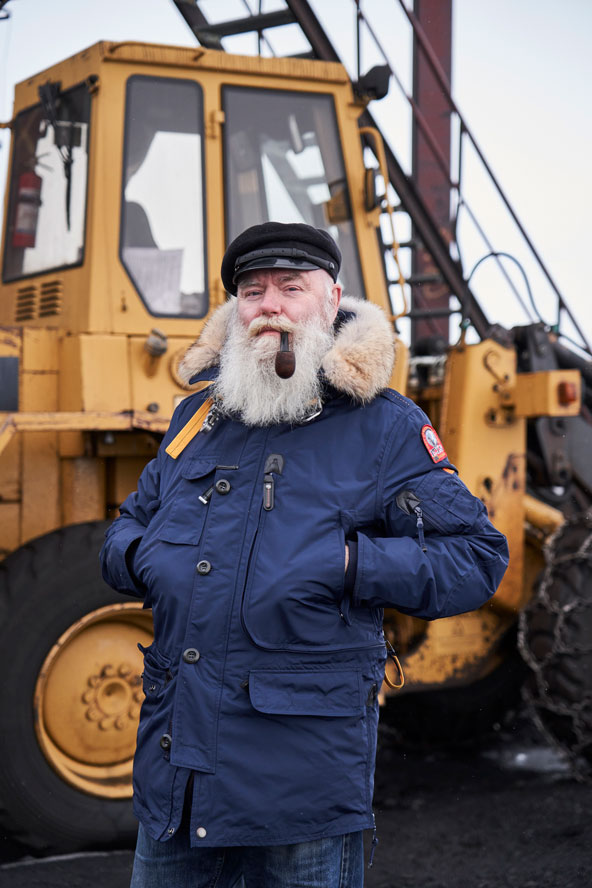
    Wiggo Antonsen, a local taxi driver is the protagonist of the first story. He came from the mainland in Norway and has no intention to leave any time soon. In this video, we discover his story as he take us on a ride around Longyearbyen, the largest settlement in Svalbard.

    Can you tell us more about how Parajumpers started and what was the inspiration behind it?

    The luxury outerwear brand was inspired by the men of the 210th Rescue Squadron, who are highly trained to execute extreme recoveries in the wildest, most remote and hostile corners of the globe. Designer Massimo Rossetti developed the product, drawing from military uniforms, firemen’s gear and the technical functionality of accessories such as backpacks. Each Parajumpers’ collection closely references hardware, with the removable metal hook that is a brand signature being developed from a quick release Parachutist hook. Parajumpers’ perfectly fuse style and function, paying close attention to developments in technological advancements and intelligence of construction.
    Why did you choose Svalbard?

    Svalbard became a natural choice for this season of Parajumpers Stories as it is an area of great beauty and also true conditions to highlight the performance levels of the Parajumpers’ product.

    The Parajumpers Stories speak of lives outside the ordinary, lived in the remotest corners of earth where powerful forces of nature make everyday survival a challenge. Longyearbyen is the largest settlement and administrative centre of Svalbard. Once an active coal-mining town, it is now better known for its university, the Svalbard Global Seed Vault, as a base to see breathtaking glaciers and the Northern lights, and for scientific research. As such a unique area we were blown away by its beauty.
    How did you come across Wiggo and his story?

    Whilst we were working on the Stories campaign, we came across a lot of interesting characters. Wiggo Antonsen, was one of these and we chose to feature him as the introduction to the campaign as he has such an appealing narrative and vibrant personality.

    Wiggo is a local taxi driver and sightseeing tour operator, who told us that the best part of Longyearbyen are the people and the sense of community. “In this town, we are 2,304 citizens, but we come from 51 different countries” he says. “What I like best about this place is the combination of peace, no stress and no crime”.

    In Svalbard there is virtually no such thing as a “local” inhabitant. Like Wiggo, who came from mainland Norway over a decade earlier, many have left behind more hectic lives for a chance to live in the icy north. It is an enticing mix of cultures, religions and beliefs that makes it uniquely colourful and inclusive.
  • By Signe, Sustainable Danish Fashion

    By Signe, Sustainable Danish Fashion

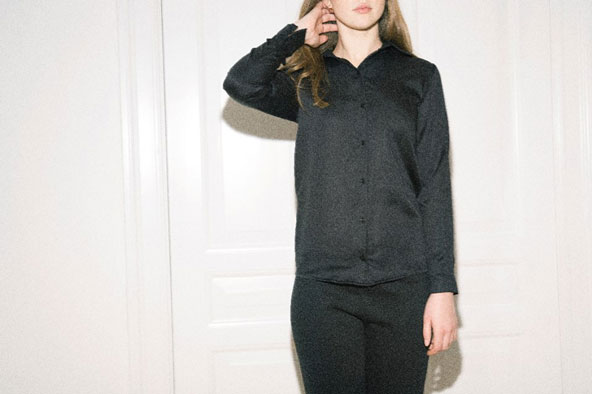
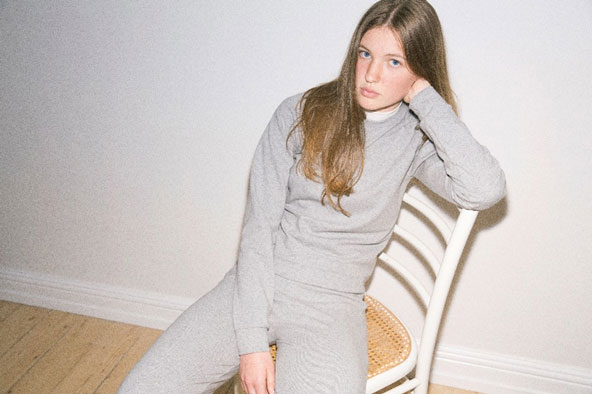
    As a Danish fashion brand established in 2015 by Signe Rødbro, By Signe is dedicated to creating honest and feminine easywear for the independent and creative woman. This is achieved through an honest design process that uses high quality materials while reducing the environmental impact during production.

    www.bysigne.com

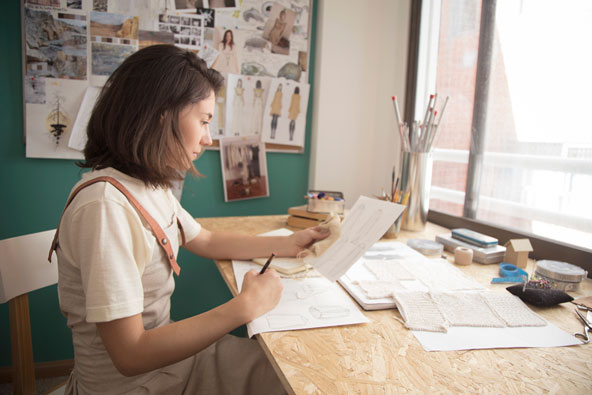
    For most of her life, Rødbro didn’t see herself going down this current career path. That was until she went to university and realised “reading books forever” was not her thing. The would-be fashion brand owner then dropped out of college and enrolled instead in an old-fashioned tailoring school. It was during this time that she decided she needed to be a fashion designer. After graduating, she further pursued fashion design at a university in Spain.


    Image credit: By Signe

    Rødbro started the brand in order to prove that apparel can be made exclusively in Denmark. In fact, all of By Signe’s clothes are made under one roof, from designing, to producing, all the way to finishing. This way, the team has full control over the quality of the brand’s clothes and requires no complicated transportation costs. In contrast, other popular fashion brands often outsource their production, designing clothes in their headquarters, manufacturing them in one country, and then adding finishing touches in another.


    Image credit: By Signe

    As for its sustainability aspects, Rødbro felt it important to create something she could vouch for. By Signe’s founder has a huge conscience, and is well aware that the fashion industry is the one the top polluters in the world. Rødbro explains that contrary to popular belief, working with an environmental agenda doesn’t make the creative process any more difficult. It actually makes it more grounded. Thus, her brand joins the minority of fashion labels that ensure eco-friendly and ethical practices from start to finish.

    With its honest process and minimalist approach to design, By Signe has seemingly mastered the Danish concept of hygge. It is an idea that has no direct English translation. However, Lottoland state that some words associated with hygge include “pleasant atmosphere” or “cosy feeling.” Over time, it has evolved into other concepts like “security,” “peace,” and “home welfare.” By Signe most vividly incorporates hygge in how the brand focuses on its clothes’ warmth and cosiness by using natural materials like organic cotton, bamboo, and natural dyes.


    Image credit: By Signe

    In Rødbro’s interview with Savant Magazine, she explains that while By Signe strives to appeal to everyone, Rødbro herself takes inspiration from “women who are more art than beauty.” With this, she hopes to create healthy and comfortable garments for the natural woman in modern society.

    With her creations, Rødbro wants audiences to know how the team makes an effort in visualising other people in their clothes. In the design process, she imagines how a particular garment will move or feel on a woman’s body. The Danish fashion designer thinks about details like where the stretches and tightness will be, because it’s actually these little things that can have a great impact on a clothing item’s cosiness.

    Overall, By Signe is a brand that wants its wearers to be happy and comfortable in their skin with pieces that are ethically made and not harmful to the environment. Another eco-friendly fashion brand worth taking note of is Zampa, which you can check out here on The Future Positive.

  • Zampa

    Zampa

    Founded by Bárbara Mayer, Zampa is an Argentinian womenswear brand based on the production of garments made of noble materials and manufactured using fairly traded practices through artisan partnerships.

    Bárbara was born in a small town in the Argentinian Patagonia spending most of her childhood surrounded by wool producers and she inherited her passion for handmade textiles from her grandmother. Inspired by her roots and after studying Fashion Design at University of Buenos Aires, Bárbara started Zampa with the objective of showing the process behind the manufacture of garments: from raw materials to final products.
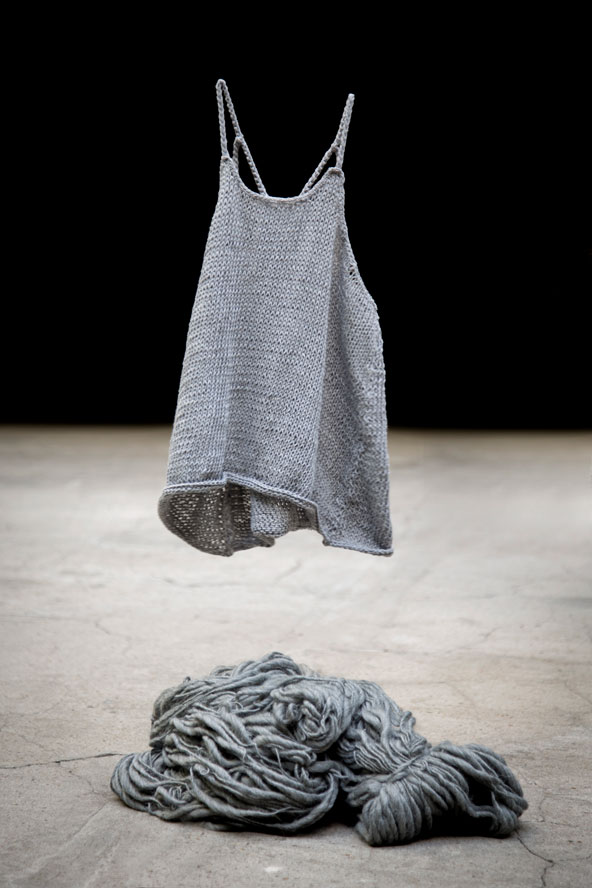
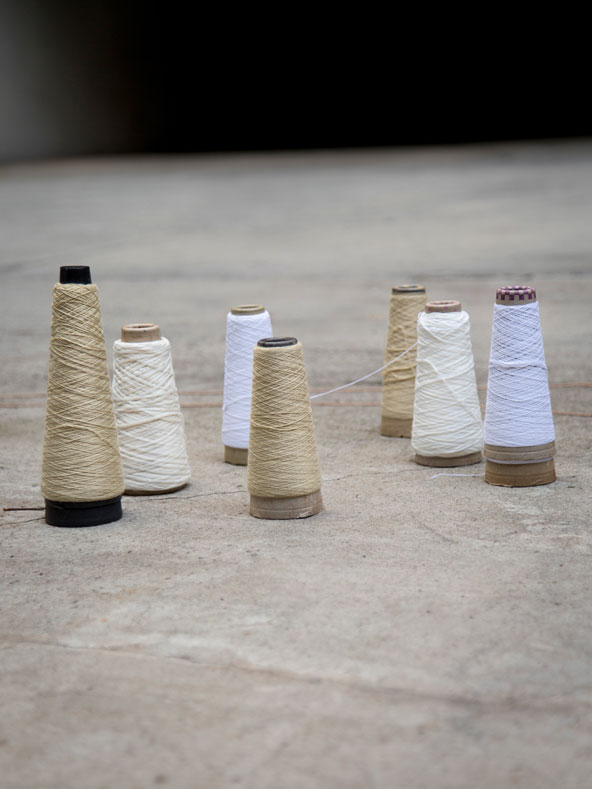
    Zampas’ ethos reads “Natural fibres are created by the planet, not made by humans”. Inspired by nature, the human body and their interaction, Zampas’ garments are made of noble materials such as raffia, cotton, linen and merino, llama and alpaca wool. According to Bárbara, “all these materials have their own identity, characteristics and express a particular message. So that the product is cosy and warm in a poetic way.”
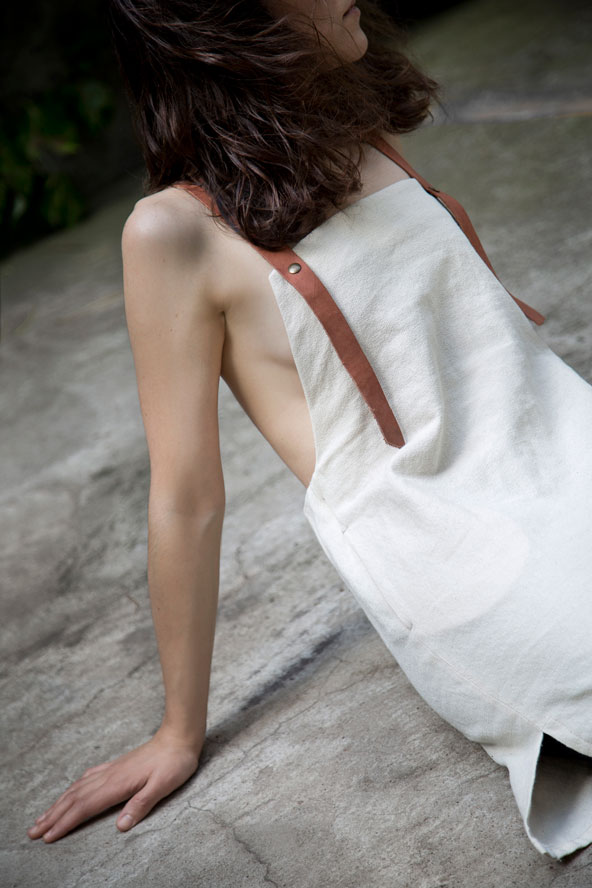
    Bárbara aims to learn from textile traditions, through the artisans and producers she works with in order to generate clothes and objects with history. Her garments tell stories – from the materials and their connection to nature to the design itself – and are manufactured with the idea of creating pieces that aren’t governed by fashion trends, designing a revolutionary product with a strong identity.
    www.zampapatagonia.com

  • NKITH – New Kids in the Hood

    NKITH – New Kids in the Hood

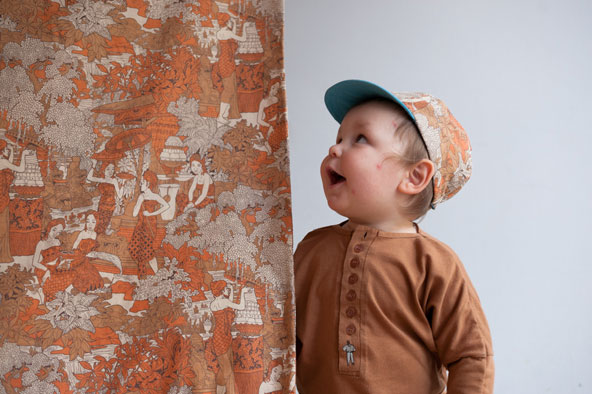
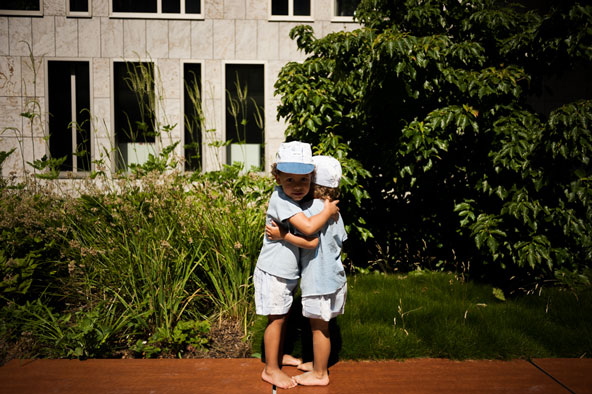
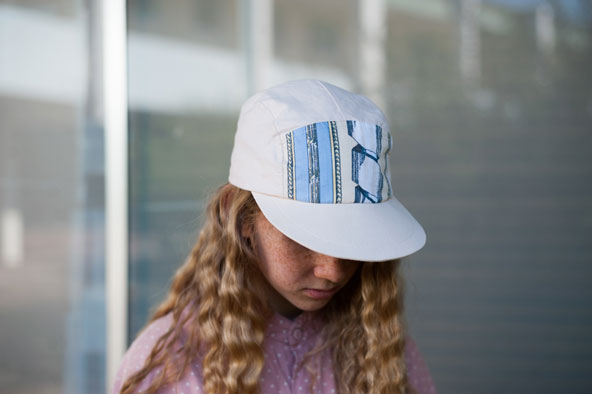
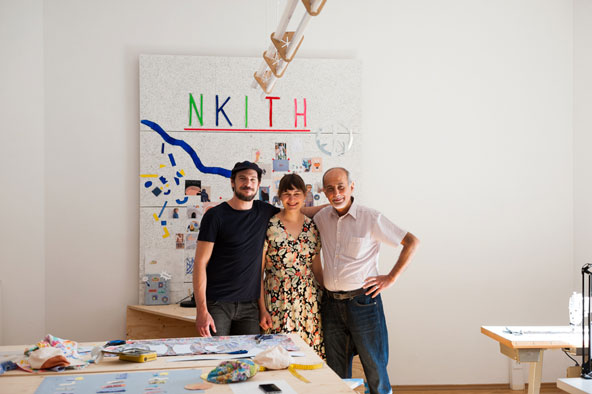
    Sarah Seidel is the founder of New Kids in the Hood (NKITH), a kidswear label producing upcycled and sustainable clothing in Nuremberg, Germany. Along with her boyfriend Florian and Hamdi, a production manager from Syria she met whilst working with refugees on an art exhibition, Sarah creates caps, trousers, shirts and other children clothing using fabrics and prints from the 80’s and 90’s.

    We talked with Sarah to find out more about how NKITH started, the label’s design and manufacturing process, and future plans.

    www.instagram.com/newkidsinthehood
    www.nkith.com

    Photos by Maria Bayer.

    Can you introduce yourself and the rest of your team?

    My name is Sarah, I am a seamstress and social worker living in Nürnberg, Germany. I have a 3-year-old son with my husband Florian, who I am also doing this project with.
    Florian is the creative director of “Die Krieger des Lichts”, a design agency from Nürnberg. We share the same workspace – I design the clothes while Florian is head of all print / online designs and also develops all strategic matters for NKITH.

    We also receive a huge amount of help from our friend Hamdi, a textile production manager from Syria. He helps with sewing all the kids clothing.

    How did NKITH start?

    Two years ago, when I was studying social work, I met Hamdi while working on an art exhibition with refugees. He used to own a huge textile production company with 200 people working for him, back in Syria. We decided to start working together by making kids clothes out of old fabrics. Initially, we gave our products to family and friends – this is how New Kids in the Hood was born.

    Hamdi is a great production and high quality manager. This project would not work without his enthusiasm and his love for clothes and life.

    Sustainability is key in your products, can you tell us about your design and manufacturing processes?

    NKITH is an upcycling kidswear brand with a slow fashion approach. We are driven by the colorful and fearless memories of our childhood, and we collect used fabrics to create new and timeless pieces for kids.

    Our first collection is inspired by 90’s sitcoms and public transportation seats. They feature exuberant patterns and illustrations from the time that brought us the internet and a prince from Bel Air.

    We love what we do and this is an ambitious project for all of us. We want to make fashion without wasting too many natural resources in terms of the fabric production. There are tons of old fabrics still in good shape and it would be so stupid not to use them – you probably know about the critical water consumption due to the world’s cotton production…. Every item is unique and handmade with love in our studio in South Germany.

    What products do you currently offer and what you’d like experiment with in the future?

    At the moment we offer kids clothing: trousers, skirts, dresses and caps for 0-8 year-olds. We also make caps and mum-shirts in adult sizes. The upcycling process allows us to only craft unique pieces.

    All fabrics are collected from huge textile recycling factories in the south of Germany. We manage to produce about 30 caps out of one fabric – when it’s used up, we will probably never find that very same textile print again.

    For the SS18 collection, we will add some basic items. In order to generate more single colour fabrics for the basics collection, we will upcycle and hand dye old fabrics.

    How do you see NKITH growing in the next few years? Do you have any projects or ideas you’d like to develop?

    In the future we would love to invite more people to work with us, as there are many very talented seamstresses living in our area. Textile factories are very rare in Germany, so we would like to bring the fashion production back to our hood.

    We want to experiment with special techniques; we figured out how to avoid remnants by laser cutting all pieces to give an example. We are calculating, developing and trying out a lot. It feels like a huge everyday puzzle that we are completing day by day. It’s this particular challenge what we really love about our project.

  • The New Mediterranean

    The New Mediterranean

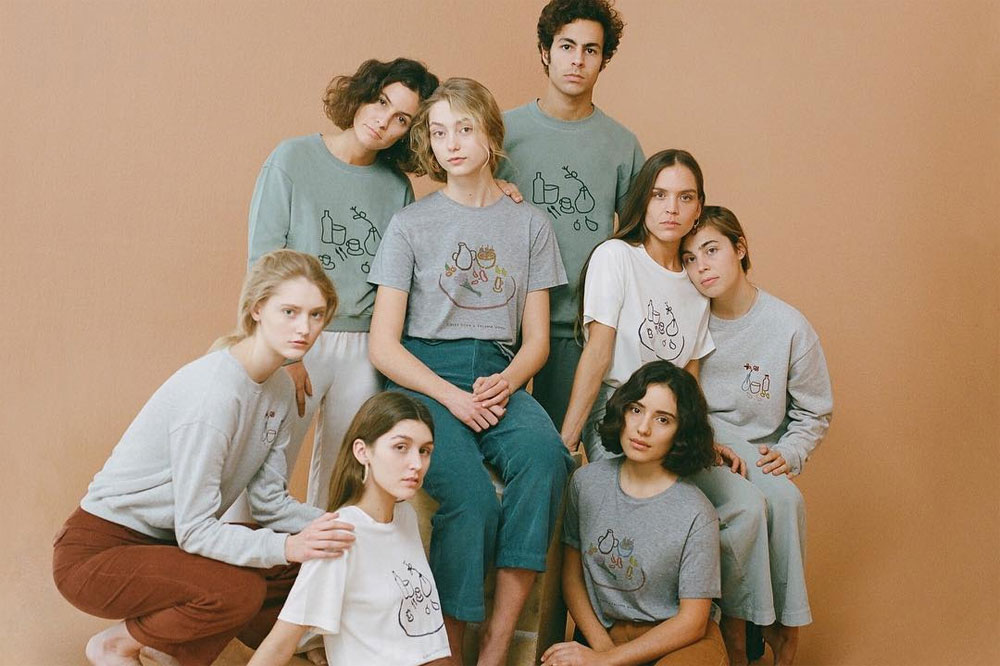
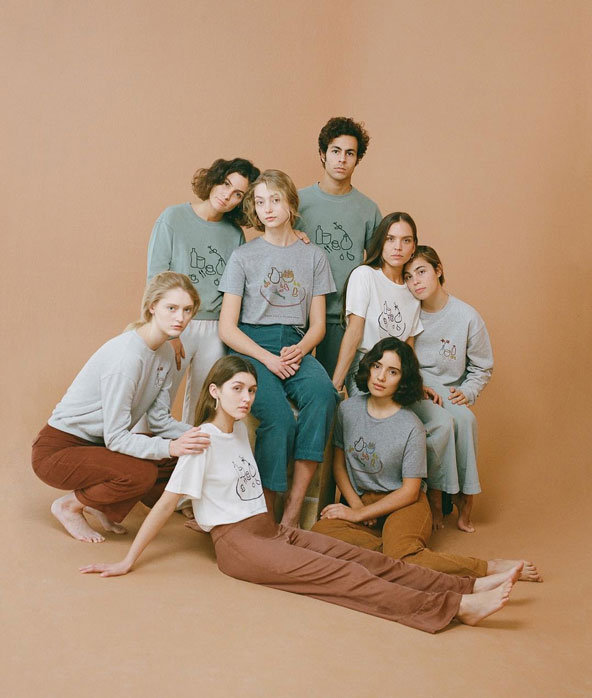
    A shared love for plants, handmade products, natural materials, Henri Matisse and the organic shapes found in the Mediterranean architecture and landscapes are just some of the elements that connect a new wave of Barcelona-based creatives and collaborators who are influencing current fashion and art trends. We’ve selected some clothing and accessories brands, shoemakers, illustrators and jewellery labels that represent the aesthetics and values of what we have called ‘The New Mediterranean’.

    Paloma Wool


    Image via Paloma Wool Instagram

    Founded by artist and designer Paloma Lanna, Paloma Wool is described as a “a project on photography, clothing and other experiments”. Paloma Wool’s products are locally made in Barcelona, often collaborating with artists to create items ranging from clothing and jewellery to bags and art books. Paloma also explores “the space or ideas that are created around the act of getting dressed” through art installations and performances in which she also collaborates with other local creatives like art director and photographer Carlota Guerrero, known for her work with Solange.

    www.palomawool.com

    LEVENS

    Image via LEVENS Instagram

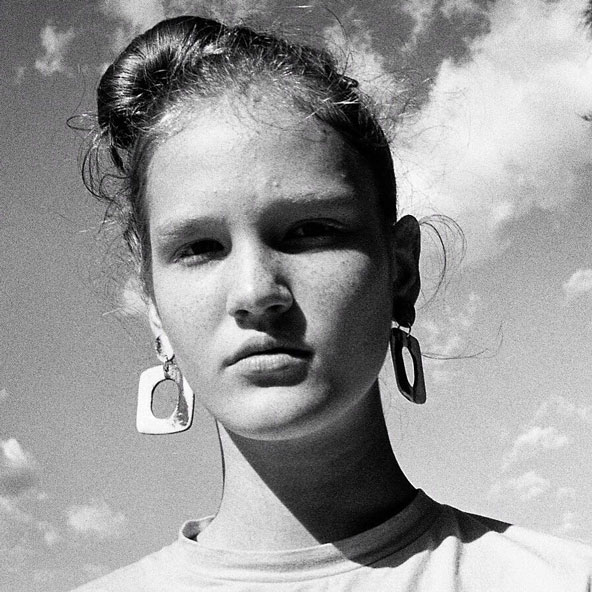
    Actress Mar del Hoyo is behind LEVENS, a jewellery label founded in 2016. Mar creates ceramic earrings inspired by her fascination for nature and femininity. All LEVENS’ products are handmade, with differences in shape and colour which make them unique. In fact, these ‘imperfections’ are part of the ethos behind this project: “Imperfect pieces that arise from a manual movement, almost intuitive, in which the simplicity of forms and materials are a sign of identity”.

    www.levensjewels.com

    About Arianne

    Image via About Arianne Instagram

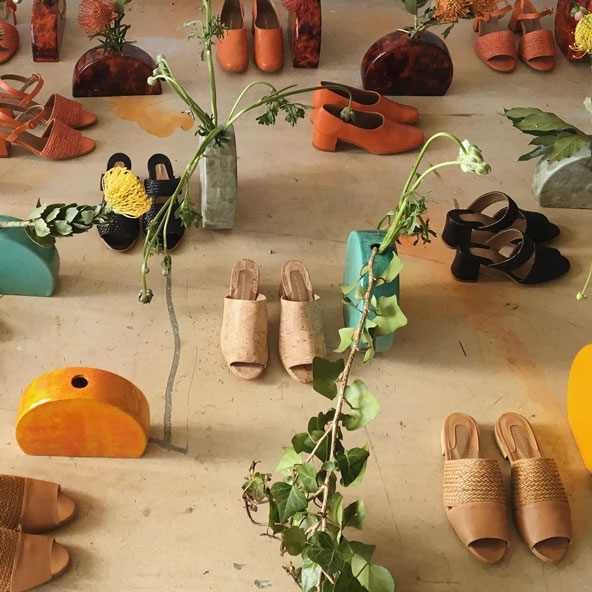
    About Arianne was one of the first Stories we published on our website. The founders of About Arianne, Ariadna Guirado and Ernest Vidal, have been creating women’s shoes 100% made in Spain since 2010 and have also recently started to design bags. From their shop/studio in Barcelona’s Poble Nou, Ariadna and Ernest produce slow-fashion centred around three values: quality, comfort and design. About Arianne’s shoes and bags are inspired by classic lines and silhouettes which are reinterpreted with a contemporary vision, creating unique and timeless pieces.

    www.aboutarianne.com

    Tana Latorre

    Image via Tana Latorre Instagram

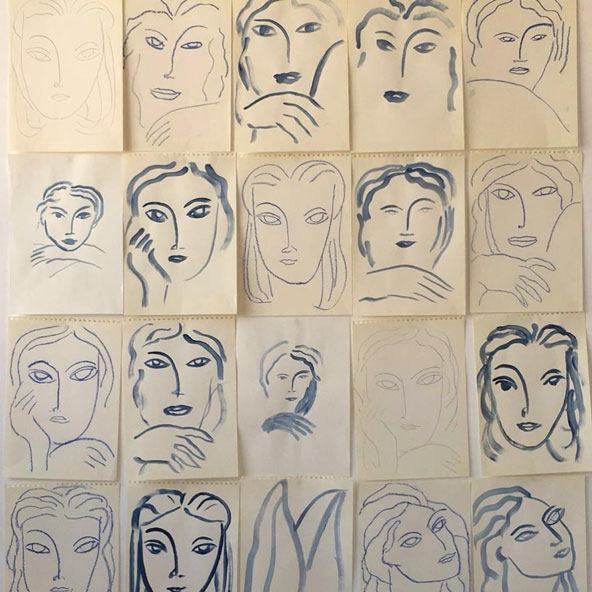
    Tana Latorre is an artist and one of the close friends and collaborators of Paloma Wool – she has illustrated clothing and worked together on other art projects with the label’s founder Paloma Lanna. Born in Nairobi, Tana lives in Barcelona and her minimalist drawings of female silhouettes and faces have been reinterpreted by other artists like sculptor Diego Cabezas and the Berber women behind Anou, a project connecting artists with artisans in Morocco.

    www.instagram.com/tanalatorre

    Matagalan Plantae

    Image via Matagalan Plantae Instagram

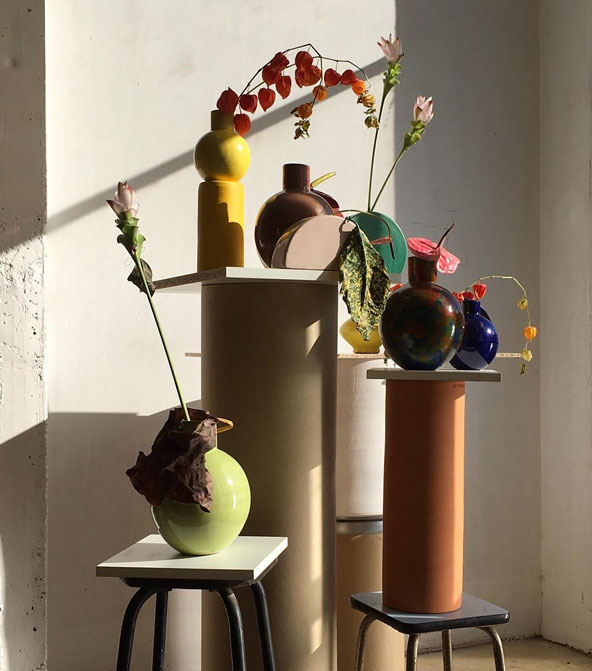
    Born in Costa Rica, Carolina Spencer moved to Barcelona in 2004 and worked as a florist before starting Matagalan Plantae in 2013 as a project exploring the relationship between plants and pots, and their connection to the city. Caroline saw the plant and its container as just one object, and wanted to replace the traditional plastic pot with ceramic vases made by hand in Cataluña in order to create a plant/pot combination more aesthetically pleasing.

    www.matagalan.club

    Ölend

    Image via Ölend Instagram

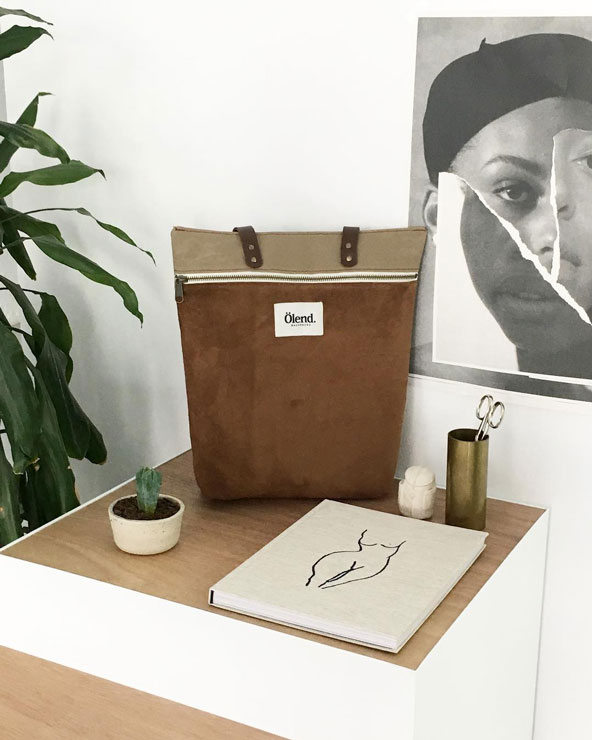
    Fran Rios, Adriana Dumon and Antonio Longás started Ölend with the idea of creating backpacks for themselves, and their friends liked them so much that they decided to start making them on demand. Ölend’s backpacks and bags are inspired by travelling, challenges and mountaineers from the 40’s and 50’s. They are handmade 100% in Barcelona, using only the highest quality materials and sometimes even customised based on the clients’ preferences.

    www.olend.net