Author: Igor

  • The Future of UK’s Independent Ceramic Industry

    The Future of UK’s Independent Ceramic Industry

    The UK has always been associated with ceramics and pottery and, over the past few years, the country’s ceramic industry has gone through a revival thanks to independent makers and designers celebrating craftsmanship and using social media to connect with their customers. According to data, the sector grew 45% between 2009 and 2013, and since 2013 the employment in this industry has kept on increasing.

    To find out about the current situation and what’s next, we chatted with 4 ceramicists and potters across the country to hear their views and predictions.

    Olivia Fiddes

    Olivia Fiddes is a Scottish ceramic artist based in London that creates homeware and objects using hand building techniques. When asked about why ceramics have become so popular over the past years Olivia says “There’s clearly been a shift away from ‘fast-fashion’ and consumption to more support for local, ethical and traditional businesses. Even if you aren’t able to be a ‘maker’ yourself you can be involved in that lifestyle by supporting makers and by having these goods in your home. I think shops and businesses definitely see this and have looked to sourcing products from artists, designers and craftspeople who value quality and self-expression. As a customer there is nothing more special than a one-off or limited run product, which handmade ceramics tend to be.


    Photo by Olivia Fiddes

    For Olivia, this shift in the way we consume products is also influenced by the current financial situation, “We’re spending rather than saving our money more because houses and families are more distant. We’re willing to spend money enjoying our everyday and living in the present, whether that is on special tableware, a holiday or going out for meals.


    Photo by Johanna Tagada / Photo by Association

    Ana Abellán

    Spanish ceramicist Ana Abellán started working with ceramics 5 years ago after moving to Edinburgh and attending an evening course for adults. Ana agrees with Olivia when it comes to the value of owning something special, “We all want to have unique things, things that have a meaning – I really believe in quality over quantity. I don’t want to have ten cups made with a machine somewhere in China, I’d rather have one handmade cup that has some kind of special energy“. The way we live right now has also influenced how we interact with things around us and Ana thinks that “Society has lost the connection with nature and beauty. I think we need to relearn how to slow down and appreciate the beauty inherent in simple things we have around us, although I am the first one on that list – I am always rushing everywhere trying to get too many things done.


    Photo by David Guillen

    When asked about what ceramic artists need to do to supply customer needs in the near future Ana says that “Ceramic artists have done a great job over the last few years, promoting themselves, sharing more and making ceramics more attractive. Getting in touch with customers and listening to them is important, as well as being affordable but valued.


    Photo by David Guillen

    Home Thrown Studio

    Gem Mordle from Home Thrown Studio also got interested in ceramics after taking up an evening class when she moved to Dorset 8 years ago. For Gem, the recession has had a positive impact on consumer behaviour, “I’ve definitely seen a rise in appreciation for ceramics and everything and anything hand crafted over the last couple of years. People want to spend their money on objects or clothing that are hand made and have a sense of authenticity about them. Lots of my customers seem to really appreciate the personality of my wares and the fact they are all original and have a story. It’s also really nice to be able to meet customers face to face at local markets, as so much shopping is done online these days.


    Photo by Home Thrown Studio

    Despite oversees manufacturing and the easy access to cheap homeware, Gem feels positive about the current situation of the industry and its future, “I feel over the past years that ceramicists and potters are being put back on the map. There has been a bit of a revival with the Great British Throw Down, the Kickstarter campaign for The Clay College in Stoke and a handful of universities are starting up their ceramic courses again so I think we can be hopeful. I am inspired daily by the ceramic community on Instagram, and feel that social media is a great platform for contemporary potters to exhibit their work and keep in touch with their customers.


    Photo by Home Thrown Studio

    Natalie J Wood

    Scottish designer Natalie J Wood studied at Gray’s School of Art and felt attracted to ceramics due to its complexity and flexibility. For Natalie, social media has played a key role in the development of her businesses and educating customers about what’s behind a product, “It has helped me connect to new audiences. To promote events I’m linked with. I feel as a designer/maker Instagram has been a great platform for visual based work. You can instantly gauge what about your work people connect to the most. It challenges you in a way to create a larger story with your work. Now people want to understand more about behind the scenes and how making is a part of your life. In turn that gives the work more value because people can understand it on more than just a visual level.


    Photo by Sean Dooley

    Natalie considers function an important factor for current and future customers, “I think the industry is becoming more about micro manufacturing and independent brands. People are becoming more concerned about where the products they buy are coming from and having a story behind a piece makes it something special. I also think that in a backlash to throwaway culture our society is less about the ornate and there is a rise in the beauty of function. Objects that have purpose but also become decoration. I know I sell water carafes but a large number of people use them as vases, which I think is great! I’ve been a long time advocate of the William Morris quote ‘Have nothing in your house that you do not know to be useful, or believe to be beautiful.’ But I think now that use and beauty are becoming one and the same.


    Photo by Sean Dooley

  • Professor Sujit Choudhry Examines Populism and Constitutional Law

    Professor Sujit Choudhry was asked to provide his opinion on whether a constitution could be sufficiently designed to safeguard against populist forces taking over a country’s government. He answer was complex and multi-faceted because he started to define the ultimate aim of a constitution and the actual threat that populist mobs might pose to its staying power. While he has great admiration for the ability of a constitution to guide society towards respect for human rights and governmental structures, there are some political events that simply cannot be accounted for if they manage to garner sufficient support from the population. It is laudable for a constitution to aim to protect the governing structures of society and protect citizens from violations of their basic rights by their elected officials or fellow citizens. Thinking that a constitution can do much more than this could jeopardize its ability to withstand the political test of time. 

    What makes populist rebellions different from those of autocratic takeovers is that populist rebellions typically have the support of the people and are not seeking to rule with an iron fist. Populism is rooted in a desire to reject the confines of a governing structure just because it is grounded in years of tradition. Populist rebels would prefer a government to be able to react more flexibly to the whims of the people in any given situation. This appears to be the antithesis of how constitutional rule is widely regarded. Populists may not attempt to reject a constitution altogether, but they are not likely to respect any traditional political party system.

    According to Professor Sujit Choudhry, it would be a grave mistake to try to spell out all of the workings of a political party system in a constitution because this is begging to be challenged by populist detractors. It is much more useful to design a constitution that outlines the major governing structures of a company and erects barriers against the intrusion of the government on its citizens’ fundamental rights. One of the reasons why some constitutional scholars may be all too eager to suggest ways to make constitutions more resilient to the turmoil accompanying populism is that populist revolutions seem to be happening in large numbers all over the world. It is easy to get caught up in the headlines, but a more nuanced view of current affairs is that populist rebellions are attracting more media coverage whether or not they have significantly more supporters for their movement. 

    Professor Sujit Choudhry’s Background in the Study of Comparative Constitutional Law

    Professor Sujit Choudhry has served governments and political organizations around the world for decades as a constitutional advisor. He specializes in analyzing how a constitution can be designed and ratified to reduce violence and fighting when countries are attempting to transition to a new governing structure. This requires a deep understanding of international politics because each country has its own set of cultural, social, political and economic realities that determine what constitutional rule might take shape. 

    While some scholars might find the breadth of the knowledge that Professor Sujit Choudhry must keep on top of daunting, he says that this is the best part of his profession. He is excited about the many events and political changes happening around the world at the same time and enjoys spending time staying updated on current events. He believes that the next milestone in the field of comparative constitutional studies will be sharing constitutional documents across borders through an international scholarly database that is constantly updated.

  • The Best Ways To Indulge On Vacation Without Spending A Fortune

    When you’re in need of a little bit of indulgence and find yourself with enough time off work to warrant a holiday, often the only thing from stopping you from jetting off shrouded by luxury is your budget. Being able to afford all of the fancy destinations and activities you see the latest and greatest famous faces doing on social media may be completely out of the question, but this doesn’t mean you can’t have a similar experience without the hefty price tag! You can visit vacations made easy online to improve you vacation experience. Also, there are many ways to spoil yourself in a whole new location whilst keeping your bank account intact, so keep on reading to discover some of the best ideas and start to organise your next amazing holiday and pamper.

    Image Source

    Go On A Cruise

    For possibly one of the best ways to get an all around feeling of being spoilt rotten whilst on your holiday, you may want to consider hopping on a cruise ship. They commonly have spas and other high class relaxation centers onboard to provide you with the highest levels of comfort and calm. With a little bit of extra research, you can discover the best luxury cruise deals with whichever destinations and entertainment you prefer for the cheapest price possible. It’s a very smart idea to upgrade your trip to all inclusive, as it’s often just a small increase in the price that means you can have unlimited food and beverages throughout your trip. This will be able to save you so much money in the long run, and being able to have whatever you like when you like really adds to the feeling of indulgence too. If you’re feeling lucky and enjoy spontaneity, one of the best ways to get an amazing deal on a cruise is by checking the tickets a couple of days before the ship is due to depart. They will not want to set sail without filling all of the cabins or having the maximum number of passengers on board, so any vacant rooms and unsold tickets will be sold for just a fraction of their original price. You can register your interest and sign up to emails on most companies’ websites, and they will send you various special offers right to your account.

    Book Off Season

    If you’re stuck on one destination or idea, one of the easiest ways to make the whole trip less expensive is by simply waiting a few more weeks to book. Every country and city has a busy season, during which many tourists and visitors flock to the location and all hotels, apartments and flights are fully booked or drastically overpriced. If you’re able to avoid the very hectic periods, which generally tends to be the months of July and August, you might be able to save yourself a pretty penny. As there will be less interest and demand for those wanting to visit, the likelihood of deals and vouchers being available will increase as sales targets will still need to be met and businesses still have to make some money. Select the ‘whole month’ option when searching for flights, as comparison sites will often show you which dates are the cheapest to help you make the most economically sensible decision.

    Stay Somewhere Different

    The typical choice for accommodation when travelling is usually a hotel of some kind, often booked based on the brand name rather than its actual qualities and functions. However, a great way to save a bit of extra crash whilst still getting a perfectly unique and special experience is by staying at a ‘home away from home’ or some other kind of rented property or abode. With the drastic increase in people putting their own houses on the market for a much cheaper price than that of just a single room inside a chain hotel, it’s becoming so easy to discover an entire property with all of the essentials and more for less. Be sure to read other customers reviews before committing to book anywhere to stay, and visit several different sites to see what options are on the market for you to choose between.

    Hopefully these hints and tips can help you plan and execute the most serene and indulgent vacation for a price you can be proud of. Visiting the cities at the top of every bucket list doesn’t have to cost you an arm and a leg, just be creative and innovative when it comes to organizing your trip and be smart when making any purchases.

  • Meet the Graduate: Julia Krewinkel

    Meet the Graduate: Julia Krewinkel

    We’re starting a new series of posts in which you can meet students from art schools around the world that are graduating in 2017. If you’d like to be featured on our blog, please send us an email to hello@thefuturepositive.com with some information about your graduation project.

    Julia Krewinkel is an illustration student who is about to graduate from the art academy AKV|St. Joost in the Netherlands. We talked to Julia to find out more about her course, her project ‘This must be the place’ and how someone graduating in 2017 feels.

    www.juliakrewinkel.com

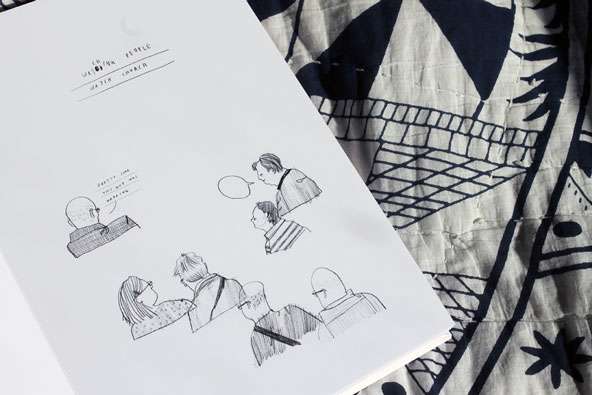
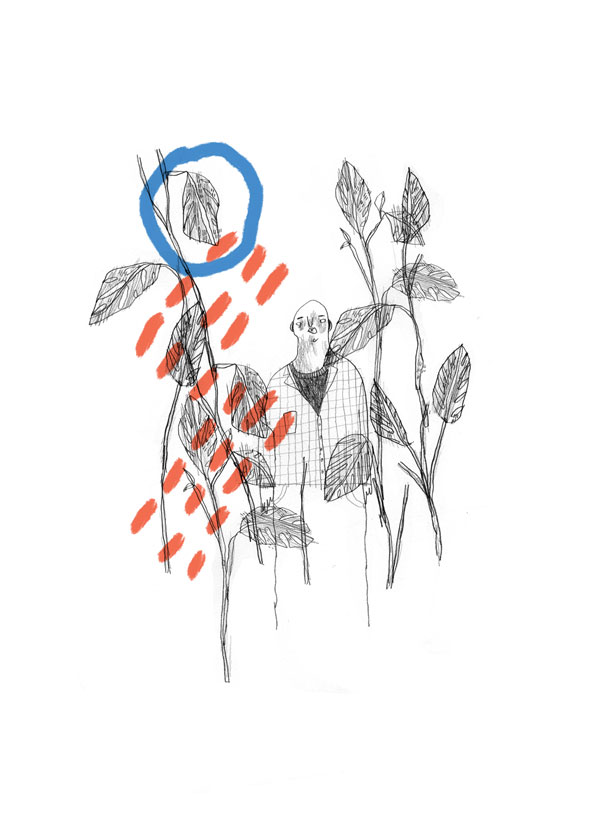
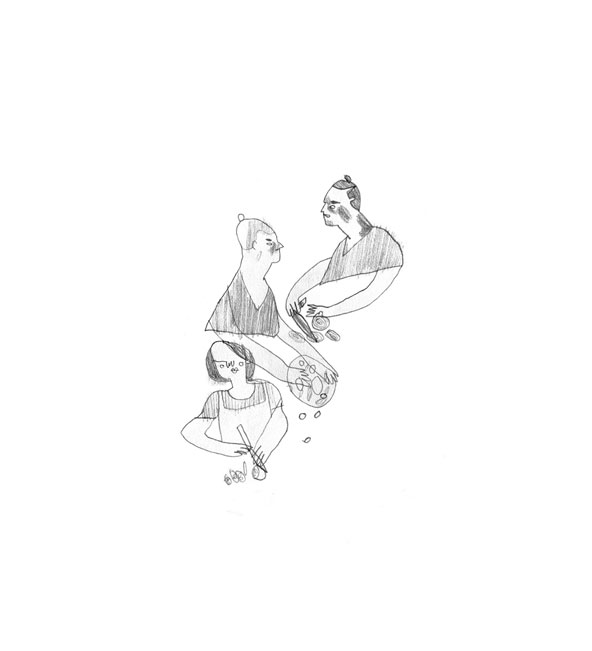
    Illustrations taken from ‘This must be the place’.

    Can you tell us about yourself and your course?

    I literally grew up with a pencil in my hand. With my mother as a goldsmith and my father as a painter, my brother and I grew up in a very free and creative environment where I learned to look at the world around me with curiosity and to react with it accordingly. In high school I didn’t have a creative outlet, so when I started my first course in graphic design I felt that I was really in the right place. Here I was encouraged to think big in a conceptual way, but also to think about working with clients. After graduating I decided to continue my education with a programme in illustrative design at the art academy. During this course, I learned to position myself in the art world and to make my place in the world. I have become an independent designer; I try to distinguish myself and to use my education in the best way.

    Can you tell us more about your project ‘This must be the place’?

    For the last four years I have been living in an international student campus in the Netherlands. More than 200 people, from all over the world, live in my building and from the beginning I was intrigued with who my 199 housemates are. I decided to interview these international residents and ask them how they experience their lives in the Netherlands, how they organize their lives and what problems they may encounter. Through the interviews it became clear that many of the residents didn’t know their neighbours either and that sometimes they felt isolated and lonely. I decided to tell their stories in a graphic novel where I could show, through many short stories, some of the different ways these people experienced these types of loneliness. The stories show that although everyone experiences loneliness in a different way, the essence of the experience is the same. Ultimately my goal is for the reader to see that loneliness can be relieved if you realize that you are not the only one who has these feelings.

    How has your course and school prepared you for life after graduating?

    During my education I learned to position myself as a designer. I worked for four years to find my distinctive abilities and apply them. In my third year I worked as an intern in a design studio with a number of classmates, where we worked on numerous different projects and had intensive contact with clients. These experiences taught me how to maintain my own aesthetic while working with the needs of a particular client and project. Alongside my education I have worked independently over the last four years, participating in various art fairs in the Netherlands. Since 2016 I have also been selling my work in an art store in Maastricht.

    How does a graduate feel in 2017?

    Graduating and discovering the workplace is exciting for everyone, but perhaps especially for art students. You don’t have the quick guarantee of a steady job and income, so the future may feel unsure and that’s unsettling. However, there are some advantages to my situation; I often work digitally and when I have my computer and drawing tablet, my immediate surroundings are irrelevant – the world is virtually at my feet. I’m eager to become part of the creative world and to show people my vision of events.

  • Putting It Famously – Executives Offer Their Favorite Leadership Quotes

    Successful executives lead through inspiration.

    There’s a reason for that, and it’s probably universal. Fast Company offered this explanation: “Humans are aspirational. Leaders and their words…affect us on a primal level.”

    Jeffrey Aronin, Chairman and CEO of Paragon Biosciences, calls on inspiration from Henry David Thoreau to describe the lure of entrepreneurship: “If one advances confidently in the direction of his dreams, and endeavors to live the life which he has imagined, he will meet with a success unexpected in common hours.”  And recognizing that bold endeavors often mean overcoming adversity, Aronin also cites Winston Churchill: “If you’re going through hell, keep going.”

    To inspire his team, Elon Musk observed that “Engineering is the closest thing to magic that exists in the world.” To help employees at Microsoft embrace change, CEO Satya Nadella reminded them that “Our industry does not respect tradition – it only respects innovation.”

    Above all, inspirational quotes help leaders and their teams overcome challenges and reinforce important values. To close his 2018 Duke University commencement speech, Apple CEO Tim Cook quoted Dr. Martin Luther King from the commencement speech King made at Duke in 1964: “The time is always right to do right.”