Author: Igor

  • Seeking below market properties in London

    With property prices dropping at the moment, now is probably the time to explore the possibility of finally getting yourself on the housing market. Interest rates may be rising, but if you can fix at a reasonable rate that is affordable for a few years, then this will give you the flexibility and security to finally get yourself on the property ladder.

    It might not feel like it at the moment, but it is still possible to get a BMV Below Market Value property, even in property hotspots such as London. The trick is to know where to look, and to be prepared to move extremely quickly. Our simple checklist below will help to manoeuvre you into the right position so that you can jump in as soon as you are ready.

    Get your finances and paperwork in order

    First things first, in order to move quickly you need to make sure all your paperwork and your financial situation is in order. The competition for BMV properties is fierce, and there are always many cash buyers who can pounce quickly. As a first time buyer you need to have that flexibility to close the deal as quickly as possible.

    If you are proceeding with a mortgage, make sure that the offer is in place in principle, that your deposit is lodged and you have full proof of funds, and that all the various moving parts such as solicitors and mortgage brokers are in place a ready to act swiftly when needed.

    What to look for in a BMV property

    There are several things that will affect the market price of a property.

    • Structural condition – chances are the property will need serious updating, particularly if it is an old family home that has been in the same family for a long period of time and is therefore seriously dated. Alternatively, there may be options to add value. Basement tanking of London properties is the latest trend for homeowners seeking ways to add to overall living space in a city which has limited room to expand. Bear in mind that if using a mortgage any serious work may cause the surveyor to undervalue the property even more, which could affect your borrowing. So make sure that you have a back up plan in place.
    • Current owner’s circumstances – try to find out as much as possible about the current owner’s personal circumstances. It may be that they are selling because they are in a difficult financial situation and need to sell quickly, or have personal issues to deal with which requires them to sell up. Possibly the property is in probate, and the inheritors simply want to release the inheritance and are not worried about getting the best possible price. In this case, information could give you greater leverage over the bidding process.
    • Is the property really the bargain it purports to be? Do your homework – check other properties in the area. Is it really a decent area? What are the neighbours like? Are there any debts attached to the property?

    Be prepared for failure

    Be prepared for what is probably going to be a roller coaster of a journey to finding a BMV property. We all love a bargain, but rarely are those bargains what they appear to be on the surface. If you are a first time buyer your priority should be to protect yourself at all costs. BMVs are great if you have the time, skills and resources to flip them quickly. However, property itself is a long game – be considered and measured in your approach, and don’t bite off more than you an chew.

  • How to Increase Your Chances of Business Success

    No one begins a business fully confident that they’ll achieve success. After all, business is a highly competitive field, so there’s simply no way to guarantee that any particular business will rise to the top. Even some of the biggest names end up failing for reasons beyond their control.

    However, while you can’t be sure that your venture will succeed, there are things you can do that will increase your chances. It’s all about controlling what’s within your control. Do that, and you’ll be putting yourself in the best possible position for success. In this post, we’ll look at a few handy areas to focus on during the early days of your venture.

    Pexels – CC0 Licence

    Understanding What You Offer

    Your business won’t attract all customers. It’ll attract a specific demographic. One way to get ahead is to have a clear understanding of how and why your goods and services will appeal to that demographic. For instance, why would a potential customer choose your business over a competitor? It could be because you’re experts in your field, you have a great cost-to-quality ratio, or you’ve invested heavily in your customer service. Once you understand your USP and market position, you should be able to tailor your offering more clearly to your potential customers.

    Read Widely

    Knowledge is key in all aspects of life, and especially in the business world. The more you know, the more likely it is that you will succeed. In this day and age, there are countless online resources that you can use to inform yourself about the best way to set up your business. This is especially important when entering a sector with a lot of competition. For instance, if you’re opening a corner shop, then you’ll need to know what products you need to stock to attract customers and make sales. If you’re opening a hairdresser shop, then reading how to create an inviting and pleasant environment in your store will be beneficial. It doesn’t really matter what it is — the bottom line is that knowledge is power!

    Research Competitors

    You’ll be largely focused on your own business. But there’s a lot of value in spending some time looking at what your competitors are doing. For one thing, this might help identify something that is not currently being offered by others in your local area. Again, to use the corner shop example; if all your competitors are closing at 8 p.m., then having later opening hours could help to attract customers. It’s not about copying your competitors; just being aware of what they’re doing and how you can do things better. 

    Play the Long Game 

    Finally, remember that success won’t come overnight. In fact, it might not come for the first couple of years, and that’s OK — the bottom line should be the priority at this stage. In the early days, the focus should be on making your business as excellent as it can be, not on profits. Do that, and you’ll have the kind of business that eventually finds success.

  • Good Hotel, London

    Good Hotel, London

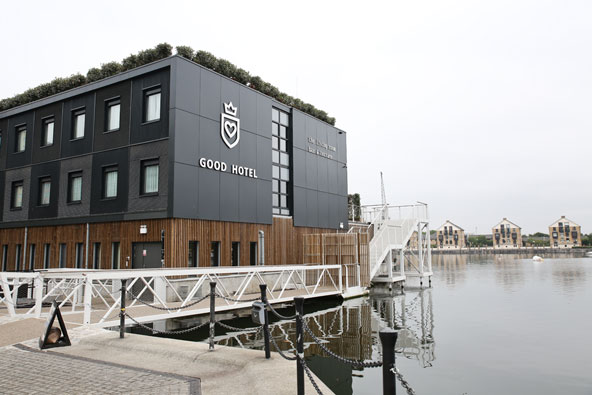
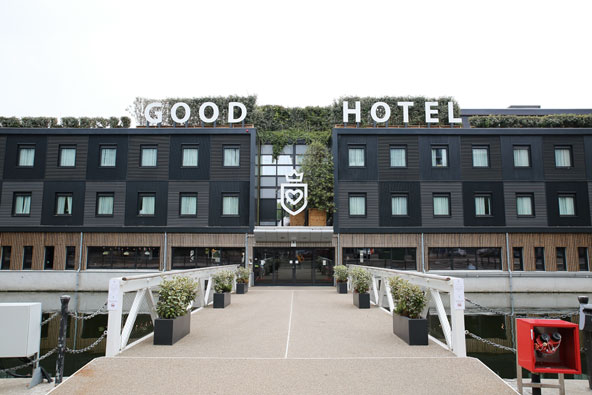
    We recently had an amazing stay at Good Hotel in London’s Royal Victoria Dock. Good Hotel is part of Good Group, a social business which has community and not individual at its core, providing premium hospitality with a cause.

    www.goodhotellondon.com


    The concept

    Founded by Marten Dresen, Good Hotel is the manifestation of his social business dream. The first Good Hotel popped up in Amsterdam during 1 year and trained and re-integrated 70 long-term unemployed locals who were living off welfare. Good Hotel now has locations in London (the floating hotel was transported from Amsterdam) and Guatemala (Marten founded a NGO called Niños de Guatemala there in 2006) and plans to open 5 new properties by 2020, focusing on destinations where touristic demand meets the needs for development.

    There’s one common point in all the Good Hotel properties: the contribution they make to the local community while offering a personalised, authentic experience. The Good Group has created an in-house training program called Good Training, offering long-term unemployed locals custom-made hospitality training and the chance to build a new future. Rooted in the local community, the ingredients, materials and labour needed at Good Hotel are all locally sourced from small business owners and craftsmen.

    Good Hotel also invests in the education of children of low-income families in Guatemala through the NGO Niños de Guatemala founded by Marten – in its first year it has donated $80,000 and is now working towards a goal to donate $500,000 per year).

    If you’re running a similar project and need guidance in social care, you can find organisations like CBAT that can help you in this process.

    The hotel

    Located in the Royal Victoria Docks, an up-and-coming area in East London, Good Hotel London is a floating hotel with an innovative design in a unique waterfront location.

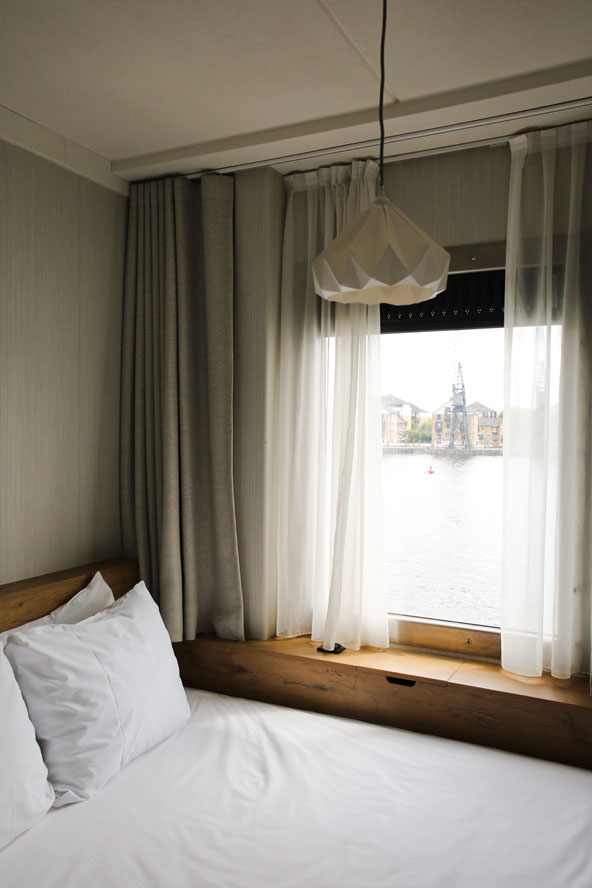
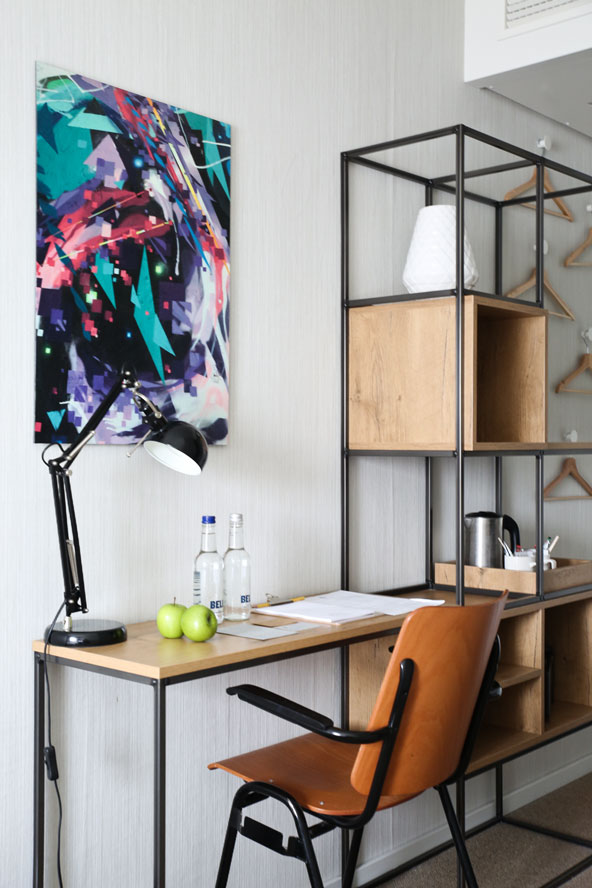
    The modern rooms (4 types with different bed sizes and views to the dockside or waterfront and River Thames) have a minimalistic design, with Scandinavian-style wooden furniture and special details that make the stay even more pleasant, such as the fair trade toiletries, tooth brush and shaving kits, sockets for EU guests and a little doll handcrafted by Guatemalan artisans and designed to help you have a good night sleep.

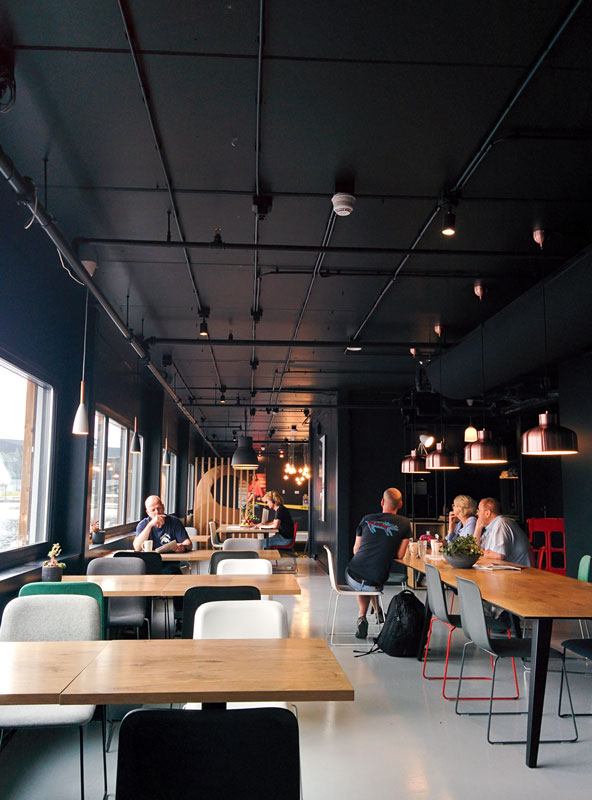
    On the ground floor guests can find The Living Room, an open space with sofas where you can relax, big tables to work and meet other people staying at the hotel and a bar serving locally inspired cuisine with an international twist. On the top floor, guests can also find a roof area overlooking the River Thames and London, whilst enjoying drinks and café classics.

    When you book direct with Good Hotel, £5 will be donated to their NGO Charity partner, per booking, per night. When you book with Booking.com, they have partnered to created a unique ‘boosted’ link whereby if you book to stay anywhere with it, Booking.com will donate a percentage of your booking to Good Hotel’s NGO.
    Find out more here: www.goodhotelbooking.com


  • The Silver Building, creative workspaces in London’s Royal Docks

    The Silver Building, creative workspaces in London’s Royal Docks

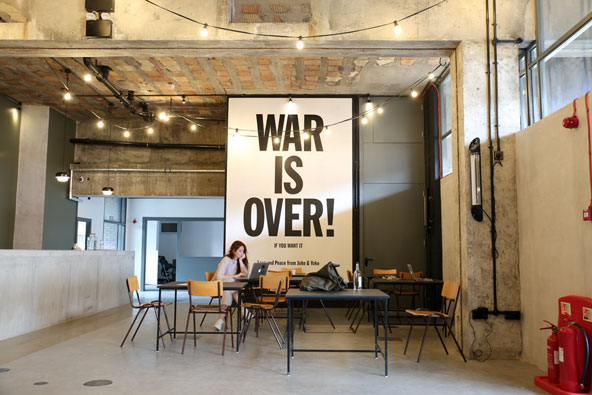
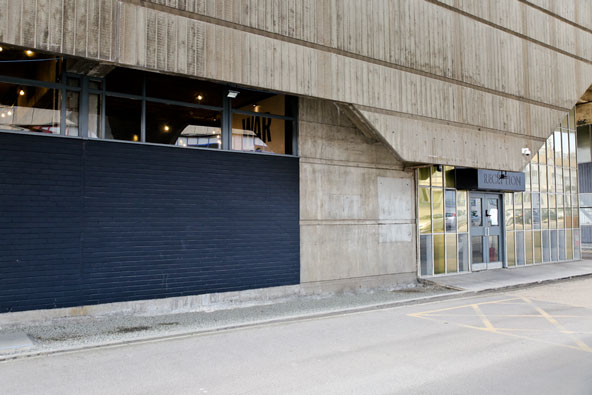
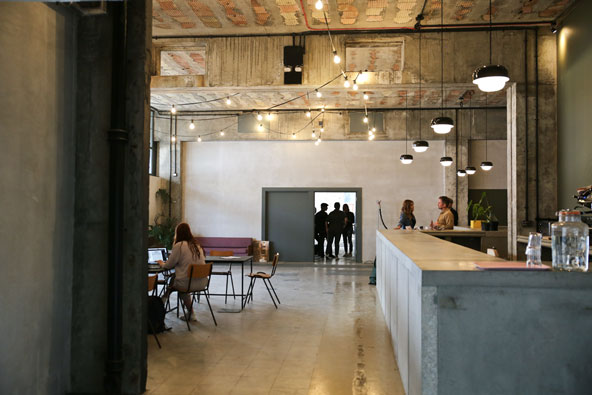
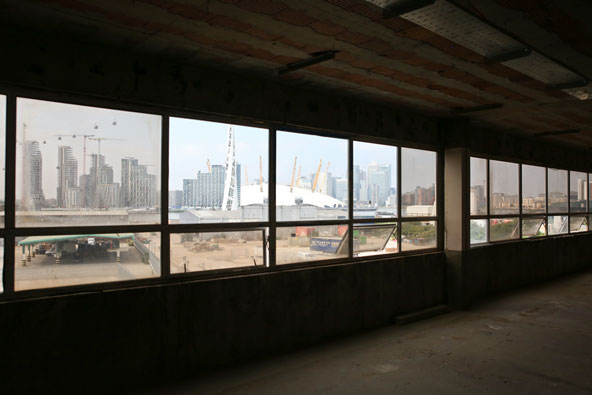
    Located in London’s Royal Docks, an area currently undergoing a transformation to become a hub for creative industries, The Silver Building is a dramatic multi-purpose shared workspace centre in a striking brutalist building by the River Thames.

    www.thesilverbuilding.com

    On our last trip to London, we visited The Silver Building at Silvertown and were showed around the different areas and studios by its founder Nick Hartwright, who’s also behind Green Rooms Hotel – an arts hotel and social enterprise we’ve already talked about.

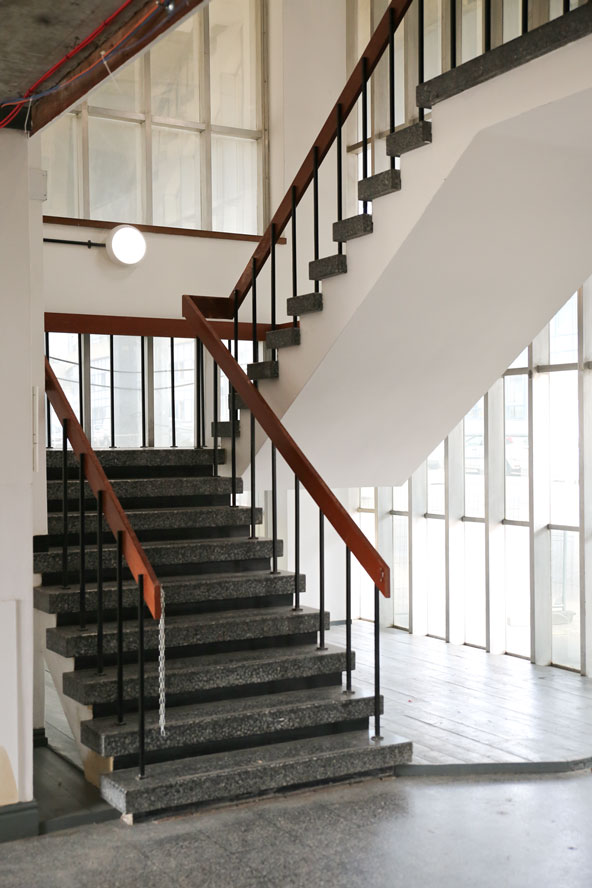
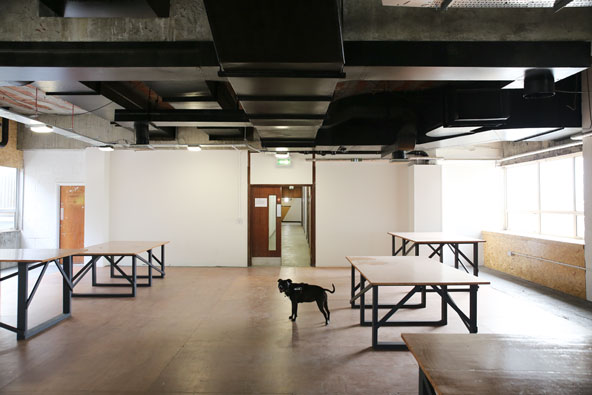
    The 50,000 sq ft building, originally constructed in 1964 for Carlsberg-Tetley Brewing company, opened in late 2017 and is already a bustling creative and entrepreneurial hub where new talent is nurtured and grown. The concept behind this project is to provide affordable workspace for everyone, with different studio spaces that cater for everyone: from fashion designers and artists to photographers and set designers.

    Working in partnership with the Mayor of London’s office and re-purposed by award-winning studio of architects and designers SODA, The Silver Building also features communal areas and events spaces across its four floors, with a ground floor café which is the beating heart of the development.

    Nick Hartwright has said about the project “The Silver Building is an incredibly exciting project and a perfect example of how modern regeneration should be carried out.  Over the coming years we’re going to put Silvertown on the map.  We’re going to engage with existing Newham-based businesses and we’re going to bring new enterprises to the area.  Everyone will benefit, and together, I’m sure we’ll produce some brilliant outputs.”

    And the Mayor of London, Sadiq Khan, supports the initiative and the offering of affordable workspaces for creative businesses: “London’s creative industries are unrivalled, but the capital is growing and we need to make sure we build great creative infrastructure into major development projects. As property prices rise, artists are finding it more difficult to put down roots here and that’s why they need access to genuinely affordable workspace.“

    Fashion designers like Craig Green and Liam Hodges have their workspaces here and also set designers Block9, who have worked with Gorillaz, Lana del Rey and Banksy. With prices of around £15 per sq ft, The Silver Building is attracting some of the most exciting creative talent due to its affordable spaces, the dramatic setting and the on-going regeneration of the neighbourhood.


  • FAIM, a magazine about people, places and food

    FAIM, a magazine about people, places and food

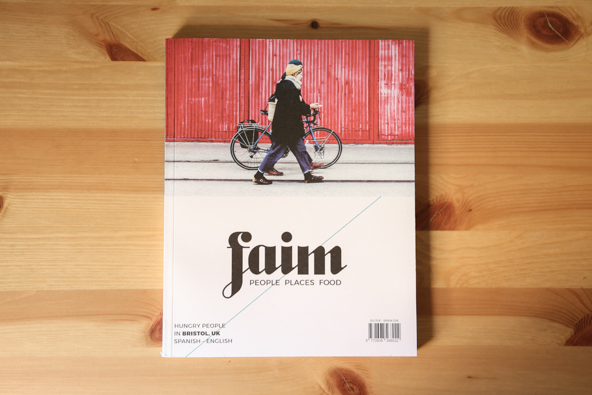
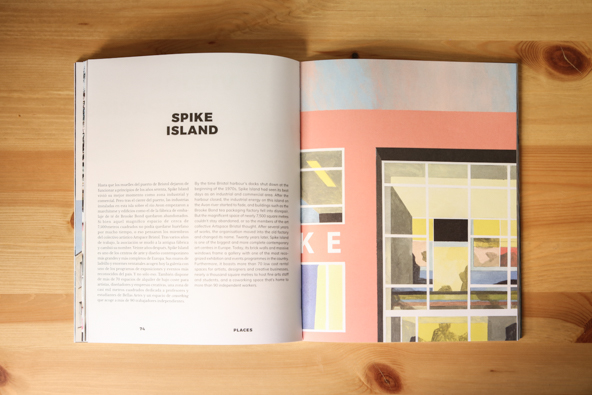
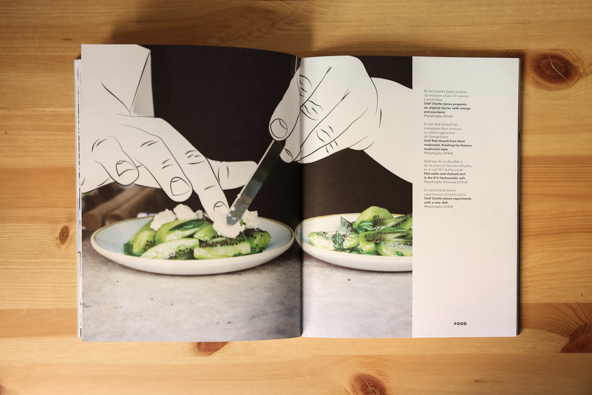
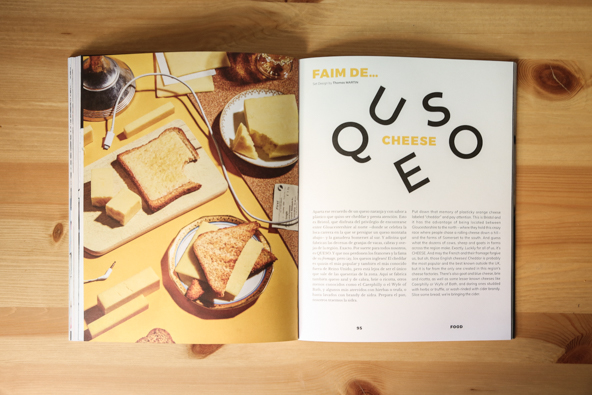
    FAIM is a new independent publication exploring the lives of young creatives from all around the world and discovering a new city in each issue. We chatted with its founders, Axel and Naiara, to find out more about why they decided to start their own magazine, the challenges they’ve faced since they started this project and what readers can find in the latest issue.

    www.faim-magazine.com


    Can you introduce yourself and tell us a little bit about your education and background?

    We are Axel and Naiara, the founders of FAIM. Axel, our art director and graphic designer, is French and studied Fine Arts and Graphic Design, so he is responsible for our beautiful image and general look. Naiara, FAIM’s editor-in-chief, is Spanish but moved to Paris three years ago. She is a journalist and is in charge of the project management and content production.

    What made you start your own magazine? What’s the main idea behind FAIM?

    We both work as freelancers, always looking for new exciting projects to work with. We had this idea of creating something together, launching our own project. And as paper lovers and maniac magazine consumers, the choice was easy. Even if, of course, we have discovered many things involved in the process of creating a magazine we had no idea of, but well, that’s also a part of what makes it so exciting.

    And about the idea, we live and work in Paris, but we both come from smaller cities and had had this conversation many times about how media and social media are often exclusively focused on what happens in big cities. That creates an illusion within our generation that makes young creators looking for an opportunity believe that they’ll only find it by trying their chance in a big capital, and that’s not true! We wanted to shine a light on all those people creating great projects in places other than big capitals and inspire others with their stories.


    Why did you decide to focus on Bristol in the second issue of the magazine?

    To choose our destinations we certainly do a lot of research. The recommendation for Bristol came from different channels, so we created a list with subjects we would like to talk about and we got surprised by how many amazing topics we were able to assemble. So when we compared it to our other options, Bristol just appeared as the logical choice. Then we started working on the content production and wow… It really is an amazing place with loads of amazing people living and working there.

    Can you tell our readers what they can find inside this issue?

    We believe that the content in this second issue will give our readers a proper vibe of what happens in the city. Bristol is a very community-focused place, so there are a lot of initiatives and projects that intend to create opportunities and connections within the city and its neighbours. We talk a lot about the ‘consume local’ movement, new ways to use old spaces and fighting to maintaining what makes them special, we offer a sneak peak into the fantastic food scene… And of course, in this issue our readers will find a lot of creativity. It is one of the attributes that stands out most here and, for us, you can see that it’s present in almost every aspect of the daily life: from the most obvious and well known street art scene to the way people work, create and consume.


    How do you see FAIM growing and evolving in the future? What can readers expect in the third issue?

    We see it as growing community. We want to keep on going out there to find those people who share a way of connecting and inspiring each other and tell their stories to the world. We think we all need to hear more of those. That’s why we would like to expand the project, try new formats and involve more people (contributors in different areas, members of our community, participants in each issue…). For now we are going to focus on the paper review and the website, but we have very cool plans for the future.

    And for the third issue, all we can say is that the creation rhythm for these two firsts issues has been a little crazy, so we haven’t chosen a destination yet. However, we think our readers from issue 1 might be able to tell that several things have changed for the better with the second issue, since we keep questioning ourselves and trying to find new ways to convey our message. And this is definitely something that will be found in issue 3. We keep evolving and having fun in the process, and we hope that’s something that is reflected in the magazine.


    What are the main challenges you’ve faced since you started FAIM? What’s the advice you’d give to someone who’s thinking about starting their own magazine?

    People who start their own projects often joke saying that, if they had known everything that they were going to need to do at the beginning, they might have never started. And even if now we don’t see ourselves doing anything else, well, we say that too! Because having your own project is something absolutely great and extremely satisfying, but it also means a lot of work that is not mentioned that often. And that has probably been the most difficult part of the whole process: we all think that creating a magazine is writing some cool content and creating a beautiful layout (we did too, so naive!), but then there’s business models, taxes, marketing and communication work, distribution…

    So if we were to give advice on starting a magazine, we would tell you to get as much information as you can before starting, talk to other people in the sector, read books and websites. And after all that, if you have a concept you’re happy with and an idea of how you want to achieve your objective, just launch it yourself. Assume that you probably won’t be ready enough and that you’ll make mistakes. That’s fine, no one starts being a master. And enjoy the process, it’s really worth it.

    Can you share some of your favourite independent magazines?

    Sure! We are big fans of French magazines Encore and Les Others, Spanish Fuet and Canadian Dinette. Some of our favourites also use this one-city format like Fare, Boat or Hamburger Gentle Rain. There are dozens of super inspiring projects out there, the independent magazine world is living a really interesting moment.