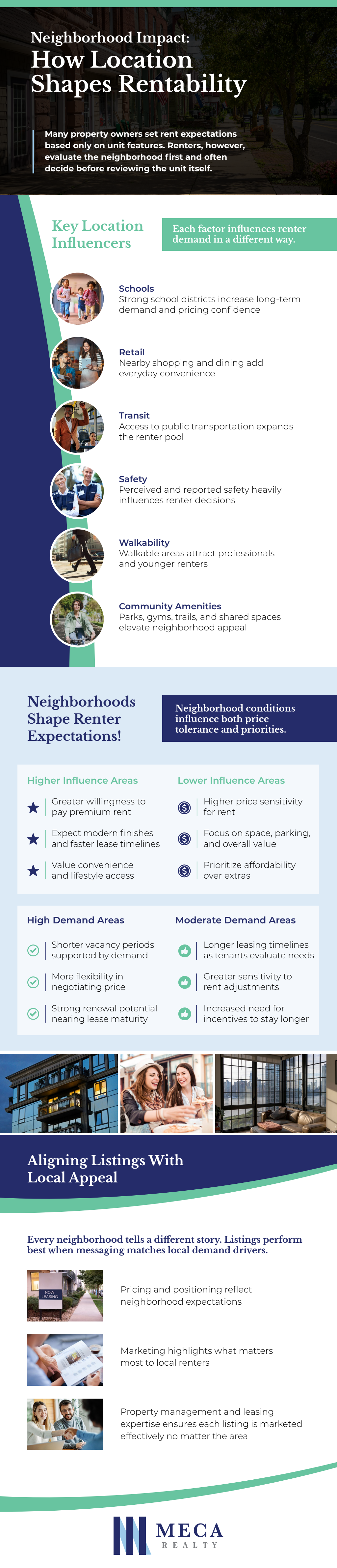
When assessing rental performance, attention often goes straight to unit features like updated interiors, modern appliances, or flexible floor plans. While these details matter, they are only part of the equation. A property’s surroundings play an equally powerful role in shaping rentability. Long before a renter compares finishes or square footage, location helps determine whether a property even makes it onto their shortlist.
Today’s renters evaluate housing through the lens of lifestyle. They look for neighborhoods that align with how they live, work, and spend their time. Access to transportation, nearby amenities, walkability, and the overall feel of an area all influence whether a property feels like a natural fit. When a location supports a renter’s daily routine, the unit itself often feels more appealing, even if it is similar to options in other areas.
Perceptions of value are also closely tied to neighborhood characteristics. In high-activity or centrally located areas, renters may expect efficiency, connectivity, and convenience, and they often accept smaller spaces or higher prices in exchange. In quieter or more residential neighborhoods, renters may place greater importance on space, privacy, or long-term comfort. These expectations shape how pricing is received and how quickly renters are willing to commit.
Location also affects leasing pace. Some neighborhoods create urgency because of strong demand, reputation, or limited inventory. In these areas, renters may move quickly and make decisions with minimal negotiation. In other locations, the process tends to be more deliberate. Renters may compare options longer, ask for additional information, or weigh tradeoffs more carefully. Recognizing these patterns allows property teams to adjust leasing approaches and set realistic timelines.
Effective marketing bridges the gap between location and renter expectations. Listings that clearly communicate neighborhood benefits help renters visualize daily life beyond the unit itself. Describing nearby conveniences, community character, and accessibility provides context that supports faster and more confident decision making. When marketing reflects how renters actually experience a neighborhood, it becomes a powerful driver of interest.
Over time, alignment between renter expectations and neighborhood reality supports stronger performance. Residents who feel connected to their surroundings are more likely to remain satisfied, renew leases, and engage positively with property teams. This consistency benefits both renters and owners by reducing turnover and strengthening long-term stability.
Strong rental strategies treat location as an active influence, not a fixed backdrop. By understanding how neighborhood dynamics shape demand, perception, and behavior, owners and managers can better position their properties, attract the right renters, and support sustainable results across their portfolio.
For a deeper look at how neighborhood traits impact rental outcomes, refer to the companion visual guide below from MECA Realty, a residential property management company in Charlotte, NC.